The teenager who destroyed Martina Navratilova's Grand Slam dream – only to suffer four major final heartbreaks of her own
WTA
Four Grand Slam singles finals, four defeats, 14 major titles, and a place among tennis's all-time greats. Helena Suková's career is one of the sport's most fascinating contradictions.
The Czech star never lifted a Grand Slam singles trophy, but she achieved something that few players could even imagine: ending Martina Navratilova's extraordinary 74-match winning streak and denying her a calendar-year Grand Slam in 1984. From unforgettable victories alongside Martina Hingis and Jana Novotná to her remarkable mixed doubles partnership with her brother, Suková built a legacy that raises an intriguing question: is she one of the greatest players who never won a singles major?
The teenager who ended Martina Navratilova's 74-match winning streak
At this time Navratilova was immersed in a period of total dominance in the women's game. Across all surfaces, especially on grass, she represented the benchmark. Also as an additional story, Suková's mother, Věra, helped coach Martina Navratilova during her junior years. She also knew Navratilova growing up and had even served as her ball girl.
Sukova was only 19 when the Czech and a former Czech clashed in a major singles semi-final. The first set, as expected, went Navratilova’s way by the score of 6-1. The younger woman had other ideas, bouncing back to pocket the second set. In the decider, Sukova raced into a 3-0 advantage. Navratilova then displayed her champion spirit by fighting back to 4-4.
Sukova now had to find greater resolve. "When I lost a point, I'd just say, 'Let's try another one and forget that,'" she said later to Sports Illustrated. I wasn't nervous or anything.
Ironically, given she was Navratilova’s principal rival, Chris Evert would prove too strong in the title match. Despite taking the opening set 7-6 (4), Sukova went down in the next two to finish runner-up. A position we should be reacquainted with in future major singles finals.
The four singles finals Sukova suffered heartbreak in
| Year | Grand Slam | Opponent | Result |
| 1984 | Australian Open | Chris Evert | Lost 7-6(4), 1-6, 3-6 |
| 1986 | US Open | Martina Navratilova | Lost 3-6, 2-6 |
| 1989 | Australian Open | Steffi Graf | Lost 4-6, 4-6 |
| 1993 | US Open | Steffi Graf | Lost 3-6, 3-6 |
Nine women's doubles majors and the partnerships that made Suková a legend
Sukova reached Grand Slam doubles finals frequently during her career. She went on to triumph on nine occasions in women's doubles Grand Slam finals and a further quintet of mixed doubles Grand Slams.
The initial rush of major success came in partnership with German Claudia Kohde-Kilsch. They were beaten in their first two major finals together, losing to the then dominant pairing of Navratilova and Pam Shriver in the 1984 Australian Open and 1985 French Open finals.
After losing at Roland Garros, redemption soon followed as a few months later they bested Navratilova and Shriver in a three-set US Open final.
Further success with Kohde-Kilsch would materialise at the 1987 Wimbledon Championships when they secured the grasscourt major with a 7-5, 7-5 victory over American Betty Nagelsen and Australian Liz Smylie. Their last major final resulted in a comfortable loss to Navratilova and Shriver in the 1988 US Open title match.
One of the factors in what made Sukova such a formidable exponent of doubles was her tall stature, allowing her to dominate at net. Tennis.com said, “Standing a 6ft 2, she possessed a commanding wingspan that allowed her to cover the net effectively, intercept floaters, and crush overhead smashes.”
From Olympic silver to Wimbledon glory: Suková's remarkable partnership with Jana Novotna
Ahead of the 1988 Olympics in Seoul, where tennis was making a return as a medal sport at the Olympics for the first time since 1924, Sukova elected to play with fellow Czech Jana Novotna in the Canadian Open to prepare for potential Olympic glory. They came home with a silver medal after having won in Canada.
The partnership was maintained for the 1989 season, with a total of five titles being lifted from fifteen events. This haul included a maiden Grand Slam title together. In the final, Larisa Savchenko and Natasha Zvereva were dismissed 6-1, 6-2.

Jana Novotna formed a partnership with her.
Their 1990 campaign turned into one of exceptional dominance, narrowly missing out on a Calendar Year Grand Slam. The run began with glory in the Australian Open, defeating American duo Patty Fendick and Mary Joe Fernandez in two tiebreak sets. They doubled their major haul for the year when they triumphed at Roland Garros. Neiland, formerly Savchenko, and Zvereva again played second fiddle to the Czechs in a major final. Their Wimbledon defence was secured after a 6-3, 6-4 victory over Kathy Jordan and Liz Smylie.
They ultimately fell short of Grand Slam immortality when beaten in the US Open title match by Navratilova and Gigi Fernandez. This defeat shouldn't detract from an incredible legacy of four Grand Slams together, two Olympic silvers and a 39-match winning streak.
When speaking to the New York Times, Novotna spoke about what made them so successful: “Novotná noted that she provided the "spark" and energy on the court, while Suková acted as the steady, calming anchor during high-pressure points." Their playing styles were similar in favouring a serve and volley approach, but their contrast in personalities allowed them to complement each other effectively.
Further success with a variety of partners, including brother Cyril
Outside of the principal pairings with Kohde-Kilsch and Novotna, more success came in doubles with a variety of different partners.
Sukova claimed five doubles majors in the mixed discipline. Three of these were clinched with her younger brother Cyril Suk. The first materialised at the 1991 French Open, where they bested Dutch pair Caroline Vis and Paul Haarhuis in three sets. Later in the nineties, sibling excellence yielded great joy when triumphing at Wimbledon in consecutive years (1996-97).
She rebelled in success with her sibling. When Sukova was inducted into the International Tennis Hall of Fame in 2018, it was Cyril who introduced her on stage, giving an insight into his sister's mindset: “Any games we ever played, she always had to win. By the way, she was a terrible loser. I have to say that because she was a great competitor, that's why she became one of the best tennis players to ever play the game of tennis."
Her other two mixed doubles majors came in tandem with Australian Todd Woodbridge. They lifted the trophy at 1993’s US Open and the Wimbledon Championships of 1994. In the former event, Sukova came close to accomplishing a remarkable treble of trophies. She also won the women's doubles with Sanchez-Vicario and lost in the singles final to Steffi Graf.
A 15-year-old Martina Hingis, a Wimbledon title and an unexpected partnership ending
In the latter part of Sukova’s career, doubles took centre stage as her singles game began to wither. She flitted around partners at this stage. One alliance that paid for fruit came when teaming up with 15-year-old Swiss prodigy Martina Hingis.
After winning the Australian Open with Aranxta Sanchez-Vicario in 1992, Sukova’s form began to regress. She went into the 1996 season having not featured in a major doubles final the previous two seasons.
At Wimbledon, Sukova joined up with Swiss starlet Martina Hingis, who was on the cusp of singles supremacy. At just 15, their dynamic felt more akin to a mother/daughter relationship. In the final, they faced Neil and American Meredith McGrath. Bouncing back from dropping the opening set, Hingis and Sukova came back to lift the title. It was the ninth and last women's doubles title of her career. Hingis became the youngest Grand Slam doubles champion in history.
The relationship abruptly ended when Hingis informed Sukova of her desire to focus on singles competition. This reasoning felt deceptive to Sukova as the Swiss continued to play with a variety of other partners. Hingis's mom, Melanie Molitor, suggested it was due to doubts over the now 31-year-old Sukova’s fitness capacity to play the brand of tennis to complement Hingis.

Helena Sukova in action.
Later career as a psychologist
Since her playing days, Sukova has qualified as a psychologist. She's used much of her experiences in the pressure cooker of elite tennis to inform her work.
When inducted into the International Tennis Hall of Fame, Sukova spoke to the WTA about her second career. "It helps you in that you know how the athletes are feeling at a certain stage, so you know what to look for," she said. "Every person is different, but a lot of these deep things are similar.
When working with someone from the world of sport, Sukova was keen to emphasise her past experience. She also acknowledges how this type of support could have aided her own tennis career: “If I were a player now, I would be so smart, telling myself what to do. I would be winning everything!
“It’s like they say, now you have the experience, but you don’t have the body.”
Fourteen major titles but no singles crown: Is Helena Suková the greatest underrated great in tennis?
Sukova’s place in the tennis pantheon is built on her record in doubles. Her tally of nine women's doubles majors and five in mixed compare favourably with many in the doubles discipline. Some would opine her failure to land a singles major counts against her greatness.
I believe singles to be the ultimate benchmark for tennis, but the two disciplines differ to the extent that you can be regarded as a great player of the game if you've delivered in either of them.
A further discussion surrounds Sukova being arguably the greatest female player to never win a singles Grand Slam. Her losses in the four finals she contested are tempered by the quality of opposition. The triumvirate of Navratilova, Chris Evert and Graf were the ones who stopped her mounting the top of the podium. This trio represents three of the four most prolific winners of singles Grand Slams in the Open Era.
Read also
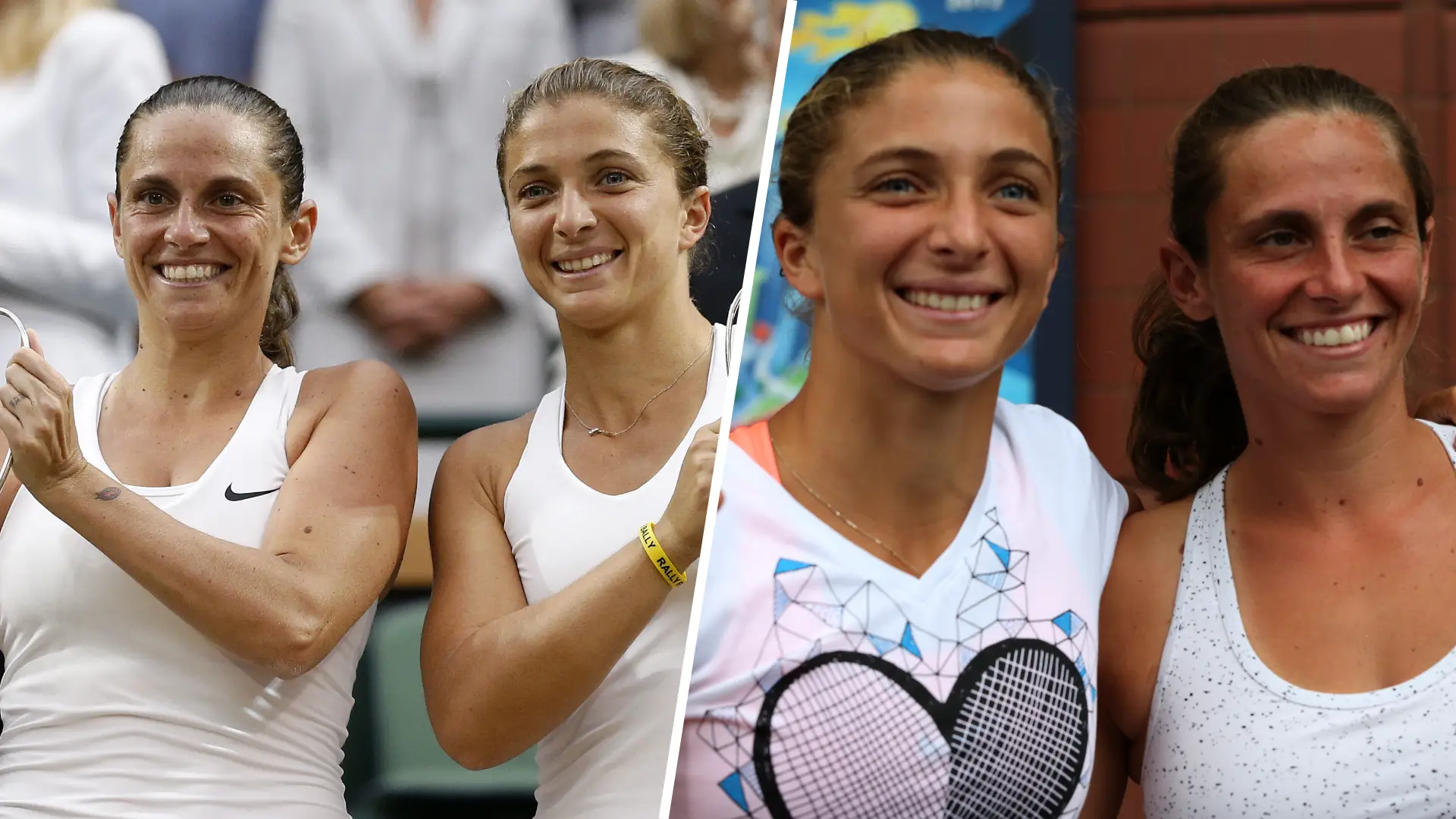
A career grand slam in doubles places Sukova in an exclusive club. She's only the 18th woman in the Open Era to achieve the feat in doubles.
Four Grand Slam singles finals and no titles might suggest an unfulfilled career. But 14 major trophies, two Olympic silver medals and a victory that shattered one of tennis's greatest winning streaks tell a different story. Suková may never have conquered singles tennis at a Grand Slam, but her achievements ensure that she belongs in any serious discussion of the sport's most accomplished players.

Jay Brannon is a sports journalist from Sutton Coldfield, England, with a lifelong passion for athletic competition and storytelling. For the past 1.5 years, he has been a prominent voice at TennisUpToDate.com, where he has authored more than 3,000 articles, specializing in deep-dive columns, tactical analyses, liveblogs, and comprehensive match reports for the ATP and WTA tours.
Jay’s tennis reporting blends rigorous, real-time statistical analysis with on-the-ground coverage. He frequently travels to tournaments to cover the action firsthand from the press box and player press conferences. This direct access allows him to deliver sharp insight into player form and tour developments—a dedication sparked by his earliest sporting memory of the iconic 1991 Wimbledon final between Michael Stich and Boris Becker.
Beyond the court, Jay brings a versatile background in live broadcasting and media. His professional experience includes serving as a sports reporter for BHBN Hospital Radio—where he delivered live updates and analysis for West Bromwich Albion and Wolverhampton Wanderers matches—as well as working as a match reporter for Sutton Coldfield Town.
Jay holds a degree in Music Journalism and Broadcasting from Staffordshire University, a foundational training that shaped his voice as a thoughtful, authentic storyteller. Grounded in core journalistic ethics, he places a strict emphasis on careful sourcing, editorial accuracy, and swift, verified updates.
claps 0visitors 0
Just In
Popular News
Latest Comments
- I cannot stand Rennae Stubbs. She is so flipping self-righteous! She is extremely judgemental. I really wish she would just shut her trap sometimes!Rapunzel27-11-2026
- But her Belarus President must be very proud of her. Another photo-op with the Dictator?
 mandoist25-11-2026
- WTA and ATP have their own in-house Mafia Agents... all competing to be the next champion of a "gotcha moment". Just like they did to Vondrousova when they attempted an unannounced surprise ambush at her own home!! We are now in the 21st Century. Most people understand organizations which have Total Control of their operations are not trustworthy, rarely willing to cooperate with an outside entity, extremely secretive to a fault, and worse. Even if one sides with the WTA/ATP, one cannot seriously believe they are capable of honest in-house "investigations". Definitely not willing to share results of their so-called "investigations" when that result does not side in their favor!mandoist25-11-2026
- This woman is gradually becoming a problem interjecting her personal problems into the tennis tour. I've been fed-up with her Holier-Than-Thou attitude for quite some time. SVITOLINA IS NOT THE ONLY UKRAINIAN PROFESSIONAL DEALING WITH THE INVASION IN HER COUNTRY. At some point the general public is going to have had enough of the "poor me' performances. My friends and colleagues from, or still living in, Ukraine do not care for her "distant approach" in addressing this sad time in Ukranian history. Perhaps it's best if she take a leave from tennis and go fight for her cause? The constant nonsense dissing her Russian colleagues on the courts (and now in the media) has run its course. As much as she may believe she's 'fighting' for her country -- she is not.mandoist24-11-2026
- Damn! This is not the news we wanted to hear. Hopefully, surgery will help and Sinner will be back to competition soon.Rapunzel23-11-2026
- Well... at least someone in that camp finally 'saw the Light'. No one wants to go down with a sinking ship.mandoist23-11-2026
- At a time when WTA should be reducing the ridiculously unhealthy schedule, their collective greed and ignorance is adding to the risks.mandoist21-11-2026
- It's bullshit to apologize for something most of us already knew/know (and what others are afraid to admit) about her. Time to fine her in a Big, Big way for screaming and cursing DIRECTLY at fans. It's a shame she's not the sharpest pencil in the box -- but that should not excuse her from paying a price when necessary. Time to quiet the Fake Screamer down a few notches.mandoist21-11-2026
- Allow me to summarise this wonderful article. We have been inundated with TOO MUCH tennis! Let the players go home, spend some time with families and loved ones and allow them to breathe and have a merry Christmas.Rapunzel20-11-2026
- It's been apparent to people that remember who Saba acted and spoke (before her win streak) that she's been gradually reverting to her old nasty, argumentative, excuse-making self. Even Championships cannot hide one's personality forever.mandoist18-11-2026
