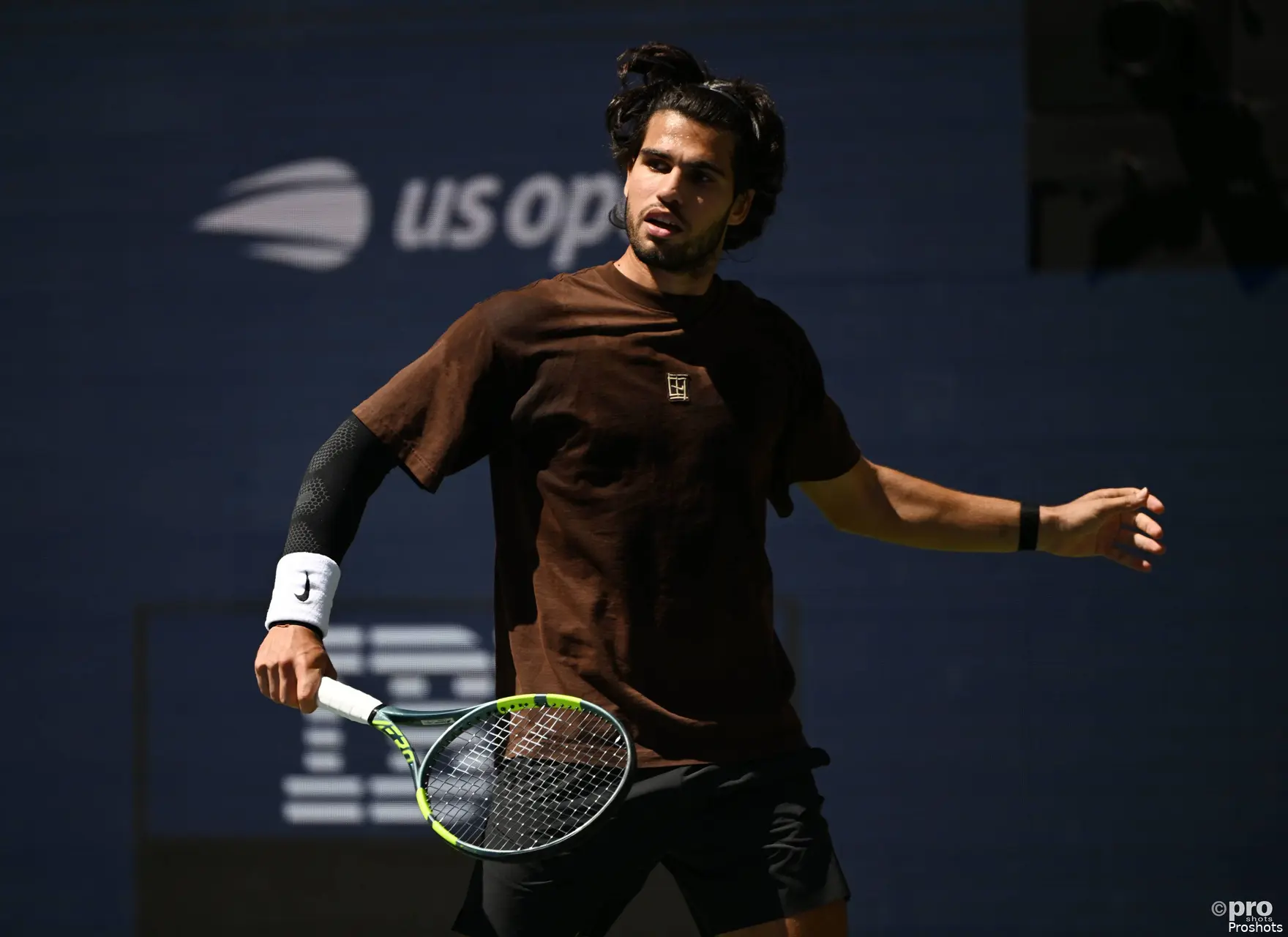
It is fair to say that Carlos Alcaraz is one of the best
players in the world. However, the 23-year-old is far from perfect. His recent 7-5,
7-6(4) defeat to Zizou Bergs in the third round of the Shanghai Masters proves
that he is not immortal, a tale that has been seen numerous times.
When Alcaraz gets it right, he is virtually unbeatable.
Possibly only Jannik Sinner can live with him in this tennis landscape. The
scary thing is that the young Spaniard can still improve and get better. The sky
and beyond is the limit, with his current seven Grand Slam total likely to soar
a lot higher with a long and prosperous career ahead of him.
There are incidents where he is not competing at a high enough
level. Compared to a rival like Sinner, whose consistent form on the big stage
has only really been compromised by external factors away from tennis, Alcaraz
is not totally safe from an early exit.
He was not at his best in the contest against Bergs and paid
the price. Once again, a concerning and unpredictable trend has occurred with
Alcaraz. He was vocal about the balls in that match, but whether it is a lack
of focus, consistency or his opponent simply being better on court, there is possibly a blueprint to take down the World No.3. However, not enough players are brave
enough to complete this, or maybe even talented enough. When they do, the results speak for themselves; just look at Bergs.
BIGGEST WIN OF BERGS' CAREER 🤯 Bergs stops Alcaraz's win streak at 7, with a 7-5 7-6(4) win in Shanghai! #RolexShanghaiMasters https://t.co/xMojHN9jh8
— Tennis TV (@TennisTV) October 12, 2026
Alcaraz defeat to Bergs falls in a worrying pattern
At Masters 1000 level, Alcaraz has been very much hit and
miss. From 2024, he has competed in 16 events, making it to the quarter-final
stage on 10 occasions. That is a decent turnaround for most players, but those
six exits in question prove that Alcaraz is unmistakably at risk sometimes from
exiting the tournament early.
The players he lost to in these events are also competitors
who should not be getting the better of someone with the calibre of Alcaraz.
| Year | Masters 1000 event | Opponent who eliminated Alcaraz | Round |
| 2024 | Cincinnati | Gaël Monfils | Second round |
| 2024 | Paris Masters | Ugo Humbert | Third round |
| 2025 | Miami Open | David Goffin | Second round |
| 2025 | Paris Masters | Cameron Norrie | Second round |
| 2026 | Miami Open | Sebastian Korda | Third round |
| 2026 | Shanghai Masters | Zizou Bergs | Third round |
When he gets it right, it is electrifying. A player who boasts so much variety and overall is a joy to watch. Brimming from ear to ear while pulling off almost unthinkable shots, Alcaraz is one of the most mesmerising tennis players of this current generation and is already being compared to the greats.
This makes these results a lot more bizarre. Take the most recent one against Bergs. The World No.39 had failed to win more than two matches in any tournament from Wimbledon onwards. He lost in the opening round of the Japan Open, the competition Alcaraz won just before Shanghai, and yet produced a stunning upset.
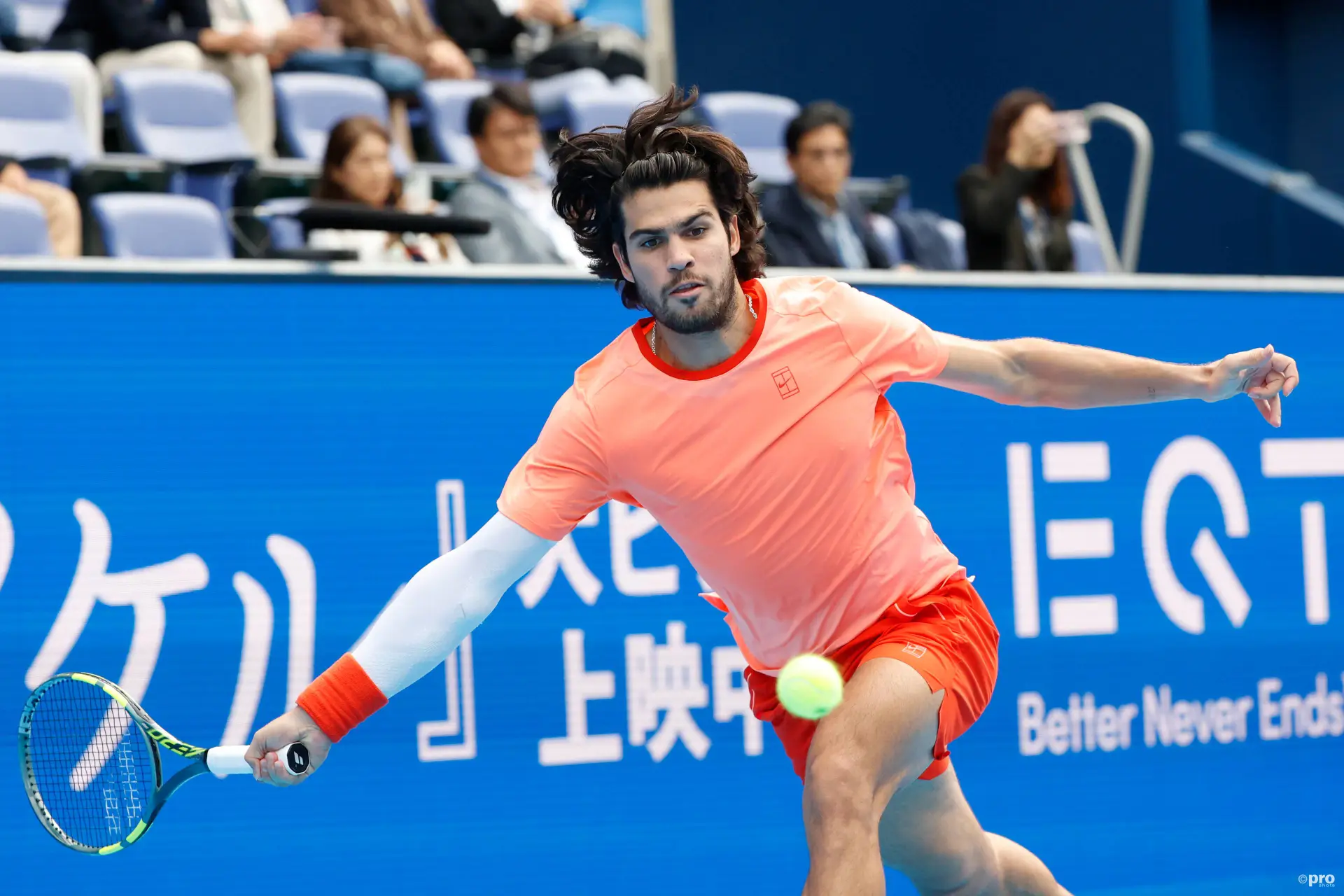
Coming into this tournament, Alcaraz was in great form. A US Open quarter-final in his return to the sport was a commendable result, but the Japan Open title charge was a statement. While not at his best, he turned up the heat in all his matches and was able to dart clear to complete a fine title defence. He was one of the favourites for glory in Shanghai, but a wait to clinch an elusive title in this tournament prolongs.

Carlos Alcaraz won the Japan Open but was on the end of a surprising early exit at the Shanghai Masters
How Bergs exposed Alcaraz on the big stage
This result goes far deeper beyond the surface. At first glance, upsets are a part of tennis. Bergs is a title winner in 2026 and is rapidly improving. Shanghai is also the location of his maiden Masters 1000 quarter-final, making it happy hunting ground for him. When taking a deeper dive, there is much to analyse.
Stats from Zizou Bergs vs Carlos Alcaraz
| Statistic | Zizou Bergs | Carlos Alcaraz |
| Aces | 9 | 5 |
| Double faults | 1 | 2 |
| First serve | 48/75 (64%) | 53/79 (67%) |
| Second serve | 26/27 (96%) | 24/26 (92%) |
| First-serve points won | 37/48 (77%) | 35/53 (66%) |
| Second-serve points won | 14/27 (52%) | 14/26 (54%) |
| Service games played | 12 | 12 |
| Break points saved | 0/2 (0%) | 1/4 (25%) |
It was not the first time Bergs had faced Alcaraz, losing to him in Tokyo last year. He did put up a fight, breaking three times in that match. That is the exact same amount as in Shanghai, but he was a lot more solid on serve and shut the door to his opponent.
The first serve points won percentage at 77% is key. Bergs was aggressive when starting points and successfully managed to shorten them. This made Alcaraz more uncomfortable while asserting his dominance on the court.
According to Eurosport, the match averaged just 3.6 shots per point, with 107 of the 154 points finishing within four shots. Bergs won 59% of those. This is a huge contrast to the few points that extended beyond that, with Alcaraz on top by quite a distance. When dragged into longer rallies, Alcaraz can fall back on his explosive power, variety and lightning quick pace to cause his opponent a lot of grief. When faced with a more aggressive player, this comprimises his game plan and makes it harder to produce this. Bergs not letting the rallies develop was a key tactical insight that proved pivotal.
Adding to that, the rewarding yet risky aggressive style of play Alcaraz utilises was not at its glittering best. It is a style of play that Alcaraz has not just mastered but uses highly effectively, as he is part of a new generation playing a similar way. His forehand alone can overwhelm opponents with a key eye for a drop shot.
This works because Alcaraz is able to get on top of the rally and dictate play. When his chances of controlling the contest are limited, this opens the door for his opponent to step in and capitalise. Against the serve, Bergs limited the chances Alcaraz would get, with just two break points created. He did take them, but on this occasion it was not enough.
It is not a hard court problem
Alcaraz can play on every surface. The seamless transition from hardcourt to clay to grass back to hardcourt just adds to the reasons why he is in a class of his own. While indoor hardcourt is possibly an area he could improve, outside he has won almost everything. Australian Open, two US Open's, along with more success at Indian Wells, Miami and Cincinnati.
His prior successes prove that he does have solutions to when he is becoming unstuck on the court. Sometimes, his attacking style has to be used in a different way. Able to absorb pressure, he can still change the rhythm and give the player on the other side of the net a headache.
Take the 2025 US Open title triumph. He dropped one set in the entire tournament, and that included fixtures against Novak Djokovic and Sinner in the final. It was an event where his serving was of the highest calibre, giving him a solid foothold in the contests. Against Bergs, he won just 66% of first-serve points.
In other hardcourt tournaments, he is able to find solutions. Shanghai is one that continues to leave him scratching his head. A fourth round and quarter-final appearance in 2023 and 2024, respectively, is far off the level expected, and another poor run in the penultimate Masters 1000 competition of the season makes for grim reading.

Carlos Alcaraz won the Australian Open at the start of 2026
This is a warning but does not guarantee victory
The straight sets defeat against Bergs could have a number of storylines and reasons coming from them. On one instance, the poor prior form in Shanghai, not much competitive tennis played following wrist injury, conditions not being to his liking, a tactical failure or just a standard bad day at the office could all be compelling arguments.
You do have to factor in how Bergs hushed Alcaraz for much of the contest, but that deserves so much praise. It is not as simple to say to a tennis player, 'play this way, and you will beat Alcaraz.' For someone that good, you have to produce a performance higher than your usual standard and hope you are not met with a barrage from the other side of the court.
This blueprint on how to defeat Alcaraz on a hardcourt cannot be written in stone thanks to just one performance. If that is going to be made permanent, it needs to happen again, and again, and again. However, Bergs demonstrated that an opponent does not need to outlast Alcaraz or match his full range of shot-making. A strong serve, early ball-striking, forward movement and disciplined execution can be enough to deny him the time he needs.
Read also
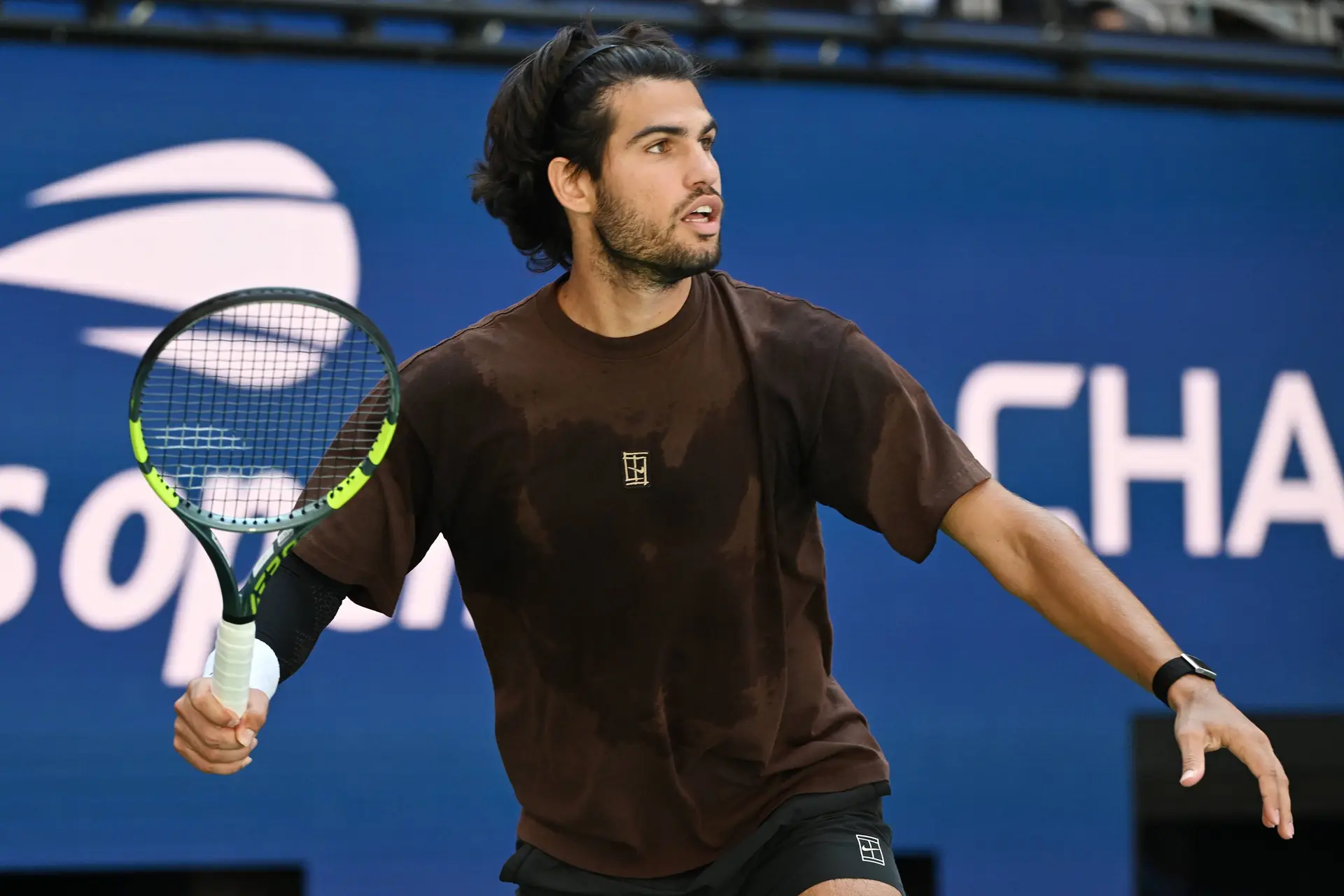
For Alcaraz, the main argument to deal with this is to play nearer to his usual self. Maybe if he was slightly more satisfied with the balls, he would have got more joy on the court. Even then, the key word is adapt. He needed to adapt to the conditions when his opponent successfully did so. He needs to successfully implement a style of play on court that is built around his aggressive nature and variety but also takes a more patient approach, producing a better serving performance and solving the returning issue.
This is an effective way to defeat Alcaraz. However, it is too soon to call it a huge flaw. Early defeats in these big tournaments have been common for Alcaraz, especially on hardcourt. Even in Japan the week before, he was pushed by his rivals but managed to find a way to win. There is an argument that Bergs unearthed the combination to tackle Alcaraz, but whether it is the ultimate method is yet to be seen.

Lucas MichaelTennis Journalist
Lucas Michael is a tennis journalist based in Cambridge, UK, specializing in comprehensive coverage of the ATP and WTA tours. For the past 1.5 years, he has been a core contributor to TennisUpToDate, where he has authored more than 3,000 data-driven match reports, deep-dive analysis pieces, and engaging liveblogs.
Lucas pairs real-time statistical analysis with on-the-ground reporting, frequently traveling to tournaments to cover the action firsthand from the press box and player press conferences. This blend of advanced metrics and direct access allows him to provide sharp context regarding player form, tactical trends, and breaking tour developments.
He holds a BA (Hons) in Sports Journalism. Grounded in core journalistic ethics, Lucas places a strict emphasis on meticulous sourcing, editorial accuracy, and a commitment to updating live content swiftly as verified information emerges.
claps 0visitors 0
Just In



Popular News
Latest Comments
- A healthy Qinwen may be hard to stop next season. She was already scaring her opponents before her medical leave(s). Unfortunately, Zheng insisted on singing again. On the positive side -- Mirra did not sing!! ;~}
 mandoist11-10-2026
 - Where is it written that athletes, entertainers... People in general... are mandated to keep looking at -- or even using [anti]Social Media? Public & private figures consistently complain and reveal their concerns about negativity and violence thrown at them -- yet they insist on participating. Avoid it, don't use it, don't read it. It's okay to occasionally look up at the World instead beating your eyes & thumbs to death on The Inventions out there.mandoist11-10-2026
- great articlestennisseserver07-10-2026
- Medvedev was leading Djokovic 7-5, 3-5 when an attempted return..' NO you ignorants, Djokovic was leading .weiss05-10-2026
- No more bullshit "Wildcards" to these two. Qualify like everyone else -- there will be cameras there, too. Time to scream... WTF ????!!!!mandoist29-09-2026
- Let's not BS the general public -- Sabalenka started showing cracks in her game last season. Her losses and near-losses started at about the same time she began being distracted by Fame (constant Selfies, making TV commercials, magazine shoots, endless Social Media nonsense, etc., etc.) One would think even Saba could recognize the parallels with others who failed before her -- Raducanu, Giorgi, Bouchard to name a few.mandoist25-09-2026
- Gross!! Hey Raducanu, Giorgi, and Bouchard -- reserve a seat at your Social Media Selfie table for Saba + Naomi. They're heading in your direction soon enough.mandoist24-09-2026
- And then these same players will complain about how lengthy their season’s were and need more time-off. I’m all for more tennis but the amount of tennis we get now is actually kind of crazy! We all need a break, especially the players.DaveyWavey23-09-2026
- You should do a comparison article for "different kinds of justice" the courts decide for tennis players. I can think of at least three players who received very small bans of a few months, however Tara Moore has been fighting for her literal survival the past few years. It seems odd considering she is not a "name" player, unlike the other cases.DaveyWavey22-09-2026
- PRIZE MONEY & POINTS Winner - $185,500 Finalist - $114,500 Semi-Finalist - $66,003 Quarter-Finalist - $35,000 Round of 16 - $18,045 Round of 32 - $13,005 Winner - 500 Finalist - 325 Semi-Finalist - 195 Quarter-Finalist - 108 Round of 16 - 60 Round of 32 - 1DaveyWavey20-09-2026

Loading