COLUMN: Sabalenka falls apart again, Svitolina seizes her chance, and nobody can get a flight home
WTA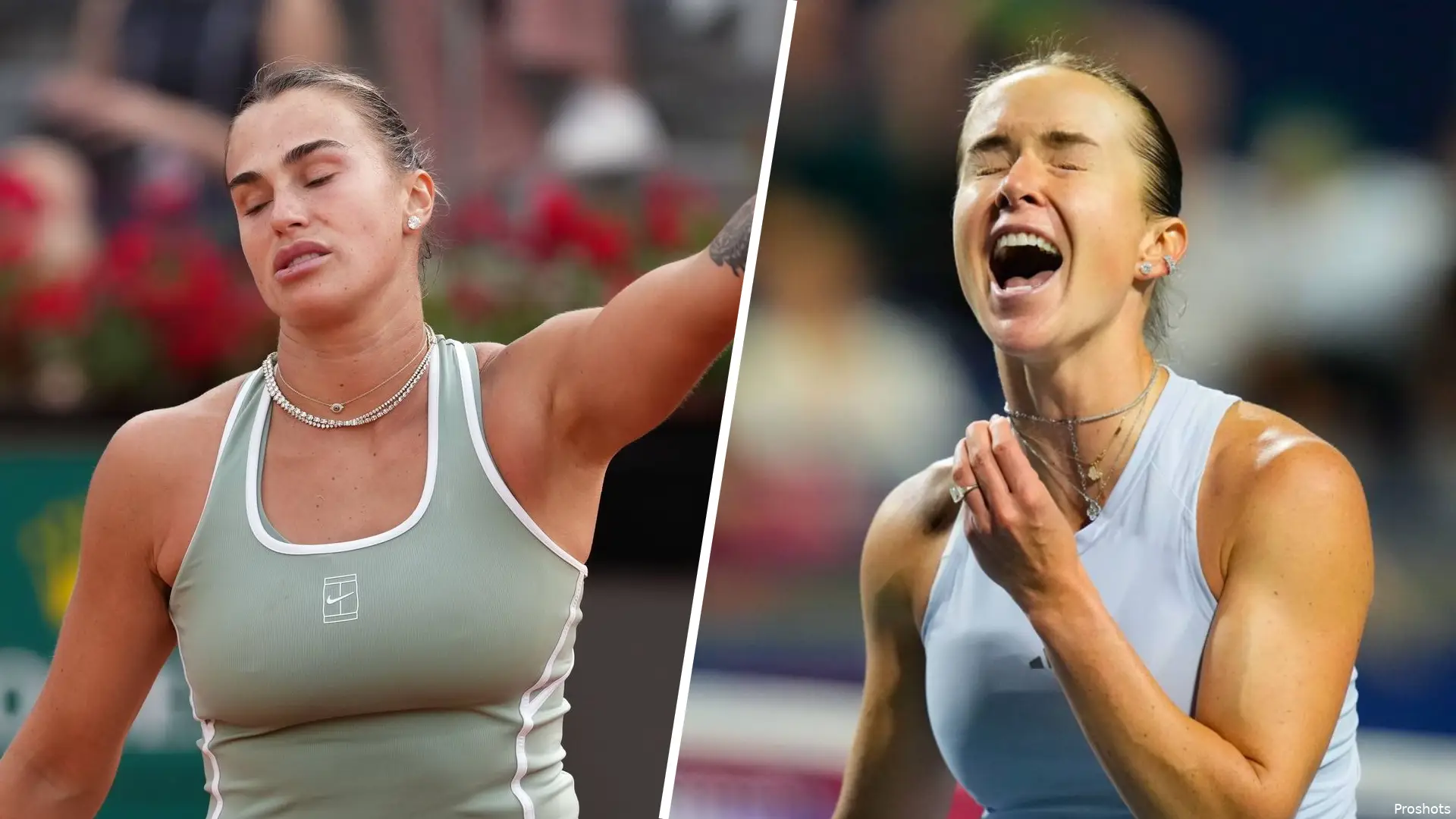
There are tennis matches you remember because of the extraordinary quality of the tennis. There are others you remember because something happens that you simply can’t believe you’re watching. Friday’s Aryna Sabalenka–Elina Svitolina match at the WTA Finals in Indian Wells managed to be a little of both.
For two sets, we had exactly the kind of contest this tournament needed. Two accomplished players, one remaining semifinal spot, and absolutely no room for mistakes. Sabalenka and Svitolina split those sets by identical 6–3 scores, setting up a deciding set in which the winner would advance and the loser would go home.
And then Sabalenka happened. I don’t mean the Sabalenka who has become one of the most accomplished players of her generation. The one who has learned to control her extraordinary power, manage difficult moments, and turn her immense talent into consistent success.
I mean the other Sabalenka. The one who can take a perfectly competitive tennis match and turn it into an emotional avalanche of frustration, disbelief, and increasingly questionable decisions.
We’ve seen that version before. In fact, we saw her on Wednesday when Mirra Andreeva demolished her 6–4, 6–0 in barely an hour.
But Friday’s third set was something special, even by Sabalenka’s occasionally spectacular standards of self-destruction. Svitolina won it 6–1. And just like that, one of the tournament favorites was finished.
First, a Match That Didn’t Matter
Friday actually began with a bit of unfortunate news. Karolína Muchová, whose appearance at her first WTA Finals had been one of my favorite stories of the week, withdrew from her final round-robin match because of gastrointestinal illness.
Andreeva did what she needed to do. Good for her. The real tennis was still to come.

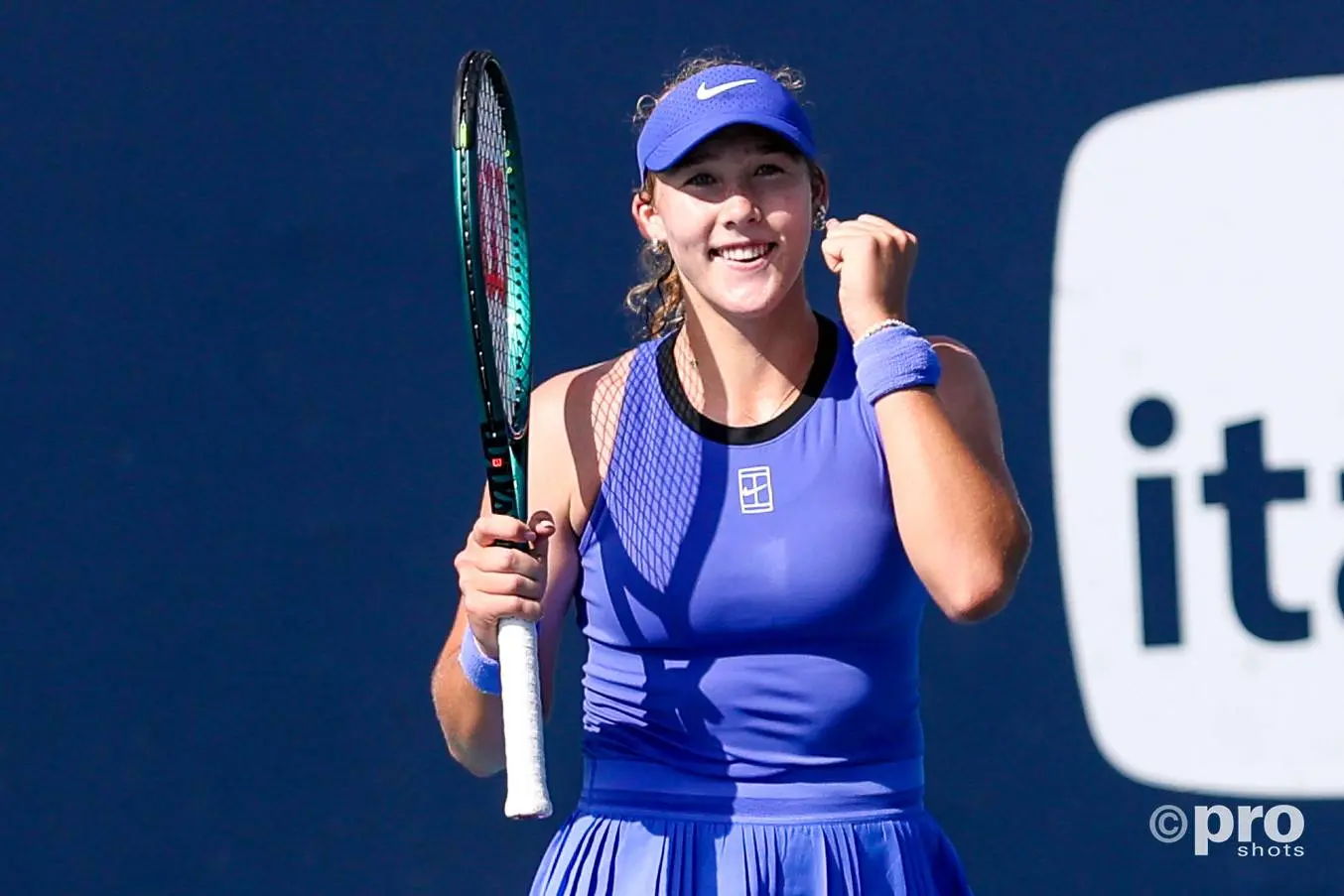
Mirra Andreeva won all three round robin matches in her debut WTA Finals campaign
Muchová had already been eliminated, so her match against Andreeva had no bearing on semifinal qualification. Still, it’s a miserable way to end a season that included so much to celebrate. Diana Shnaider stepped in as an alternate, and Andreeva promptly defeated her 6–2, 6–1.
I’m not going to spend much time analyzing that match because, frankly, there wasn’t much at stake. Andreeva had already qualified, Shnaider was getting an unexpected opportunity to compete, and the result was about as surprising as discovering that November evenings in the California desert can get chilly.
Group 1 – Final standings
| Position | Player | RR W–L | Set W–L | Game W–L |
| 1 | ✓ Linda Noskova | 2-1 | 5-2 (71%) | 41–30 (58%) |
| 2 | ✓ Jessica Pegula | 2-1 | 5-3 (63%) | 43–42 (51%) |
| 3 | ✗ Coco Gauff | 2-1 | 4-3 (57%) | 37–34 (52%) |
| 4 | ✗ Marta Kostyuk | 0-3 | 0-6 (0%) | 22–38 (37%) |
The Match We Had Been Waiting For
I entered Friday’s Sabalenka–Svitolina match expecting Sabalenka to win. Not because I don’t respect Svitolina. Quite the opposite. She’s one of the most determined competitors on the women’s tour, and her ability to make opponents work for every point has always impressed me.
But Sabalenka, at her best, is simply a different kind of player. Her power can overwhelm even the most accomplished defenders, and over the past several seasons, she’s become much better at controlling the emotional side of her game. Or so I thought.
The first two sets were genuinely entertaining. There was a sense of urgency that had been missing from too many matches earlier in the week, and both women seemed to understand exactly what was at stake.
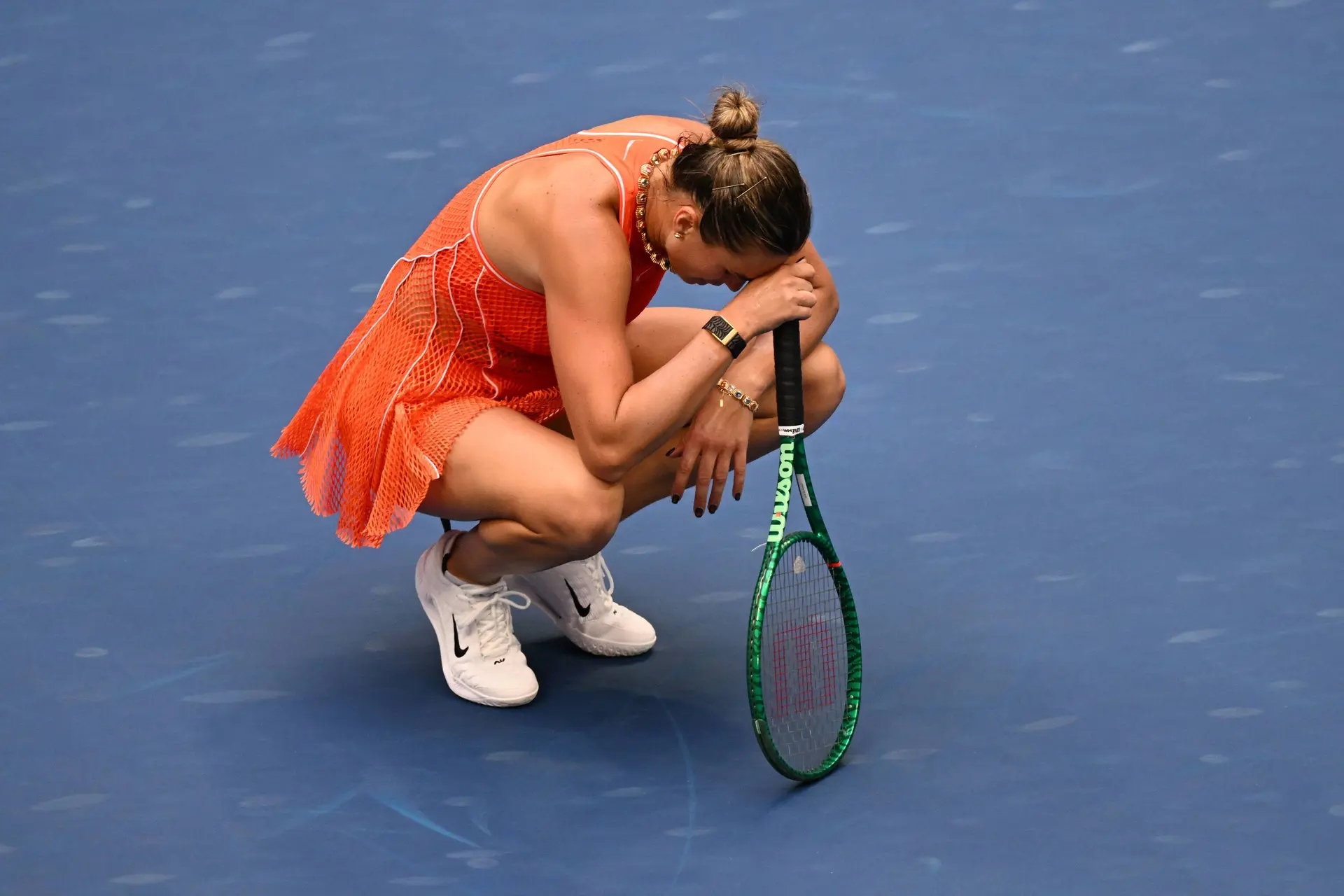
Each took a set 6–3. That meant one set would decide everything. And what followed was one of the more remarkable examples of a top player completely losing her composure that I’ve watched in quite some time.
Sabalenka began arguing with herself. Her frustration with her team became increasingly obvious. She seemed exasperated with the crowd, the circumstances, and just about everything happening around her.
At one point, I wondered whether she was angry about being in Indian Wells at all. And as the third set slipped away, there was something almost painful about watching the realization settle in that her tournament was ending.
This wasn’t simply a player having a bad 15 minutes. It was the kind of unraveling that can feed on itself. A missed shot produces frustration. That frustration affects the next point. Another mistake makes the player even angrier, and soon the match is no longer about the opponent across the net.
It’s about the argument taking place inside the player’s own head. Tennis can be terribly unforgiving when that happens.
Group 2 – Final standings
| Position | Player | RR W–L | Set W–L | Game W–L |
| 1 | ✓ Mirra Andreeva | 3-0 | 6–0 (100%) | 36–11 (77%) |
| 2 | ✓ Elina Svitolina | 2-1 | 4–4 (50%) | 34–32 (52%) |
| 3 | ✗ Aryna Sabalenka | 1-2 | 3–4 (43%) | 28–38 (42%) |
| 4 | ✗ Karolína Muchová [Diana Shnaider] | 0-2 [0-1] | 1–4 (20%) [0–2] | 21–29 (42%) [3–12 (20%)] |
Let’s Give Svitolina Her Due
There’s a danger in describing Sabalenka’s collapse that we overlook how well Svitolina played. I don’t want to make that mistake.
Svitolina was excellent, particularly when the match became increasingly chaotic. She remained composed, continued competing, and refused to become distracted by Sabalenka’s growing frustration.
That’s much harder than it sounds. When a great player begins falling apart, the opponent can sometimes start playing too carefully. Suddenly, instead of concentrating on winning points, you’re thinking about what a remarkable victory this might become.
Svitolina didn’t fall into that trap. And the way she finished the match was extraordinary. Serving for the match, she delivered three aces in the final game, all to essentially the same spot. Three. In a match of this importance, against an opponent who had been one of the favorites to win the tournament, that’s a remarkable way to put an exclamation point on a victory.
It also illustrated the difference between the two players in those final minutes. Sabalenka looked increasingly overwhelmed by everything happening around her. Svitolina knew exactly what she wanted to do. And she did it.
I had been skeptical about Svitolina’s chances of reaching the semifinals. I certainly didn’t expect her to beat Sabalenka in this fashion. But she earned her place in Saturday’s lineup, and she deserves enormous credit for doing so.

2018 champion Elina Svitolina is in the WTA Finals semi-finals for the third time
The Old Sabalenka Hasn’t Entirely Disappeared
I’ve followed Sabalenka’s career long enough to remember when performances like Friday’s were considerably more common.
She has always possessed extraordinary physical gifts. Few players can hit the ball with her combination of power and aggression, and when she’s playing well, she can make even the best opponents look helpless.
But there was a period when her emotional volatility seemed almost inseparable from her tennis. A few mistakes could become a bad game. A bad game could become a terrible set. And before anyone quite understood what had happened, a match that should have been competitive was over.
Over time, Sabalenka appeared to move beyond much of that. Her success wasn’t simply about hitting harder or serving better. It came from learning to manage the difficult moments that inevitably occur in professional tennis.
That’s why this week’s performances have been so striking. Against Andreeva on Wednesday, Sabalenka lost the final set 6–0. Against Svitolina on Friday, she lost the deciding set 6–1.
Those aren’t the kinds of scores we expect from a player of her caliber in the biggest matches of a season-ending championship. And while both Andreeva and Svitolina deserve full credit for their victories, it’s impossible to ignore how dramatically Sabalenka’s level and composure deteriorated.
I don’t think these results erase everything she’s accomplished. But they do raise a question she’ll need to address before the next season begins. Has she really solved the emotional challenges that once held her back, or has she simply become better at managing them most of the time? Because when things go wrong, they can apparently still go very wrong indeed.
And Good Luck Getting Home
As if Friday needed another strange element, the United States experienced an extraordinary aviation disruption while the WTA Finals were unfolding. The Federal Aviation Administration issued a nationwide ground stop because of serious communications problems affecting air traffic control.
Thousands of flights were delayed or canceled, creating enormous problems for travelers across the country. For spectators trying to reach Indian Wells for the weekend, or leave Southern California after the tournament, the timing couldn’t have been much worse.
The scale of the disruption was extraordinary. Nationwide ground stops are exceedingly rare, with the previous one occurring in January 2023 and the most infamous example coming after the September 11 attacks.
And while all of this was happening, Sabalenka was discovering that her own immediate travel plans might need to change. Her tournament was over.
Getting home, however, could be another matter entirely. I realize that sounds like an unnecessarily cruel joke at the expense of a player who had just suffered a deeply disappointing defeat.
But there was something almost surreal about watching one of the world’s best tennis players unravel on court while the country’s aviation system was experiencing its own extraordinary difficulties. Friday was apparently not a particularly good day for keeping things under control.
Now We Have a Final Four Worth Watching
And so, after six days of occasionally wonderful, frequently strange, and sometimes thoroughly uninspired tennis, we’ve arrived at the semifinals. Saturday gives us two genuinely fascinating matches. Linda Nosková will face Elina Svitolina. Jessica Pegula will play Mirra Andreeva.
I like both matchups enormously. Nosková remains my pick to win the tournament. I’ve been saying for months that when she’s playing her best tennis, she might be the finest player in the world. Nothing I’ve watched this week has changed that opinion.
Yes, she lost to Pegula on Thursday after holding a match point. But she has produced some exceptional tennis at Indian Wells, particularly in her comprehensive victory over Coco Gauff.
Against Svitolina, she’ll face a player who has just demonstrated tremendous resilience and an ability to maintain her composure under enormous pressure. That’s going to be interesting.
Nosková will want to dictate the points, take time away from Svitolina, and prevent the Ukrainian from turning the match into an extended physical and tactical battle.
Svitolina, meanwhile, will try to do what she does so well: make Nosková hit another ball, force her into uncomfortable positions, and test whether she can maintain her aggression without becoming impatient. It’s a wonderful contrast in playing styles.
The other semifinal might be even more intriguing. Andreeva has been extraordinary this week. Her dismantling of Sabalenka was one of the most impressive performances of the tournament, and she has looked remarkably comfortable in her first WTA Finals.
Pegula, however, has already demonstrated that she’s capable of surviving just about anything. Her comeback against Nosková on Thursday, saving a match point before winning in three sets, was one of the most compelling moments of the week.
She’s experienced, intelligent, and very difficult to put away. Andreeva brings youthful confidence and an increasingly sophisticated game. Pegula brings the knowledge of someone who has spent years learning how to win matches even when everything isn’t going perfectly. I wouldn’t be surprised if that becomes the more tactically interesting of Saturday’s two contests.
Finally, the Tournament We Deserve
I’ve been critical of the quality of tennis at these Finals. Some of that criticism has been directed at the players, some at the exhausting WTA calendar, and some at the unusual November playing conditions at Indian Wells. But I also think the tournament has improved as the week has progressed.
Thursday gave us Gauff’s extraordinary comeback against Marta Kostyuk and Pegula’s thrilling victory over Nosková. Friday gave us a genuine winner-takes-all match, a terrific performance from Svitolina, and one of the more memorable Sabalenka implosions in recent memory.
Read also
Not all memorable tennis is beautiful tennis. Sometimes it’s messy, emotional, uncomfortable, and completely unpredictable. That’s part of what makes the sport so compelling. And now we have four players who have earned their places in the semifinals, each with a legitimate opportunity to win the title.
I still believe Nosková is going to be the last woman standing on Sunday. But after everything we’ve watched this week, I’m considerably less inclined to assume that anything is inevitable. Except perhaps one thing.
By Sunday evening, I suspect quite a few people involved in this tournament will be ready for a vacation. Assuming, of course, they can find a flight.

Aron SolomonGuest Author
A Pulitzer Prize-nominated journalist for his groundbreaking op-ed in The Independent exposing the NFL’s “race-norming” policies, Aron Solomon, JD, is a globally recognized thought leader in law, media, and strategy.
As Chief Strategy Officer for AMPLIFY, he leverages his deep expertise to shape the future of legal marketing. Aron has taught entrepreneurship at McGill University and the University of Pennsylvania and was honored as a Fastcase 50 recipient, recognizing him among the world’s top legal innovators. A prolific commentator on law, business, and culture, his insights regularly appear in Newsweek, The Hill, Crunchbase News, and Literary Hub.
He has also been featured in The New York Times, Fast Company, Fortune, Forbes, CBS News, CNBC, USA Today, ESPN, TechCrunch, BuzzFeed, Venture Beat and countless other leading global media outlets. We are proud to have Aron on board at TennisUpToDate, where his deep tennis expertise enriches the site with sharp, original columns that connect the sport to wider cultural debates.
claps 2visitors 2
Just In
Popular News
Latest Comments
- Was Saba not paying attention to those who sought an inordinate amount of attention outside of their sport (occupation)... and to the point they lost their focus and eventually their place in tennis? For example: Giorgi, Bouchard, Raducanu, etc. They became infatuated with endless Selfies, videos, podcasts, TV commercials, magazine shoots, and so on. Thus their tennis suffered. Priorities are important.
 mandoist14-11-2026
- I, like writer of this wonderful article, also picked Noskova to win this entire thing. I would love it if she and Andreeva are in the final.Rapunzel12-11-2026
- "Priorities", Saba... spend less time in front of cameras, anti-Social Media, selfies and back to Tennis.mandoist12-11-2026
- Tell this to Andreeva!mandoist12-11-2026
- Andreeva with 11 games in a row to add to Saba's downward spiral issue !!! Personal feelings aside... Jess Pegula may want to reassess her evaluation of Mirra's abilities.mandoist12-11-2026
- I predicted whenthe list was finalised that Linda Noskova would win the WTA Finals and her matches against Gauff and Kostyuk prove that. She is the best (underrated) player in the world!Rapunzel11-11-2026
- Either Lena has a chronic internal ailment (i.e., colitis, enteritis, Crohn's, or some type of lower abdomen issue) -- or she is once again dealing with 'Vukovitis'. Mental stress can indeed cause lower body pains. No matter... whatever is truly going on sucks. "Virus" excuse is getting a bit old -- and often -- at this point.mandoist09-11-2026
- Ironically, Martina became a U.S. Citizen about the same time as the Orange Convicted Felon & Abuser was just beginning on his road to losing all Daddy's Millions!!mandoist09-11-2026
- "Another fresh start is in the cards." Thanks for the Humor!! I'm guessing this is the minimum one can do to keep all your sponsors hanging-on in perpetuity?mandoist09-11-2026
- Vukov is doing this to Lena... AGAIN!!!!! WTA's autonomous collective should be dismantled for allowing Vukov to re-emerge from his hand-slapping suspension. Just ask WTA employees how that's been going lately as they witness his continued verbal abuses. Women's Pro Tennis should start over.mandoist08-11-2026
