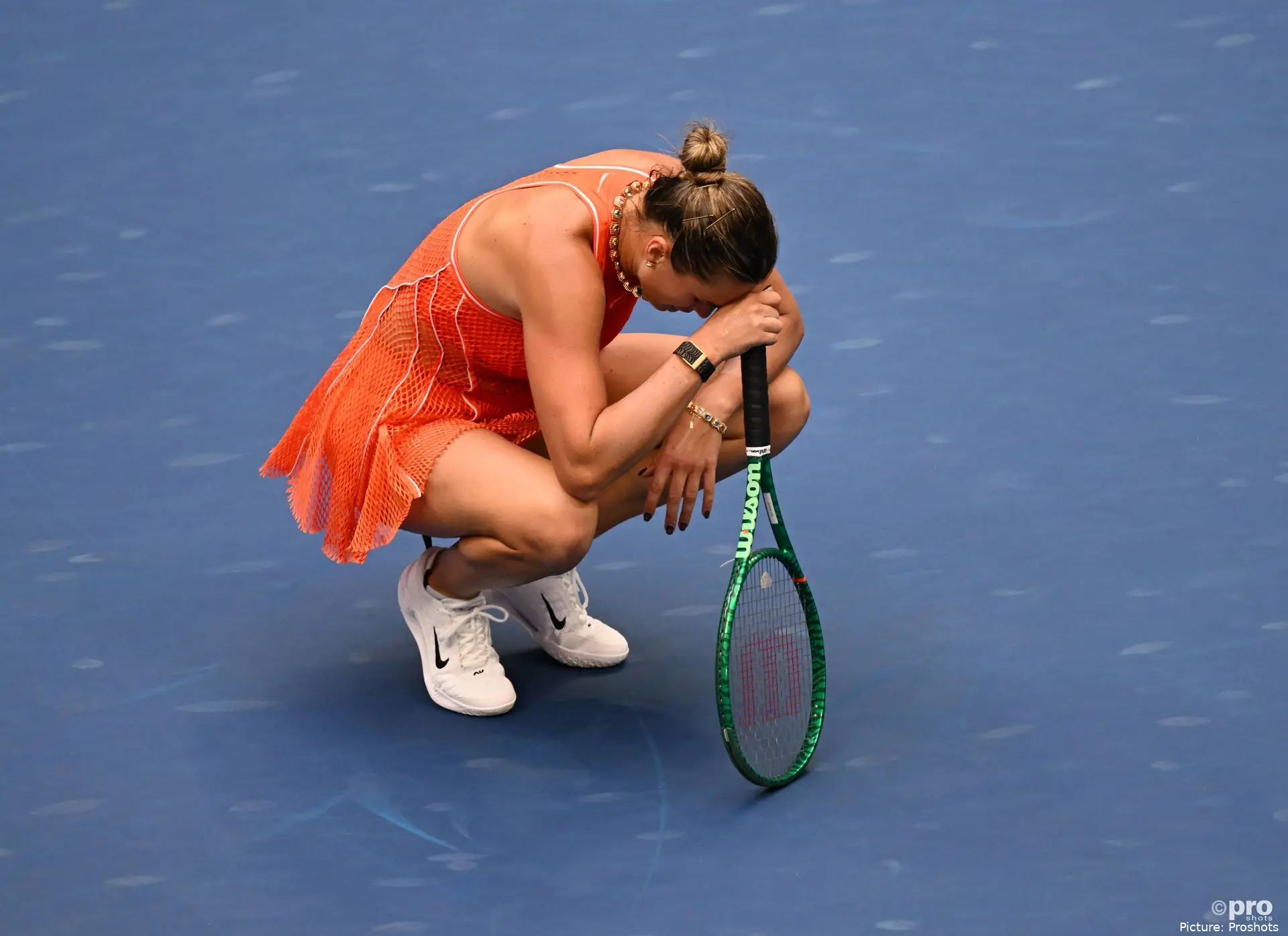
For about 45 minutes on Wednesday, I thought the WTA Finals had finally turned a corner. The tennis looked better. The players seemed more comfortable. There was less of the nervous, tentative play that had made parts of the first three days so difficult to watch. Karolína Muchová, one of my favorite players on the tour, was hitting the ball beautifully against Elina Svitolina, and I was beginning to think that the tournament was finally delivering the kind of tennis we had been waiting for.
Then Muchová lost the plot, Svitolina won a match that became progressively less interesting, and Aryna Sabalenka somehow managed to lose twelve of the final fourteen games against Mirra Andreeva.
Wednesday turned out to be quite a day. Not necessarily a good day of tennis, mind you. But certainly an interesting one.
And by the end of it, I found myself wondering whether the Maldives had suddenly become the most popular destination in the WTA locker room.
Wednesday was supposed to be different
One thing I noticed almost immediately was that Wednesday felt different from the opening days of the tournament.
Perhaps the simplest explanation is that it was Wednesday. The players had been in Indian Wells long enough to become familiar with the conditions. The nerves that accompany the beginning of a season-ending championship should have largely disappeared. And, importantly, everyone understood that the opportunities to qualify for the semifinals were rapidly disappearing.
After Wednesday, each player would have just one round-robin match remaining. For some, even winning that final match wouldn’t be enough. There was no longer much room for easing into the tournament.
And early in the Svitolina-Muchová match, I thought we were seeing the benefits of that urgency. Muchová was simply hitting the ball better than she had on Monday. She was getting to the important balls a little earlier, striking them more cleanly, and making better decisions once she arrived.
Against a player like Svitolina, those small differences matter enormously. Svitolina is one of the tour’s most accomplished competitors, and she has built much of her career around making opponents uncomfortable. She can extend rallies, change direction, and force players to hit another ball when they would much rather be walking toward the net to shake hands.
But in the opening set, Muchová was doing a better job of controlling the exchanges. She took the first set 6–3, and for a little while, I was genuinely enjoying the tennis. Unfortunately, that feeling didn’t last.
Muchová’s very unfortunate afternoon
I’ve written before about how much I admire Muchová’s game. There are relatively few players on the women’s tour who possess her combination of touch, creativity, anticipation, and tactical intelligence. When she’s healthy and playing well, she offers something different from the relentless baseline hitting that has become so common in modern tennis.
That’s part of what made her appearance at her first WTA Finals such a wonderful achievement. But Wednesday was a reminder of how frustrating tennis can be, particularly when a player begins so promisingly.

Muchova threw away Svitolina game.
After winning the opening set, Muchová managed to win only four games across the next two. Svitolina won 3–6, 6–2, 6–2.
And the tennis, which had briefly seemed so promising, returned to the low-energy, largely uninspired quality that we’ve seen far too often this week. Muchová wasn’t getting to the ball quite as early. Her timing was less precise. The creativity that had made the opening set enjoyable became harder to find.
Svitolina deserves credit for fighting back and finding a way to win. That’s what good competitors do, especially when their tournament lives are on the line. But I can’t pretend that the final two sets were particularly entertaining.
For Muchová, the result means that her final round-robin match against Mirra Andreeva will be her last appearance at this year’s Finals.
After that, she can head home. Or, given what we’ve learned about the vacation preferences of WTA players, perhaps directly to the Maldives. I hope she enjoys the break. She has earned it. Svitolina, meanwhile, kept her semifinal hopes alive and earned herself a Friday meeting with Aryna Sabalenka.
At the time, I thought that was a particularly unfortunate reward for surviving Wednesday’s match. I couldn’t imagine Svitolina beating Sabalenka. Then the second match happened.
What on earth happened to Aryna Sabalenka?
I have watched Sabalenka play some extraordinary tennis over the years. I’ve also watched her completely implode. Wednesday’s performance against Mirra Andreeva was a rather spectacular return to the second category.
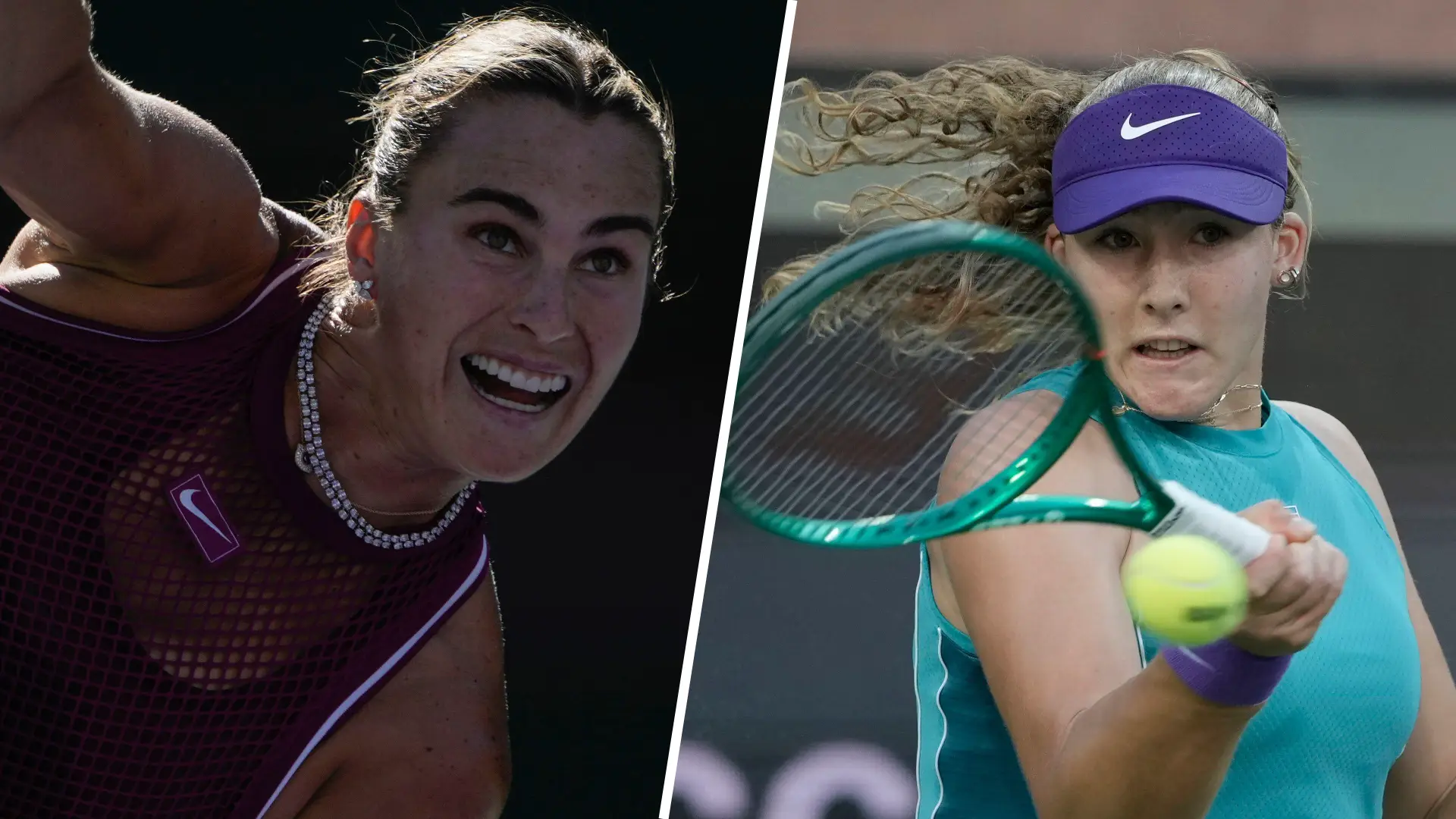
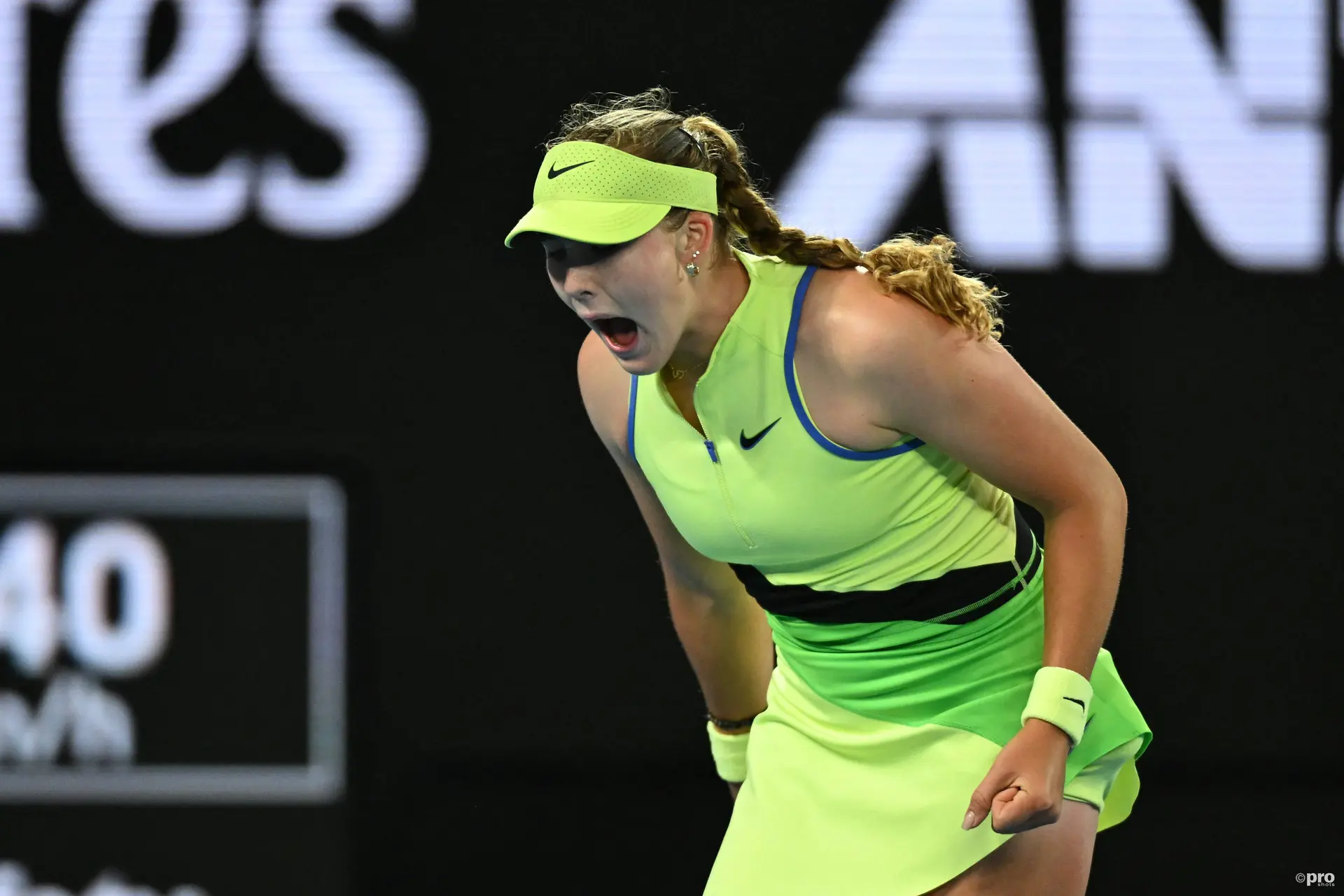
In exactly one hour, Andreeva defeated Sabalenka 6–4, 6–0. Read that score again. Six-four. Six-love. Against Aryna Sabalenka.
The same Sabalenka who, when she’s playing well, can overwhelm almost anyone with the sheer power and consistency of her groundstrokes. Instead, we got something that looked remarkably like the Sabalenka of several years ago, when matches could turn into emotional and technical disasters with astonishing speed.
There was a time when Sabalenka’s biggest opponent often seemed to be Sabalenka herself. Her game could be magnificent one moment and almost unrecognizable the next.
Andreeva d. Sabalenka 6-4 6-0 Mirra qualifies for the semifinals in her debut WTA Finals appearance Down 1-4 in the 1st set, she won the last 11 games. Insane level so far from her this week…0 sets dropped so far Her last 2 matches: 6-4 6-0 against world No. 6 Elina Svitolina 6-4 6-0 against world No. 2 Aryna Sabalenka ✅3rd top 10 win of 2026 ✅52nd win of 2026 Makin’ Mirracles 💙
— The Tennis Letter (@TheTennisLetter) November 11, 2026
Over the past few seasons, she has done an extraordinary job of becoming a more disciplined, mentally resilient player. That’s a significant part of why she’s reached the very top of the sport.
But Wednesday was a reminder that the old Sabalenka hasn’t entirely disappeared. Andreeva took the opening set 6–4, which was impressive enough.
Then she won the second set without losing a game. It was a remarkable demonstration of what happens when one player is completely focused on executing her game while the other increasingly struggles to execute much of anything.
To be fair, this wasn’t simply a case of Sabalenka handing the match away. Andreeva deserves enormous credit.
She played with purpose, attacked intelligently, and refused to become distracted by what was happening on the other side of the net. That last part is important.
When a player of Sabalenka’s stature begins unraveling, opponents can sometimes become nervous themselves. They start thinking about the significance of the victory rather than concentrating on the next point. They become tentative, allowing the struggling player an opportunity to recover.
Andreeva did none of that. She kept attacking, kept making Sabalenka uncomfortable, and finished the job with an efficiency that was almost startling.
For a player of Andreeva’s age, that kind of composure is particularly impressive. Still, I can’t remember the last time I watched Sabalenka look quite so comprehensively beaten in such a short period of time. It wasn’t merely a loss. It was a dismantling.
The WTA Finals have become increasingly difficult to predict
One of the more entertaining aspects of this tournament is how quickly our assumptions can become ridiculous.
On Tuesday, Linda Nosková defeated Coco Gauff 6–3, 6–3, reinforcing my belief that Nosková, at her best, is currently the finest player in women’s tennis.
I picked Nosková to win this tournament before it began, and nothing I’ve seen has persuaded me to abandon that prediction. But Wednesday reminded us that even the most accomplished players can suddenly look vulnerable.
Sabalenka entered her match against Andreeva as one of the players everyone expected to contend for the title. An hour later, she had been handed one of the most emphatic defeats of the tournament.
Andreeva, meanwhile, demonstrated that she’s capable of producing an extraordinary performance when everything comes together. That’s the version of the WTA I wish we saw more consistently.
There is so much young talent on this tour. The depth is remarkable, the different playing styles can make for fascinating matchups, and the sport has no shortage of compelling personalities.
What it sometimes lacks, particularly at this stage of the season, is the sustained quality of tennis that should accompany those ingredients. Wednesday offered both extremes. A match that began promisingly before becoming increasingly difficult to watch.
And a match that became fascinating precisely because one of the world’s best players was being taken apart so completely. Neither was the kind of competitive, high-quality three-set contest that makes women’s tennis so enjoyable at its best. But the second was certainly memorable.
Maybe the problem isn’t the players
I’ve returned repeatedly this week to the extraordinary demands of the WTA calendar. I don’t think we can separate what we’re watching in Indian Wells from the fact that these women have been competing for almost the entire year.
Some look exhausted. Others seem to struggle to maintain their concentration. Even players who begin matches with energy and purpose sometimes appear unable to sustain it.
Of course, that’s not the explanation for every disappointing performance. Sometimes players simply have bad days. Sometimes an opponent is better. And sometimes, as we saw with Sabalenka, a match can unravel in ways that have little to do with the calendar.
But when we see so many uneven performances at the same tournament, I think it’s reasonable to ask whether the sport is asking too much of its athletes.
The WTA Finals should be a celebration of women’s tennis. It should be the moment when the world’s best players come together and remind everyone why they deserve to be considered among the finest athletes in professional sports.
Instead, parts of this week have felt like a competition to determine who has enough energy left to survive a few more days.
That’s not entirely fair to the players, and it’s certainly not ideal for the fans. Especially the fans at Indian Wells, who have continued to show up in impressive numbers and support this event even when the tennis has given them relatively little reason to get excited.
They deserve better. And so do the players.
Friday just became much more interesting
Before Wednesday’s second match, I would have given Svitolina very little chance of beating Sabalenka on Friday.
After watching Andreeva take Sabalenka apart in an hour, I’m considerably less certain. That doesn’t mean I suddenly expect Svitolina to win. It means that the Sabalenka we watched Wednesday looked nothing like the player who has spent so much of the past few years establishing herself as the dominant force in women’s tennis.
Which Sabalenka will show up on Friday? The composed, powerful, disciplined champion? Or the player who seemed completely unable to stop Andreeva’s momentum? That’s now one of the most interesting questions remaining in the round-robin stage.
As for Muchová, I hope she produces something special against Andreeva in her final match. Even with her semifinal hopes gone, it would be lovely to see her finish the season playing the kind of tennis that makes her such a pleasure to watch.

And for Andreeva, Wednesday was an important statement. Beating Sabalenka is impressive. Beating her 6–4, 6–0 in an hour is something else entirely.
Four days into these WTA Finals, I remain convinced that Nosková can win the whole thing. But after Wednesday, I’m also convinced that almost anything can happen between now and Sunday. Except, perhaps, the WTA suddenly deciding that its players need a longer offseason. That would be the biggest surprise of all.

Aron SolomonGuest Author
A Pulitzer Prize-nominated journalist for his groundbreaking op-ed in The Independent exposing the NFL’s “race-norming” policies, Aron Solomon, JD, is a globally recognized thought leader in law, media, and strategy.
As Chief Strategy Officer for AMPLIFY, he leverages his deep expertise to shape the future of legal marketing. Aron has taught entrepreneurship at McGill University and the University of Pennsylvania and was honored as a Fastcase 50 recipient, recognizing him among the world’s top legal innovators. A prolific commentator on law, business, and culture, his insights regularly appear in Newsweek, The Hill, Crunchbase News, and Literary Hub.
He has also been featured in The New York Times, Fast Company, Fortune, Forbes, CBS News, CNBC, USA Today, ESPN, TechCrunch, BuzzFeed, Venture Beat and countless other leading global media outlets. We are proud to have Aron on board at TennisUpToDate, where his deep tennis expertise enriches the site with sharp, original columns that connect the sport to wider cultural debates.
claps 0visitors 0
Just In
Popular News
Latest Comments
- I predicted whenthe list was finalised that Linda Noskova would win the WTA Finals and her matches against Gauff and Kostyuk prove that. She is the best (underrated) player in the world!Rapunzel11-11-2026
- Either Lena has a chronic internal ailment (i.e., colitis, enteritis, Crohn's, or some type of lower abdomen issue) -- or she is once again dealing with 'Vukovitis'. Mental stress can indeed cause lower body pains. No matter... whatever is truly going on sucks. "Virus" excuse is getting a bit old -- and often -- at this point.
 mandoist09-11-2026
- Ironically, Martina became a U.S. Citizen about the same time as the Orange Convicted Felon & Abuser was just beginning on his road to losing all Daddy's Millions!!mandoist09-11-2026
- "Another fresh start is in the cards." Thanks for the Humor!! I'm guessing this is the minimum one can do to keep all your sponsors hanging-on in perpetuity?mandoist09-11-2026
- Vukov is doing this to Lena... AGAIN!!!!! WTA's autonomous collective should be dismantled for allowing Vukov to re-emerge from his hand-slapping suspension. Just ask WTA employees how that's been going lately as they witness his continued verbal abuses. Women's Pro Tennis should start over.mandoist08-11-2026
- Can't help but suspect Vukov is back to his old self again. Thank you, WTA. Perhaps you can give them a "Battling Couple of the Year Award 2026" ??mandoist08-11-2026
- Wtf? Why is there no reason? And what about the men's?Bel08-11-2026
- One step by another step -- WTA continues to 'lose the plot'. Too many hi-tech microphones being installed at most venues!!! Remove them (especially those along the hallways, sidewalks, and pathways throughout the venues. Not to mention (most of all) remove the mic's from the Players/Coaches Box.mandoist06-11-2026
- Enough of her bullshit. Go marry someone.mandoist06-11-2026
- Don't you just love this young lady!? We fans often expect athletes to be supermen and superwomen, often forgetting that they WILL GET TIRED! I love Alex's perspective. Tiredness for an athlete should never be viewed as a negative, especially if you are healthy, taking care of your body and mental health and putting in the work. What a mature perspective. Good for you, Alex!Rapunzel05-11-2026
