One of the things you learn when you’ve played competitive tennis is that the sport can hit you like a freight train.
Everything can be going beautifully. You’re hitting your spots, moving well, and beginning to believe that the person across the net has absolutely no answer for what you’re doing. You might even start thinking about what you’ll have for dinner after the match.
Then something happens. You miss a couple of shots. Your opponent makes a few extraordinary returns. A game you should have won disappears, followed by another. Suddenly, the court feels smaller, your racket feels heavier, and you can’t quite remember how you managed to play such wonderful tennis 15 minutes earlier.
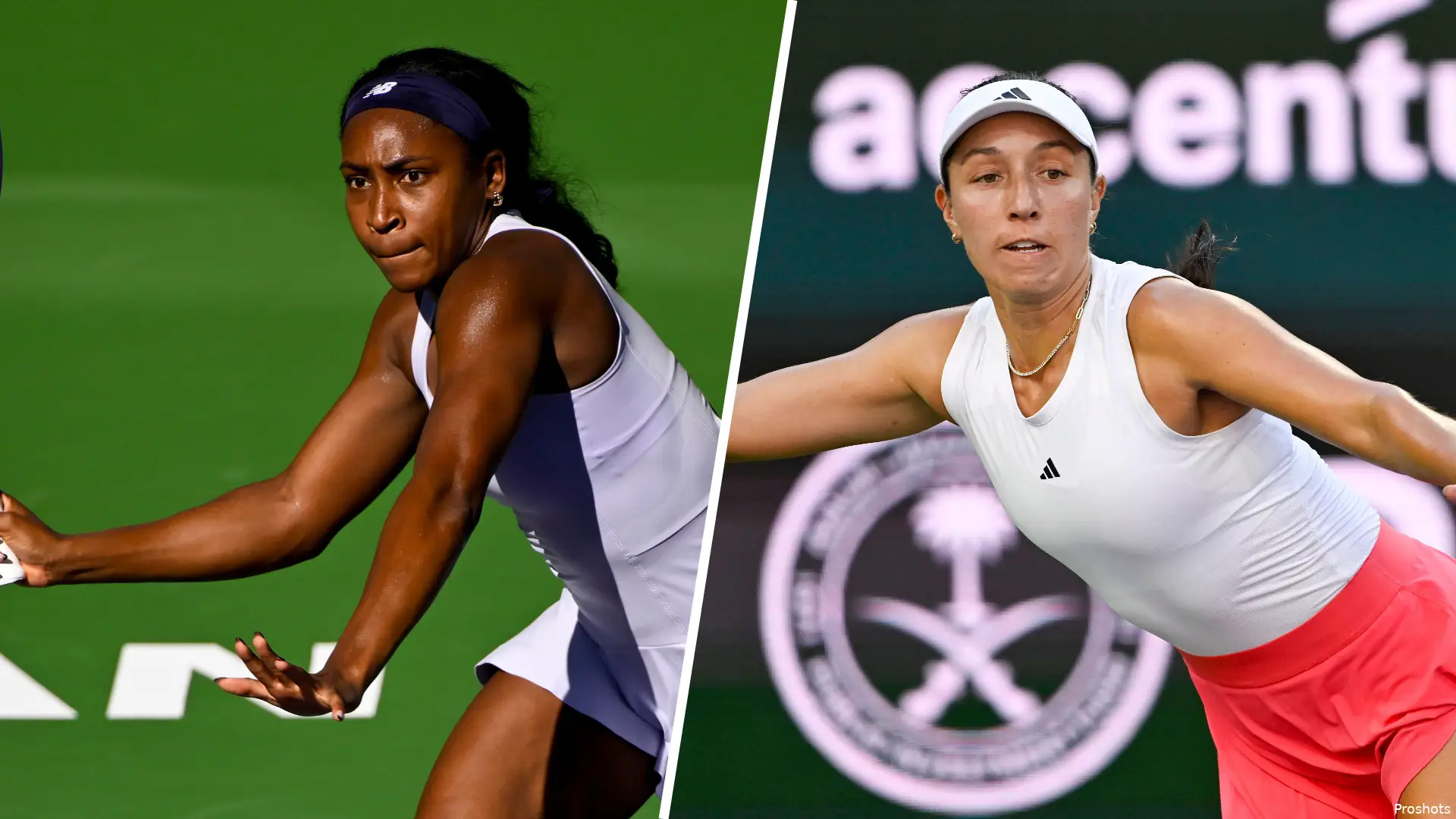
On Thursday at the WTA Finals in Indian Wells, Marta Kostyuk experienced precisely that. Unfortunately for her, Coco Gauff was on the other side of the net.
And by the time the afternoon was over, we had witnessed two matches that were considerably more interesting than much of what we’ve watched this week. We also learned that winning a remarkable tennis match doesn’t necessarily mean you’ve accomplished what you came to the tournament to do. Just ask Gauff.
How Group B unfolded at the WTA Finals
| Player | Matches Played | Wins | Losses | Final Outcome |
| Linda Noskova | 3 | 2 | 1 | Qualified |
| Jessica Pegula | 3 | 2 | 1 | Qualified |
| Coco Gauff | 3 | 1 | 2 | Eliminated |
| Marta Kostyuk | 3 | 0 | 3 | Eliminated |
Coco Gauff and the Most Remarkable 16 Minutes of the Tournament
Gauff defeated Kostyuk 6–4, 7–5, but that score tells almost nothing about what happened in the second set.
Kostyuk began the set beautifully, racing to a 3–0 lead. Gauff, meanwhile, was clearly uncomfortable and took a medical timeout for treatment of what she later described as back tightness. At one point during treatment, she appeared to be crying from the discomfort. It was difficult to watch.

Coco Gauff was in one of the most remarkable spots of the whole tournament.
Whatever one thinks about the extraordinary physical demands of professional tennis, nobody wants to see a player in that kind of distress.
Kostyuk kept playing well and eventually built a 5–1 lead. Given how the match was unfolding, a third set seemed almost inevitable. Then Gauff began feeling better. Or at least she began playing as though she felt considerably better.
The transformation was astonishing. In approximately 16 minutes, Gauff went from looking physically compromised and thoroughly beaten in the second set to winning 18 of 20 points during one extraordinary stretch.
By the time the score reached 5–5, Kostyuk looked like a player who had been struck by that freight train I mentioned earlier.
She hadn’t suddenly forgotten how to play tennis. But the match had changed so completely, and so quickly, that everything she had been doing successfully seemed to stop working.
Gauff was moving better, striking the ball with greater conviction, and finding a level of consistency that had been missing earlier.
Kostyuk, meanwhile, was trying to understand how a set that had appeared comfortably within her grasp was disappearing. Gauff eventually won six consecutive games to take the set 7–5 and finish the match in straight sets.
I’ve watched an enormous amount of tennis over the years, and I still find these momentum shifts fascinating. There’s something uniquely cruel about tennis because there is nowhere to hide when things begin going wrong. No teammate can take over for a few minutes. No coach can substitute you out while you recover your composure.
You stand there, alone, trying to solve a problem that seems to be getting worse with every point. Kostyuk deserves some sympathy. She played some excellent tennis Thursday, particularly early in the second set, but will leave Indian Wells without a victory.
Gauff deserves enormous credit for finding a way through a match that appeared headed toward a much more difficult conclusion. And yet, by the end of the day, none of it was enough.
Pegula Wins, and Gauff Goes Home
When Jessica Pegula and Linda Nosková took the court for Thursday’s second match, the situation was relatively straightforward.
Nosková had already qualified for the semifinals. Pegula needed to win to join her. And Gauff, having completed her remarkable comeback earlier in the afternoon, needed Nosková to beat Pegula.
That’s one of the peculiarities of round-robin tennis. You can do everything required of you on a particular day and still end up depending on someone else’s result.
Pegula and Nosková proceeded to produce one of the best matches of the tournament. The first set was exceptionally well played, with Pegula taking it 7–6 in a tiebreak. The crowd seemed genuinely invested, and for the first time in a while, the tennis itself was consistently rewarding that enthusiasm.

Pegula v Noskova was a treat.
Nosková, whom I’ve been predicting will win this tournament, fought back to take the second set 6–4. Then came a third set that reminded us why tennis can be such extraordinary entertainment.
Nosková had a match point with Pegula serving at 4–5. One more point, and she would have completed an undefeated round-robin campaign while sending Pegula home.
Instead, Pegula survived. She held serve, broke Nosková in the next game, and finished the match 7–6, 4–6, 7–5 after two hours and 45 minutes.
Sixteen aces from Pegula, a career high, helped her get there. It was a wonderful example of a player refusing to accept that a match was slipping away.
And it also demonstrated why Pegula is such a difficult opponent. She isn’t always the most spectacular player on the court, but she competes with intelligence, discipline, and an ability to recognize when she needs to change something.
On Thursday, that was enough to beat a player who had looked nearly unstoppable earlier in the tournament. For Gauff, watching from the sidelines, the result meant elimination. Think about that for a moment.
She had recovered from physical discomfort, escaped a seemingly hopeless second-set deficit, and produced one of the most remarkable comebacks of the week.
A few hours later, her tournament was over. That’s tennis. And, more specifically, that’s the WTA Finals.
Indian Wells in November Isn’t Indian Wells in March
There’s another interesting story developing at this tournament, and it has nothing to do with the players’ rankings, their fitness, or even their tennis. It’s the sun.
A fascinating article published Thursday by The Athletic, part of The New York Times, examined how dramatically different the playing conditions are at Indian Wells in November compared with the regular tournament in March.
This is something I hadn’t given nearly enough thought to when the WTA Finals arrived in California.
We’ve spent much of this week celebrating Indian Wells as one of the finest tennis venues in the world. The facilities are extraordinary, the crowds have been excellent, and there’s something special about watching tennis in that desert setting.
But there’s a problem with assuming that Indian Wells in November is the same place, from a tennis perspective, as Indian Wells in March. It isn’t.
The sun is considerably lower in the sky at this time of year. Shadows fall differently across the courts, and players can find themselves looking directly into glare in situations where they wouldn’t ordinarily encounter it during the regular tournament. That matters enormously.
These are the best players in the world, and many have spent years competing at Indian Wells. Some have won the tournament. Others have reached the later rounds and developed a detailed understanding of how the courts play.
They know the speed of the surface, the way the ball travels through the desert air, and the peculiar challenges that make Indian Wells different from other hard-court events.
But much of that familiarity comes from playing here in March. Move the tournament to November, change the position of the sun, and suddenly some of those instincts become less reliable.
At this level, players don’t have the luxury of spending an extra half-second locating a ball in the air. Their timing is built around reactions measured in fractions of seconds. A different visual environment can disrupt the most familiar routines.
Even Nosková has reportedly adjusted her return position to account for the conditions.
And that brings us to a rather uncomfortable question. Is Indian Wells really the perfect home for the WTA Finals?
I’ve argued repeatedly this week that it should be. I love the venue, the crowds, and the atmosphere. I also think the WTA would be making a mistake by treating this as merely a temporary stop before moving to Charlotte.
But Thursday’s reporting adds an important qualification. Indian Wells might be a tennis paradise in March.
In November, that paradise comes with a few complications. Perhaps some of the uneven tennis we’ve watched this week has had as much to do with the conditions as with the players’ exhaustion.
That doesn’t excuse every poor performance. But it does suggest we should be a little more careful about criticizing players who are competing in an environment that looks familiar while presenting very different challenges.
Three semi-finalists, one place remaining
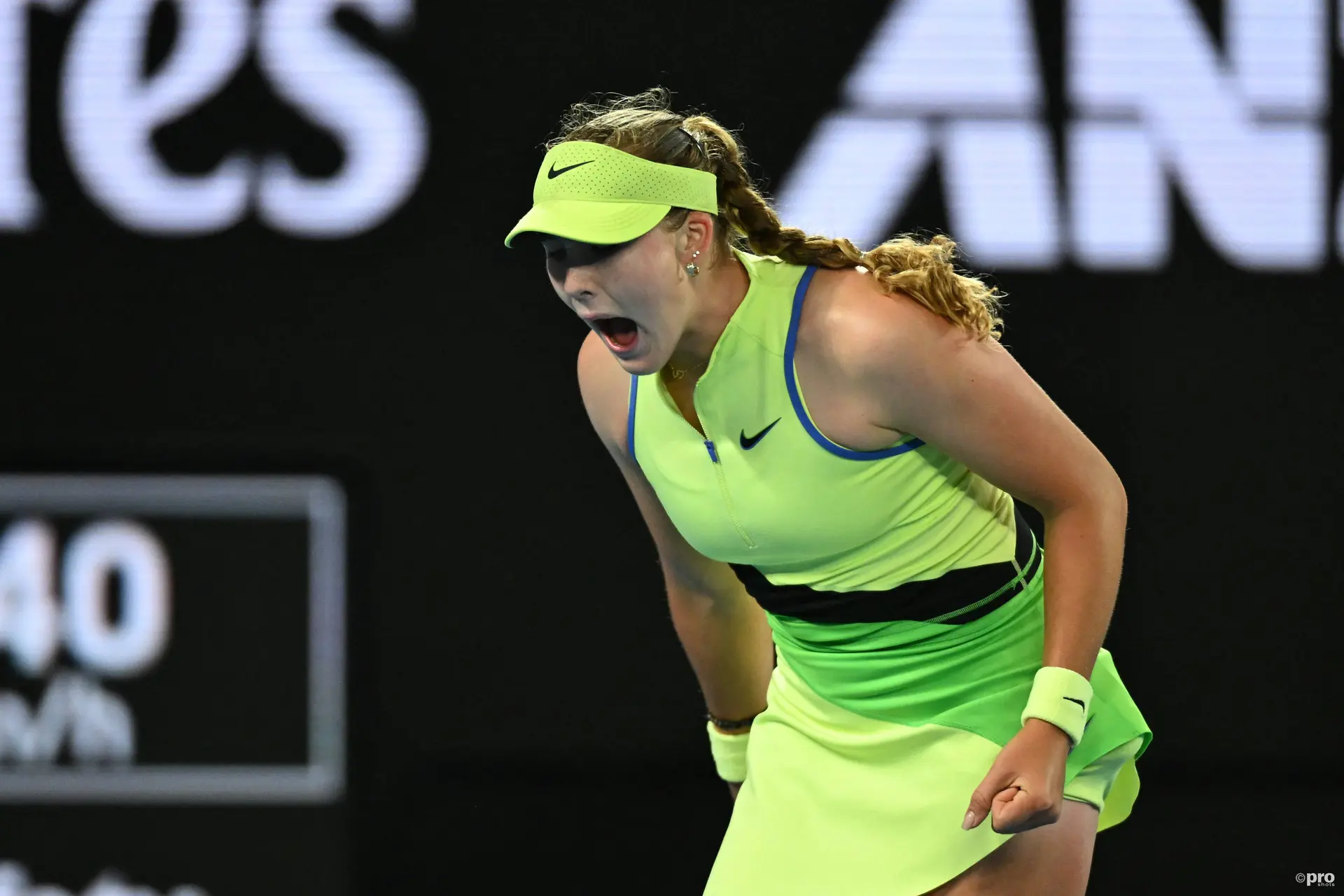
By Thursday evening, three of the four semifinal places had been decided. Nosková, Pegula, and Mirra Andreeva are through.
Andreeva will face Pegula on Saturday, while Nosková will play the winner of Friday’s Aryna Sabalenka–Elina Svitolina match.
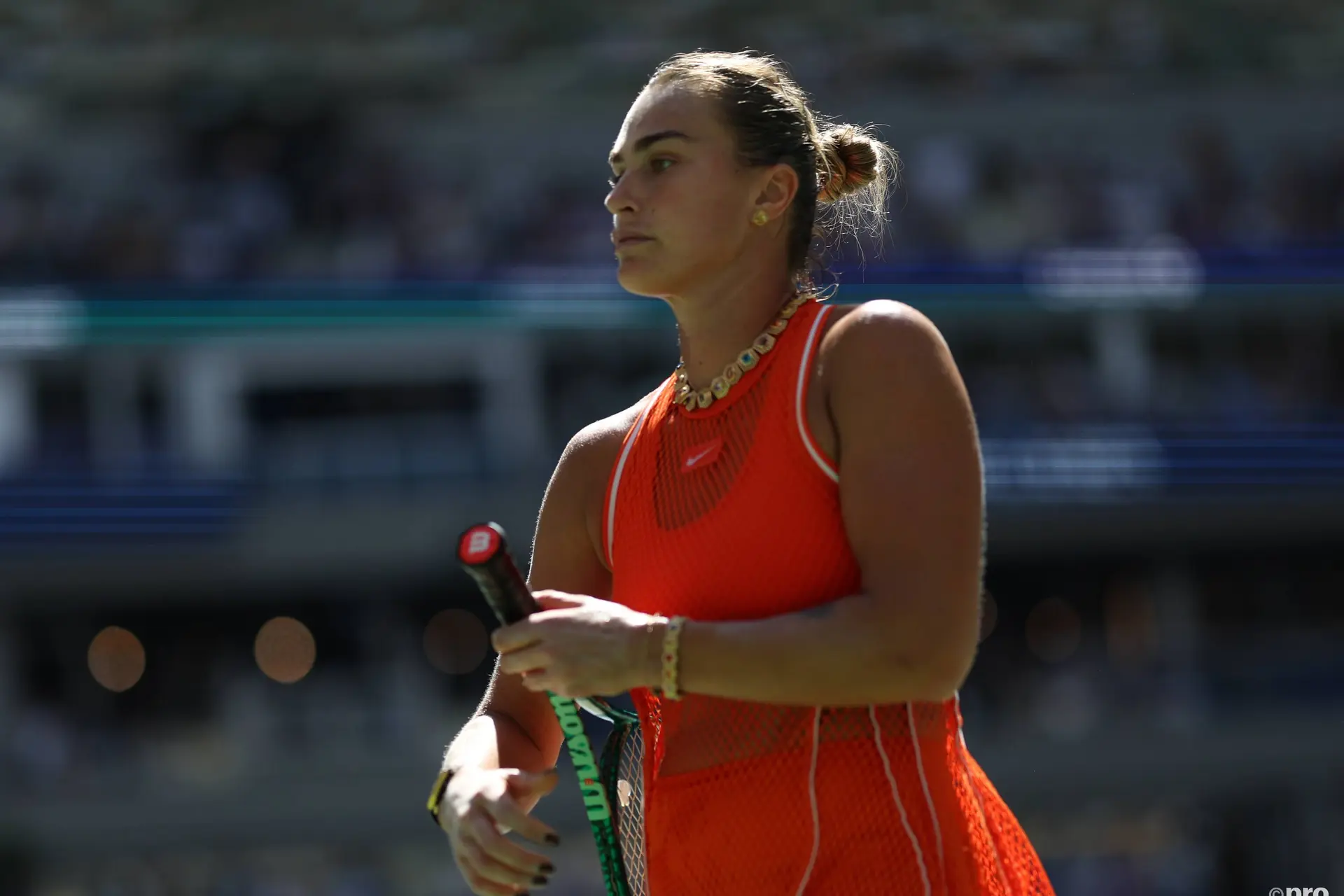
That final round-robin encounter suddenly looks much more interesting than it did a couple of days ago. Before Wednesday, I would have had very little hesitation picking Sabalenka to beat Svitolina. Then Andreeva dismantled Sabalenka 6–4, 6–0 in barely an hour, producing one of the strangest and most emphatic results of the tournament.
It was a reminder of the Sabalenka we used to see more frequently, a player capable of playing magnificent tennis before suddenly losing control of a match. If that version of Sabalenka appears on Friday, Svitolina has a genuine opportunity.
If the disciplined, powerful, and composed Sabalenka we’ve become accustomed to watching returns, I suspect Svitolina will have a considerably more difficult afternoon.
Either way, Friday is now a winner-takes-all contest. And that seems entirely appropriate for a tournament that has become increasingly unpredictable.
I still believe in Nosková
One final thought about Thursday. I’m not particularly concerned that Nosková lost to Pegula.
Would I have preferred that she finish the round-robin stage undefeated? Of course. But she had already qualified for the semifinals, and Thursday’s match gave her something valuable: nearly three hours of high-level, competitive tennis against an excellent opponent.
She also came within one point of winning. That’s hardly a reason to abandon my prediction. I continue to believe that when Nosková is playing her best tennis, she is capable of beating anyone in the world.
We’ve already seen her dismantle Gauff this week. We’ve seen her handle the pressure of competing in her first WTA Finals, and we’ve seen how dangerous she can be when her serve, groundstrokes, and decision-making come together.
Thursday showed that she’s not invincible. I never thought she was. But it hasn’t changed my belief that she can win this tournament.
Read also

And after five days in Indian Wells, I’m increasingly convinced that the semifinals could be something special. We’ve had enough strange tennis, exhausting tennis, and occasionally rather uninspired tennis to last us quite a while.
Thursday finally gave us the drama and quality this event deserves. Now we need the final four players to deliver two more days of it. And perhaps, if the November sun cooperates, we’ll get to see just how good they really are.

Aron SolomonGuest Author
A Pulitzer Prize-nominated journalist for his groundbreaking op-ed in The Independent exposing the NFL’s “race-norming” policies, Aron Solomon, JD, is a globally recognized thought leader in law, media, and strategy.
As Chief Strategy Officer for AMPLIFY, he leverages his deep expertise to shape the future of legal marketing. Aron has taught entrepreneurship at McGill University and the University of Pennsylvania and was honored as a Fastcase 50 recipient, recognizing him among the world’s top legal innovators. A prolific commentator on law, business, and culture, his insights regularly appear in Newsweek, The Hill, Crunchbase News, and Literary Hub.
He has also been featured in The New York Times, Fast Company, Fortune, Forbes, CBS News, CNBC, USA Today, ESPN, TechCrunch, BuzzFeed, Venture Beat and countless other leading global media outlets. We are proud to have Aron on board at TennisUpToDate, where his deep tennis expertise enriches the site with sharp, original columns that connect the sport to wider cultural debates.
claps 0visitors 0
Just In


Popular News
Latest Comments
- I, like writer of this wonderful article, also picked Noskova to win this entire thing. I would love it if she and Andreeva are in the final.Rapunzel12-11-2026
- "Priorities", Saba... spend less time in front of cameras, anti-Social Media, selfies and back to Tennis.
 mandoist12-11-2026
- Tell this to Andreeva!mandoist12-11-2026
- Andreeva with 11 games in a row to add to Saba's downward spiral issue !!! Personal feelings aside... Jess Pegula may want to reassess her evaluation of Mirra's abilities.mandoist12-11-2026
- I predicted whenthe list was finalised that Linda Noskova would win the WTA Finals and her matches against Gauff and Kostyuk prove that. She is the best (underrated) player in the world!Rapunzel11-11-2026
- Either Lena has a chronic internal ailment (i.e., colitis, enteritis, Crohn's, or some type of lower abdomen issue) -- or she is once again dealing with 'Vukovitis'. Mental stress can indeed cause lower body pains. No matter... whatever is truly going on sucks. "Virus" excuse is getting a bit old -- and often -- at this point.mandoist09-11-2026
- Ironically, Martina became a U.S. Citizen about the same time as the Orange Convicted Felon & Abuser was just beginning on his road to losing all Daddy's Millions!!mandoist09-11-2026
- "Another fresh start is in the cards." Thanks for the Humor!! I'm guessing this is the minimum one can do to keep all your sponsors hanging-on in perpetuity?mandoist09-11-2026
- Vukov is doing this to Lena... AGAIN!!!!! WTA's autonomous collective should be dismantled for allowing Vukov to re-emerge from his hand-slapping suspension. Just ask WTA employees how that's been going lately as they witness his continued verbal abuses. Women's Pro Tennis should start over.mandoist08-11-2026
- Can't help but suspect Vukov is back to his old self again. Thank you, WTA. Perhaps you can give them a "Battling Couple of the Year Award 2026" ??mandoist08-11-2026
