
Back in July, I wrote a column arguing that Montreal didn't need a new tennis stadium. It needed a reality check. At the time, Tennis Canada was pushing ahead with plans to build an entirely new stadium in Jarry Park, complete with a retractable roof, greater capacity, and all the other expensive things that apparently come with hosting a Masters 1000 tournament in the modern era. I argued that the proposal was terrible for the neighbourhood, terrible for the park, and fundamentally misguided for a city that has far more pressing infrastructure problems.
Three months later, something rather encouraging has happened. Montreal Mayor Soraya Martinez Ferrada said in a council meeting that she will oppose further encroachment by Tennis Canada into Jarry Park. Facing questions at a city council meeting, she made clear that protecting the quality of life of people living around the park was not something she was prepared to compromise.
That's welcome news. But anyone who thinks this means the battle is over hasn't been paying attention to how these things work. In fact, this is precisely when we need to keep talking about it.
How bad ideas become permanent fixtures
Large infrastructure projects have a remarkable ability to survive public opposition. They rarely happen overnight. Instead, they advance through feasibility studies, consultations, revised proposals, funding discussions, and increasingly elaborate promises about community benefits. Before long, the conversation shifts from whether something should be built to precisely how it should be built.

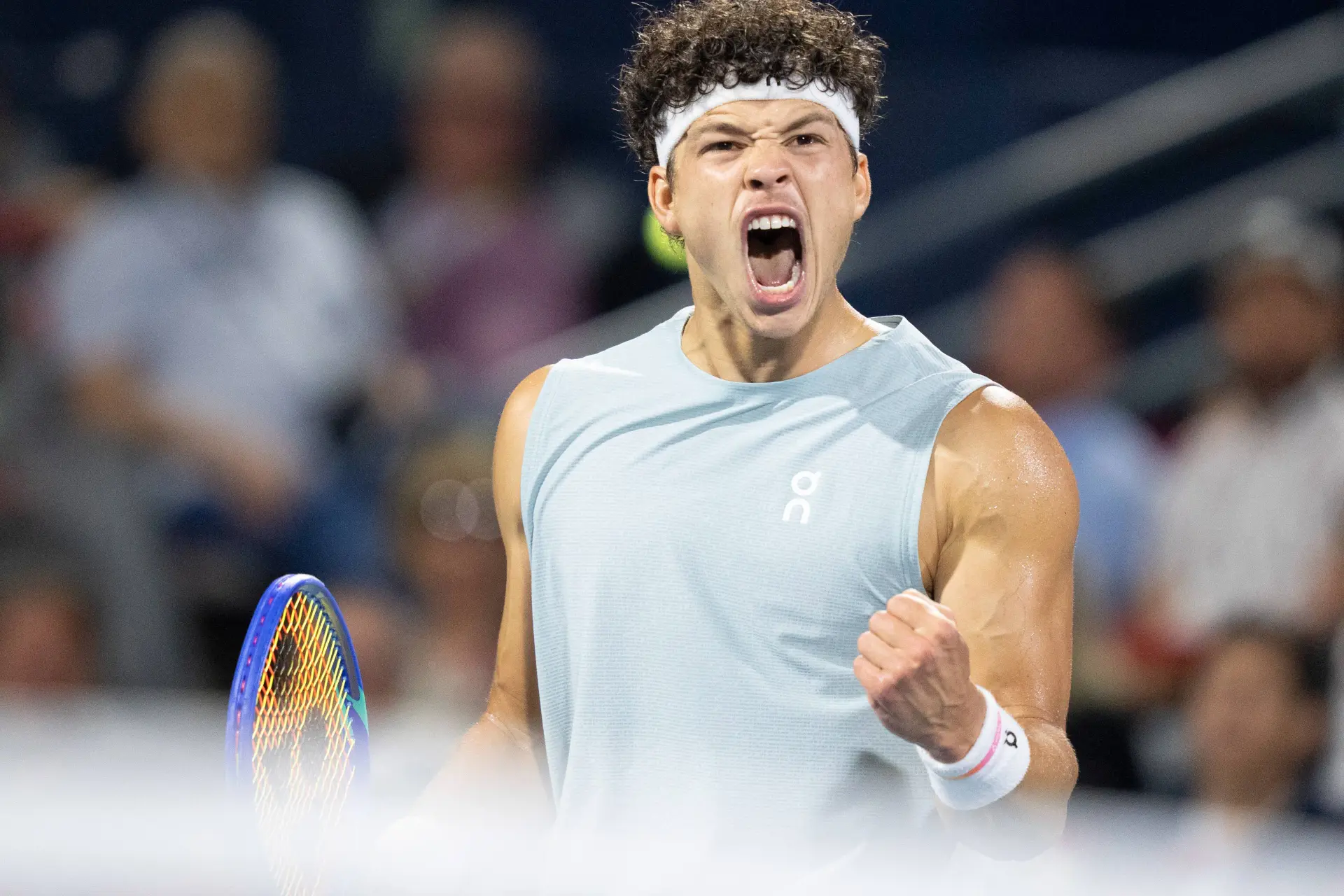
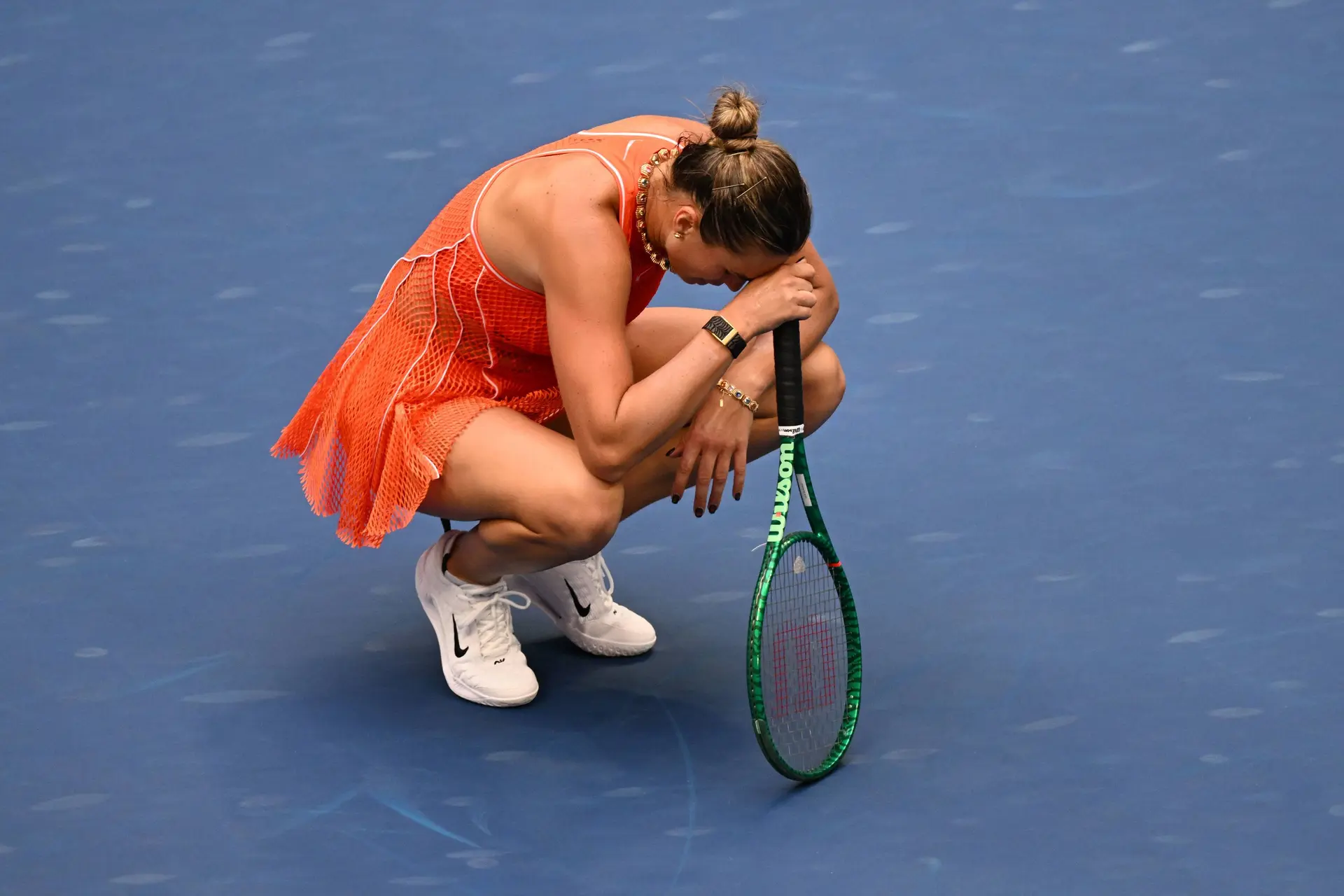
Ben Shelton in action.
And that's where the public can lose its voice. I'm not suggesting Tennis Canada is secretly plotting to bulldoze half of Jarry Park in the middle of the night. But the organization clearly wants a new stadium, and it has made equally clear that it believes Montreal needs one to remain competitive on the ATP and WTA tours.
Valérie Tétreault, Tennis Canada's vice-president of communications and professional tournaments, has suggested that the organization could return portions of its existing leased land to public use in exchange for occupying other areas of the park. The idea, apparently, is that taking some space and giving back other space might leave the overall footprint relatively unchanged.
Perhaps. But that deserves a great deal more scrutiny than a reassuring explanation about rearranging the park. Public space isn't interchangeable simply because the number of square metres works out on a spreadsheet. A community softball field where children play isn't automatically replaceable with a former parking area somewhere else. How people use a space, where it's located, and what it means to the surrounding neighbourhood matter enormously. And the people who have been protesting this proposal understand that better than anyone.
This is a park. An actual park.
I train and compete at Jarry Park. For years, I lived about a minute's walk from IGA Stadium. I know this neighbourhood extraordinarily well, and I also know that people who don't live here sometimes misunderstand what Jarry Park actually is.
It's not a tennis complex with some grass and trees surrounding it. It's a public park. There are ducks in the summer. People skate in the winter. Kids play soccer and cricket. Families gather for picnics. Thousands of dogs are walked through the park every week, and one of the city's far too few dog runs gives them somewhere to play.
People come here because they live here, not because a professional tennis tournament happens to visit every summer. And here's something else about Jarry Park that I think is worth mentioning, particularly for tennis fans who have never visited.
On one side of the tennis stadium is a practice wall featuring a hand-painted portrait of Leylah Annie Fernandez. On the other side, there's a similar tribute to Félix Auger-Aliassime. Two of Canada's greatest contemporary tennis talents, both of whom spent part of their formative years training at Jarry Park. I love those walls. I love what they represent. They remind us that this isn't simply a place where professional tennis players arrive for a couple of weeks every summer, collect their prize money, and move on. Jarry Park has a genuine place in Canadian tennis history. It's where young players have developed their games, where dreams have taken shape, and where generations of Montrealers have fallen in love with the sport.
And that's precisely why I find this entire stadium debate so frustrating. Nobody is suggesting we tear down the history of tennis in Montreal. Nobody is arguing that Jarry Park should stop being a place where the next Leylah or Félix learns to play. But there's an enormous difference between celebrating that history and using it to justify taking more public space from the people who live here.
Those painted walls tell a wonderful story about what tennis has meant to Montreal. They deserve to remain part of that story. What we don't need is for the stadium's walls to keep expanding until they're practically in people's living rooms. That distinction seems to get lost whenever we start talking about the supposed prestige of hosting a Masters 1000 event. And let's talk about Montreal itself for a moment.
This is a city where potholes are practically a defining feature of the urban landscape. Traffic is appalling. Roads seem to be under permanent construction, and getting across relatively modest distances can feel like an endurance event. Against that backdrop, the idea of committing substantial public resources to a new tennis stadium strikes me as an extraordinary misreading of priorities. Tennis Canada has not released a final construction budget. The possibility of significant public funding should make Montrealers extremely interested in every stage of this discussion.
The bigger problem facing professional tennis
But there's a much larger issue here, and it extends well beyond Montreal. Across the ATP and WTA tours, tournaments are constantly under pressure to improve facilities, expand infrastructure, increase capacity, and compete with events that have enormous financial resources behind them.
Some tournaments can comfortably meet those expectations. Others are trying to punch far, far above their weight. Montreal falls squarely into the second category. I've said this before, and I'll keep saying it: Montreal has no business hosting a Masters 1000 tournament under the current circumstances.
I love tennis. I love watching the world's best players compete. And I'd love nothing more than to see professional tennis thrive in my city for decades to come. But loving tennis doesn't require pretending that every city is suited to hosting one of the sport's biggest events.
The existing facility has serious limitations. The surrounding neighbourhood has serious limitations. The park itself has competing uses that are every bit as legitimate as professional tennis. And the city has infrastructure needs that should make any proposal involving significant public expenditure an exceptionally difficult sell. At what point do we acknowledge that the problem isn't the stadium? It's the size of the tournament we're trying to squeeze into it.
That's a question other tennis cities should be asking as well. When an event's status begins to demand infrastructure that its host city cannot reasonably accommodate, perhaps the tournament should adapt to the city rather than expecting the city to adapt to the tournament.
There's a perfectly good alternative
My position hasn't changed since July. Montreal has two sensible options. The first is to improve the existing IGA Stadium, within whatever structural and financial limits are realistic, without taking another inch of public parkland. If that means the facility can't satisfy every requirement of a modern Masters 1000 tournament, so be it.
The second, which I've advocated for years, is to say a warm, voluntary goodbye to 1000-level tennis and embrace a different future. Host a lovely ATP 250 tournament. Host a WTA 250 tournament. Perhaps stage them at different times of the year, at Jarry Park or at suitable facilities in the suburbs. Imagine smaller, more intimate professional tournaments that actually fit their surroundings. Events that could bring outstanding tennis to Montreal without requiring an enormous new stadium or fundamentally changing the character of one of the city's most beloved parks.
Would we lose the prestige of hosting a Masters 1000 event? Sure. Would we lose tennis? Absolutely not. There's a difference between preserving a sport and preserving a particular tournament designation. Tennis Canada sometimes seems to treat those objectives as inseparable. They aren't. Toronto already has a major tennis facility and an established place in the sport's international calendar. Concentrating Canada's 1000-level ambitions there while developing a more appropriately scaled professional tennis presence in Montreal is hardly an admission of defeat. It might actually be a rather intelligent way forward.
Don't mistake a promise for a victory
I'm pleased that Mayor Martinez Ferrada has taken this position. I'm even more pleased that Montrealers have organized, protested, and made enough noise that their concerns can no longer be treated as an inconvenient footnote to Tennis Canada's ambitions. Those protesters deserve enormous credit. They've done a far better job of making the case for protecting Jarry Park than anything I've written. But the stadium proposal hasn't disappeared. Tennis Canada still wants to pursue its plans, and discussions are still at an early stage. There will undoubtedly be more studies, more meetings, and more attempts to find a version of the project that officials and residents might accept. That's precisely why the conversation cannot stop.
The lesson here isn't just about tennis, or Montreal, or even the questionable wisdom of building another expensive stadium in a city that has trouble maintaining its existing infrastructure. It's about remembering that public parks are not reserve land waiting for someone with a bigger budget and a more ambitious business plan.
Read also
They're places where people live their lives. For a few weeks each summer, Jarry Park becomes one of the most recognizable venues in professional tennis.
For the other fifty weeks, it's something far more important to the people who live here. It's their park. And it should stay that way.

Aron SolomonGuest Author
A Pulitzer Prize-nominated journalist for his groundbreaking op-ed in The Independent exposing the NFL’s “race-norming” policies, Aron Solomon, JD, is a globally recognized thought leader in law, media, and strategy.
As Chief Strategy Officer for AMPLIFY, he leverages his deep expertise to shape the future of legal marketing. Aron has taught entrepreneurship at McGill University and the University of Pennsylvania and was honored as a Fastcase 50 recipient, recognizing him among the world’s top legal innovators. A prolific commentator on law, business, and culture, his insights regularly appear in Newsweek, The Hill, Crunchbase News, and Literary Hub.
He has also been featured in The New York Times, Fast Company, Fortune, Forbes, CBS News, CNBC, USA Today, ESPN, TechCrunch, BuzzFeed, Venture Beat and countless other leading global media outlets. We are proud to have Aron on board at TennisUpToDate, where his deep tennis expertise enriches the site with sharp, original columns that connect the sport to wider cultural debates.
claps 0visitors 0
Just In

Popular News

Latest Comments
- A healthy Qinwen may be hard to stop next season. She was already scaring her opponents before her medical leave(s). Unfortunately, Zheng insisted on singing again. On the positive side -- Mirra did not sing!! ;~}
 mandoist11-10-2026
 - Where is it written that athletes, entertainers... People in general... are mandated to keep looking at -- or even using [anti]Social Media? Public & private figures consistently complain and reveal their concerns about negativity and violence thrown at them -- yet they insist on participating. Avoid it, don't use it, don't read it. It's okay to occasionally look up at the World instead beating your eyes & thumbs to death on The Inventions out there.mandoist11-10-2026
- great articlestennisseserver07-10-2026
- Medvedev was leading Djokovic 7-5, 3-5 when an attempted return..' NO you ignorants, Djokovic was leading .weiss05-10-2026
- No more bullshit "Wildcards" to these two. Qualify like everyone else -- there will be cameras there, too. Time to scream... WTF ????!!!!mandoist29-09-2026
- Let's not BS the general public -- Sabalenka started showing cracks in her game last season. Her losses and near-losses started at about the same time she began being distracted by Fame (constant Selfies, making TV commercials, magazine shoots, endless Social Media nonsense, etc., etc.) One would think even Saba could recognize the parallels with others who failed before her -- Raducanu, Giorgi, Bouchard to name a few.mandoist25-09-2026
- Gross!! Hey Raducanu, Giorgi, and Bouchard -- reserve a seat at your Social Media Selfie table for Saba + Naomi. They're heading in your direction soon enough.mandoist24-09-2026
- And then these same players will complain about how lengthy their season’s were and need more time-off. I’m all for more tennis but the amount of tennis we get now is actually kind of crazy! We all need a break, especially the players.DaveyWavey23-09-2026
- You should do a comparison article for "different kinds of justice" the courts decide for tennis players. I can think of at least three players who received very small bans of a few months, however Tara Moore has been fighting for her literal survival the past few years. It seems odd considering she is not a "name" player, unlike the other cases.DaveyWavey22-09-2026
- PRIZE MONEY & POINTS Winner - $185,500 Finalist - $114,500 Semi-Finalist - $66,003 Quarter-Finalist - $35,000 Round of 16 - $18,045 Round of 32 - $13,005 Winner - 500 Finalist - 325 Semi-Finalist - 195 Quarter-Finalist - 108 Round of 16 - 60 Round of 32 - 1DaveyWavey20-09-2026

Loading