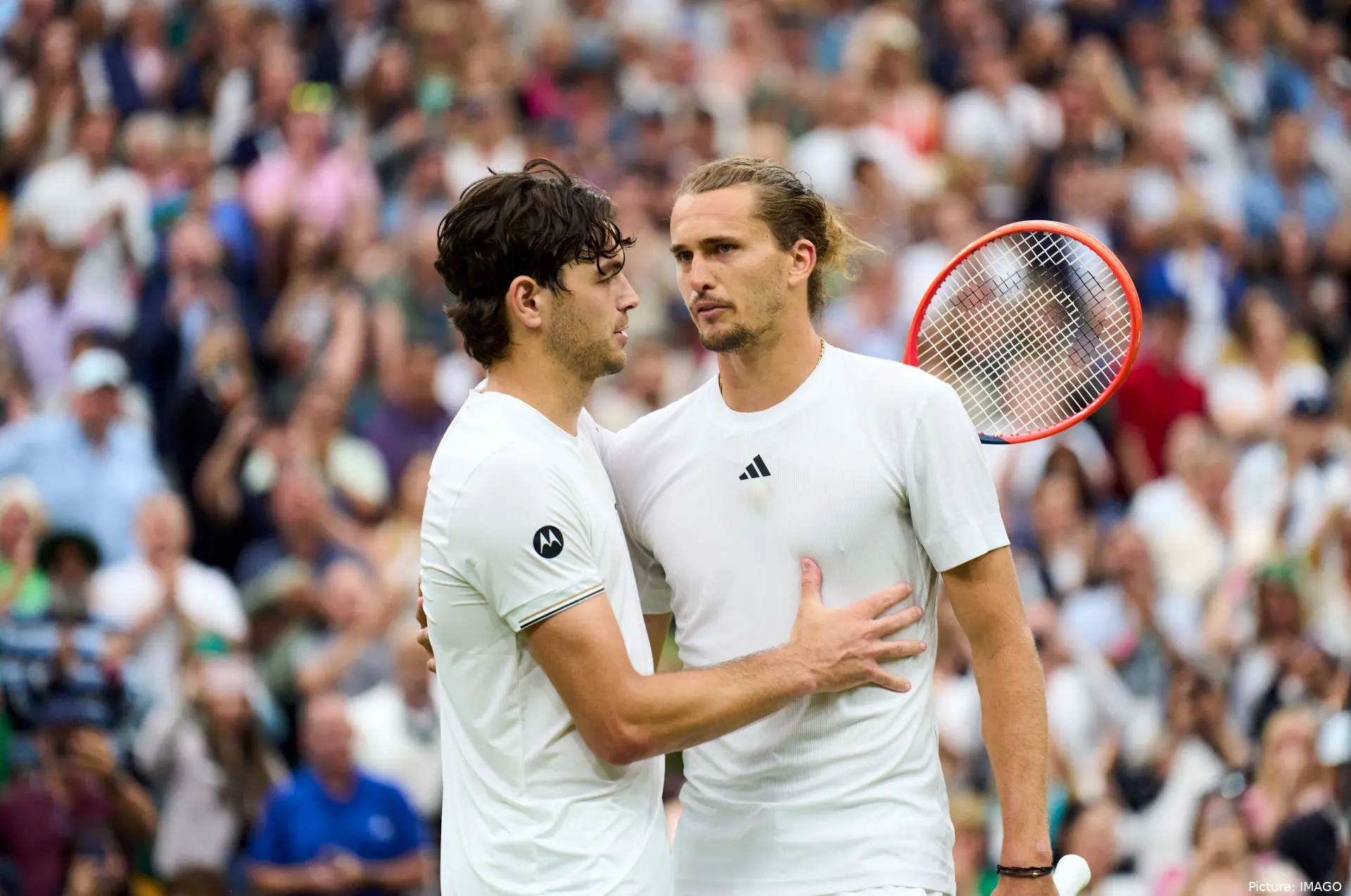
The list of contenders standing between Carlos Alcaraz and a third US Open title looks nothing like it did a week ago. Jannik Sinner never even made the trip, withdrawing before the draw with a knee injury.
Novak Djokovic, the man seeded to meet Alcaraz in the semifinal, is gone too, beaten by Mariano Navone in a four-hour, 36-minute first-round collapse that ended an 84-match, two-decade run of never losing an opening-round match at a Grand Slam.
And Arthur Fils, the in-form Frenchman who arrived off a maiden Masters 1000 title in Cincinnati and looked like this tournament's obvious dark horse, blew a 6-4, 4-1 lead and lost in four sets to Stefanos Tsitsipas.
That leaves a genuinely open picture, and it arrives at the exact moment Alcaraz is at his least battle-tested: the defending champion is playing his first singles matches since April, after a wrist injury wiped out his spring and summer. Here's who's best placed to actually take advantage.
Read also
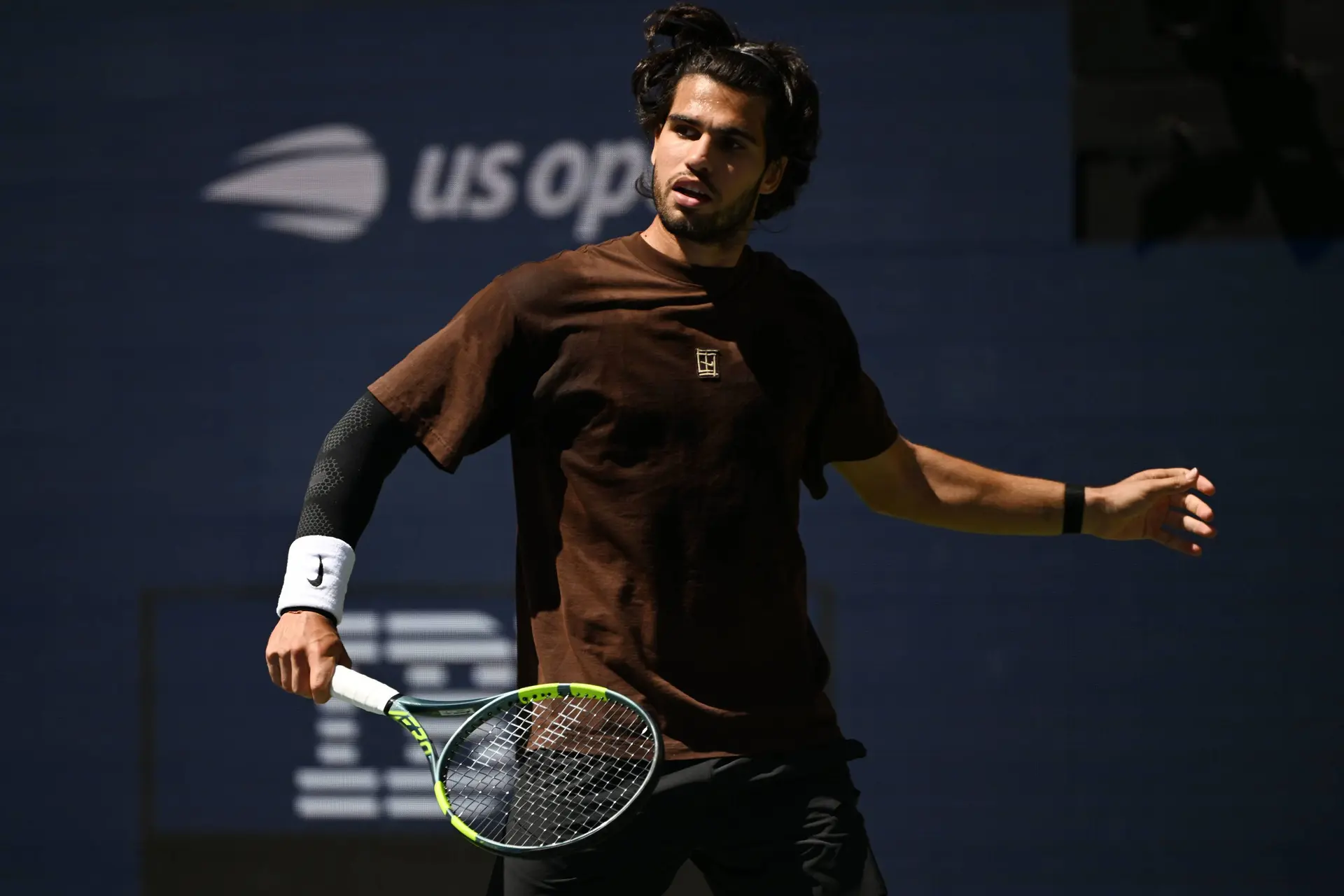
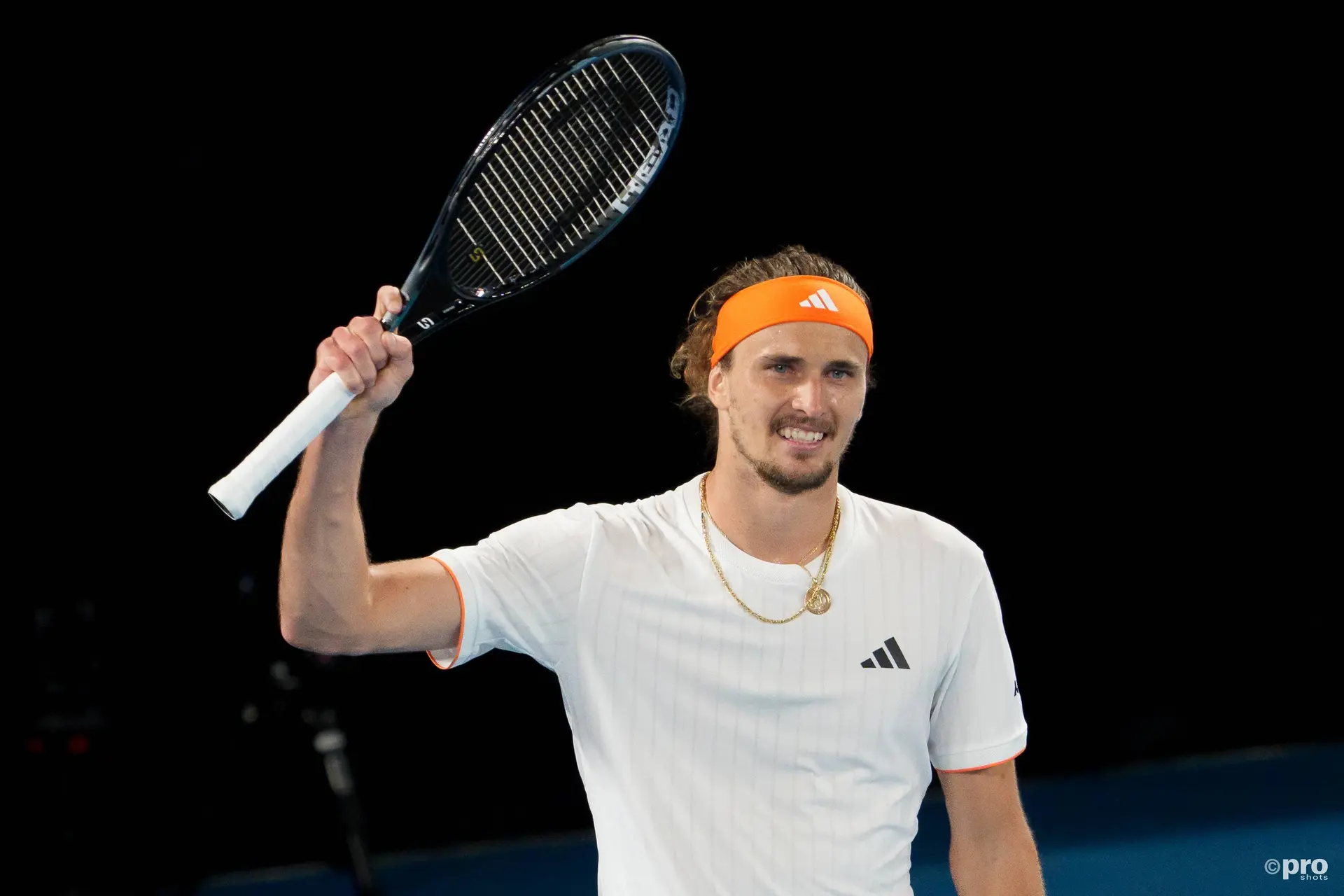
Alexander Zverev
For years, Zverev has shown up on lists like this one — especially whenever the draw looks wide open — and for years, the tennis world has walked away disappointed more often than not. That changed in 2026. He finally converted one of these opportunities into a Grand Slam title at Roland Garros, then pushed Sinner all the way in the Wimbledon final before falling short.
Now, with Sinner absent, Djokovic gone, and Alcaraz still finding his rhythm, Zverev is the top seed by default and arguably the outright favorite on paper — in a tournament where he already has a final to his name, from 2020, when he served for the title before Dominic Thiem ruined the party in a fifth-set tiebreak.
He arrives at 18-2 at Grand Slam level in 2026, the best record in the field, though his hard-court form immediately before New York has wobbled — a first-round loss in Montreal to Tallon Griekspoor and a fourth-round exit in Cincinnati after squandering a match point against Tommy Paul.
Neither result has cost him his seeding, and his path — Sonego, then a potential third-round meeting with Tabilo, a projected quarterfinal against Alex de Minaur — remains the gentlest of any top contender's.

Zverev faces tough openers but a likely pay off.
Felix Auger-Aliassime
The third seed gets far less discussion as a genuine threat than his résumé suggests he should. Auger-Aliassime has already reached two US Open semifinals, and his game — a heavy, reliable serve paired with steady baseline hitting — has always looked built for exactly this kind of tournament.
He's also quietly assembled one of the more underrated bodies of work in the men's game: a Masters 1000 finalist, a proven closer in fifth sets once considered his biggest weakness, and a player who has worked his way back into the world's top 5 after a well-documented mid-career slump that had many writing him off entirely two years ago. Now 26 and in what should be the most mature stretch of his career, this might be the best chance he's had yet to finally push through to a maiden Grand Slam final.
He opened with a four-set win over Rinky Hijikata that wasn't always pretty — he needed to come from a set down twice — but got the job done, and he sits in the bottom half of the draw, meaning he can't cross paths with Alcaraz before a final.
There's recent precedent for him doing damage from exactly this position: he beat Zverev at this same tournament last year in the third round and ran all the way to the semifinal, and a potential second-round meeting with the dangerous, big-serving Karen Khachanov is the kind of test that, if he passes it, would only add to the case that he's finally arrived at the tournament where his game translates best.

Auger-Aliassime to perform?
Daniil Medvedev
Medvedev's lead-up to New York was rough enough that he joked about taking up pickleball, going just 1-3 in his tune-up events and losing his Winston-Salem opener to American wildcard Martin Damm. None of that survived contact with Flushing Meadows: he opened with a clean, controlled win over qualifier Hugo Gaston, dropping serve zero times and hitting 83 percent of his first-serve points.
When Medvedev finds his rhythm, he's the most proven hard-court major threat left in the draw by some distance — a 2021 champion here, a finalist in 2019 and 2023, a semifinalist in 2020, a quarterfinalist as recently as 2024, and the most experienced player among the group replacing Djokovic at the top of the bracket.
He's also historically been one of the sport's best big-match front-runners once he settles into a tournament, capable of raising his level round by round rather than needing to arrive at peak form on day one. If the confidence from that first-round performance holds, and his notoriously streaky season finally points upward at the right moment, he's a name every bit as dangerous as his seeding suggests — perhaps more.

Daniil Medvedev sits waiting.
Ben Shelton
Shelton is the American name everyone wants to see go deep, and arguably the host nation's best hope of ending its own long wait for a champion. At 23, with two Masters 1000 titles and two Grand Slam semifinals already on his résumé, he's shown he can beat literally anyone in this draw on his day, and his level tends to rise rather than fade with a New York crowd behind him.
He's also arriving in genuinely excellent form: four titles already in 2026 and a successful title defense in Montreal without dropping a set. His lefty serve and increasingly complete all-court game give him a higher ceiling on a given day than almost anyone else in this list.
The real question isn't talent — it's whether he's ready to convert that ceiling into an actual Grand Slam final, and then finish the job once he's there. His best Slam result remains the 2023 US Open semifinal, and the step from "dangerous seed capable of anything" to "player who closes out best-of-five matches against the very best" is exactly the gap that's kept him from a maiden major final so far. Every big occasion he survives this fortnight only adds to the case that this could finally be the tournament where that changes.

Ben Shelton of United States celebrates his victory after winning his Men's Singles final match against Brandon Nakashima of United States on day 13 of the ATP Masters 1000 National Bank Open
Taylor Fritz
Fritz remains the other American hope, and the 2024 finalist has more big-occasion experience in New York than most of top-10 players. At 28, and having spent the better part of five years as the clear leader of American men's tennis, he has exactly the kind of hard-court consistency and composure needed to make another deep run — and a home Grand Slam title at this stage of his career would be an enormous reward for that consistency.
He arrives off a genuinely strong North American summer that included a title in Washington, and few players in the sport have done more to systematically eliminate the weaknesses that once kept him out of the very top tier.
What separates Fritz from the rest of this list is that he's already done the hardest part once — reached a Grand Slam final and lived through everything that comes with it, the media obligations, the crowd expectation, the extra day of rest and nerves before a final. That experience doesn't guarantee anything, but it does mean that if Alcaraz isn't fully sharp physically, Fritz is one of the few names here who wouldn't be overwhelmed by the moment if the draw opened up in his favor.

Fritz for glory?
Rafael Jódar
Nobody saw this coming a year ago, when Jódar was grinding through Challenger events between semesters at the University of Virginia, ranked outside the world's top 900. The 19-year-old Spaniard has since won his first ATP title in Marrakech, backed it up with a semifinal in Barcelona and quarterfinal runs at the Madrid and Rome Masters, then reached the Roland Garros quarterfinal in his Grand Slam debut — an 18-3 clay-court record that tied Jannik Sinner for the most tour-level wins on the surface in 2026.
He's since added a run to the Washington final and a career-high ranking of No. 13, a genuinely absurd rise for a player who was playing college tennis matches barely eighteen months ago.
He's landed in Zverev's projected quarter alongside Casper Ruud and Alex de Minaur, a section stacked enough that reaching the second week at all would be a real result. His ceiling is still a genuine unknown, and his lack of experience at this level — this is still only his second Grand Slam main draw — is a real limitation against the tour's very best over best-of-five.
But nothing about his 2026 season suggests there's an obvious limit to what he can do, including a win over de Minaur himself earlier this year, and against a field missing its two most dominant players of the last three years, an Alcaraz not yet back to 100 percent is exactly the kind of opening a fearless teenager could exploit.

Cristhián AvilaTennis Journalist
Cristhián Ávila is a tennis journalist based in Santiago, Chile, and has been part of the TennisUpToDate team since early 2023. He covers the ATP and WTA Tours as well as all four Grand Slams, producing breaking news, match reports, analysis, and regular liveblogs from major tournaments.
His reporting combines statistical analysis with clear explanation, helping readers understand tactical developments, player form, and broader storylines across the tour. Working fluently in both Spanish and English, Cristhián collaborates with an international editorial team and contributes to comprehensive global coverage. As part of his work, he has conducted interviews and media interactions with leading figures in the sport, including Caroline Wozniacki and John McEnroe.
In his journalism, Cristhián places strong emphasis on careful sourcing, editorial accuracy, and updating articles promptly when new, verified information becomes available. His coverage is grounded in research, context, and direct engagement with professional tennis.
claps 0visitors 0
Just In

Popular News
Latest Comments
- A healthy Qinwen may be hard to stop next season. She was already scaring her opponents before her medical leave(s). Unfortunately, Zheng insisted on singing again. On the positive side -- Mirra did not sing!! ;~}
 mandoist11-10-2026
 - Where is it written that athletes, entertainers... People in general... are mandated to keep looking at -- or even using [anti]Social Media? Public & private figures consistently complain and reveal their concerns about negativity and violence thrown at them -- yet they insist on participating. Avoid it, don't use it, don't read it. It's okay to occasionally look up at the World instead beating your eyes & thumbs to death on The Inventions out there.mandoist11-10-2026
- great articlestennisseserver07-10-2026
- Medvedev was leading Djokovic 7-5, 3-5 when an attempted return..' NO you ignorants, Djokovic was leading .weiss05-10-2026
- No more bullshit "Wildcards" to these two. Qualify like everyone else -- there will be cameras there, too. Time to scream... WTF ????!!!!mandoist29-09-2026
- Let's not BS the general public -- Sabalenka started showing cracks in her game last season. Her losses and near-losses started at about the same time she began being distracted by Fame (constant Selfies, making TV commercials, magazine shoots, endless Social Media nonsense, etc., etc.) One would think even Saba could recognize the parallels with others who failed before her -- Raducanu, Giorgi, Bouchard to name a few.mandoist25-09-2026
- Gross!! Hey Raducanu, Giorgi, and Bouchard -- reserve a seat at your Social Media Selfie table for Saba + Naomi. They're heading in your direction soon enough.mandoist24-09-2026
- And then these same players will complain about how lengthy their season’s were and need more time-off. I’m all for more tennis but the amount of tennis we get now is actually kind of crazy! We all need a break, especially the players.DaveyWavey23-09-2026
- You should do a comparison article for "different kinds of justice" the courts decide for tennis players. I can think of at least three players who received very small bans of a few months, however Tara Moore has been fighting for her literal survival the past few years. It seems odd considering she is not a "name" player, unlike the other cases.DaveyWavey22-09-2026
- PRIZE MONEY & POINTS Winner - $185,500 Finalist - $114,500 Semi-Finalist - $66,003 Quarter-Finalist - $35,000 Round of 16 - $18,045 Round of 32 - $13,005 Winner - 500 Finalist - 325 Semi-Finalist - 195 Quarter-Finalist - 108 Round of 16 - 60 Round of 32 - 1DaveyWavey20-09-2026

Loading