Flavio Cobolli is a top-10 player who lost more points than he won: what the statistic says, and what it does not
ATP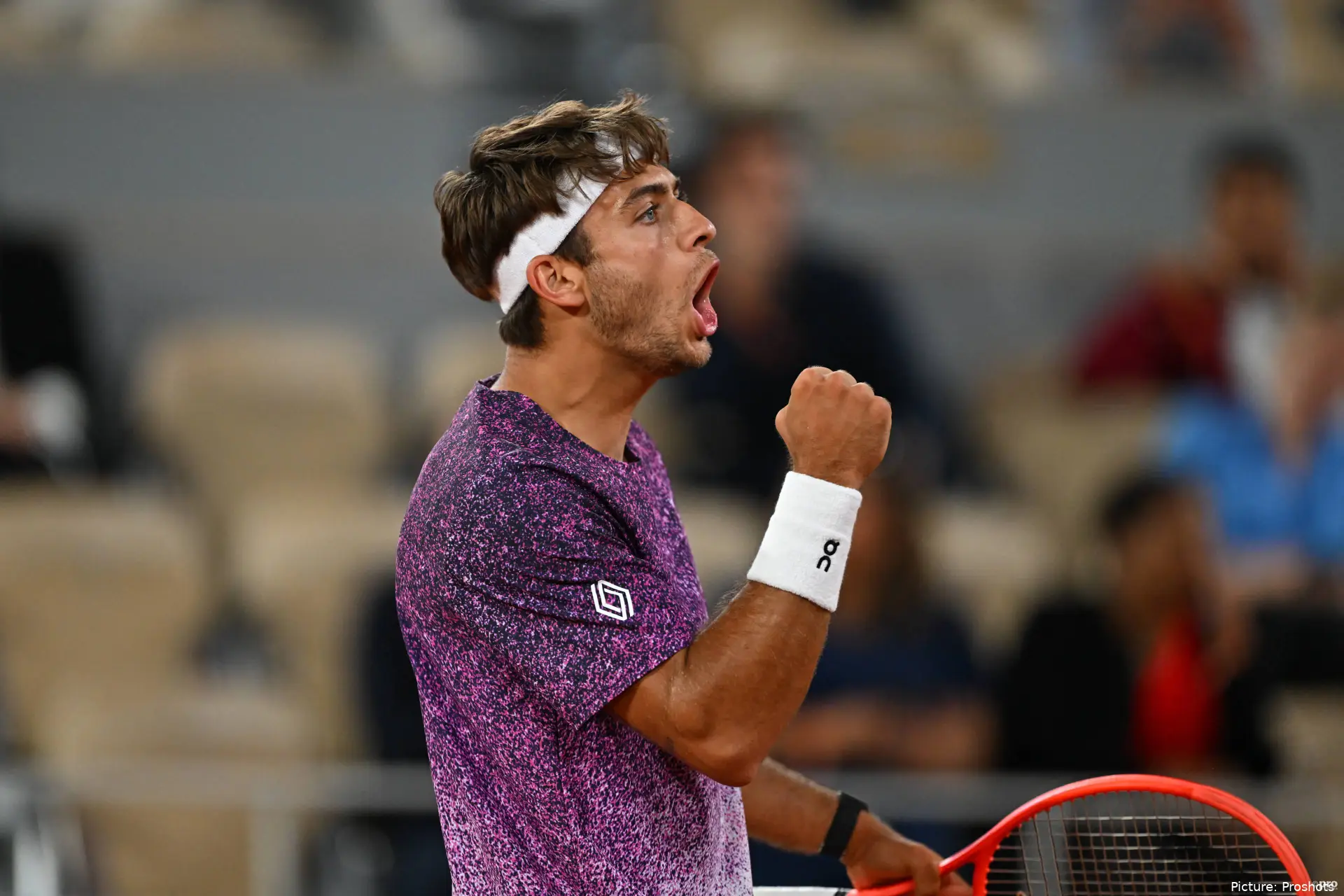
Flavio Cobolli is the world No. 6, he has qualified for the ATP Finals for the first time and he has played a Grand Slam final this year. He has also won 49.5% of the points he has played in 2026, which means he has lost more than he has won. According to Jeff Sackmann of Tennis Abstract, that makes him likely to finish the season as the first top-10 player to do so since the data begins in 1991.
The figure is a continuation of a trend. In 2025, when Cobolli finished No. 22, he won exactly 50% of his points. This year he moved ten places up the ranking and lost a little more than he won.
It does not fit with the results. Cobolli reached the Roland Garros final, won the Acapulco ATP 500, reached the Cincinnati semifinals and the Wimbledon quarterfinals, and clinched his place in Turin on November 3, when Casper Ruud beat Rafael Jodar in Paris. He has beaten established top-10 players as Alexander Zverev and Daniil Medvedev.
The question is whether the statistic is a warning or a curiosity. The numbers behind it say it is a bit of both, and that the most useful reading is about how Cobolli wins matches, not about whether he deserves to be in the top 10.
The statistic: a first in 35 years
Points won is the simplest measure of dominance in tennis: the player who wins more points wins more matches, over time. No top-10 player since 1991 has finished a season below 50%, and Cobolli is at 49.5% with the Turin week still to play.
The closest precedents are not in the top 10. Fabio Fognini won 50% of his points in 2019 and finished No. 12, and 49.7% in 2014, when he ended the year at No. 20. Cobolli is the first to carry a figure like that into the top 10. The most interesting numbers are the ones around the 49.5%. His record is 37-24, which is 60.7% of matches won, with one title.
| Measure (2026) | Cobolli |
| Points won | 49.5% |
| Games won | 50.1% (804-801) |
| Sets won | 55.2% (90-73) |
| Matches won | 60.7% (37-24) |
| Tiebreaks | 19-12 (61.3%) |
| Record vs top 10 | 4-3 |
| Record vs top 20 | 7-4 |
The table shows how the gap is built. He wins 49.5% of points and 60.7% of matches, an 11-point difference, and that difference appears in the close moments: he is 19-12 in tiebreaks and has won 55% of his sets while winning only half of his games. He has been winning the close sets more often than the underlying numbers predict.

His serve and return numbers explain why the margins are so thin. He holds 78.8% of his service games and breaks 20.6% of the time. He wins 71.4% of the points on his first serve, 51.7% on his second and 36.5% on return. Those are the numbers of a player whose sets are decided by a few points, with little margin on either side.
Yep, this is nuts. Flavio Cobolli is likely to finish the season as the first top-tenner who lost more points than he won (since 1991, when these stats are available) https://t.co/8cthodB6xY
— Jeff Sackmann (@tennisabstract) November 10, 2026
A year of big weeks
The season does not look like one of a player who wins narrowly all the time. It looks like one with a few very big weeks, and a lot of early losses in between.
| Event | Result |
| United Cup | Won his first match, then lost four in a row |
| Acapulco | Champion (ATP 500) |
| Munich | Finalist, lost to Ben Shelton 6-2, 7-5 |
| Roland Garros | Finalist, lost to Alexander Zverev 1-6, 6-4, 4-6, 7-6(5), 1-6 |
| Wimbledon | Quarterfinal, lost to Arthur Fery 6-4, 7-6(4), 6-0 |
| Cincinnati | Semifinalist, lost to Arthur Fils 6-3, 6-4 |
The Roland Garros final shows both sides of the profile. Cobolli lost in five sets and won 19 games to Zverev's 28, but he got there with a 6-1 record at the tournament. The Wimbledon quarterfinal was a straight-sets loss with a 6-0 third set. He can win close matches and he can lose heavily when a match slips.
By level, he is 12-4 in the Grand Slams, 10-8 in Masters 1000 events and 10-6 in ATP 500s. The early rounds have been less stable: he is 7-8 in round-of-32 matches.
A player who wins by small margins has less room for a bad day, and the ATP Finals are a round-robin event in which three matches against top-8 players decide who goes through. Cobolli's last ten matches are 4-6, so the form line going into Turin is not clear.
Read also
On the other side, the statistic says nothing about what he can do against the best: he is 4-3 against the top 10 and has beaten Zverev and Medvedev this year. The ranking reflects results, and results reflect matches won, not points.
His season is real, and the statistic is a reminder that it has been built on close sets and a few very good weeks. The Turin week, from November 15 to 22, is where he can change the number or add another line to a season that already has one.

Cristhián AvilaTennis Journalist
Cristhián Ávila is a tennis journalist based in Santiago, Chile, and has been part of the TennisUpToDate team since early 2023. He covers the ATP and WTA Tours as well as all four Grand Slams, producing breaking news, match reports, analysis, and regular liveblogs from major tournaments.
His reporting combines statistical analysis with clear explanation, helping readers understand tactical developments, player form, and broader storylines across the tour. Working fluently in both Spanish and English, Cristhián collaborates with an international editorial team and contributes to comprehensive global coverage. As part of his work, he has conducted interviews and media interactions with leading figures in the sport, including Caroline Wozniacki and John McEnroe.
In his journalism, Cristhián places strong emphasis on careful sourcing, editorial accuracy, and updating articles promptly when new, verified information becomes available. His coverage is grounded in research, context, and direct engagement with professional tennis.
claps 0visitors 0
Just In



Popular News
Latest Comments
- Either Lena has a chronic internal ailment (i.e., colitis, enteritis, Crohn's, or some type of lower abdomen issue) -- or she is once again dealing with 'Vukovitis'. Mental stress can indeed cause lower body pains. No matter... whatever is truly going on sucks. "Virus" excuse is getting a bit old -- and often -- at this point.
 mandoist09-11-2026
- Ironically, Martina became a U.S. Citizen about the same time as the Orange Convicted Felon & Abuser was just beginning on his road to losing all Daddy's Millions!!mandoist09-11-2026
- "Another fresh start is in the cards." Thanks for the Humor!! I'm guessing this is the minimum one can do to keep all your sponsors hanging-on in perpetuity?mandoist09-11-2026
- Vukov is doing this to Lena... AGAIN!!!!! WTA's autonomous collective should be dismantled for allowing Vukov to re-emerge from his hand-slapping suspension. Just ask WTA employees how that's been going lately as they witness his continued verbal abuses. Women's Pro Tennis should start over.mandoist08-11-2026
- Can't help but suspect Vukov is back to his old self again. Thank you, WTA. Perhaps you can give them a "Battling Couple of the Year Award 2026" ??mandoist08-11-2026
- Wtf? Why is there no reason? And what about the men's?Bel08-11-2026
- One step by another step -- WTA continues to 'lose the plot'. Too many hi-tech microphones being installed at most venues!!! Remove them (especially those along the hallways, sidewalks, and pathways throughout the venues. Not to mention (most of all) remove the mic's from the Players/Coaches Box.mandoist06-11-2026
- Enough of her bullshit. Go marry someone.mandoist06-11-2026
- Don't you just love this young lady!? We fans often expect athletes to be supermen and superwomen, often forgetting that they WILL GET TIRED! I love Alex's perspective. Tiredness for an athlete should never be viewed as a negative, especially if you are healthy, taking care of your body and mental health and putting in the work. What a mature perspective. Good for you, Alex!Rapunzel05-11-2026
- Jess is absolutely correct! But the disrespect is a trait I have noticed in most of the Russian players. Mirra is good but very immature and lacks humility. Conceivable needs to get a handle on that!Rapunzel05-11-2026
