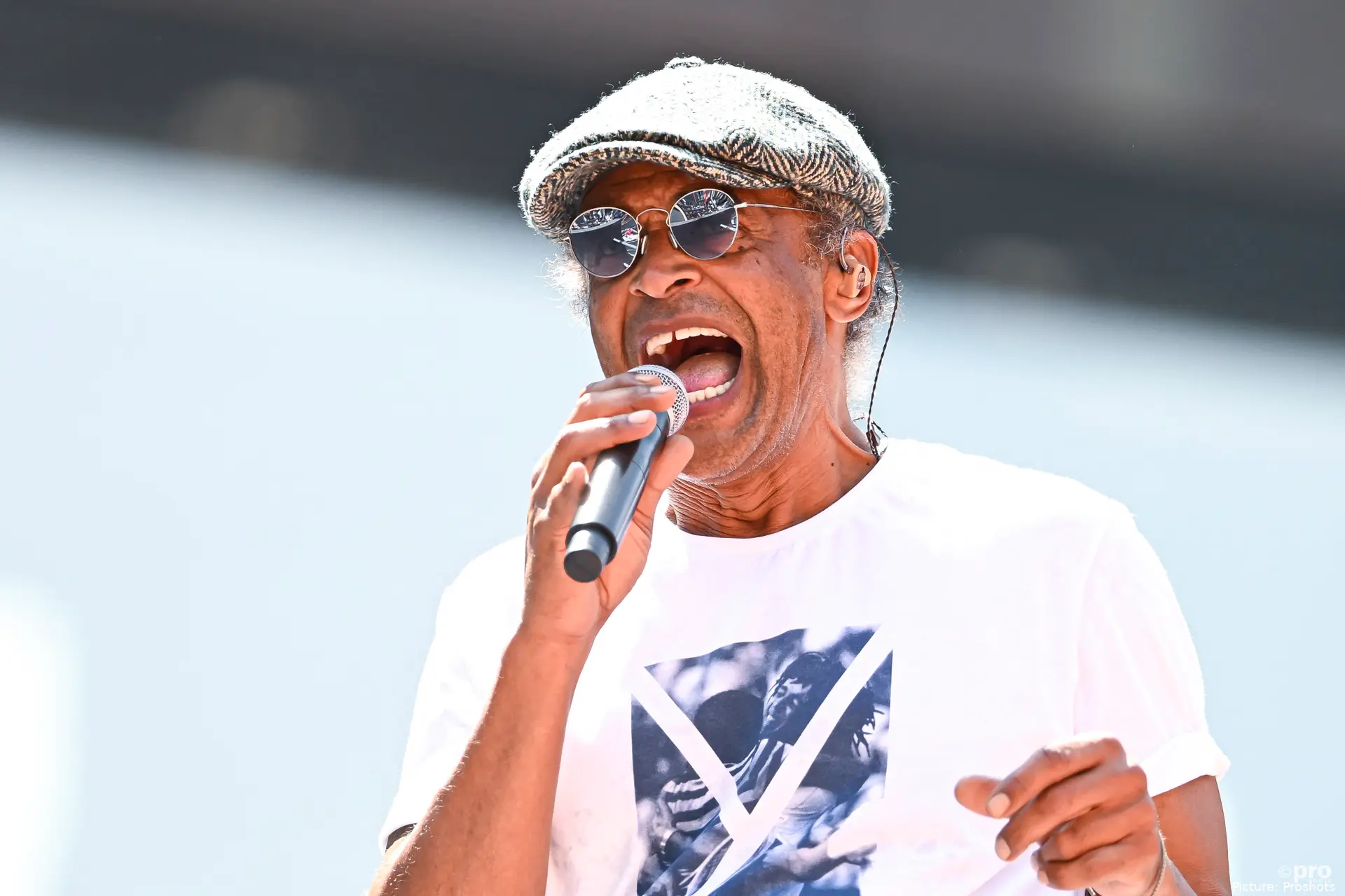
Yannick Noah has delivered a strong criticism of the current Davis Cup format just as he prepares to lead Team Europe at the 2026 Laver Cup. The Frenchman believes the competition has lost much of the identity that once made it special, particularly after moving away from the traditional home-and-away format.
Noah has a unique perspective on the subject. The former world No.3 won the French Open in 1983 and was also the captain of France's Davis Cup-winning team in 1991, giving him experience of the competition both as a player and as a leader. He now occupies a different role in team tennis after becoming Team Europe's Laver Cup captain in 2025, replacing Bjorn Borg.
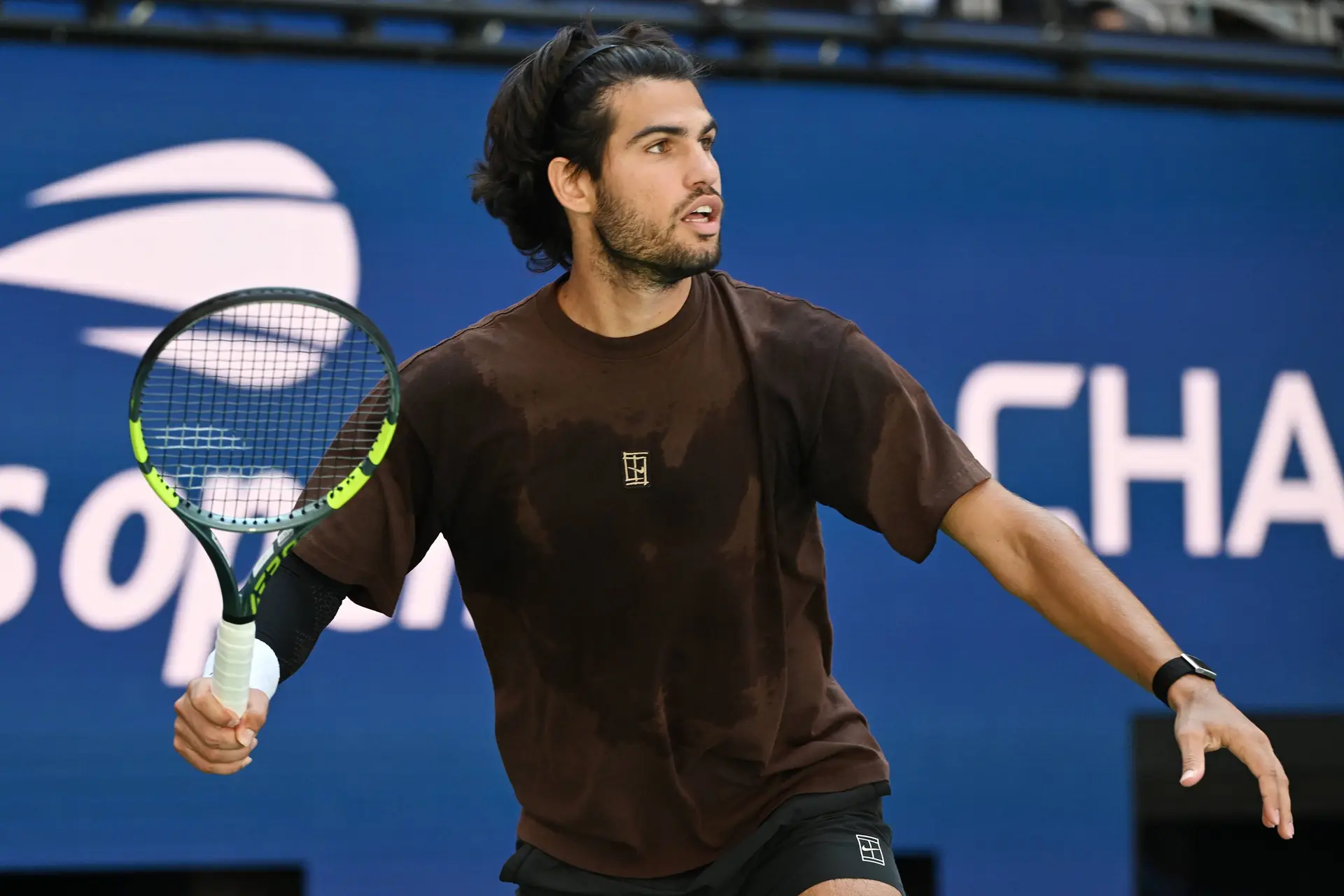
The 2026 Laver Cup will begin this Friday in London, with Noah preparing to lead a European team featuring Carlos Alcaraz, Alexander Zverev, Casper Ruud, Flavio Cobolli, Jakub Mensik and Rafael Jodar. His appointment marked the end of Borg's seven-year spell as captain, with Noah now entering his second season in charge of Europe.
His latest comments come at a time when the Davis Cup continues to look very different from the competition Noah experienced during his career. The eight-team finals are now staged at a neutral venue, replacing the traditional ties in which countries hosted their opponents, and the Frenchman believes that change has fundamentally altered what the event represents.
"This is not the real Davis Cup"
Noah was particularly direct when discussing the current version of the competition, explaining that his criticism is rooted in the difference between what the Davis Cup represented during his playing days and what it has become today.
“This is not the real Davis Cup. I find it a bit difficult to talk about the Davis Cup today, having lived through the authentic Davis Cup," the former French Open champion said. "For me, this is not the real Davis Cup. From the beginning, I was against this format. I do not recognize the spirit of the Davis Cup. I do not recognize the spirit of the competition.”
The traditional Davis Cup placed a major emphasis on the connection between the national team and its supporters, with ties taking place in one of the competing countries. For Noah, that element was central to the competition rather than simply a feature of its scheduling.
He also believes the difference can be seen in how players approached representing their countries in previous generations. Noah recalled a period when being selected for the Davis Cup was something players actively wanted, regardless of the sacrifices required.
“In my time, and for previous generations and those immediately following mine — before this change occurred — we were willing to do anything to be selected. We were willing to do anything to play the Davis Cup. Because it was a competition that meant something. It was part of history. There was a tradition.”
Read also
"Overnight, all of that disappeared"
Noah believes the change in format also helps explain why some of the biggest names in men's tennis have increasingly missed Davis Cup ties. He acknowledged that players from his generation also sometimes decided against competing because of the demands of the calendar, but argued that the situation today is fundamentally different.
“Overnight, all of that disappeared, and we see that the best players no longer participate. It is true that, back then, there were some players who found the schedule too demanding and did not play. But that was something completely different. As a current spectator, I find it hard to get interested in this competition.”
Noah will now turn his attention to the Laver Cup, where he will have the chance to lead several of the players who have become central figures in the modern game. Team Europe will face Team World in London from Friday, with the European side looking to reclaim the trophy after losing to Team World in San Francisco in 2025.

Cristhián AvilaTennis Journalist
Cristhián Ávila is a tennis journalist based in Santiago, Chile, and has been part of the TennisUpToDate team since early 2023. He covers the ATP and WTA Tours as well as all four Grand Slams, producing breaking news, match reports, analysis, and regular liveblogs from major tournaments.
His reporting combines statistical analysis with clear explanation, helping readers understand tactical developments, player form, and broader storylines across the tour. Working fluently in both Spanish and English, Cristhián collaborates with an international editorial team and contributes to comprehensive global coverage. As part of his work, he has conducted interviews and media interactions with leading figures in the sport, including Caroline Wozniacki and John McEnroe.
In his journalism, Cristhián places strong emphasis on careful sourcing, editorial accuracy, and updating articles promptly when new, verified information becomes available. His coverage is grounded in research, context, and direct engagement with professional tennis.
claps 0visitors 0
Just In

Popular News
Latest Comments
- A healthy Qinwen may be hard to stop next season. She was already scaring her opponents before her medical leave(s). Unfortunately, Zheng insisted on singing again. On the positive side -- Mirra did not sing!! ;~}
 mandoist11-10-2026
 - Where is it written that athletes, entertainers... People in general... are mandated to keep looking at -- or even using [anti]Social Media? Public & private figures consistently complain and reveal their concerns about negativity and violence thrown at them -- yet they insist on participating. Avoid it, don't use it, don't read it. It's okay to occasionally look up at the World instead beating your eyes & thumbs to death on The Inventions out there.mandoist11-10-2026
- great articlestennisseserver07-10-2026
- Medvedev was leading Djokovic 7-5, 3-5 when an attempted return..' NO you ignorants, Djokovic was leading .weiss05-10-2026
- No more bullshit "Wildcards" to these two. Qualify like everyone else -- there will be cameras there, too. Time to scream... WTF ????!!!!mandoist29-09-2026
- Let's not BS the general public -- Sabalenka started showing cracks in her game last season. Her losses and near-losses started at about the same time she began being distracted by Fame (constant Selfies, making TV commercials, magazine shoots, endless Social Media nonsense, etc., etc.) One would think even Saba could recognize the parallels with others who failed before her -- Raducanu, Giorgi, Bouchard to name a few.mandoist25-09-2026
- Gross!! Hey Raducanu, Giorgi, and Bouchard -- reserve a seat at your Social Media Selfie table for Saba + Naomi. They're heading in your direction soon enough.mandoist24-09-2026
- And then these same players will complain about how lengthy their season’s were and need more time-off. I’m all for more tennis but the amount of tennis we get now is actually kind of crazy! We all need a break, especially the players.DaveyWavey23-09-2026
- You should do a comparison article for "different kinds of justice" the courts decide for tennis players. I can think of at least three players who received very small bans of a few months, however Tara Moore has been fighting for her literal survival the past few years. It seems odd considering she is not a "name" player, unlike the other cases.DaveyWavey22-09-2026
- PRIZE MONEY & POINTS Winner - $185,500 Finalist - $114,500 Semi-Finalist - $66,003 Quarter-Finalist - $35,000 Round of 16 - $18,045 Round of 32 - $13,005 Winner - 500 Finalist - 325 Semi-Finalist - 195 Quarter-Finalist - 108 Round of 16 - 60 Round of 32 - 1DaveyWavey20-09-2026

Loading