“I’m just in the fourth round”: Joao Fonseca stays grounded after stunning Djokovic comeback
ATPSaturday, 30 May 2026 at 04:30
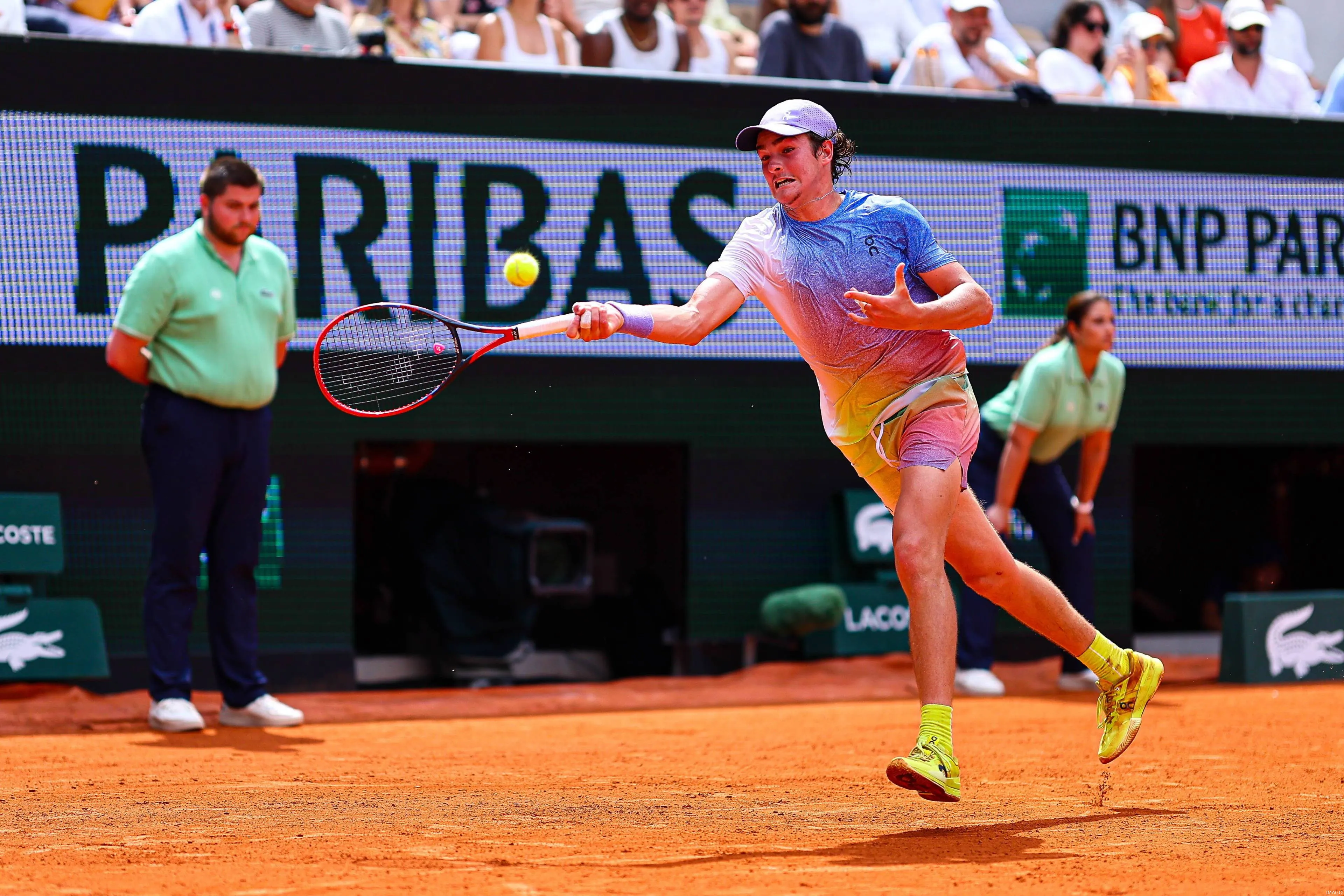
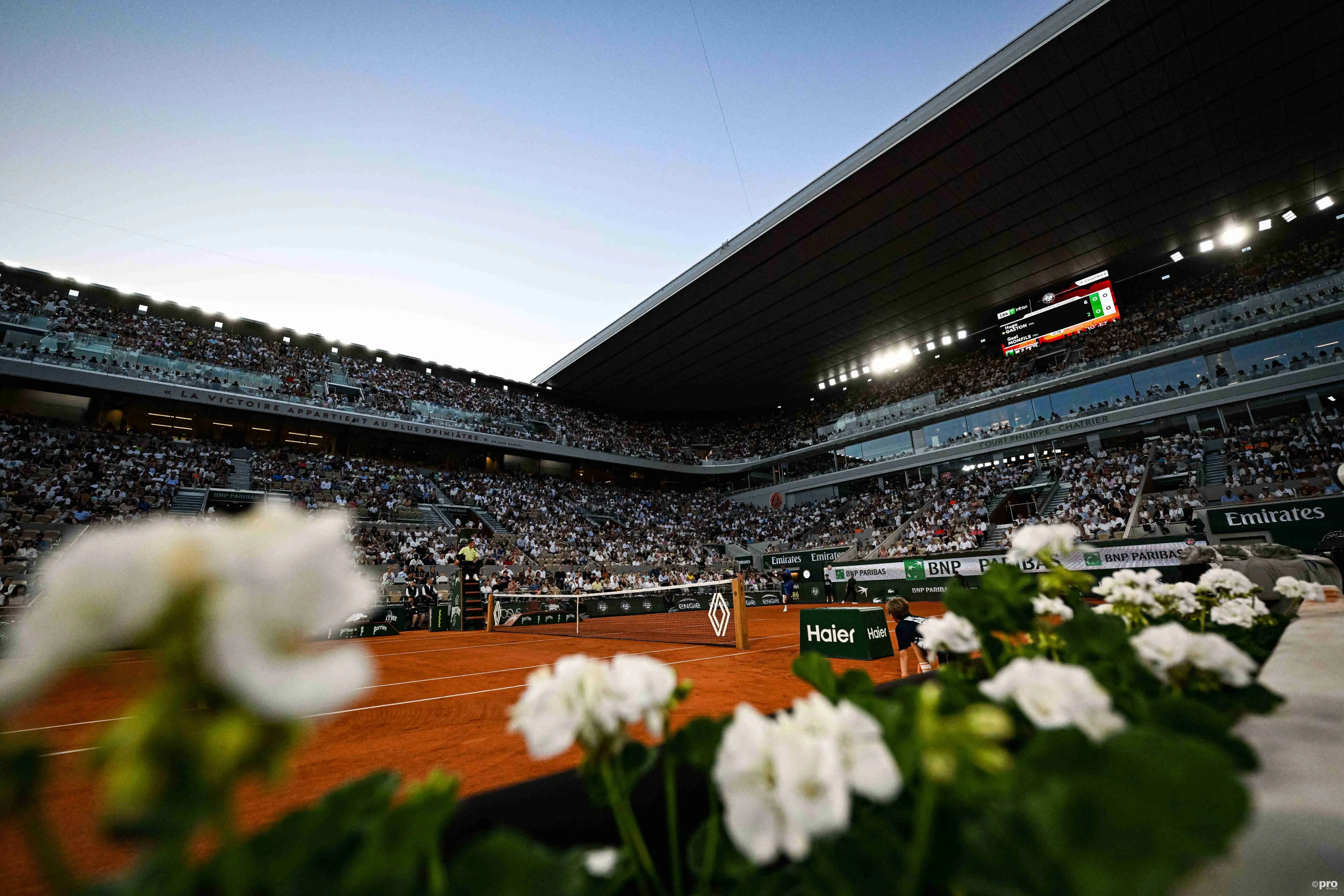
Joao Fonseca described his five-set victory over Novak Djokovic as a match he initially struggled to believe he could complete, despite eventually overturning a two-set deficit on Court Philippe-Chatrier. The 19-year-old Brazilian said the physical intensity of the encounter left him unsure of his own position early in the contest.
The match developed into a sustained baseline battle in which Fonseca repeatedly referenced Djokovic’s ability to increase pace and absorb aggression. “He was destroying me,” the Brazilian said in press conference, describing the difficulty of creating openings in the first two sets.
Djokovic, a three-time Roland-Garros champion, had taken early control before Fonseca gradually shifted momentum by focusing on point construction and reducing unforced errors. The Brazilian said the turning point came as he began to simplify his approach and extend rallies.
Fonseca ultimately completed the comeback in five sets after four hours and 57 minutes. It marked his first appearance in the fourth round of a Grand Slam, and he now prepares for a high-level clash against Casper Ruud, one of the pre-tournament title contenders in Paris, who himself arrives after a five-set comeback against Tommy Paul.

“I just stayed” – the turning point in Fonseca’s comeback
Fonseca dropped the first two sets (4-6, 4-6) before mounting his comeback. He had already achieved a similar turnaround in the second round against Croatia’s Dino Prižmić, when he recovered from two sets down. Against Djokovic, however, the challenge was significantly greater given the Serbian’s status as a 24-time Grand Slam champion, who had only once previously lost a match after leading by two sets.
“Actually, I was not even believing in myself,” Fonseca admitted in Paris. “I mean, it was tough to play against him in the heat. He was destroying me. I mean, if I hit it hard, the ball was coming back harder. And if I go higher, he was just doing drop shots and going aggressive.”

The Brazilian said the key adjustment was not tactical complexity but emotional control, as he focused on reducing the scale of the match in his mind. That shift coincided with a gradual physical dip from Djokovic and a more stable baseline rhythm from Fonseca.
“I just stayed, focusing on point by point, not focusing that I had three more sets to win,” the 19-year-old explained. “And I was just thinking, I mean, let’s stay, let’s stay. I mean, I figured out he was a little bit more tired and that gave me a little bit more hope. And I think I just stayed.”
Djokovic win, crowd impact, and Fonseca’s immediate perspective
Fonseca also reflected on the emotional dimension of sharing the court with Djokovic, describing the post-match exchange as a significant moment in his early career. The Serbian’s brief words at the net added to that impression. “More crowd today. But yeah, I think first of all, it was an amazing match. For me, just sharing the court with him was an unbelievable experience.”
“At the end of the match, he just said good luck. And actually, he said in Portuguese, I can’t remember right now, he said something like ‘parabéns’, which means congrats in Portuguese,” Fonseca noted. “And he said keep it going, good luck. And yeah, for me, it was just a pleasure sharing the court with him.”
The Brazilian also highlighted the role of the crowd, particularly in key momentum swings during the final two sets. He said the atmosphere helped him sustain intensity despite physical fatigue in the closing stages.
“I’m just enjoying the moment” – limits and perspective after first Slam breakthrough
Despite eliminating one of the tournament favourites, Fonseca was reluctant to project long-term expectations, instead emphasising the scale of his immediate achievement. He underlined that this was his first appearance in the fourth round of a Grand Slam. “Well, it’s my first fourth round in my career. I’m just thinking about my next match. The guys are still playing. And for now, I’m just enjoying the moment.”
He added that the understanding of what he had achieved only became clear shortly after the match ended, once the physical intensity had eased and the significance of the result became more apparent. “You know, I think just 10 minutes after the match, I could realise a little bit what I did, what I achieved, how difficult it was and how amazing it was for me.”
Read also

Fonseca also referenced the broader draw context, noting that early exits for top-ranked players had opened opportunities, but insisted his focus remained strictly match-by-match. “I’m just in the fourth round, of course. Jannik (Sinner) and Djokovic out, there’s more chances for the guys."
"There are more on tour like Sascha (Zverev), Casper (Ruud) or whatever,” the world No. 30 said. “I’m just focusing match by match. For me, it was a great achievement just being able to play my first time round of 16. And I’m just going to enjoy the moment.”

claps 0visitors 0
Just In
Popular News
Latest Comments
- "...that way I can talk through my clothes" Wow! Ironically 'mentality' is mentioned in this needless article. Geez.
 mandoist27-05-2026
 - I did the common sense thing... turned it off.mandoist27-05-2026
- Osaka seems to have 'lost the plot' some time ago. Distraction, distraction, distraction.. WTA lost The Plot quite some time ago as well.mandoist27-05-2026
- This one continues to find ways to distract herself from The Game; more than anyone since her "heroes" The Williams. Hope she's not turning into her 'unnecessarily opinionated' father.mandoist27-05-2026
- How unfortunate. Martinez stands far & above these others in effective coaching (and personality).mandoist26-05-2026
- What a Simp.mandoist26-05-2026
- I do not think it is that bad. Many countries do not have a top 10 player on the ATP Tour. The ladies' is indeed not so good since Ash Barty stopped playing suddenly.
 AceOfBase26-05-2026
 - Like Saba :-)AceOfBase26-05-2026
- Still strange that if Swiatek wins Roland Garros, it is a surprise :-)AceOfBase26-05-2026
- Nice article!AceOfBase26-05-2026

Loading