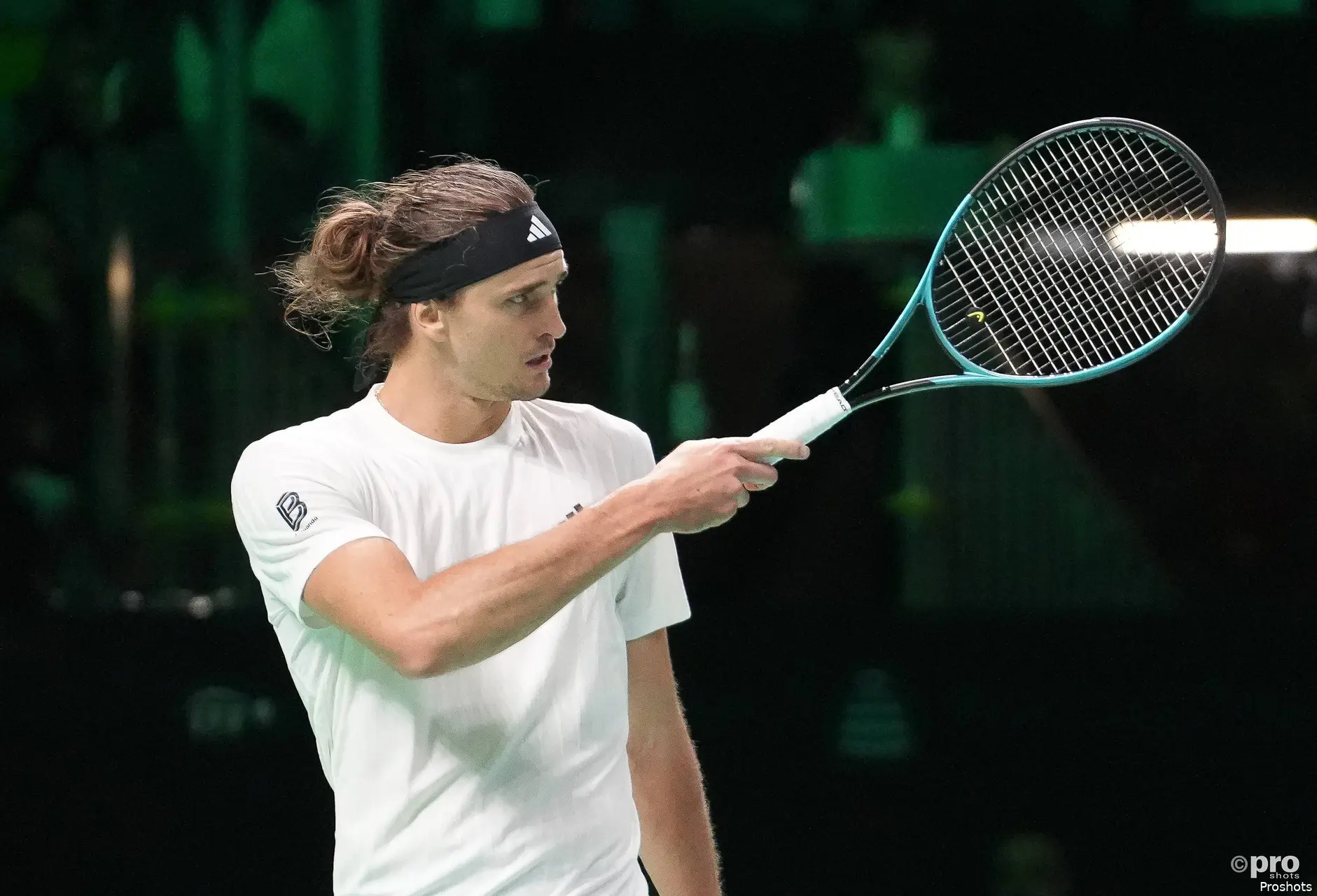
Alexander Zverev has offered a direct comparison between tennis generations, arguing that while past eras carried greater name recognition, the modern ATP Tour is more competitive across the rankings. Speaking on the Nothing Major podcast, the German framed the debate around depth rather than peak quality, stating clearly that “tennis has improved for sure” in today’s game.
The discussion comes after the Sunshine Double in 2026, where Zverev remained a consistent presence in the latter stages. While he did not convert those runs into a title, his results reinforced a broader pattern of sustained competitiveness at Masters 1000 level, maintaining his position among the top contenders behind players like Jannik Sinner and Carlos Alcaraz.
Zverev’s career record continues to underpin that standing. With more than 20 ATP titles, multiple Masters 1000 trophies, an ATP Finals title and Olympic gold, he remains one of the most accomplished players without a Grand Slam title. He has reached major finals, including at the US Open, and has been a regular fixture in the second week of Slams.
Against that backdrop, Zverev approached the generational debate without nostalgia. He pointed to specific structural differences in playing styles and competitive balance, repeatedly stressing that the current era should be viewed as “different” rather than inferior.
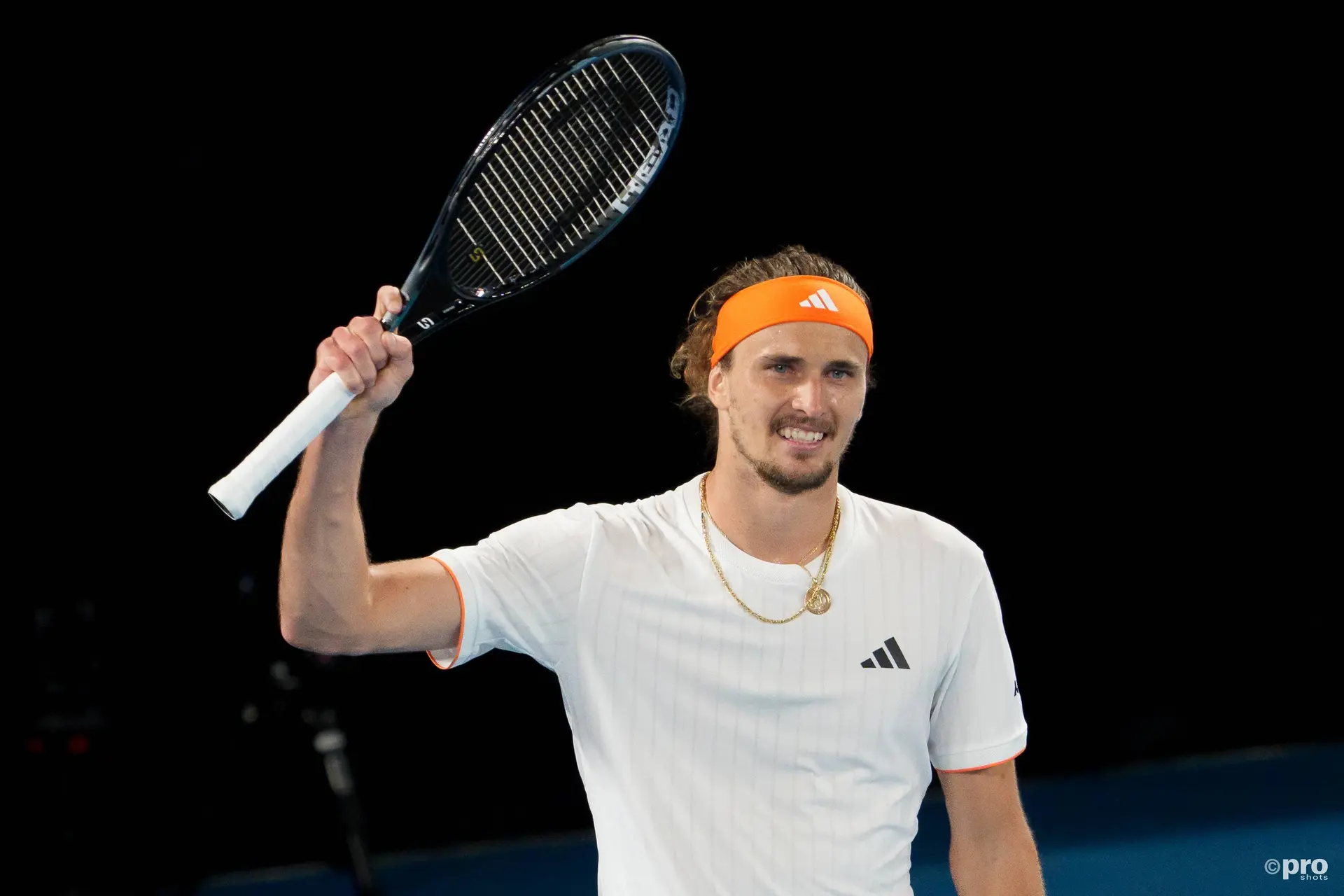
Power baseline and loss of stylistic contrast
Zverev centred his analysis on how the modern game has shifted toward uniformity, with power-based baseline tennis dominating across the tour. He argued that stylistic variation—once a defining feature of players like Roger Federer and Rafael Nadal—has largely diminished.
He described the change in direct terms, noting that most players now operate within the same tactical framework, with differences emerging primarily in execution rather than identity. “The biggest difference is tennis has changed. Everybody hits the ball so hard. Everybody kind of has a similar game style nowadays.”
He expanded that comparison by contrasting earlier generations with today’s field, suggesting that distinctive traits are less pronounced outside a small number of players. “There’s not really the finesse of Roger, or the topspins of Rafa. Carlos has that a little bit, but everybody else kind of plays the same way.”
Zverev then grouped several current players—including himself—within this shared approach, framing modern tennis as a high-tempo, power-driven environment. “Sinner plays very fast, smacking the ball. Fritz smacks the ball. When I play well, I smack the ball. Draper smacks the ball, Rublev smacks the ball. Everybody kind of just hits the ball as hard as they can.”
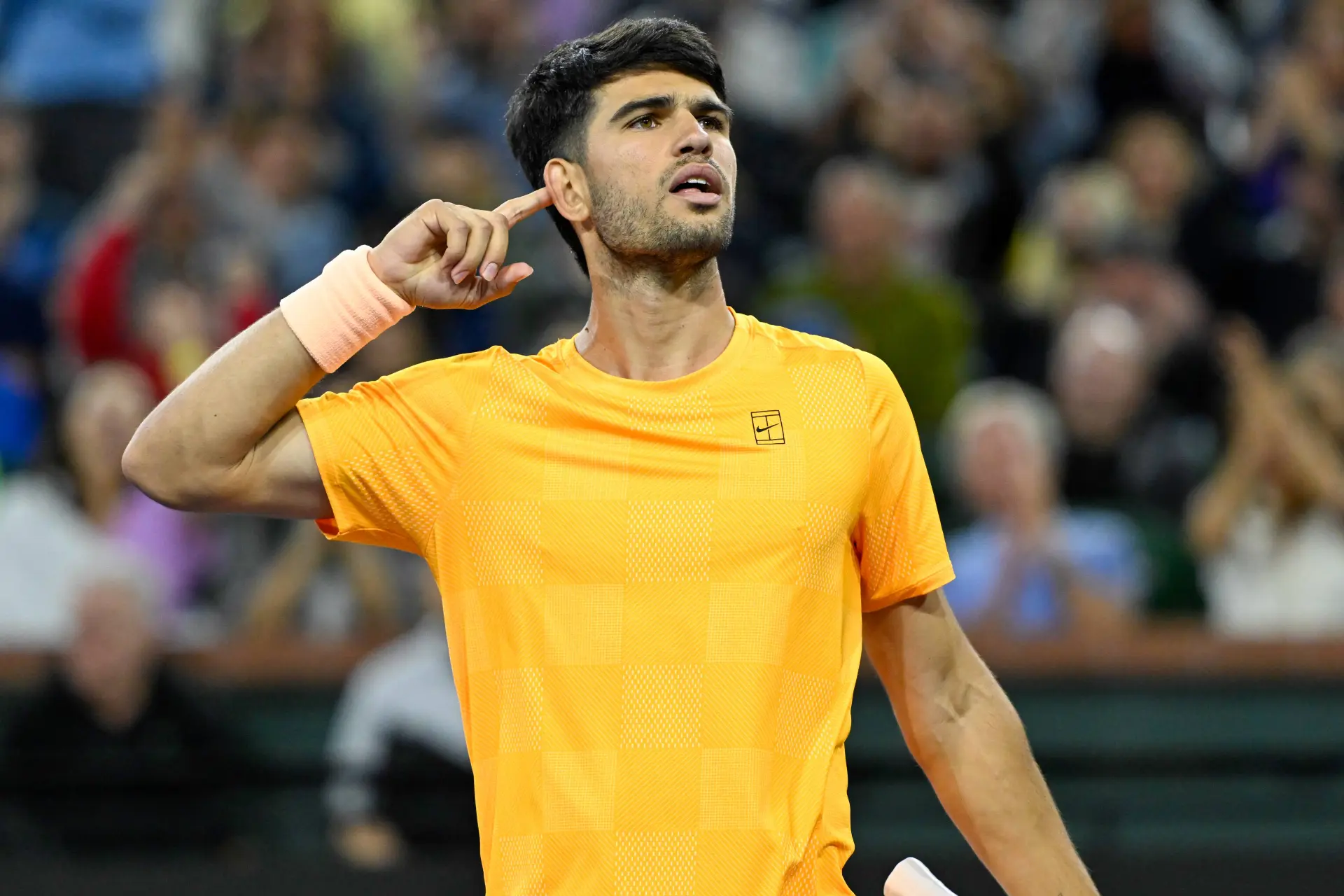
Greater depth beyond the top 10
While acknowledging the stature of previous generations, Zverev emphasised that competitive balance has shifted significantly outside the top tier. He referenced players such as David Ferrer, Tomas Berdych, Stan Wawrinka and Juan Martín del Potro as benchmarks of past strength, but argued that their dominance over lower-ranked opponents was more consistent.
He pointed to a key difference in upset frequency, stating that earlier eras rarely saw top players lose to those ranked outside the top 20 at Grand Slams. “Those names were very big names. But tennis-wise, tennis has improved for sure. I think from 15 to 30, those guys have improved.”
Zverev made the contrast explicit by referencing how uncommon such results once were. “Before, you really rarely saw at a Grand Slam a Ferrer lose to someone 30 in the world. That just didn’t happen.”
He then contrasted that with the current landscape, where results are less predictable and the performance gap has narrowed. “Now it’s different. Rublev can lose to Cerúndolo at the French Open. Tommy Paul can beat Casper Ruud," the world No. 3 added. "There’s not that big of a difference anymore between the top 10 guys like it used to be.”
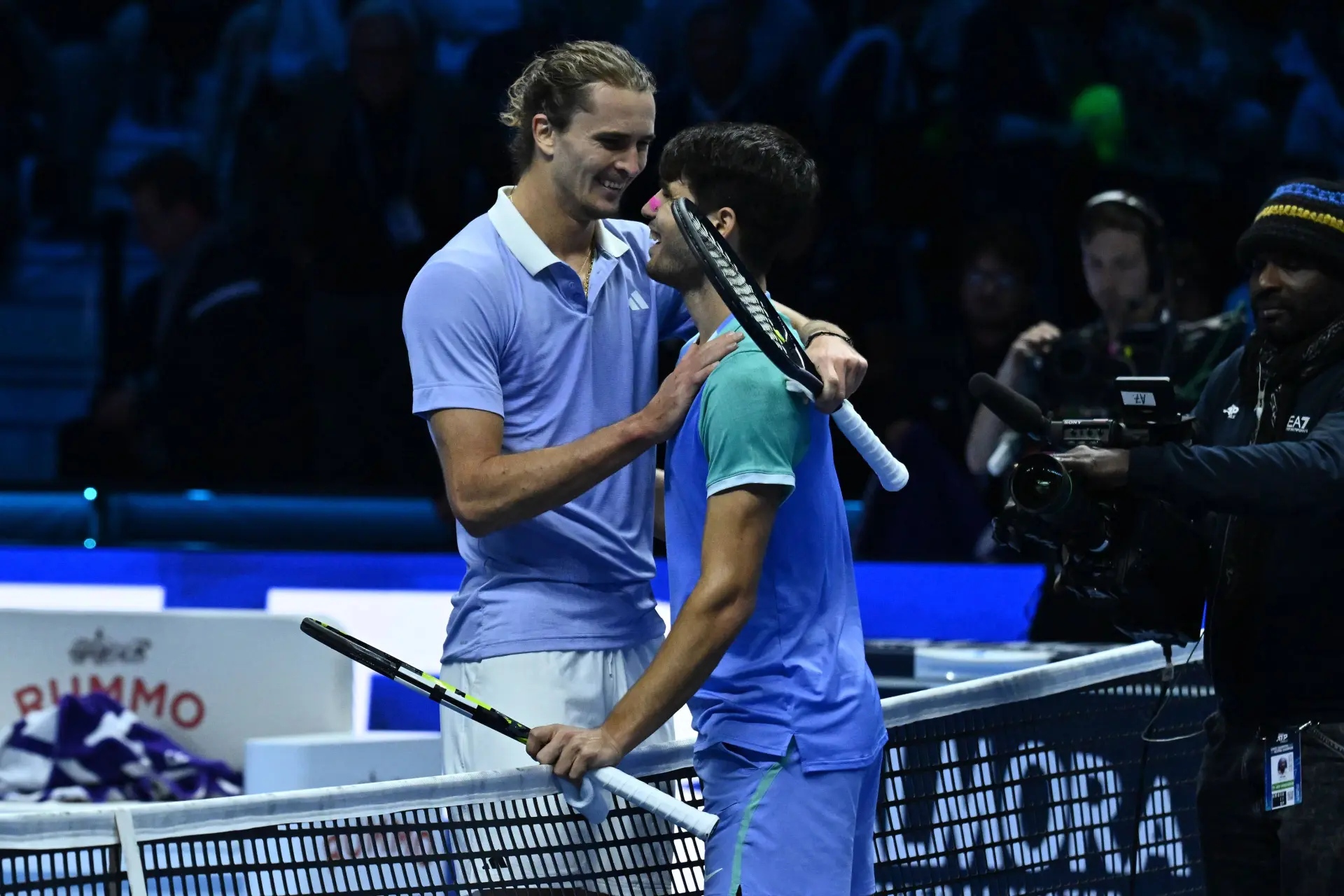
Consistency at the top still remains
Despite highlighting increased depth, Zverev also acknowledged that the top tier retains structural similarities with previous eras. He pointed out that a core group of players still dominate the latter stages of major tournaments, even if the path there is less predictable.
He framed this by referencing how quarter-finals in earlier eras were often filled by the same names, describing that level of consistency as a defining feature. “Before, in the quarterfinals of a Slam, you probably had six of the top eight players every single time. If more than two or three were not there, that was a massive surprise.”
At the same time, he stressed that the modern era still has its own version of that structure, with a group of players consistently expected to reach the final rounds. “Sinner is a lock. Alcaraz is a lock. Novak is a lock. I’d say I’m more or less there.”
Zverev concluded by positioning the comparison as evolutionary rather than hierarchical, reinforcing that the differences between eras lie in how competition is distributed rather than in overall quality.

Cristhián AvilaTennis Journalist
Cristhián Ávila is a tennis journalist based in Santiago, Chile, and has been part of the TennisUpToDate team since early 2023. He covers the ATP and WTA Tours as well as all four Grand Slams, producing breaking news, match reports, analysis, and regular liveblogs from major tournaments.
His reporting combines statistical analysis with clear explanation, helping readers understand tactical developments, player form, and broader storylines across the tour. Working fluently in both Spanish and English, Cristhián collaborates with an international editorial team and contributes to comprehensive global coverage. As part of his work, he has conducted interviews and media interactions with leading figures in the sport, including Caroline Wozniacki and John McEnroe.
In his journalism, Cristhián places strong emphasis on careful sourcing, editorial accuracy, and updating articles promptly when new, verified information becomes available. His coverage is grounded in research, context, and direct engagement with professional tennis.
claps 0visitors 0
Just In

Popular News

Latest Comments
- Does Sinner need that 4.5 mil? I doubt it. He can make that with three modelling gigs!😅🤣Rapunzel21-10-2026
- Did "People Magazine" purchase this website? This nonstop storyline is bullshit.
 mandoist21-10-2026
 - Listen... this is of no concern to anyone but these two. Deal with your own issues -- most of us have our own. Thanks, media, for these insignificant follow-ups which are meaningless.mandoist21-10-2026
- This is so very very sad, for all three of them. I truly thought they had an unbreakable bond, but life throws up so many differing challenges. Having your homeland suffering in such a terrible way, makes happiness lose out to guilt as well. Our thoughts are with them. X💔bjsexton20-10-2026
- I have lost all respect for Svitolina! Could she not have waited until he had played at the Paris Masters!!! She is selfish and don't give a damn about Gael. That is NOT how love is demonstrated Elina!!Rapunzel19-10-2026
- Perhaps convenient tennis tour sex is not a strong enough experience in which to base a marriage?mandoist19-10-2026
- Fight the Good Fight... Tennis (sports in general) need more Humans such as yourself.mandoist18-10-2026
- When is WTA going to mandate Genetic Testing (DNA) ???mandoist18-10-2026
- Hey, Dan... you just wake up from a coma? Regardless -- Thanks for the comedy this morning!mandoist18-10-2026
- Two Things: 1. Stop allowing these Spoiled Trust-Fund Elitists to behave badly. Your little hand-slaps do not deter them. 2. STOP the incessantly annoying "towel wiping" nonsense!!!!mandoist15-10-2026

Loading