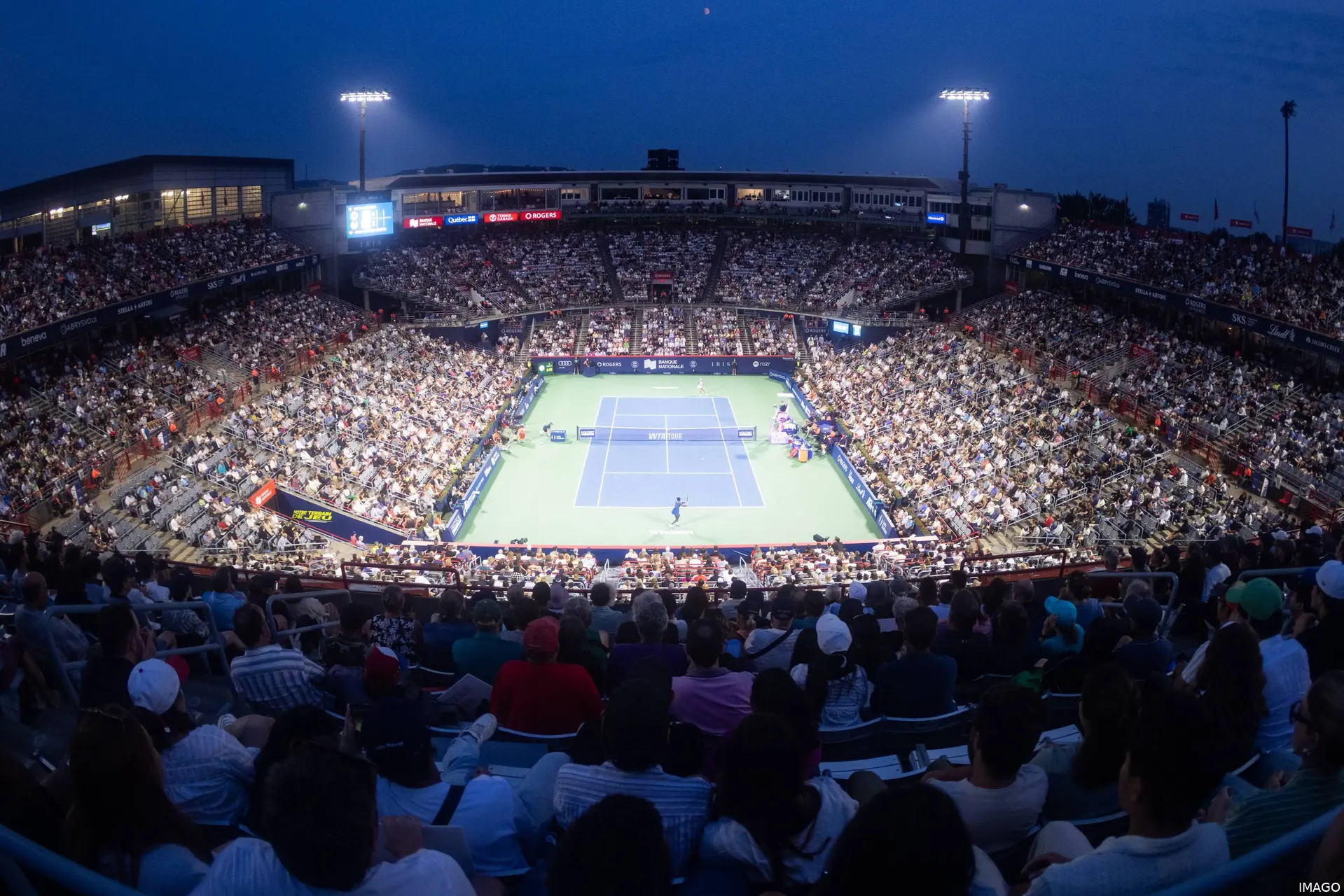
Throughout its history, Wimbledon has been marketed as being steeped in tradition, but the latest bump up in prize money really is very modern tennis. The Championships are not only preserving history but also safeguarding its future. They're reacting to a sports economy that's evolving into a time when it's clear to every player, broadcaster, sponsor and fan that value is being added.
Now, prize money is part of a broader message; much like punters wager for potential winnings on www.playnj.com, tennis professionals are looking to do the same at Grand Slams.
Why? It lets the players know they are valued. It serves as a reminder to agents and sponsors that Wimbledon is still financially strong. It informs fans that the event can expand without losing its identity.
Player Power Is Becoming Harder to Ignore
The rise is also a sign of greater player power. Tennis players aren't employees like footballers or basketball players. They go along with teams, cover coach fees, plan their calendar and take on a lot of the expenses of competition.
The Grand Slam prize money is in addition to endorsements and appearance value for top players. For lower-ranked players, it can mean the difference in a season. A larger payout structure is beneficial because it allows players to cover the costs of travel, coaching, recovery and preparation.
For instance, that is why the discussion isn't only about the champions' increased pay. It's a question of whether the sport can sustain the number of players that make the tournament possible before the final weekend.
The Grand Slams Are Becoming Media Empires
Wimbledon isn't only a tennis tournament. It's the broadcast product, a hospitality event, a driver for tourism, a platform for sponsorships and a global media brand. All matches, practice highlights, interviews and viral moments become merchandising opportunities.
That's changing the perception of prize money. If the game itself is about the players, then the players will ask themselves what they get in return. It's not a tennis thing. In sports, athletes are more aware of their value as performers, media assets, and brand builders.
Thus, the Grand Slam economy is now edging towards that of big entertainment. Tradition may draw the audience in, but it is the players' actions that keep them watching.
Why Wimbledon’s Increase Feels Like a Signal
A record increase is no act of goodwill. It's a sign that Wimbledon gets the vibe in the atmosphere. Grand Slams must defend their domain while simultaneously trying not to appear out of touch with the athletes who power the product.
Not all the prize demands can be fulfilled, though. Tournaments also invest in facilities, fan experience, security, technology and grassroots tennis and staffing. Nevertheless, the course is set. This discussion has gone from using prize money as a bonus to using it as a tool of fairness.
Wimbledon's change is a sign that even the oldest tennis event understands it must continue to evolve.
The Middle of the Draw Matters More Than Ever
What's interesting about prize money isn't always the overall amount for the winners. What happens down the draw is what it is. Tennis is a costly sport and not all players are blessed with big sponsorships.
Having a large first-round win can help stabilize a first-round player. It could pay for a coach for a longer period of time, pay for travel blocks, or remove the incentive for a player to play through an injury to make some quick money. This can enhance the quality of the tour in the long term.
Moreover, the idea of a healthier tennis economy should not just be the reward for the final two on the court. It should help to make the professional pathway more real in the wider field.
Fans Are Watching the Business Side Now
Modern fans are more "business savvy" than the previous generations. They follow prize money, sponsorship deals, media rights, ticket prices and player disputes. They know that sport isn't only about competing. It is business.
For instance, that means that the money on offer at Wimbledon is also a tale for the fans. It has a significant impact on the event perception. It's a tournament that can look more progressive if it distributes more of its growth to players. If it is too resistant, it can look out of rhythm.
The ideal Wimbledon isn't a sepia-toned affair. One that preserves the traditions while acknowledging that the economic nature of those traditions has changed.
A New Era for the Grand Slam Model
Wimbledon's record jackpots don't cure all of the tennis world's ills. Questions concerning scheduling, player well-being, revenue sharing, and tour construction will proceed. But it does indicate the direction the sport is going in.
Nowadays, the Grand Slams are not judged just by courts, crowds and champions. They're evaluated based on their player treatment, the extent to which they leverage their commerce clout, and the amount of money that returns to the creators of the show.
That is what this increase in prize money is about. It's more than a bigger cheque. It's a sign that even Wimbledon, the flagship of continuity in the sport, is being dragged into a new economic age.

Samuel GillEditor-in-Chief
Samuel Gill is the Chief Content Officer (CCO) of TennisUpToDate.com, a role he has held since 2020. He is responsible for editorial governance across the platform, including setting content standards, overseeing accuracy and consistency, and guiding long-term editorial strategy. Since joining, he has contributed more than 10,000 articles and editorial pieces across the TennisUpToDate network, playing a central role in the daily operation and development of the site.
Based in Leicester, Samuel has a broad background in tennis media. In his current role, he works closely with editors and writers to ensure coverage meets clear journalistic standards, with particular attention to verification, consistency, and timely updates when new information becomes available.
claps 0visitors 0
Just In

Popular News
Latest Comments
- A healthy Qinwen may be hard to stop next season. She was already scaring her opponents before her medical leave(s). Unfortunately, Zheng insisted on singing again. On the positive side -- Mirra did not sing!! ;~}
 mandoist11-10-2026
 - Where is it written that athletes, entertainers... People in general... are mandated to keep looking at -- or even using [anti]Social Media? Public & private figures consistently complain and reveal their concerns about negativity and violence thrown at them -- yet they insist on participating. Avoid it, don't use it, don't read it. It's okay to occasionally look up at the World instead beating your eyes & thumbs to death on The Inventions out there.mandoist11-10-2026
- great articlestennisseserver07-10-2026
- Medvedev was leading Djokovic 7-5, 3-5 when an attempted return..' NO you ignorants, Djokovic was leading .weiss05-10-2026
- No more bullshit "Wildcards" to these two. Qualify like everyone else -- there will be cameras there, too. Time to scream... WTF ????!!!!mandoist29-09-2026
- Let's not BS the general public -- Sabalenka started showing cracks in her game last season. Her losses and near-losses started at about the same time she began being distracted by Fame (constant Selfies, making TV commercials, magazine shoots, endless Social Media nonsense, etc., etc.) One would think even Saba could recognize the parallels with others who failed before her -- Raducanu, Giorgi, Bouchard to name a few.mandoist25-09-2026
- Gross!! Hey Raducanu, Giorgi, and Bouchard -- reserve a seat at your Social Media Selfie table for Saba + Naomi. They're heading in your direction soon enough.mandoist24-09-2026
- And then these same players will complain about how lengthy their season’s were and need more time-off. I’m all for more tennis but the amount of tennis we get now is actually kind of crazy! We all need a break, especially the players.DaveyWavey23-09-2026
- You should do a comparison article for "different kinds of justice" the courts decide for tennis players. I can think of at least three players who received very small bans of a few months, however Tara Moore has been fighting for her literal survival the past few years. It seems odd considering she is not a "name" player, unlike the other cases.DaveyWavey22-09-2026
- PRIZE MONEY & POINTS Winner - $185,500 Finalist - $114,500 Semi-Finalist - $66,003 Quarter-Finalist - $35,000 Round of 16 - $18,045 Round of 32 - $13,005 Winner - 500 Finalist - 325 Semi-Finalist - 195 Quarter-Finalist - 108 Round of 16 - 60 Round of 32 - 1DaveyWavey20-09-2026

Loading