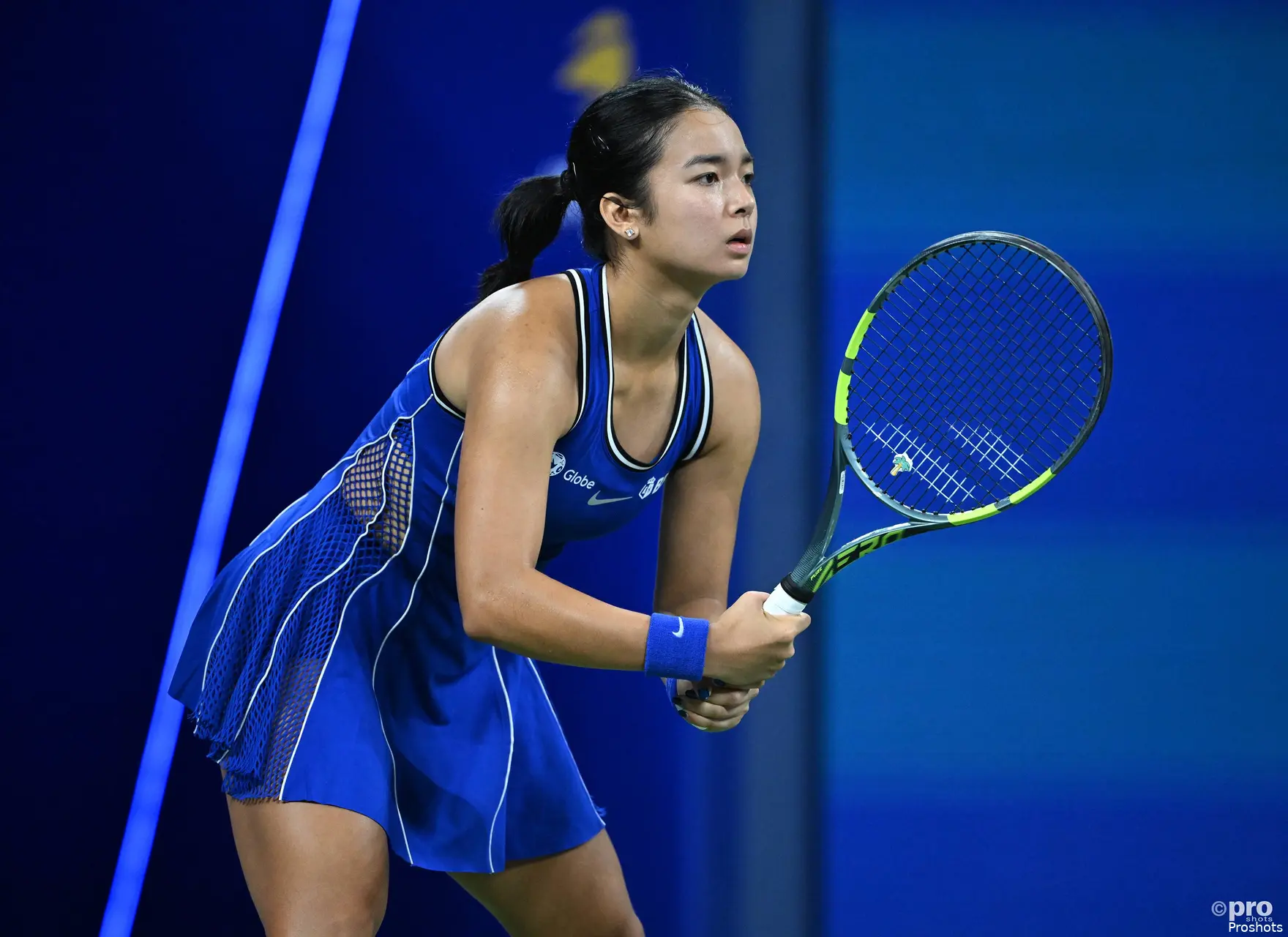
Alexandra Eala lost in the third round of the US Open, 7-5, 3-6, 7-5, to world No. 14 Iva Jovic. On paper, that is a solid but unremarkable result. Treating it as the headline, though, misses the actual story of her year. Eala started 2026 ranked No. 53 in the world. She leaves New York at a career-high No. 18, with her maiden WTA Tour title, wins over multiple Grand Slam champions and a résumé that no longer reads like a breakout — it reads like an arrival.
That distinction matters, and it is worth sitting with for a moment. Breakouts are moments — a great week, a run nobody saw coming, a name trending for 72 hours before the tour moves on. What Eala has built this season is something slower and more durable: a body of work assembled match by match, across hard courts, clay and grass, over nine months. The loss to Jovic is a footnote to that. The season itself is the headline, and it deserves to be read as one.
The numbers behind the rise
Eighteen months ago, Eala was not inside the world's top 100. She entered 2025 ranked No. 147, spent that season climbing to a career-high No. 56, and then opened 2026 at No. 53 — a solid, unspectacular ranking for a 20-year-old with promise but no signature results yet. What has happened since has been anything but gradual.
She reached the Round of 16 at both Indian Wells and Miami, progressed to the fourth round at Wimbledon, won her first WTA 125 title in Birmingham and, weeks later, claimed her first WTA Tour singles title at the WTA 500 DC Open. Eala arrived at the US Open as the tournament's No. 17 seed — a player other seeds were actively trying to avoid, rather than one hoping to sneak past them.
Alexandra Eala — ranking history
| Date | Ranking |
| Start of 2024 | No. 185 |
| Start of 2025 | No. 147 |
| 2025 year-end | No. 56 |
| Start of 2026 | No. 53 |
| March 2026 | No. 29 |
| Aug 2026 | Top 20 |
| After 2026 US Open | No. 18 |
| US Open 2026 seeding | No. 17 |
The trajectory alone tells a story of consistency, not a single hot week — which is exactly what separates a genuine top-20 player from someone who once had one.
Where it started: Miami, and the making of a contender
To understand why 2026 has not come out of nowhere, it helps to go back to March 2025, when a 19-year-old Eala arrived at the Miami Open on a wildcard, ranked outside the top 100, and proceeded to beat three Grand Slam champions in a row — Madison Keys, Jelena Ostapenko and Iga Swiatek — to reach the semifinals.
It made her the first player from the Philippines to reach a WTA 1000 semifinal and announced, for anyone who had not been paying attention, that her game translated to the highest level, not just against lower-ranked opposition.

Alexandra Eala after beating Iga Swiatek at Miami Open quarterfinals
That run did not come from nowhere either. Eala picked up a racket at four, coached first by her grandfather, before moving to Spain at 13 on a scholarship to train at the Rafa Nadal Academy in Manacor — the same academy that produced its namesake's relentless baseline game and mental discipline.
She graduated in 2023 with her diploma handed to her by then-world No. 1 Iga Swiatek, two years before beating her in Miami. Rafael Nadal himself has stayed close to her progress ever since, training alongside her as recently as this year. It is the kind of pedigree that explains the technical foundation; the results since have
Bigger than tennis: what she means back home
Eala's rise has also become much bigger than her results on the court. The support surrounding her has grown rapidly alongside her results, with Filipino fans increasingly turning up in large numbers at tournaments around the world. That was particularly evident during her run in Washington, where she won her first WTA Tour title and became the centre of attention back home.
Jessica Pegula, the player Eala defeated in the rain-delayed final, later highlighted just how noticeable that support had become. The American described the Filipino crowd she experienced during the final as the best support she had seen for a Monday match anywhere on tour, underlining how Eala's success has created a following that now travels far beyond the Philippines.

Alexandra Eala stunned Jessica Pegula in the DC Open final
That connection is significant for a player representing a country without a long tradition of success at the highest level of tennis. Eala is no longer simply competing for herself or trying to climb the rankings. Her matches have become events for Filipino fans, with her progress creating a level of visibility for Philippine tennis that few players from the country have previously managed.
Eala has embraced that role rather than shied away from it, describing Filipino fan culture as something that "should be celebrated". Her rise has given those supporters a player to follow at the biggest tournaments, while her results have simultaneously raised expectations for what Philippine tennis can produce.
Why this changes the conversation
The bigger change, however, is what Eala's results now mean for the way she is viewed as a player. Eighteen months ago, she was still outside the top 100 and largely seen as a promising teenager capable of producing a major upset. Her Miami run changed that perception, but the consistency of her results in 2026 has taken her far beyond the prospect label.
Eala is now a genuine top-20 player with a WTA Tour title and wins over some of the biggest names in the sport. Her victories over Grand Slam champions are no longer isolated surprises, while her results across hard courts, clay and grass show that her level is not dependent on one particular tournament or surface.
Read also
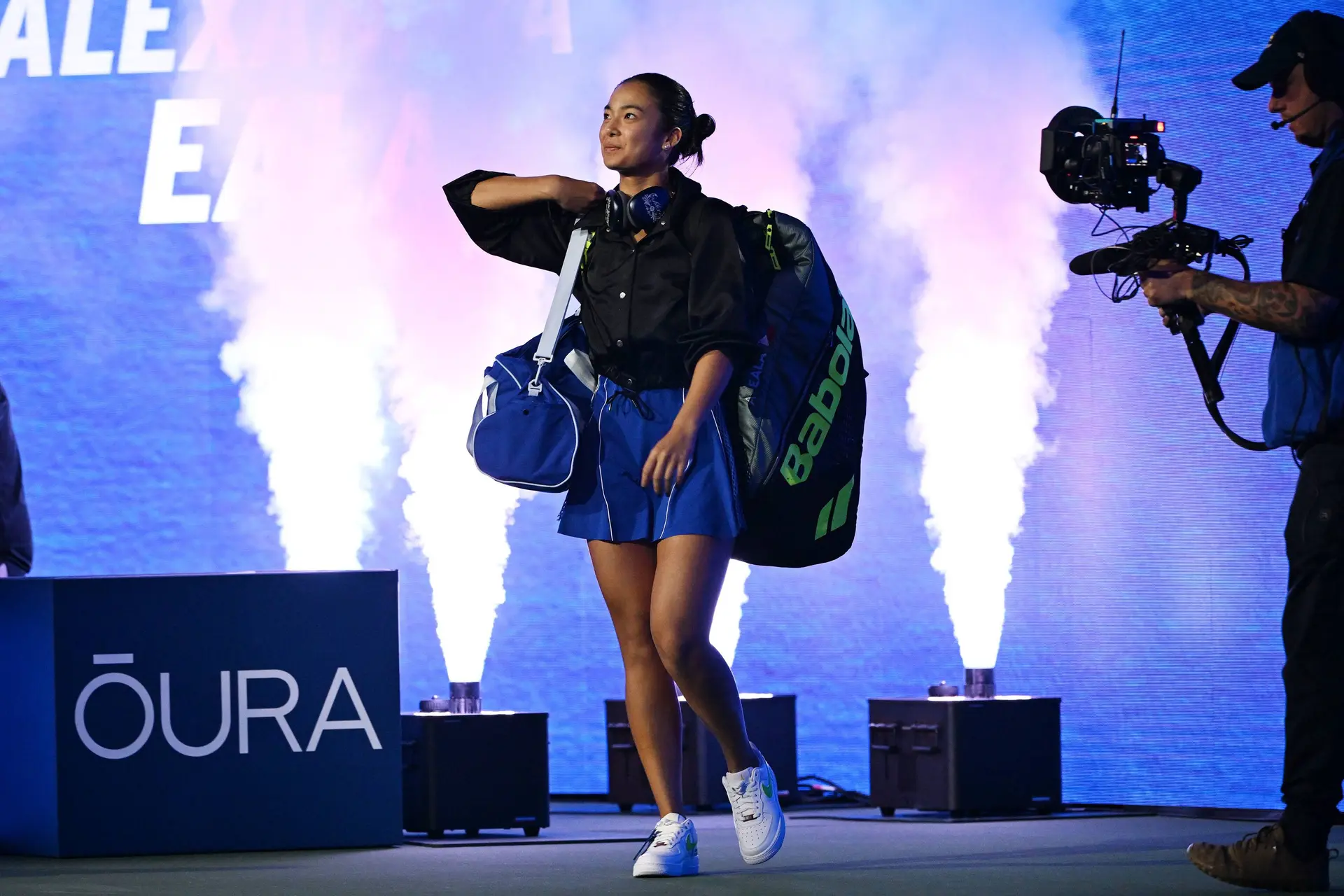
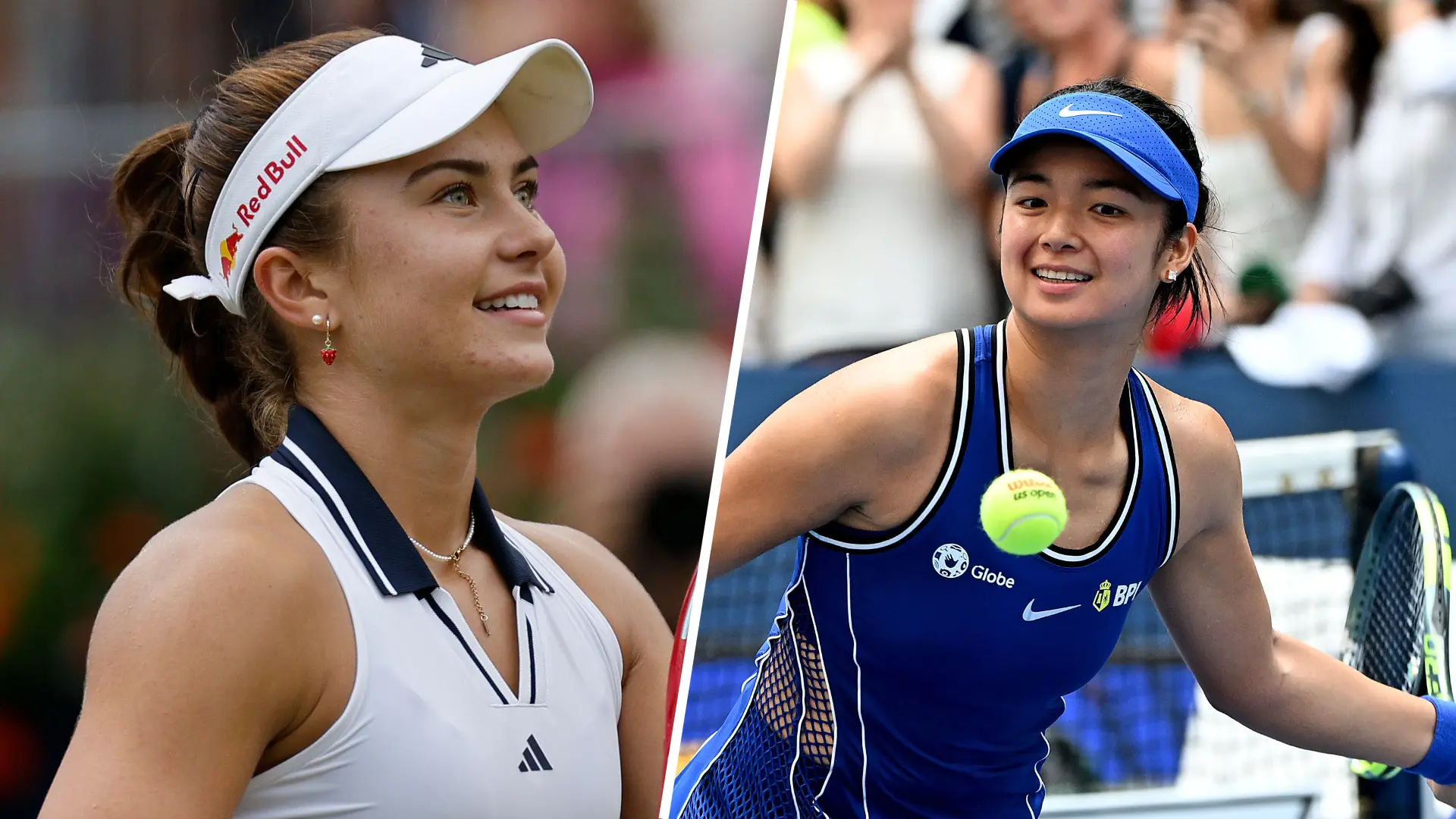
That is why the third-round defeat to Iva Jovic should not alter the bigger picture. Eala lost 7-5, 3-6, 7-5 in Arthur Ashe Stadium, but the result came after a season in which she had already established herself among the world's best.
A year ago, reaching the third round of a Grand Slam would have represented another important step. Now, it feels like an opportunity missed. That shift in expectations is perhaps the clearest indication of how far Eala has come

Cristhián AvilaTennis Journalist
Cristhián Ávila is a tennis journalist based in Santiago, Chile, and has been part of the TennisUpToDate team since early 2023. He covers the ATP and WTA Tours as well as all four Grand Slams, producing breaking news, match reports, analysis, and regular liveblogs from major tournaments.
His reporting combines statistical analysis with clear explanation, helping readers understand tactical developments, player form, and broader storylines across the tour. Working fluently in both Spanish and English, Cristhián collaborates with an international editorial team and contributes to comprehensive global coverage. As part of his work, he has conducted interviews and media interactions with leading figures in the sport, including Caroline Wozniacki and John McEnroe.
In his journalism, Cristhián places strong emphasis on careful sourcing, editorial accuracy, and updating articles promptly when new, verified information becomes available. His coverage is grounded in research, context, and direct engagement with professional tennis.
claps 0visitors 0
Just In

Popular News



Latest Comments
- Does Sinner need that 4.5 mil? I doubt it. He can make that with three modelling gigs!😅🤣Rapunzel21-10-2026
- Did "People Magazine" purchase this website? This nonstop storyline is bullshit.
 mandoist21-10-2026
 - Listen... this is of no concern to anyone but these two. Deal with your own issues -- most of us have our own. Thanks, media, for these insignificant follow-ups which are meaningless.mandoist21-10-2026
- This is so very very sad, for all three of them. I truly thought they had an unbreakable bond, but life throws up so many differing challenges. Having your homeland suffering in such a terrible way, makes happiness lose out to guilt as well. Our thoughts are with them. X💔bjsexton20-10-2026
- I have lost all respect for Svitolina! Could she not have waited until he had played at the Paris Masters!!! She is selfish and don't give a damn about Gael. That is NOT how love is demonstrated Elina!!Rapunzel19-10-2026
- Perhaps convenient tennis tour sex is not a strong enough experience in which to base a marriage?mandoist19-10-2026
- Fight the Good Fight... Tennis (sports in general) need more Humans such as yourself.mandoist18-10-2026
- When is WTA going to mandate Genetic Testing (DNA) ???mandoist18-10-2026
- Hey, Dan... you just wake up from a coma? Regardless -- Thanks for the comedy this morning!mandoist18-10-2026
- Two Things: 1. Stop allowing these Spoiled Trust-Fund Elitists to behave badly. Your little hand-slaps do not deter them. 2. STOP the incessantly annoying "towel wiping" nonsense!!!!mandoist15-10-2026

Loading