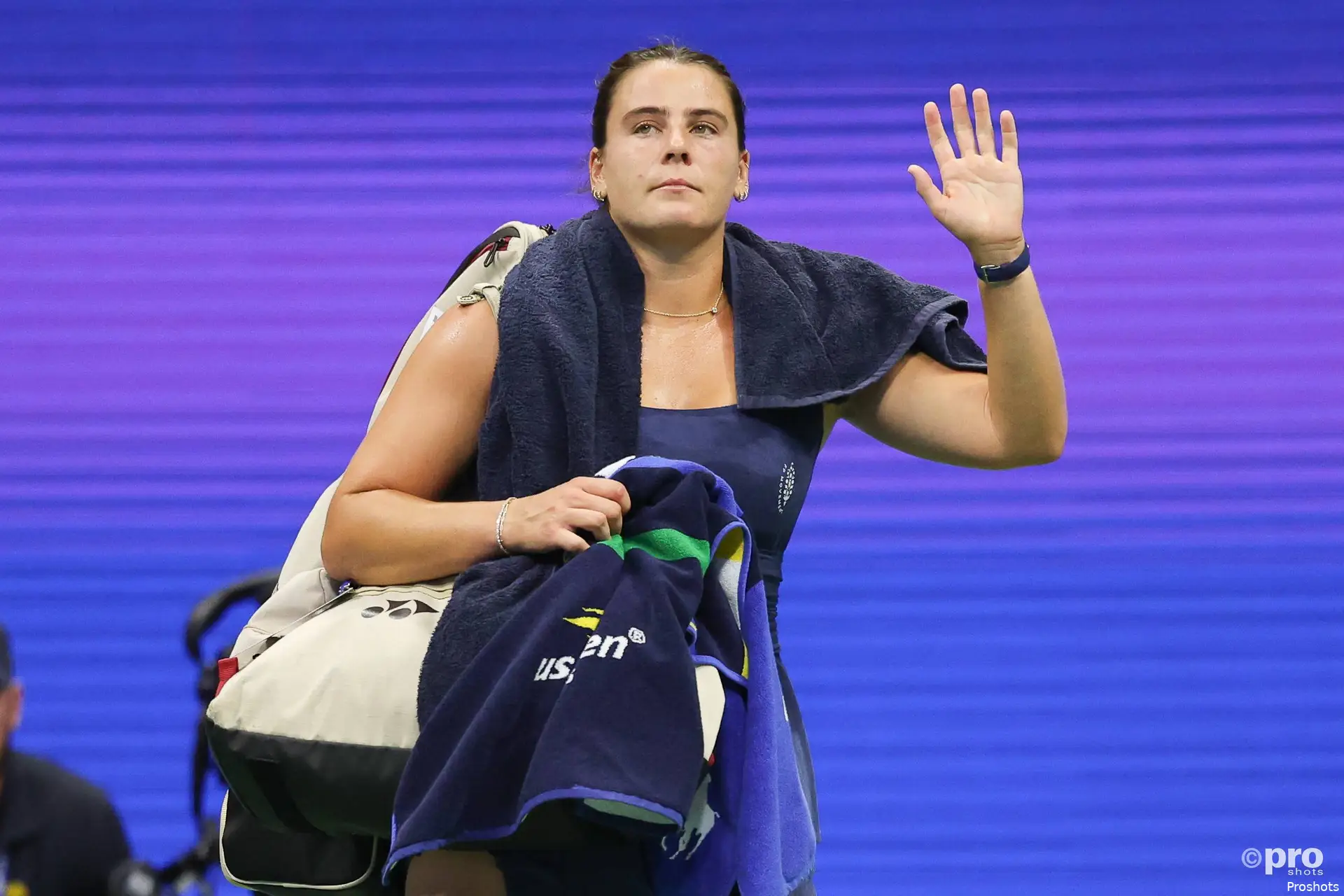
People have always seemed to want Emma Navarro’s story to be about something other than Emma Navarro. Her father is a billionaire. Her family owns major tennis properties.
She grew up with advantages most aspiring professional tennis players could never imagine having. All of those things are true. And none of them tell us very much about what it feels like to live inside Emma Navarro’s body, play professional tennis at Emma Navarro’s level, or experience the past three years of Emma Navarro’s life.
On Wednesday, she finally told us. And what she wrote was brave. Navarro revealed that the health problems she has dealt with over the past several years were eventually diagnosed as Relative Energy Deficiency in Sport, or RED-S, complicated by Hashimoto’s hypothyroidism. She described losing nearly 20 pounds during her first full year on tour, being constantly hungry, dealing with headaches and dizziness, struggling with brain fog and memory, watching her immune system weaken and experiencing emotions that felt foreign to her.
All the while, she was becoming one of the best tennis players in the world. Think about that for a moment. In 2023, Navarro played 88 singles matches across 29 tournaments. She started that year ranked around No. 150 and finished it inside the top 40. Then came Hobart, bigger wins, deeper Grand Slam runs and, eventually, a semifinal at the 2024 US Open and a career-high ranking of No. 8.

Emma Navarro has revealed her issues.
From the outside, Emma Navarro’s life looked pretty easy. It wasn’t. That’s why I hope we can resist doing what we so often do with athletes and immediately turn Navarro’s story into a debate about something else. The schedule. Sports nutrition. The WTA. Her team. Her family. Who should have noticed what and when.
Those are legitimate conversations, and there will be time for them. Today should be about Emma. Because there is real courage in telling people that the version of you they saw wasn’t the whole version.
There’s even more courage when part of what you’re discussing is your body. Navarro acknowledged that people noticed her body changing as she recovered. She had noticed the comments online. Her response should be printed out and taped to the wall of every junior tennis academy in America: “So yeah. I gained some weight this year. But I also gained my life back.”
That is an extraordinary thing for a 25-year-old professional athlete to say publicly. It’s also why I’m comfortable using a word that gets thrown around far too casually in sports. Emma Navarro is a hero.
Not because she has suffered more than everyone else. Suffering isn’t a competition, and privilege doesn’t make someone immune from pain, illness, fear or vulnerability.
She’s a hero today because somewhere there is a 15-year-old tennis player who believes getting thinner will make her better. Somewhere there is a college athlete who thinks constant exhaustion is simply the price of being serious. Somewhere there is a young professional who feels awful but keeps looking at her results and telling herself that if she’s winning, everything must be fine.
And somewhere there is a young woman reading Emma Navarro saying that no number on a scale and no amount of leanness is worth more than your health and well-being. Maybe she needed to hear precisely that from precisely this person.
We’ve been talking about the wrong Navarro
I’ve never particularly liked the way Navarro’s family wealth dominates conversations about her.
Yes, it’s part of her biography. Pretending otherwise would be silly. Her father, Ben Navarro, is a billionaire businessman whose family investments in tennis include the Charleston Open and Cincinnati Open.
But being born into extraordinary wealth doesn’t mean somebody else can play your third set. It doesn’t hit your serve. It doesn’t return Iga Świątek’s serve. It doesn’t drag you through 88 matches in a season.
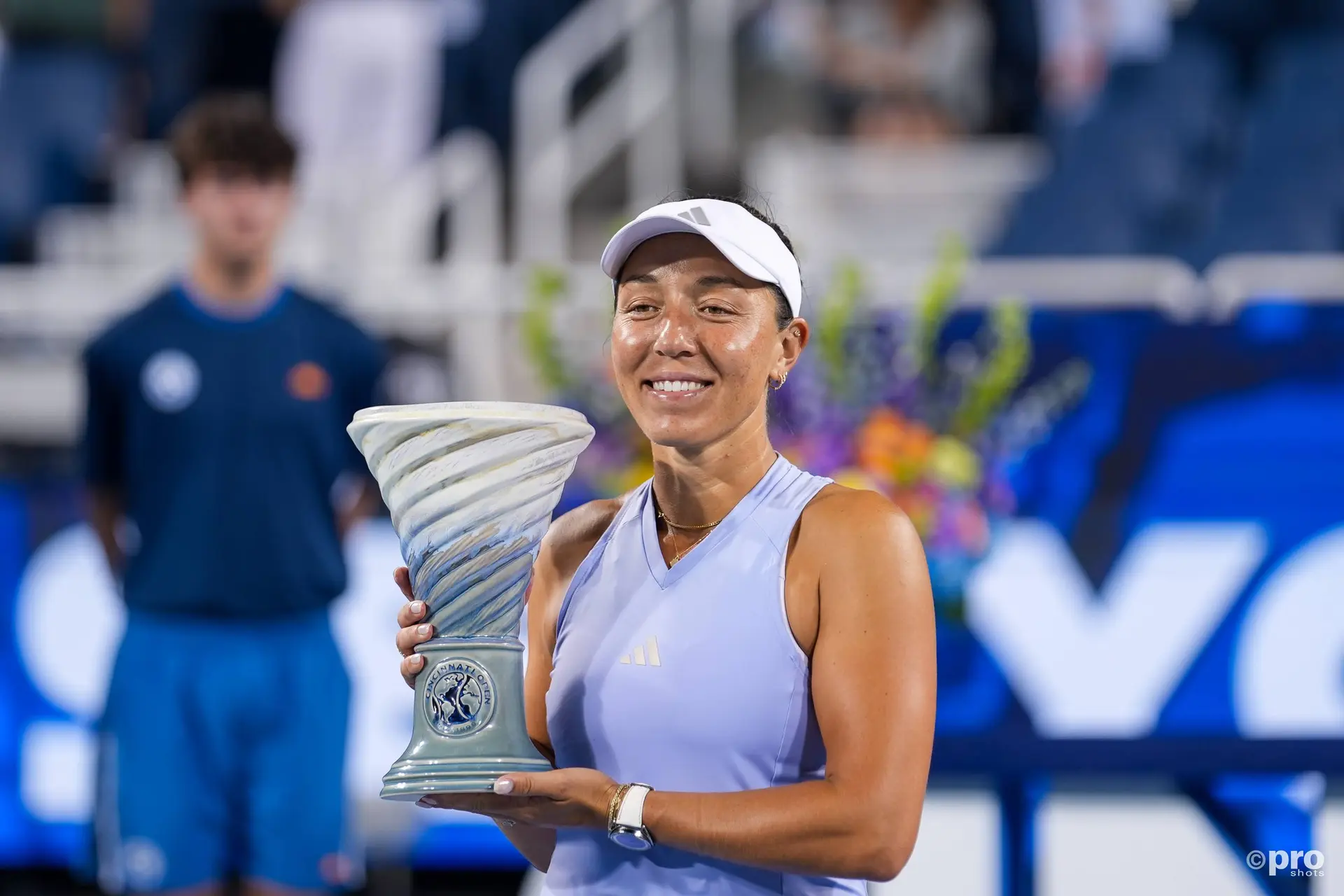
And it certainly doesn’t prevent you from getting sick. We do something similar with Jessica Pegula. Mention Pegula to a casual sports fan and there’s a decent chance the conversation gets to her parents’ wealth before it gets to what an exceptional tennis career she has built.
I’ve always found that strange. We don’t ordinarily decide that someone’s advantages invalidate everything difficult they subsequently accomplish. Yet with Navarro and Pegula, family wealth sometimes becomes a shortcut for explaining away achievement.
Navarro herself has pushed back on being defined as somebody’s billionaire daughter. What she has built on the tennis court belongs to her. And what she revealed Wednesday belongs to her, too.
Money can provide exceptional doctors. It can provide nutritionists, trainers, travel and resources unavailable to most people. Those advantages matter enormously.
Money still cannot outsource being sick. It cannot experience dizziness for you. It cannot clear the brain fog. It cannot make the decision for you to tell the world what happened. And it cannot walk onto Arthur Ashe Stadium and play the match.
Tennis needs Emma Navarro
I think Navarro is going to be exceptionally good for women’s tennis. Actually, she already is. She’s an excellent player with a game that has taken her into the top 10 and deep into Grand Slams. She reached another US Open quarterfinal this month despite everything she has been working through. But I’m thinking much longer term.
Women’s tennis needs people who care about the sport beyond their own ranking. It needs ambassadors. It needs former players who remain involved when their playing careers end. It needs people with ideas, relationships, business experience and, yes, access to capital who believe women’s tennis is worth investing in.
Navarro grew up in a family that has already made enormous investments in tennis. Charleston has become one of the signature events on the WTA calendar, and her family’s Beemok Sports & Entertainment also owns the Cincinnati Open.
I have no inside information about what Emma Navarro will do 10, 20 or 30 years from now. But I’ll make the prediction anyway. Like Pegula, I suspect Navarro’s relationship with tennis will last far longer than her playing career.
I can imagine her as an ambassador for the sport, a mentor to younger players, a friend of the tour and eventually an investor in it. I can imagine Emma Navarro at 45 still helping build women’s tennis rather than simply remembering when she played it.
Wednesday gave us another reason to hope so. Because being a great ambassador isn’t only about smiling for sponsors, signing autographs or saying the right things after a match. Sometimes it means telling the truth when the truth is uncomfortable.
Now let her go
Navarro is shutting down her 2026 season. She won’t play the Asian swing. She plans to use the remainder of the year to continue working on her medication and fueling protocols, with the goal of returning in Australia in 2027. Good.
In fact, this is where I’ll return to one of my favorite tennis arguments: this should ABSOLUTELY be the offseason anyway.
I’ve argued repeatedly that professional tennis asks too much of its players and gives them too little genuine time away. The season stretches and stretches, and players are expected to manage their bodies while rankings, points, prize money and tournaments keep whispering the same message:
Keep playing. Navarro has earned the right to stop. No guilt. No questions about when she’ll be ready. No obsessing over rankings she might lose or tournaments she’ll miss.
Give her the grace to disappear for a while. Let her eat. Let her recover. Let her laugh. Let her spend time with people she loves.
Let her be a very cool 25-year-old. There will be tennis again soon enough.
And when Australia arrives in January, I hope tennis fans recognize what we’re getting back. Not the billionaire’s daughter. Not the former No. 8. Not the US Open semifinalist. Emma Navarro.
Read also

A superb tennis player who discovered, painfully, that winning matches and being healthy aren’t necessarily the same thing. A young woman who could have kept the details private but decided her experience might help somebody else. A person who told the world that gaining weight helped her gain her life back.
That took guts. So congratulations, Emma. Go take your offseason. We’ll see you in Australia.

Aron SolomonGuest Author
A Pulitzer Prize-nominated journalist for his groundbreaking op-ed in The Independent exposing the NFL’s “race-norming” policies, Aron Solomon, JD, is a globally recognized thought leader in law, media, and strategy.
As Chief Strategy Officer for AMPLIFY, he leverages his deep expertise to shape the future of legal marketing. Aron has taught entrepreneurship at McGill University and the University of Pennsylvania and was honored as a Fastcase 50 recipient, recognizing him among the world’s top legal innovators. A prolific commentator on law, business, and culture, his insights regularly appear in Newsweek, The Hill, Crunchbase News, and Literary Hub.
He has also been featured in The New York Times, Fast Company, Fortune, Forbes, CBS News, CNBC, USA Today, ESPN, TechCrunch, BuzzFeed, Venture Beat and countless other leading global media outlets. We are proud to have Aron on board at TennisUpToDate, where his deep tennis expertise enriches the site with sharp, original columns that connect the sport to wider cultural debates.
claps 1visitors 1
Just In

Popular News


Latest Comments
- Does Sinner need that 4.5 mil? I doubt it. He can make that with three modelling gigs!😅🤣Rapunzel21-10-2026
- Did "People Magazine" purchase this website? This nonstop storyline is bullshit.
 mandoist21-10-2026
 - Listen... this is of no concern to anyone but these two. Deal with your own issues -- most of us have our own. Thanks, media, for these insignificant follow-ups which are meaningless.mandoist21-10-2026
- This is so very very sad, for all three of them. I truly thought they had an unbreakable bond, but life throws up so many differing challenges. Having your homeland suffering in such a terrible way, makes happiness lose out to guilt as well. Our thoughts are with them. X💔bjsexton20-10-2026
- I have lost all respect for Svitolina! Could she not have waited until he had played at the Paris Masters!!! She is selfish and don't give a damn about Gael. That is NOT how love is demonstrated Elina!!Rapunzel19-10-2026
- Perhaps convenient tennis tour sex is not a strong enough experience in which to base a marriage?mandoist19-10-2026
- Fight the Good Fight... Tennis (sports in general) need more Humans such as yourself.mandoist18-10-2026
- When is WTA going to mandate Genetic Testing (DNA) ???mandoist18-10-2026
- Hey, Dan... you just wake up from a coma? Regardless -- Thanks for the comedy this morning!mandoist18-10-2026
- Two Things: 1. Stop allowing these Spoiled Trust-Fund Elitists to behave badly. Your little hand-slaps do not deter them. 2. STOP the incessantly annoying "towel wiping" nonsense!!!!mandoist15-10-2026

Loading