Ten WTA Finals, ten different champions: can Rybakina finally break Serena Williams' record in Indian Wells?
WTA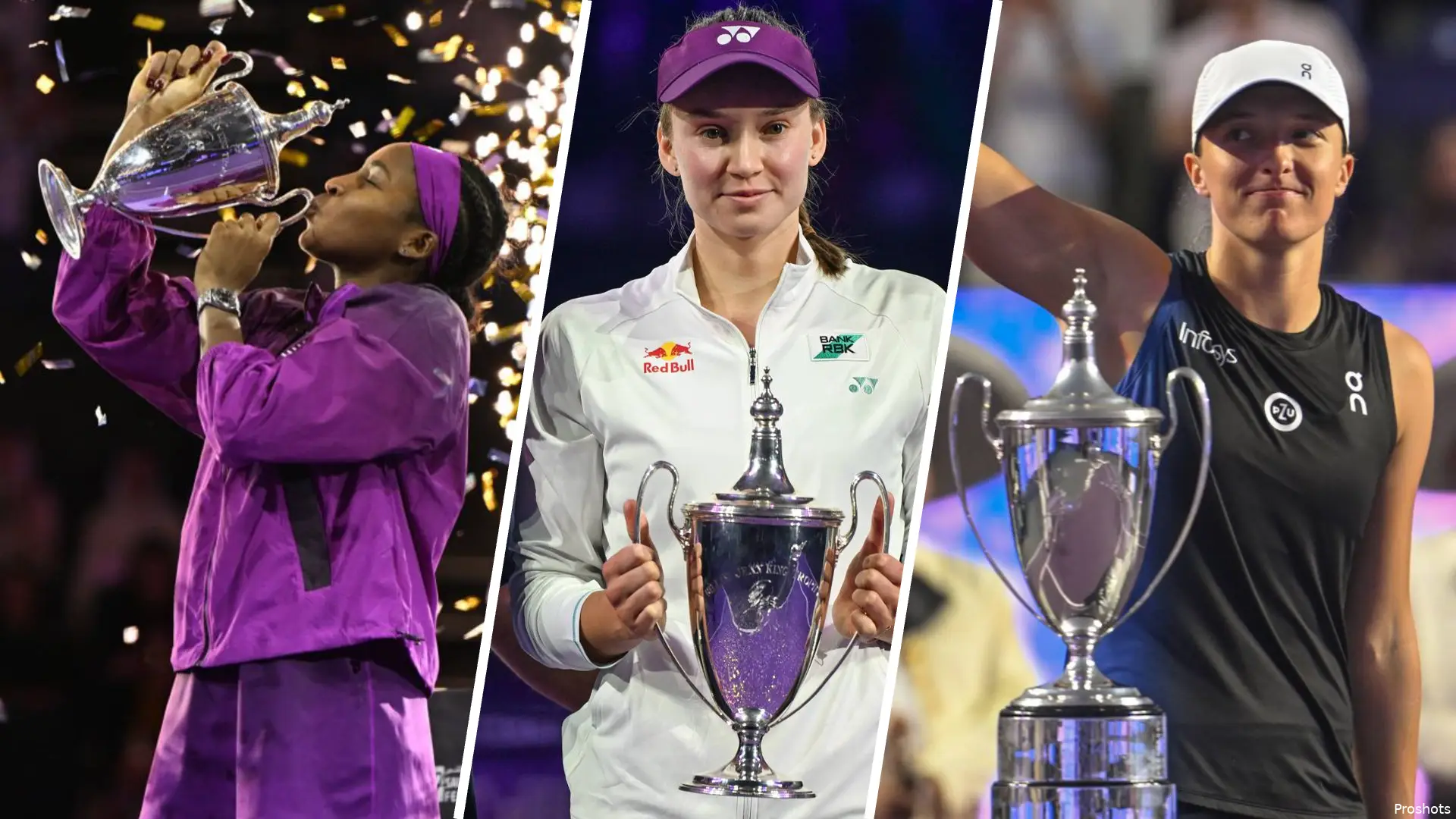
Since Serena Williams won three consecutive WTA Finals titles between 2012 and 2014, no player has managed to win the tournament twice. The last 10 editions have produced 10 different champions, and three of them will be competing in Indian Wells this year with the opportunity to add another title to their collection. However, nobody has managed to defend the trophy since Williams, or even claim a second title.
The ten editions played since then have produced ten different champions: Agnieszka Radwanska, Dominika Cibulkova, Caroline Wozniacki, Elina Svitolina, Ashleigh Barty, Garbine Muguruza, Caroline Garcia, Iga Swiatek, Coco Gauff and, last year, Elena Rybakina. The 2020 edition was not played because of the pandemic, meaning the sample covers ten tournaments across eleven seasons.
That is the pattern awaiting the 2026 field in Indian Wells, November 8-15, where Rybakina arrives as the defending champion, the world No. 1 and the player with the most titles on tour this season, having won four.
She also faces a difficult historical trend. In 2024 and 2025, the defending champion failed to advance beyond the round-robin stage, while in 2022 the previous year's champion did not even qualify. Of the eight players competing, three have already won the tournament and five are still chasing their first title. The question heading into the week is straightforward: will the streak finally end, or will the WTA Finals crown an 11th consecutive different champion?
Ten editions, ten champions
The record since Serena's last title is clean. Serena has five titles in total, but the three in a row from 2012 to 2014 are the last time the trophy stayed with one player. The table shows the champion and the runner-up of every edition from 2015 to 2025. Serena won in 2012, 2013 and 2014, beating Maria Sharapova, Li Na and Simona Halep, and she is the only player to win more than once in the period from 2010 to 2025.
| Year | Champion | Runner-up | Final score |
| 2015 | Agnieszka Radwanska | Petra Kvitova | 6-2, 4-6, 6-3 |
| 2016 | Dominika Cibulkova | Angelique Kerber | 6-3, 6-4 |
| 2017 | Caroline Wozniacki | Venus Williams | 6-4, 6-4 |
| 2018 | Elina Svitolina | Sloane Stephens | 3-6, 6-2, 6-2 |
| 2019 | Ashleigh Barty | Elina Svitolina | 6-4, 6-3 |
| 2020 | Not held | Not held | - |
| 2021 | Garbine Muguruza | Anett Kontaveit | 6-3, 7-5 |
| 2022 | Caroline Garcia | Aryna Sabalenka | 7-6(4), 6-4 |
| 2023 | Iga Swiatek | Jessica Pegula | 6-1, 6-0 |
| 2024 | Coco Gauff | Zheng Qinwen | 3-6, 6-4, 7-6(2) |
| 2025 | Elena Rybakina | Aryna Sabalenka | 6-3, 7-6(0) |
The ten champions come from nine different countries, with Poland the only one to appear twice (Radwanska and Swiatek). Svitolina is the only champion from this period to return to the final in a later edition. After lifting the trophy in 2018, the Ukrainian came within one victory of defending her title the following year but ultimately lost to then-world No. 1 Ashleigh Barty.
In the five editions since then, Sabalenka is the only player to have reached multiple finals, finishing runner-up in both 2022 and 2025. Despite establishing herself as one of the dominant forces on the WTA Tour, the Belarusian is still searching for her first WTA Finals title.
Why the trophy does not stay with anyone
The round-robin format is the first explanation. Eight players are split into two groups of four, with each playing three matches and only the top two advancing to the semifinals. A single bad day can be enough to derail a title defence. Swiatek, the 2023 champion, failed to advance from her group in 2024, while Gauff, who lifted the trophy that year, went 1-2 in 2025 and was also eliminated in the round robin. In 2022, Muguruza did not even qualify for the tournament she had won 12 months earlier.
The second factor is that the favourites do not always deliver. Garcia won in 2022 as the No. 6 seed, while Gauff claimed the title in 2024 as the No. 3 seed despite losing one of her round-robin matches, 5-7, 4-6 against Barbora Krejcikova. The Czech, ranked No. 13 at the time, went on to reach the semifinals, underlining how unpredictable the group stage can be.
Rybakina's triumph last year provided perhaps the clearest example. She was the last player to qualify, securing her place during a remarkable run in the Asian swing and taking the final spot away from Andreeva at the last moment. Arriving as the No. 6 seed after an inconsistent season, the Kazakh produced a flawless title run without losing a match. Her only dropped set came against Swiatek in the round robin, when she recovered from 3-6 to win 6-1, 6-0. On her way to the trophy, Rybakina defeated four top-five opponents, including world No. 1 Sabalenka in the final.

Elena Rybakina with the WTA Finals trophy.
Another recurring trend is the failure of the top seed to win the tournament. Swiatek entered as the No. 1 seed in 2022 but lost in the semifinals to Sabalenka. Sabalenka then suffered the same fate in 2024, losing to Gauff in the last four before falling to Rybakina in the 2025 final. Across those three editions, the top seed failed to lift the trophy, with the champions entering as the No. 6, No. 3 and No. 6 seeds, respectively.
The eight in Indian Wells: experience and the biggest achievement of the season
Rybakina enters as the top seed and defending champion, while Gauff and Svitolina have also experienced what it takes to compete at the WTA Finals as former title holders. Svitolina reached the final in 2019, coming within one victory of defending her crown after winning the tournament the previous year. Gauff, meanwhile, went 1-2 as the defending champion last season and failed to advance beyond the round-robin stage.
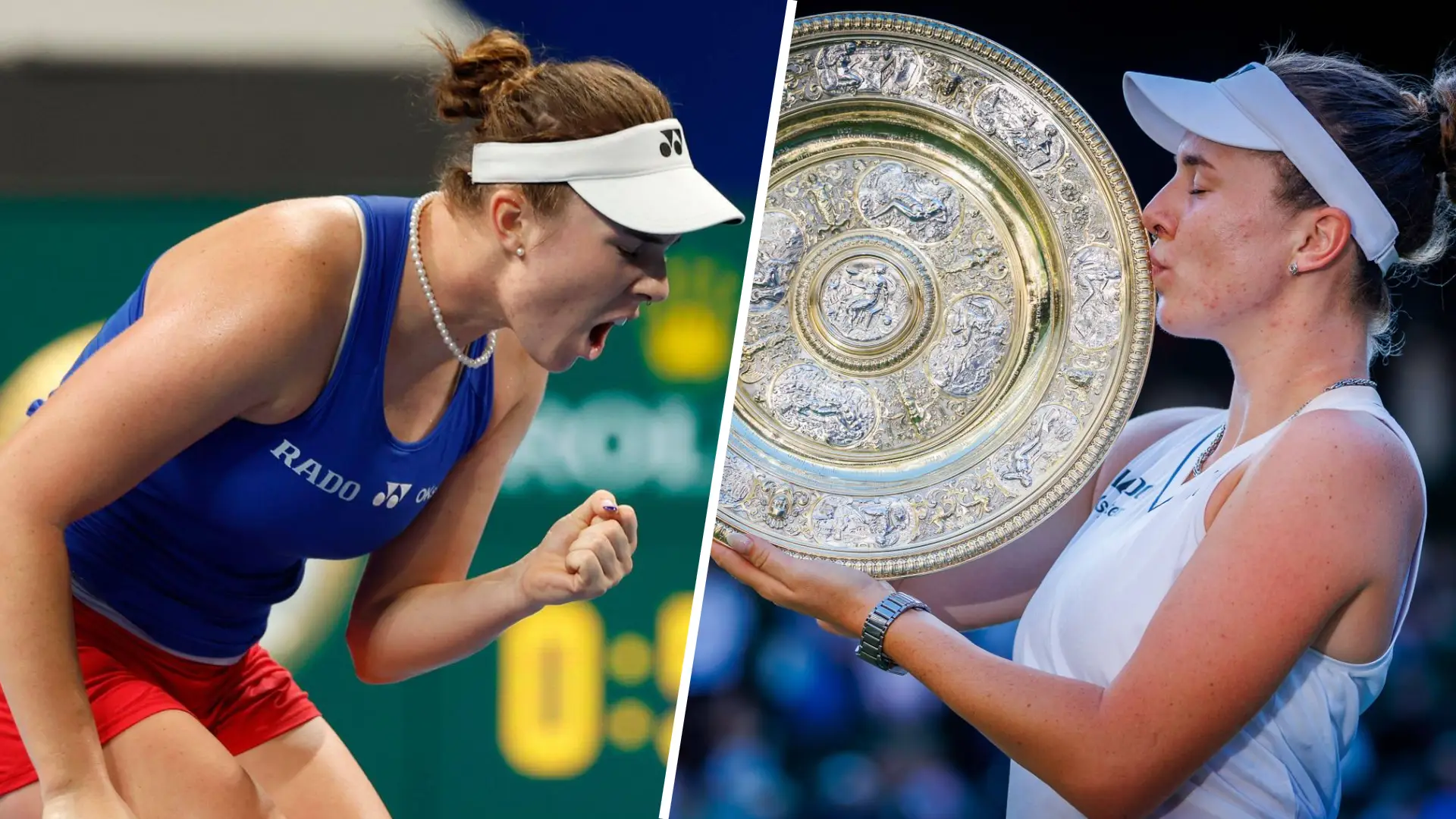
Several players in this year's field have considerable experience at the season-ending tournament. Sabalenka, Rybakina, Gauff and Pegula have all made multiple appearances, while Svitolina returns after a seven-year absence since reaching the final in 2019. The three newcomers will be Mirra Andreeva, the Roland-Garros champion, Linda Noskova, the Wimbledon winner, and Karolina Muchova, the Wimbledon runner-up.
| Seed | Player | WTA rank | Previous appearances | Best Finals result | Biggest achievement of 2026 |
| 1 | Elena Rybakina | 1 | 3 | Champion (2025) | Australian Open and US Open titles, first time at No. 1 |
| 2 | Aryna Sabalenka | 2 | 5 | Finalist (2022, 2025) | Sunshine Double, two Grand Slam finals |
| 3 | Mirra Andreeva | 3 | 0 | Debut | Roland Garros title |
| 4 | Coco Gauff | 4 | 4 | Champion (2024) | Cincinnati title, Miami and Rome finals |
| 5 | Jessica Pegula | 5 | 4 | Finalist (2023) | Dubai and Charleston titles, five finals |
| 6 | Elina Svitolina | 6 | 3 | Champion (2018) | Rome title (WTA 1000) |
| 7 | Karolina Muchova | 7 | 0 | Debut | Doha title (WTA 1000), Wimbledon final |
| 8 | Linda Noskova | 8 | 0 | Debut | Wimbledon title |
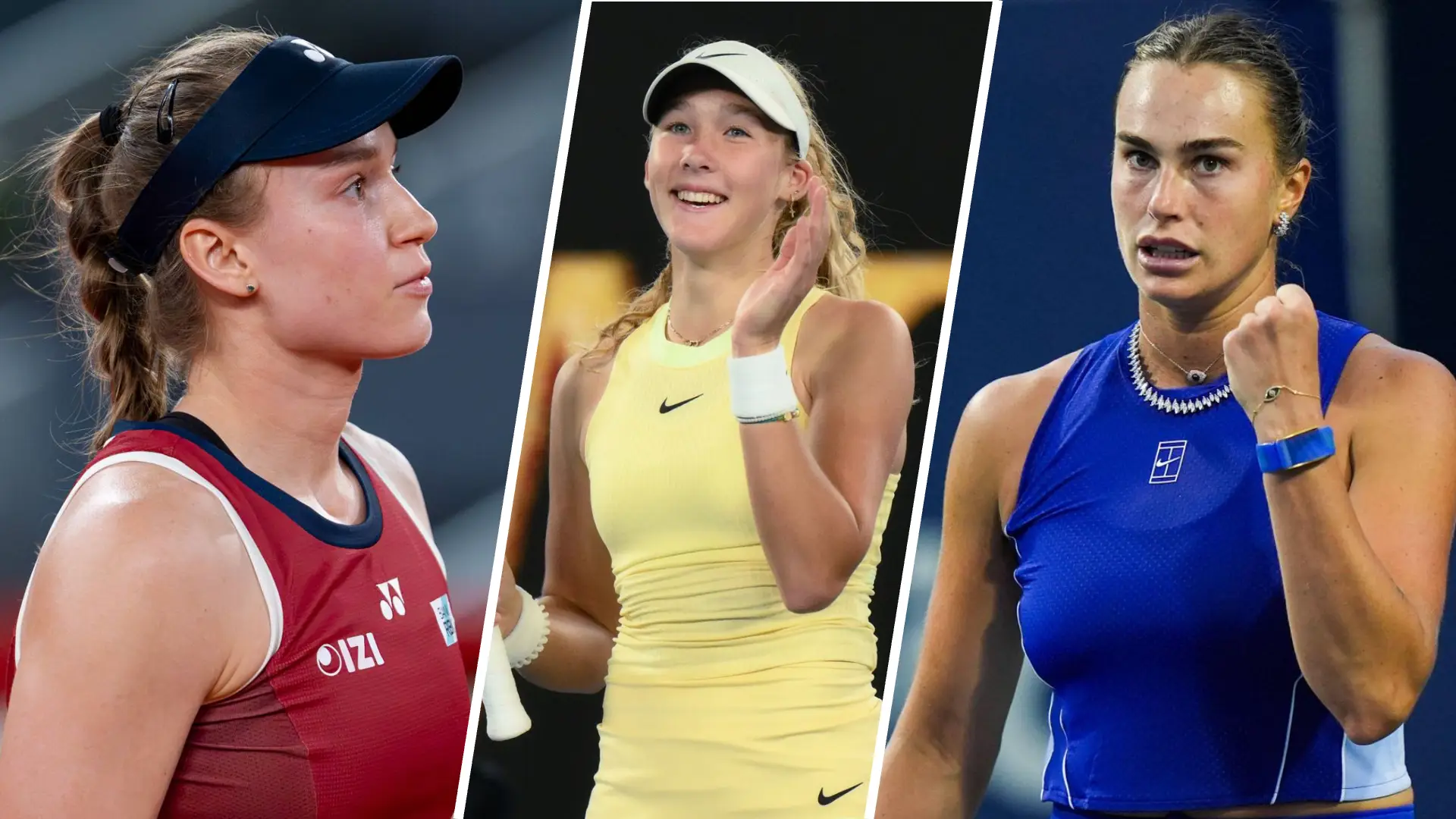
Three of the eight players have already won the tournament: Rybakina, Gauff and Svitolina. Two more, Sabalenka and Pegula, have reached the final, while Andreeva, Muchova and Noskova will make their debuts. It is a field with several players capable of ending the streak, although Sabalenka arguably has the most to prove after reaching two finals without lifting the trophy.
The state of form
Rybakina has the strongest numbers among the eight contenders. She enters with a 54-14 record this season and four titles, the most on the WTA Tour. Her latest came in Ningbo Open, where she defeated Leylah Fernandez 6-2, 6-2 to claim the 15th title of her career. She also boasts a 10-5 record against top-10 opponents this season, the best mark in the field, and defeated Sabalenka in both Grand Slam finals this year.
Unlike last season, when she arrived in Riyadh without necessarily having the same level of confidence, Rybakina comes to Indian Wells in outstanding form and already assured of finishing the year as world No. 1. That removes one potential source of pressure: she no longer needs to worry about collecting ranking points to secure the top position. Her focus can be entirely on defending the title, potentially allowing her to play with greater freedom at a venue where she has already enjoyed considerable success.

The rest of the field presents a more varied picture. Sabalenka holds a 47-11 record with three titles, including the Sunshine Double, and an 7-3 record against top-10 opponents. However, she has yet to win a Grand Slam this season. She does have one significant advantage: having won the Indian Wells title earlier this year, she knows the conditions in California suit her game particularly well. Rybakina and Andreeva also have previous title-winning experience at the same venue, making the tournament's location an interesting factor in the battle between the favourites.
The American contenders, Gauff and Pegula, will also benefit from playing on home soil. Both have extensive experience at the WTA Finals, understand the demands of the round-robin format and have already reached the tournament's final stages. Gauff has won the title, while Pegula was runner-up in 2023. Neither should be underestimated, and both have the experience and level to disrupt the expected battle between Rybakina and Sabalenka.
| Player | 2026 record | Titles in 2026 | Record vs top 10 (2026) |
| Rybakina | 54-14 | 4 | 10-5 |
| Sabalenka | 47-11 | 3 | 7-3 |
| Andreeva | 50-16 | 3 | 1-5 |
| Pegula | 50-14 | 2 | 7-7 |
| Gauff | 47-15 | 1 | 5-6 |
| Svitolina | 48-15 | 2 | 8-5 |
| Muchova | 41-12 | 2 | 6-5 |
| Noskova | 35-15 | 2 | 4-5 |
The groups, and what it would take to break the pattern
The draw puts Rybakina, Gauff, Pegula and Noskova in Group 1, while Sabalenka, Andreeva, Svitolina and Muchova make up Group 2. The first group features two former champions and the 2023 finalist. With only the top two players advancing, at least one of Rybakina, Gauff and Pegula will be eliminated during the round-robin stage.
The opening matches will see Rybakina face Noskova and Gauff take on Pegula on Sunday, November 8. Group 2 gets underway a day later, with Sabalenka playing Muchova and Andreeva facing Svitolina on Monday, November 9.
Read also
The WTA Finals is a tournament in which the standings can change significantly from one day to the next, with sets won and lost potentially proving decisive in determining who advances. The round-robin format makes every matchup important, and the previous editions have demonstrated just how unpredictable the qualification scenarios can become.
Some players have reached the semifinals with only one victory and two defeats, while others have missed out despite winning two of their three matches. The mathematics can be complicated, and the group draw itself plays a crucial role in shaping each player's route to the title.
Ultimately, three former champions have the opportunity to end the decade-long pattern. If Rybakina, Gauff or Svitolina lifts the trophy, the WTA Finals will finally have a repeat winner for the first time since Serena Williams in 2014. Otherwise, the tournament will produce an 11th different champion in as many editions.

Cristhián AvilaTennis Journalist
Cristhián Ávila is a tennis journalist based in Santiago, Chile, and has been part of the TennisUpToDate team since early 2023. He covers the ATP and WTA Tours as well as all four Grand Slams, producing breaking news, match reports, analysis, and regular liveblogs from major tournaments.
His reporting combines statistical analysis with clear explanation, helping readers understand tactical developments, player form, and broader storylines across the tour. Working fluently in both Spanish and English, Cristhián collaborates with an international editorial team and contributes to comprehensive global coverage. As part of his work, he has conducted interviews and media interactions with leading figures in the sport, including Caroline Wozniacki and John McEnroe.
In his journalism, Cristhián places strong emphasis on careful sourcing, editorial accuracy, and updating articles promptly when new, verified information becomes available. His coverage is grounded in research, context, and direct engagement with professional tennis.
claps 0visitors 0
Just In

Popular News
Latest Comments
- Vacherot is Mongasque, rather than Swiss. The tournament was Swiss :DTrwd7702-11-2026
- After a couple decades traveling to IIHF tourneys overseas... our family is done with it... and I will not be the only one!! Bad enough the NHL allows Ovachenko (a Putin Supporter and Campaigner) to live and play in the USA. Let's not forget the STATE SPONSORED RUSSIAN DOPING PROGRAMS still in effect today.
 mandoist31-10-2026
- Osaka's mental state apparently does not allow her to reach any more Quarter Finals? I mean, she doesn't really have the time for tennis with all the pre-planning that must go into her 12 year-old "fashion" goals.mandoist29-10-2026
- With her money one would think she could afford a better team of Psychiatrists?mandoist29-10-2026
- Boss move, Sinner !Rapunzel27-10-2026
- Apparently still refusing to seek 'help' ...and still playing Dress-Up like a 10 year-old.mandoist27-10-2026
- Lena... Takin' care of businessmandoist25-10-2026
- Can you please stop publishing this nonsense? Stick to Tennis.mandoist25-10-2026
- Does Sinner need that 4.5 mil? I doubt it. He can make that with three modelling gigs!😅🤣Rapunzel21-10-2026
- Did "People Magazine" purchase this website? This nonstop storyline is bullshit.mandoist21-10-2026
