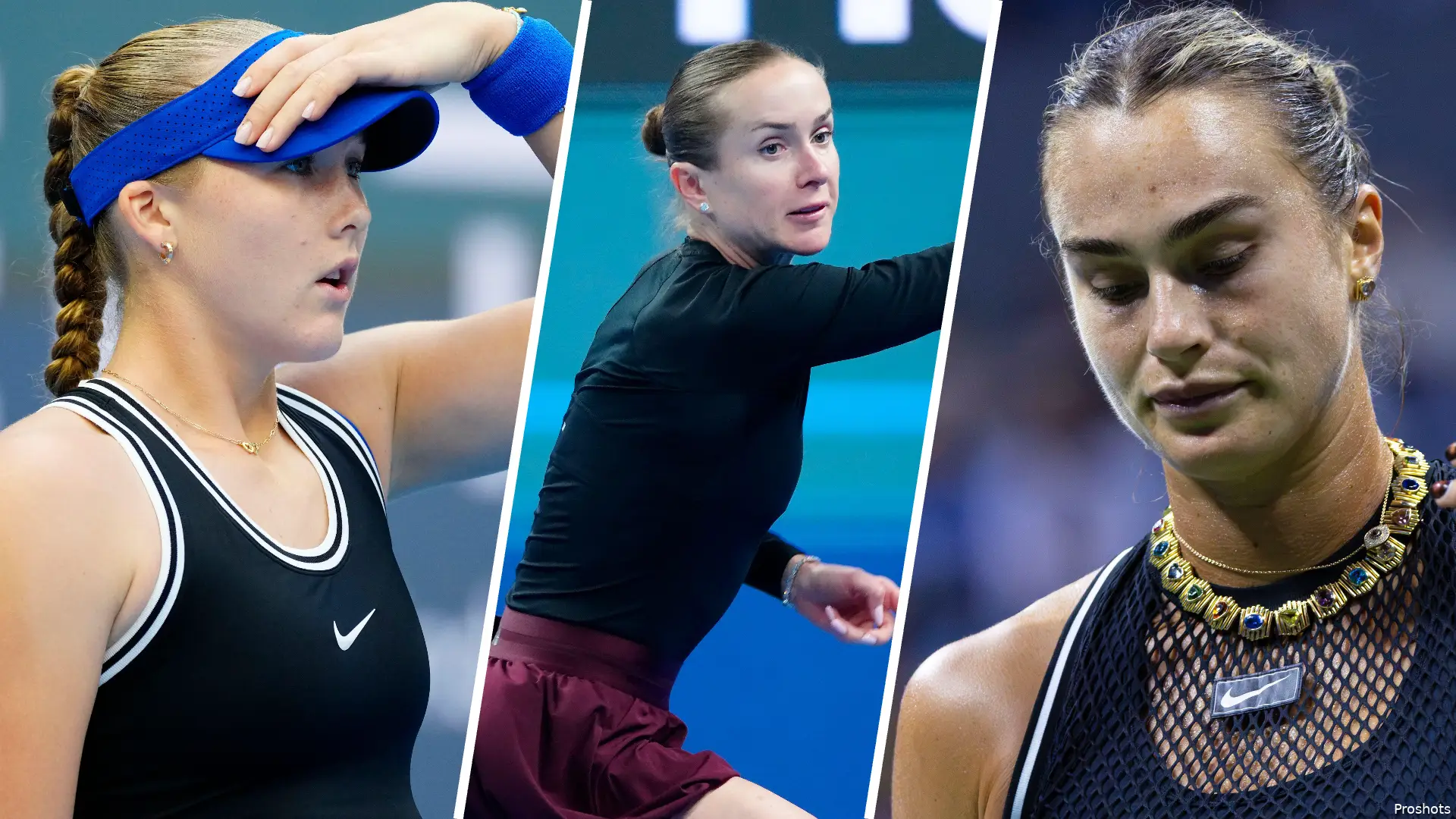
The first ball of the 2026 WTA Finals won’t be struck until Sunday afternoon at Indian Wells. At this point, I honestly can’t wait.
Not because I’m desperate to see who wins the opening match, although the tennis itself should be terrific. I can’t wait because almost everything surrounding this tournament has been so awkward, poorly handled and, frankly, icky that getting the players onto a tennis court might be the only way to rescue the occasion.
For an organization that has spent years talking about empowering women, celebrating individuality and building the future of women’s sports, the WTA has delivered a remarkable collection of unforced errors before the tournament has even begun.
I’m increasingly convinced we’re watching something close to the apex of a lack of character, spirit and leadership from the organization responsible for representing the best female tennis players in the world.
And what’s especially frustrating is that the players deserve so much better.
The microphones nobody knew were on
Let’s begin with what should have been an entirely avoidable embarrassment.
During practice at Indian Wells, Jessica Pegula was having a conversation with her coach, Mark Knowles, about Mirra Andreeva and her behavior during a practice session. Pegula reportedly called Andreeva a diva and suggested that her coach, Conchita Martínez, was enabling her behavior.

The storm as Pegula made comments about Andreeva.
Those remarks were captured by microphones and broadcast to people watching the practice livestream.
The problem? Pegula and the other players apparently hadn’t been told the microphones were active.
The WTA subsequently acknowledged its failure to inform the players and their teams, apologized and removed the recordings. It has since disabled practice-court audio. Mercifully
Now, we can have an interesting conversation about what Pegula said. Tennis players are competitors. They get irritated with each other. They complain about opponents, coaches and practice partners. Sometimes they say things privately that they wouldn’t dream of saying into a microphone at a press conference.
That’s called being human. What’s not acceptable is an organization putting its players in a position where private conversations are broadcast without their knowledge.
This isn’t some obscure technical problem that nobody could reasonably have anticipated. We’re talking about microphones on practice courts at one of the most important events of the year. Somebody had to authorize them. Somebody had to oversee the broadcasts. And somebody should have made absolutely certain that every player understood what was being recorded.
Instead, Pegula ended up in the middle of an unnecessary controversy, Andreeva became the subject of an embarrassing public discussion, and the WTA issued an apology for a problem entirely of its own making.
What an extraordinary way to welcome your best players to the season-ending championship.
The group photograph that never happened
Then there’s the missing group photograph. For years, one of the loveliest traditions of the WTA Finals has been the photograph of the eight singles qualifiers together. It’s a simple image, but an important one. These women have spent an entire season fighting for the privilege of being there, and the photograph captures something about that collective achievement.
This year, there’s no traditional photograph of all eight players. The WTA says it wanted to try a different approach, emphasizing individual personalities and fashion identities. But there’s an obvious complication that makes the explanation feel incomplete.
Elina Svitolina is Ukrainian. Aryna Sabalenka is Belarusian. Mirra Andreeva is Russian.
Since Russia’s invasion of Ukraine, Svitolina has maintained her refusal to participate in the customary post-match handshakes with Russian and Belarusian opponents. Reports have linked the absence of the traditional group photograph to her unwillingness to pose alongside them, although the WTA has not publicly confirmed that as its reason for changing the format.
The eight best singles players in the world ✨ The 2026 FAGE WTA Finals singles portraits 💚 #FAGEWTAFinals https://t.co/ZqOOS4ADuv
— wta (@WTA) November 6, 2026
And I completely understand Svitolina’s position. Her country is at war. This isn’t a theoretical political disagreement for her, or something that can be set aside because a marketing department would like a pretty picture. The WTA has had years to understand the realities facing Ukrainian players and to figure out how to navigate them respectfully.
Nobody should expect Svitolina to compromise her principles for a promotional photograph. But surely an organization with the resources and experience of the WTA could have anticipated this issue and handled it with some degree of grace.
Instead, we’re left with an awkward absence where a beloved tradition used to be, accompanied by a corporate explanation about celebrating individuality. Perhaps the individual photographs really were planned independently of the geopolitical tensions. That has been reported, and it’s entirely possible.
But the larger point remains. When the realities of the world collide with professional sport, leadership requires something more substantial than finding a new marketing concept.
And then came the fashion shoot
I should probably begin this section with a disclaimer. My hobby is to be a tennis pundit, not a fashion pundit
I understand the difference between Chanel and Balenciaga, at least in the sense that I know they’re not the same company. I’m also aware that fashion has become an important part of the commercial appeal of women’s tennis, and that many players genuinely enjoy expressing themselves through clothing.
Great. I’m all for it. But I’ve now seen the individual photographs from Indian Wells, and I have to say that this is one of the strangest-looking promotional shoots I’ve encountered in ages.
The WTA’s concept was to portray the players as spectators and superfans, wearing designer clothing in various settings around the tournament grounds. There was Chanel, Dior, Gucci, Miu Miu, Tom Ford and Balenciaga. The whole thing was styled, photographed and presented as a celebration of personality and fashion.
I really hope the players enjoyed themselves. Because from where I’m sitting, so much of it looks forced. The lighting, the poses, the locations, the overall premise. There are photographs that seem to be trying desperately to communicate some sophisticated editorial message that I’m apparently not fashionable enough to understand.
And maybe that’s the problem. These are eight of the greatest athletes in the world. They are extraordinary competitors who have earned their places through talent, discipline, sacrifice and an almost unimaginable amount of work.
Why does celebrating them have to be so complicated? I don’t object to tennis players wearing beautiful clothes. I don’t object to luxury brands investing in women’s tennis. And I certainly don’t object to athletes having lives and personalities beyond their sports.
What I object to is the growing tendency of sports organizations to confuse an elaborate marketing concept with an authentic celebration of athletic achievement. Sometimes the most powerful thing you can do is put eight extraordinary women in a room, photograph them beautifully and allow their accomplishments to speak for themselves. Of course, that brings us right back to the photograph the WTA didn’t take.
A Leadership Problem, Not a Player Problem
There’s a common thread running through all three episodes. The players haven’t created these problems.
Pegula didn’t ask to have her private conversation broadcast. Svitolina didn’t create the war in Ukraine. And the women participating in the fashion shoot presumably did their best to embrace whatever creative vision was presented to them.
The responsibility belongs to the people running the organization. That’s what bothers me most about this week. It’s the absence of judgment, of instinct, of the ability to recognize when something doesn’t feel right.
Good leadership isn’t simply about signing sponsorship agreements, securing television distribution or finding fashionable ways to promote your product. Those things matter, of course, particularly in a sport that deserves far more commercial investment than it has historically received.
But leadership also means understanding the people you’re supposed to represent. It means protecting their privacy. Recognizing their circumstances. Knowing when a tradition matters and when an elaborate promotional exercise is getting in the way of something more meaningful.
The WTA talks constantly about elevating women’s sports. Yet there are moments when it seems far more comfortable talking about the commercial possibilities surrounding its athletes than demonstrating a genuine understanding of those athletes themselves. And that’s a serious problem.
Charlotte can’t come quickly enough
There’s also the peculiar reality that Indian Wells is essentially a one-year stopgap.
Beginning in 2027, the WTA Finals will move to Charlotte, North Carolina, under a three-year agreement. The WTA will also relocate its global headquarters there, making Charlotte the centerpiece of its next chapter.
I hope it works spectacularly. The WTA needs stability. It needs a permanent sense of occasion around its most important tournament outside the Grand Slams. It needs a championship that feels like the culmination of a remarkable season rather than an event perpetually searching for its identity.
And it needs leadership that understands how much women’s tennis has changed. The players are doing their part. They are competing at an extraordinary level, attracting new audiences and building their own brands in ways previous generations could barely have imagined.
The WTA should be keeping pace with them, not repeatedly finding ways to make their lives more complicated.
Indian Wells itself is a magnificent tennis venue. None of this is an indictment of the facilities or the people who work so hard to make professional tennis happen there.
But the buildup to this particular championship has felt strangely joyless. A privacy controversy. An abandoned tradition. An awkward attempt to navigate a deeply serious geopolitical reality. And a fashion shoot that, to my eyes, looks like somebody tried much too hard to make something happen. It’s all been a little weird. And a little icky. Which brings me back to Sunday afternoon.
Read also

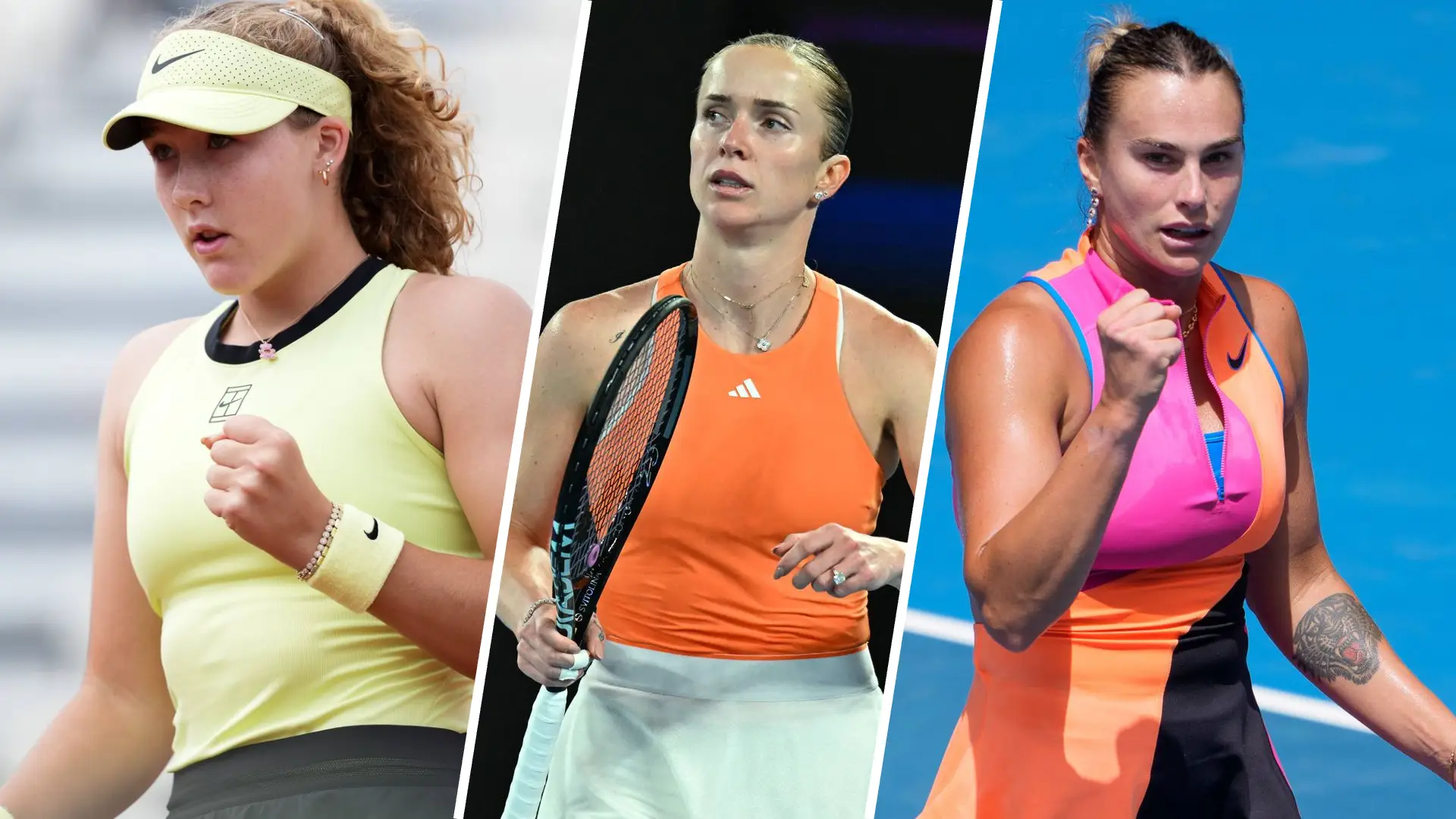
When the tennis finally begins, we’ll get to watch some of the finest athletes on earth doing what they do better than almost anyone else. We’ll get to see the power, intelligence, courage and competitive spirit that make women’s tennis such a compelling sport. We won’t need microphones capturing private conversations or elaborate explanations about fashion concepts. We’ll just need the players, the court and the ball.
For a few hours, at least, the WTA’s leadership can get out of the way. And the women can remind everyone why we’re here in the first place.

Aron SolomonGuest Author
A Pulitzer Prize-nominated journalist for his groundbreaking op-ed in The Independent exposing the NFL’s “race-norming” policies, Aron Solomon, JD, is a globally recognized thought leader in law, media, and strategy.
As Chief Strategy Officer for AMPLIFY, he leverages his deep expertise to shape the future of legal marketing. Aron has taught entrepreneurship at McGill University and the University of Pennsylvania and was honored as a Fastcase 50 recipient, recognizing him among the world’s top legal innovators. A prolific commentator on law, business, and culture, his insights regularly appear in Newsweek, The Hill, Crunchbase News, and Literary Hub.
He has also been featured in The New York Times, Fast Company, Fortune, Forbes, CBS News, CNBC, USA Today, ESPN, TechCrunch, BuzzFeed, Venture Beat and countless other leading global media outlets. We are proud to have Aron on board at TennisUpToDate, where his deep tennis expertise enriches the site with sharp, original columns that connect the sport to wider cultural debates.
claps 0visitors 0
Just In

Popular News
Latest Comments
- One step by another step -- WTA continues to 'lose the plot'. Too many hi-tech microphones being installed at most venues!!! Remove them (especially those along the hallways, sidewalks, and pathways throughout the venues. Not to mention (most of all) remove the mic's from the Players/Coaches Box.
 mandoist06-11-2026
- Enough of her bullshit. Go marry someone.mandoist06-11-2026
- Don't you just love this young lady!? We fans often expect athletes to be supermen and superwomen, often forgetting that they WILL GET TIRED! I love Alex's perspective. Tiredness for an athlete should never be viewed as a negative, especially if you are healthy, taking care of your body and mental health and putting in the work. What a mature perspective. Good for you, Alex!Rapunzel05-11-2026
- Jess is absolutely correct! But the disrespect is a trait I have noticed in most of the Russian players. Mirra is good but very immature and lacks humility. Conceivable needs to get a handle on that!Rapunzel05-11-2026
- Having spent weeks and weeks through the years on tour, I can say with confidence that Conchita was (is) one of the very few who realize the surprising level of maturity (and sometimes lack of) which Mirra seems to have developed in such a demanding adult world of Pro-Tennis. While at the same time reminding herself (Conchita, that is) that Mirra is still young and developing mentally and physically. The general public may forget at times, or not at all realize, these modern era young athletes do not have a 'normal' Youth. It's a major sacrifice, among countless sacrifices, these athletes must make. People who blow-off that fact are ignorant and unfair when they blurt out, "They choose fame so they have to put up with the intrusions on their lives". No, they do not.mandoist05-11-2026
- Okay... someone with a camera was EAVESDROPPING on a private conversation. Shouldn't that be the point of discussion here? Regardless of the sensationalist crap by media, Pegula (and anyone) has a right to an opinion. There used to be an expectation that private conversations were respected, regardless of 'stardom' and whatever other defensive excuses media tries to shove in our faces. Boo-hoo if feelings are hurt. BTW: Having been employed at various tourney venues, etc., I can't tell you how nasty and offensive players can be when discussing their opponents and colleagues... in "private". Well, I could, but won't. I also challenge anyone to deny what Jessica said is false.mandoist05-11-2026
- Vacherot is Mongasque, rather than Swiss. The tournament was Swiss :DTrwd7702-11-2026
- After a couple decades traveling to IIHF tourneys overseas... our family is done with it... and I will not be the only one!! Bad enough the NHL allows Ovachenko (a Putin Supporter and Campaigner) to live and play in the USA. Let's not forget the STATE SPONSORED RUSSIAN DOPING PROGRAMS still in effect today.mandoist31-10-2026
- Osaka's mental state apparently does not allow her to reach any more Quarter Finals? I mean, she doesn't really have the time for tennis with all the pre-planning that must go into her 12 year-old "fashion" goals.mandoist29-10-2026
- With her money one would think she could afford a better team of Psychiatrists?mandoist29-10-2026
