“The hardest part for me was suffering personally": Caroline Garcia continues winning despite impending retirement
WTA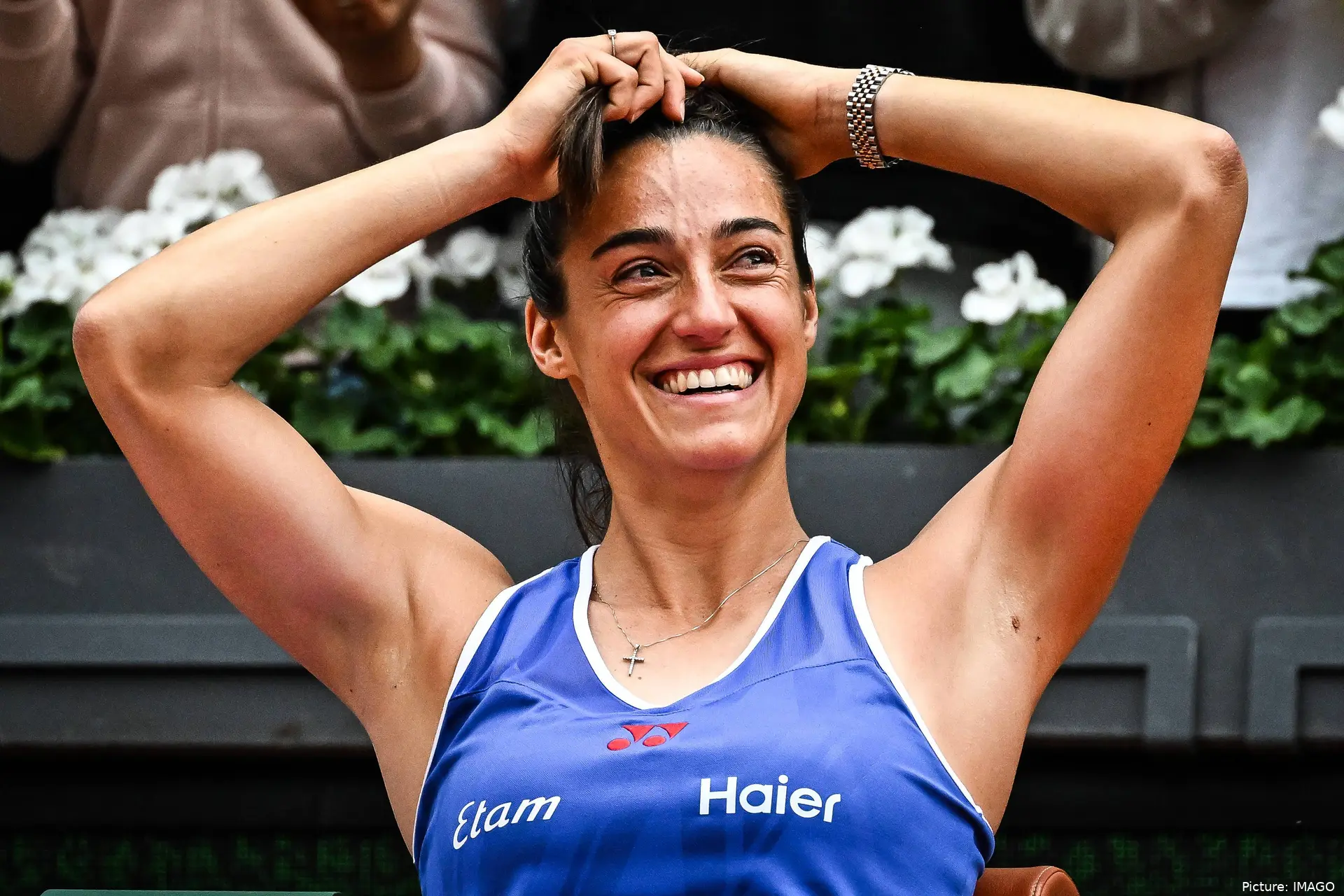
Caroline Garcia’s
announcement that she will retire from professional tennis after the 2025 US
Open has stirred a wave of conversations across the tennis world. It’s a moment
that reminds us just how complicated and personal the journey of an athlete truly
is. For someone who has been a part of the sport for over a decade, stepping
away is never just about results or rankings, it’s about the heart, the mind,
and the toll that relentless competition can take over time.
Garcia’s recent
performances, including her run to the second round at the Cincinnati Open
despite being ranked 200th in the world, still show that she has the skill and
determination of a seasoned pro. But even with those flashes of brilliance,
there’s a deeper story behind her decision, a story of highs and lows, of
battles won and lost not just on the court but within herself. In a candid
interview following her recent matches, she opened up about how her choice to
retire has been met with mixed feelings and sometimes confusion.
“Today, there are still
people who don’t understand my decision,” she said, acknowledging that many
fans and observers expect athletes to push on indefinitely. But for Garcia,
it’s never been about playing for the sake of playing. She’s been at the top. She
knows what it takes to climb back up the rankings. Yet, after years of gruelling
training, travel, injuries, and emotional strain, she no longer feels she has
the strength or perhaps the motivation to do it again.
This admission is refreshing
in a world that often expects athletes to be machines, pushing through pain and
exhaustion without complaint. The truth is far more human: careers in
professional sport demand incredible sacrifices. For Garcia, it’s not just about
physical exhaustion, but emotional weariness too. “I’ve experienced many highs
and lows,” she shared, “and the hardest part for me was suffering personally.”
It’s a reminder that behind every serve, every rally, and every match, there
are real people navigating their mental and emotional battles.
Read also

Garcia’s decision to retire
at 31, an age where many players are still competing fiercely, surprised some.
There is a sense that because she’s not currently at the very top, she should
keep fighting to reclaim her place. But her words speak to a broader truth
about fulfilment and happiness. Continuing just for appearances or external
expectations doesn’t serve anyone. Instead, she’s choosing to prioritize her
well-being, embracing a new chapter that promises more joy and light in her
life.
This moment highlights
something often overlooked in sports, the emotional and psychological demands
placed on athletes. It’s not just about how many points you win or lose, or how
many tournaments you claim. It’s about the constant pressure to perform, the
mental toll of injuries and setbacks, and the isolation that can come from a
life spent traveling and training away from family and friends. Garcia’s
openness about these challenges helps break down the stigma surrounding mental
health in sports, encouraging a more compassionate and understanding
perspective.
For fans, it’s easy to focus
only on rankings, titles, and stats. But Garcia’s story is a powerful reminder
that athletes are much more than their achievements. They are people with
dreams, doubts, and moments when the path forward isn’t clear. Retirement,
then, is not a failure but a brave choice, a decision to step away from the
spotlight and toward a life that feels more balanced and fulfilling.
Her announcement also sheds
light on the personal cost of striving for excellence. The long hours on court,
the pressure of expectations, and the need to constantly prove oneself can
erode not just physical health but emotional resilience. Garcia’s honesty about
these sacrifices invites fans and fellow players alike to consider what truly
matters in the long run.
What lies ahead for Garcia
is a mystery, but one filled with potential. She has spoken about the need to
find new passions and directions that bring happiness beyond the sport. It’s a
transition many athletes face but few talk about openly. The shift from the
regimented life of a professional athlete to the freedom and uncertainty of
retirement can be both exciting and daunting.
Her journey underscores the
importance of support systems for athletes, not just while they’re competing
but also as they transition out of sport. The world watches and celebrates when
they win, but the quieter moments of doubt, struggle, and eventual change
deserve equal attention. Garcia’s willingness to share her experience helps
pave the way for more open discussions around retirement and mental health in
tennis and beyond.

Garcia’s retirement
announcement will likely inspire others to think about their own lives and
careers. It challenges the often-unspoken rule that success must always come
with relentless endurance. Instead, it suggests that knowing when to walk away
is a form of strength and self-respect. For young players watching, her example
might encourage them to listen to their bodies and minds, to seek balance, and
to value their happiness above all.
In the end, Caroline
Garcia’s story is not just about tennis. It’s about life’s inevitable
transitions, the courage to embrace change, and the pursuit of well-being in a
world that often measures worth by achievement alone. Her decision is a
reminder that behind every athlete’s public persona is a private individual
navigating complex emotions and choices.
As she prepares to step away
from the professional circuit, Garcia leaves behind a legacy of skill,
perseverance, and honesty. She reminds us that retirement is not the end of a
story but the beginning of a new one, one filled with possibilities beyond the
baseline and beyond the court.
Her fans, fellow players,
and the broader tennis community will watch with interest and respect as she
moves forward, hopeful that she finds the joy and fulfilment she seeks. And as
the sport continues to evolve, stories like hers will help build a culture that
honours not just the victories but also the humanity of those who compete.
Caroline Garcia’s decision
may be met with surprise, but it’s also a powerful affirmation of self-care and
personal growth. It challenges us all to rethink what success truly means, both
in sport and in life. And for that, her voice is an important one courageous,
honest, and deeply human.
She hadn't played in 2.5 months, she hadn't won a match in 5 months, she is retiring any day now, but Caroline Garcia still went out and won a 2hr36m match in the Ohio heat against a Top 50 opponent. Let's go Caro 🙌 pic.twitter.com/rnTEh3YuqO
— Owen (@kostekcanu) August 8, 2025

claps 0visitors 0
Just In



Popular News


Latest Comments
- This is so very very sad, for all three of them. I truly thought they had an unbreakable bond, but life throws up so many differing challenges. Having your homeland suffering in such a terrible way, makes happiness lose out to guilt as well. Our thoughts are with them. X💔bjsexton20-10-2026
- I have lost all respect for Svitolina! Could she not have waited until he had played at the Paris Masters!!! She is selfish and don't give a damn about Gael. That is NOT how love is demonstrated Elina!!Rapunzel19-10-2026
- Perhaps convenient tennis tour sex is not a strong enough experience in which to base a marriage?
 mandoist19-10-2026
 - Fight the Good Fight... Tennis (sports in general) need more Humans such as yourself.mandoist18-10-2026
- When is WTA going to mandate Genetic Testing (DNA) ???mandoist18-10-2026
- Hey, Dan... you just wake up from a coma? Regardless -- Thanks for the comedy this morning!mandoist18-10-2026
- Two Things: 1. Stop allowing these Spoiled Trust-Fund Elitists to behave badly. Your little hand-slaps do not deter them. 2. STOP the incessantly annoying "towel wiping" nonsense!!!!mandoist15-10-2026
- A healthy Qinwen may be hard to stop next season. She was already scaring her opponents before her medical leave(s). Unfortunately, Zheng insisted on singing again. On the positive side -- Mirra did not sing!! ;~}mandoist11-10-2026
- Where is it written that athletes, entertainers... People in general... are mandated to keep looking at -- or even using [anti]Social Media? Public & private figures consistently complain and reveal their concerns about negativity and violence thrown at them -- yet they insist on participating. Avoid it, don't use it, don't read it. It's okay to occasionally look up at the World instead beating your eyes & thumbs to death on The Inventions out there.mandoist11-10-2026
- great articlestennisseserver07-10-2026

Loading