The ATP top 10 is beginning to look increasingly vulnerable from below, with several players outside the elite already producing results that suggest a breakthrough could be close. Some are teenagers making rapid climbs, while others have spent years around the top 20 and are finally putting together the consistency needed to take the next step.
Rafael Jodar and Learner Tien are among the closest to the top-10 line, while Jakub Mensik and Arthur Fils have already shown the level required to challenge the best. With the North American hard-court swing underway, the coming weeks could determine which of these rising contenders finally makes the jump into the ATP's elite.
The future top 10 contenders
| Player | Ranking | ATP Race | Career High | 2026 title(s) |
| Rafael Jodar | 11 | 6 | 11 | 1 |
| Learner Tien | 12 | 20 | 12 | — |
| Jiri Lehecka | 14 | 22 | 12 | 2 |
| Jakub Mensik | 16 | 12 | 16 | 1 |
| Valentin Vacherot | 19 | 4 | 16 | 1 |
| Luciano Darderi | 20 | 16 | 16 | 1 |
| Arthur Fils | 21 | 13 | 10 | — |
| Brandon Nakashima | 22 | 17 | 29 | 1 |
| Francisco Cerundolo | 25 | 19 | 18 | 2 |
| Joao Fonseca | 26 | 31 | 24 | 1 |
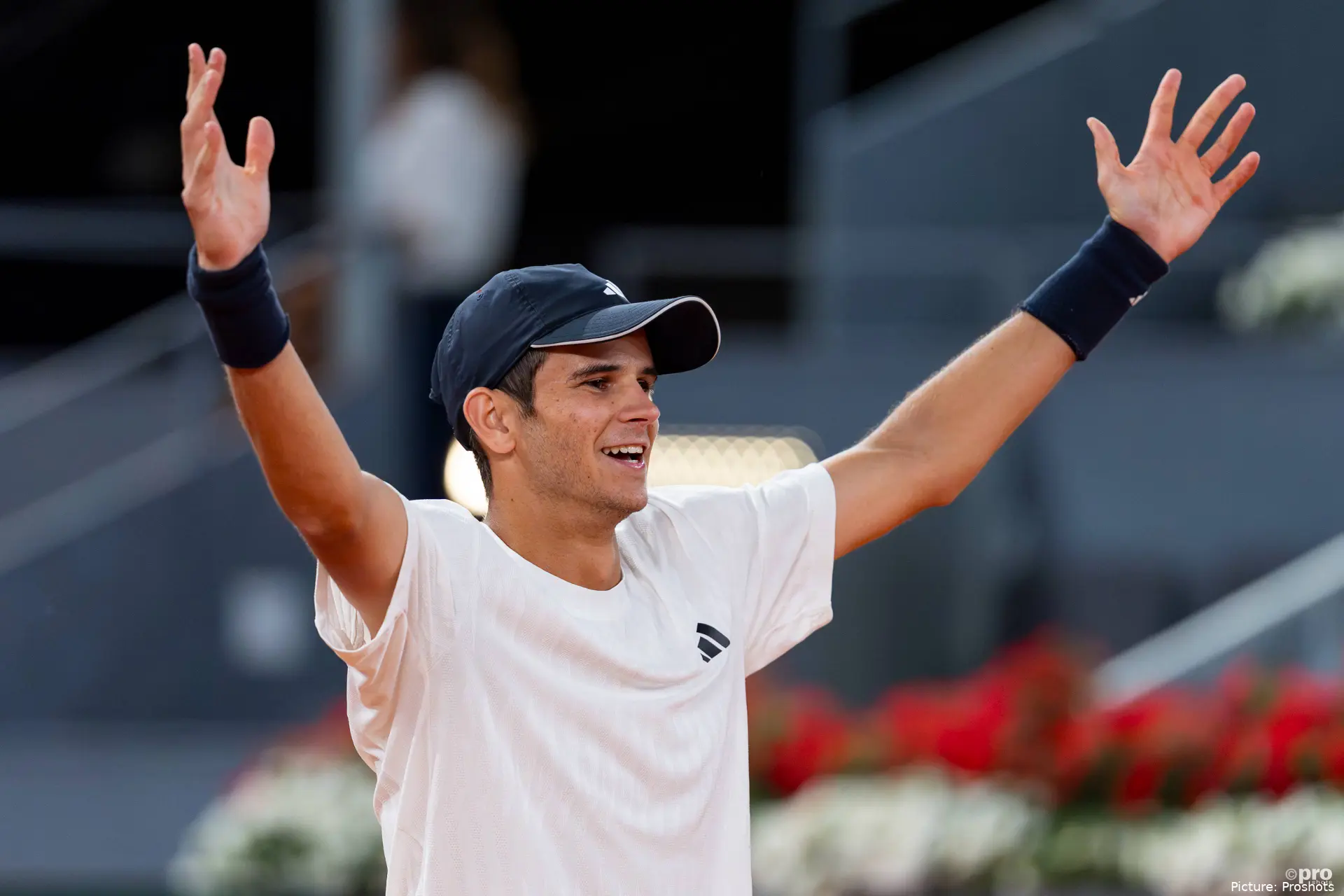
1. Rafael Jodar (No. 11)
The young Spaniard has been one of the revelations of the season, enjoying one of the fastest rises in ATP Tour history. At 19 and in his first full professional season, Jodar began the year outside the top 150 and is now just one place away from making his top-10 debut. It increasingly looks like a matter of time, especially considering he has no points to defend for the rest of the year and currently sits No. 6 in the ATP Race. His rise has been so rapid that he is already in contention for a direct spot at the ATP Finals.
His 2026 season includes his first ATP title in Marrakech, his first ATP 500 final in Washington, a semifinal run at the Canadian Open and consecutive quarterfinal appearances in Madrid, Rome and Roland Garros.
Just when it appeared that nobody could disrupt the Sinner-Alcaraz dominance, Jodar has emerged as a potential new force. He still has plenty of room to develop, but already looks like a player capable of becoming a genuine threat at Grand Slams.
Why he's ready: Jodar is already just one place outside the top 10 and has enjoyed one of the fastest ranking rises of the season. The 19-year-old has won his first ATP title, reached an ATP 500 final and made a Masters 1000 semifinal. He is also No. 6 in the ATP Race, showing that his rise is based on sustained results rather than one breakthrough week.
Biggest obstacle: The biggest challenge may simply be maintaining his extraordinary level as opponents begin treating him as a genuine threat. He is also experiencing the pressure that comes with rapidly rising expectations at just 19.
What to watch: Cincinnati and the US Open could provide Jodar with an immediate opportunity to make his top-10 debut. With no points to defend for the remainder of the season, he has an excellent platform for further movement.
What happens next? Jodar could enter the top 10 simply by continuing the form that has carried him to No. 11. His lack of points to defend makes him one of the best-positioned players on this list for a sustained rise.

Rafael Jodar at Roland Garros 2026
2. Learner Tien (No. 12)
Another player on the verge of a first top-10 appearance, Tien climbed to No. 12 after reaching the Canadian Open semifinals. Like Jodar, however, he remains roughly 700 points behind current No. 10 Taylor Fritz, making the upcoming Cincinnati Open and US Open particularly important opportunities.
Beyond the ranking race, the 20-year-old has established himself at the highest level over the past year. His European swing was less consistent, but the return to hard courts has immediately restored Tien's momentum and reinforced his status as one of the most promising young players on the ATP Tour.
Why he's ready: Tien has already established himself as a genuine threat at 20 and is now just two places outside the top 10. His run to the Canadian Open semifinals showed that he remains particularly dangerous on hard courts, while his performances over the past year have demonstrated that he belongs at Masters 1000 and Grand Slam level.
Biggest obstacle: Consistency remains the next step. Tien's European clay-court swing was less convincing, and he still needs to produce deep runs more regularly against the very best players.
What to watch: Cincinnati and the US Open are the obvious opportunities. The return to hard courts has already reignited his momentum, and another deep run could bring him within touching distance of the top 10.
What happens next? Tien needs to turn his Canadian Open momentum into another big result in Cincinnati or New York. If he can do that, his first top-10 appearance could arrive sooner than expected.

LEARNER TIEN from USA salute crowd after win over Thiago Agustin Tirante from Argentina in round of 16 at Canadian Open
3. Jiri Lehecka (No. 14)
The Czech has spent several years knocking on the door, with at least three seasons inside the top 30 and a career-high ranking of No. 12 following his run to the fourth round at Wimbledon. At 24, Lehecka has already recorded 11 wins against top-10 opponents across all surfaces and owns two ATP titles from seven finals, including his run to the Miami Open final earlier this season.
He will soon have to defend his run to the US Open quarterfinals, which represents a significant challenge. If he can reproduce that level, however, he will be in an excellent position for the final stretch of the season. When confident, Lehecka's aggressive baseline game, clean ball-striking and strong serve make him a dangerous opponent for the top players.
Current ranking: No. 14
Why he's ready: Lehecka has been around the top of the rankings for several years and has already reached a career-high No. 12. He owns 11 wins against top-10 opponents and has won two ATP titles, while his run to the Miami Open final earlier this year showed that he can go deep at the biggest tournaments.
Biggest obstacle: Ranking points from last year's US Open quarterfinal run represent a significant obstacle. Lehecka needs another strong result in New York if he wants to make substantial progress rather than simply maintain his current position.
What to watch: His US Open campaign will be crucial. A repeat quarterfinal run or better could put him firmly into the top-10 conversation, while an early exit could make the climb considerably more difficult.
What happens next? Lehecka's immediate challenge is defending his US Open points. If he can reproduce the level that took him to the quarterfinals last year, he has the experience and ranking position to make another push towards the elite.

Lehecka in Miami
4. Jakub Mensik (No. 16)
Many expected Mensik to make his top-10 debut months ago after winning his first Masters 1000 title at the 2025 Miami Open, where he defeated Novak Djokovic in the final. Injuries have repeatedly interrupted his progress, but the Czech remains one of the most highly regarded players of his generation.
His current No. 12 position in the ATP Race shows how close he is to the elite. Hard courts suit his game particularly well, and over the past year he has become more consistent and more reliable against lower-ranked opponents. His semifinal run at Roland Garros also demonstrated his ability to compete across surfaces. With only a second-round result to defend at the US Open, Mensik has a major opportunity to move closer to the top 10.
Current ranking: No. 16
Why he's ready: Mensik has already shown that he possesses top-10 level. His Masters 1000 title in Miami in 2025, where he defeated Novak Djokovic in the final, provided an early indication of his ceiling. His No. 12 position in the ATP Race also suggests that his underlying level in 2026 has been strong.
Biggest obstacle: Injuries and consistency have slowed his progress. Mensik has repeatedly shown that he can beat elite opposition, but staying healthy and producing those performances week after week remains the biggest challenge.
What to watch: Hard courts should provide Mensik with another opportunity to climb, while his relatively modest US Open points to defend give him room to gain ground.
What happens next? Mensik needs to string together several healthy weeks rather than relying on one spectacular tournament. If he can stay on court and reproduce his best level, a return towards the top 10 looks increasingly realistic.

Jakub Mensik celebrates win Roland Garros 2026
5. Luciano Darderi (No. 20)
Darderi has climbed the rankings largely through consistency. He recently became the first player to reach 10 ATP quarterfinals in a season, adding another strong result at the Canadian Open. The 24-year-old has reached three finals this year and won one title, establishing consistency as one of his biggest strengths.
With a 30-19 record in 2026 and a career-high ranking of No. 16, Darderi is quietly positioning himself for another significant rise. The next step is proving that he can translate that consistency into deep runs at the biggest tournaments and regularly challenge higher-ranked opponents.
Current ranking: No. 20
Why he's ready: Darderi has quietly built one of the more consistent seasons on the ATP Tour. He recently became the first player to reach 10 ATP quarterfinals in a season and has already reached three finals in 2026, winning one title.
Biggest obstacle: Turning consistency into truly elite results is the next challenge. Darderi has shown that he can regularly win matches, but he needs more deep runs at Grand Slams and Masters 1000 events to make the final jump.
What to watch: His performances at the biggest hard-court tournaments will be particularly important. Another Masters 1000 quarterfinal or semifinal would provide a significant boost to his ranking.
What happens next? Darderi needs to transform his impressive floor into a higher ceiling. If he can turn some of those quarterfinal appearances into semifinals and finals, the top 10 becomes a much more realistic possibility.
Read also

6. Valentin Vacherot (No. 19)
Just a year ago, Vacherot was primarily playing Challenger-level events and was largely unknown outside the hardcore tennis audience. That changed dramatically with his historic run at the Shanghai Masters, where he won his first professional title at the Masters 1000 level.
The Monegasque has spent 2026 proving that Shanghai was not a fluke. Quarterfinals in Paris and a semifinal appearance in Monte-Carlo have demonstrated that he can compete consistently against elite opposition. With very few points to defend over the next two months, every victory will move him closer to the top 10, particularly if he can produce another deep run before returning to Shanghai.
Current ranking: No. 19
Why he's ready: Vacherot has gone from relative obscurity to Masters 1000 champion in a remarkably short period. His run in Shanghai proved that he can win at the highest level, while subsequent deep runs have suggested that the breakthrough was not a one-off.
Biggest obstacle: The biggest question is whether Vacherot can maintain his ranking momentum now that opponents know exactly what to expect from him. He also has considerably less experience at the highest level than most players around the top 20.
What to watch: Vacherot has relatively few points to defend over the coming months, creating a major opportunity to continue climbing. Another deep run before the return to Shanghai would significantly strengthen his top-10 push.
What happens next? Vacherot can keep gaining ground simply by converting his opportunities at Masters 1000 and Grand Slam events. If he continues producing the level that took him to his historic Shanghai title, the top 10 could become a realistic target rather than a distant ambition.

Valentin Vacherot during his second round match at the 2026 Rolex Monte-Carlo Masters
7. Arthur Fils (No. 21)
At just 22, Fils has already spent several years demonstrating his talent and composure at the highest level. Injuries have repeatedly disrupted his progress, with several major tournaments missed this season, but his position in the ATP Race tells a different story: he is currently No. 13 based solely on his 2026 results.
Fils has no points to defend for the remainder of the season and has repeatedly shown that he can make deep runs at Masters 1000 events. Across five appearances this year, he has reached at least the quarterfinals four times, including two semifinal runs. If he can stay healthy, the second half of 2026 could finally push him into the next tier.
Current ranking: No. 21
Why he's ready: Fils has already demonstrated that he has the weapons to compete with the best players on tour. Despite missing several major tournaments through injury, he sits No. 13 in the ATP Race, while four of his five Masters 1000 appearances this year have ended in at least a quarterfinal.
Biggest obstacle: Staying healthy is clearly the biggest concern. Fils has lost valuable momentum because of injuries, and another prolonged absence would make it difficult to capitalise on his current position.
What to watch: His return to full fitness and his performances through the North American swing will be crucial. With no ranking points to defend for the rest of the year, every deep run could translate into a substantial ranking gain.
What happens next? If Fils can stay healthy, he has one of the clearest routes into the top 10. His results already suggest that the required level is there; the challenge is putting together a sustained run of tournaments.
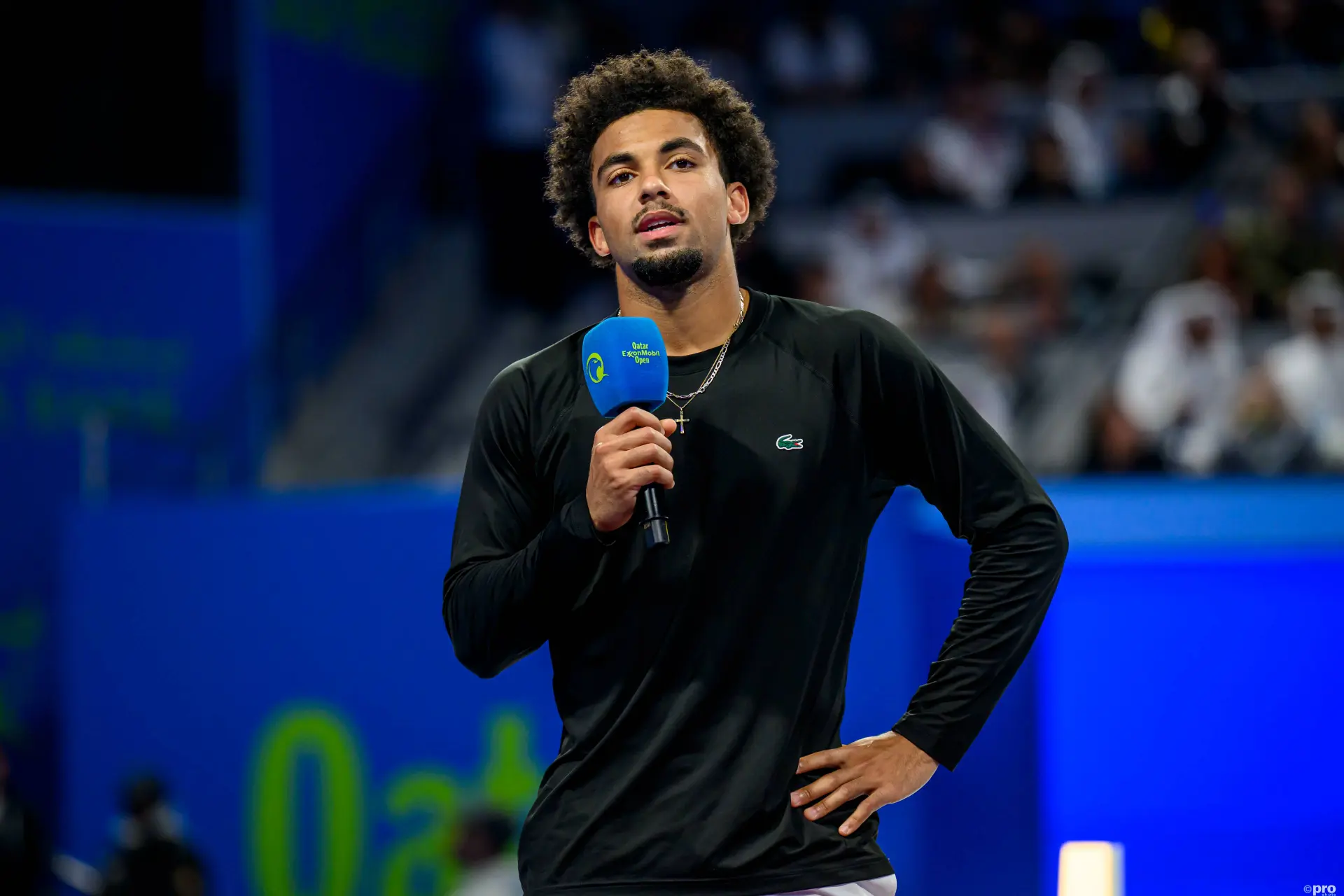
8. Brandon Nakashima (No. 22)
Ever since Nakashima won the Next Gen ATP Finals in 2022, expectations have been high, although he has taken longer than expected to establish himself as a genuine contender at the top of the sport. He has remained consistently around the top 30 for several years but has struggled to make the leap toward the biggest names.
His recent run to the Canadian Open final gives the 25-year-old a new level of credibility. Nakashima has built his ranking through consistency, regularly progressing through Grand Slam and Masters 1000 draws. He has four top-10 wins this season and owns one title from five career finals. A little more confidence could be enough to take him significantly higher.
Current ranking: No. 22
Why he's ready: Nakashima has spent several years hovering around the top 30, but his run to the Canadian Open final provided evidence that he may finally be ready for another significant step. He has built his ranking through consistency and has also recorded four top-10 wins in 2026.
Biggest obstacle: Nakashima needs to show that the Canadian Open was the beginning of a new level rather than an isolated run. He has often been difficult to beat without quite producing enough big results to make the leap towards the top 20.
What to watch: Cincinnati and the US Open will reveal whether his Canadian Open run has genuinely changed his trajectory. Another deep run would put him firmly in the ranking conversation.
What happens next? Nakashima's task is to turn his improved confidence into results against the very best players. If he can maintain the level seen in Montreal, a move from the low 20s towards the top 15 is within reach.

Brandon Nakashima of the United States reacts during his match against Rafael Jodar of Spain during semifinal tennis action at the National Bank Open in Montreal
9. Francisco Cerundolo (No. 25)
Cerundolo is another player who has spent years near the top of the rankings through consistency without quite making the next jump. The 28-year-old Argentine has produced repeated deep runs at Grand Slams and Masters 1000 events and already owns five ATP titles, including two in 2026 and his first ATP 500 crown at the Queen's Club Championships.
He remains one of the most respected players on tour, and the recent addition of Nicolas Massu as his coach could provide another boost. Massu previously coached Dominic Thiem to his 2020 US Open triumph. Cerundolo may have his best opportunity in 2027, when he is expected to have relatively few points to defend and can capitalize on the South American swing.
Current ranking: No. 25
Why he's ready: Cerundolo has been one of the ATP's most reliable performers around the top 30 for several seasons and now has five ATP titles, including two in 2026. His first ATP 500 title at Queen's Club was particularly significant and showed that he can win outside his traditionally strongest conditions.
Biggest obstacle: At 28, Cerundolo has less time than the younger players on this list to make a major leap. He also needs to turn his consistency into more regular deep runs against the highest-ranked opposition.
What to watch: His partnership with Nicolas Massu could be an important factor. Massu has previous experience guiding an established player to Grand Slam success, and Cerundolo will be looking to build on his strongest season yet.
What happens next? Cerundolo may be more of a medium-term top-10 candidate than an immediate threat. However, another strong run during the remainder of 2026 could put him in an excellent position heading into next season.
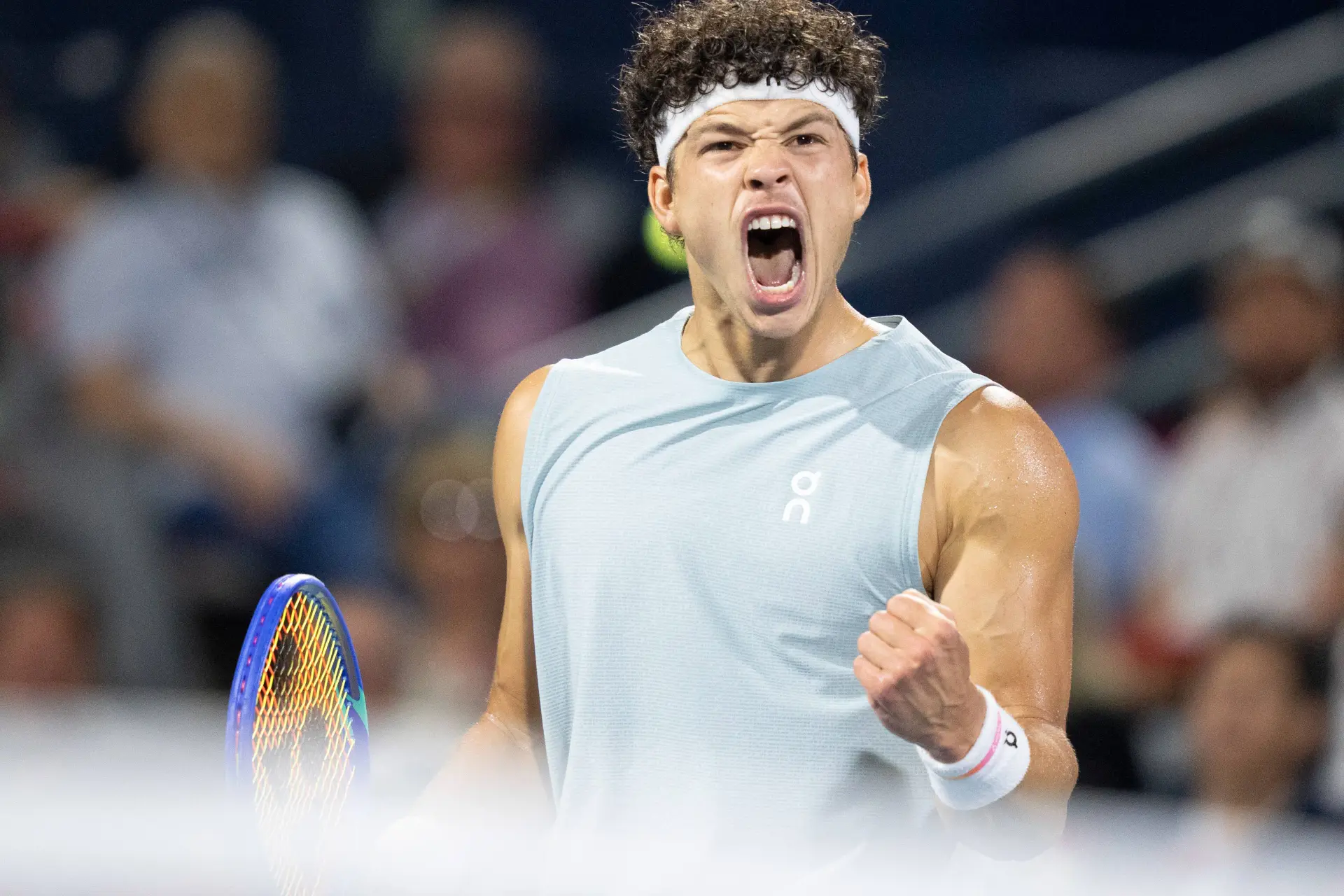
10. Joao Fonseca (No. 26)
At just 19, Fonseca is perhaps the most anticipated name on this list despite having the lowest current ranking among the 10 players. The Brazilian has long been viewed as a generational talent and one of the potential players capable of challenging the Sinner-Alcaraz dominance in the coming years.
He still needs to establish greater consistency at the highest level, but his extraordinary forehand, composure in important moments and significant improvement on serve over the past year provide plenty of reasons for optimism. His rise may not have been as rapid as some expected, but Fonseca remains one of the players with the highest ceiling on the ATP Tour and could become a serious top-10 contender as he gains experience.
Current ranking: No. 26
Why he's ready: Fonseca is the youngest player on the list and arguably has the highest ceiling. The Brazilian has long been regarded as one of the most exciting prospects in tennis, with an explosive forehand, improving serve and composure that belies his age.
Biggest obstacle: Consistency remains the obvious next step. Fonseca has shown flashes of spectacular tennis, but he still needs to produce that level across more tournaments and against a wider range of opponents.
What to watch: The remainder of the hard-court season should provide an important test of his development. Another deep run at a Masters 1000 event or the US Open would significantly accelerate his ranking rise.
What happens next? Fonseca may not be the most likely player on this list to break into the top 10 immediately, but his long-term ceiling could be higher than almost anyone here. The question is no longer whether he has the talent, but how quickly he can turn that talent into consistent results.

Cristhián AvilaTennis Journalist
Cristhián Ávila is a tennis journalist based in Santiago, Chile, and has been part of the TennisUpToDate team since early 2023. He covers the ATP and WTA Tours as well as all four Grand Slams, producing breaking news, match reports, analysis, and regular liveblogs from major tournaments.
His reporting combines statistical analysis with clear explanation, helping readers understand tactical developments, player form, and broader storylines across the tour. Working fluently in both Spanish and English, Cristhián collaborates with an international editorial team and contributes to comprehensive global coverage. As part of his work, he has conducted interviews and media interactions with leading figures in the sport, including Caroline Wozniacki and John McEnroe.
In his journalism, Cristhián places strong emphasis on careful sourcing, editorial accuracy, and updating articles promptly when new, verified information becomes available. His coverage is grounded in research, context, and direct engagement with professional tennis.
claps 0visitors 0
Just In

Popular News
Latest Comments
- A healthy Qinwen may be hard to stop next season. She was already scaring her opponents before her medical leave(s). Unfortunately, Zheng insisted on singing again. On the positive side -- Mirra did not sing!! ;~}
 mandoist11-10-2026
 - Where is it written that athletes, entertainers... People in general... are mandated to keep looking at -- or even using [anti]Social Media? Public & private figures consistently complain and reveal their concerns about negativity and violence thrown at them -- yet they insist on participating. Avoid it, don't use it, don't read it. It's okay to occasionally look up at the World instead beating your eyes & thumbs to death on The Inventions out there.mandoist11-10-2026
- great articlestennisseserver07-10-2026
- Medvedev was leading Djokovic 7-5, 3-5 when an attempted return..' NO you ignorants, Djokovic was leading .weiss05-10-2026
- No more bullshit "Wildcards" to these two. Qualify like everyone else -- there will be cameras there, too. Time to scream... WTF ????!!!!mandoist29-09-2026
- Let's not BS the general public -- Sabalenka started showing cracks in her game last season. Her losses and near-losses started at about the same time she began being distracted by Fame (constant Selfies, making TV commercials, magazine shoots, endless Social Media nonsense, etc., etc.) One would think even Saba could recognize the parallels with others who failed before her -- Raducanu, Giorgi, Bouchard to name a few.mandoist25-09-2026
- Gross!! Hey Raducanu, Giorgi, and Bouchard -- reserve a seat at your Social Media Selfie table for Saba + Naomi. They're heading in your direction soon enough.mandoist24-09-2026
- And then these same players will complain about how lengthy their season’s were and need more time-off. I’m all for more tennis but the amount of tennis we get now is actually kind of crazy! We all need a break, especially the players.DaveyWavey23-09-2026
- You should do a comparison article for "different kinds of justice" the courts decide for tennis players. I can think of at least three players who received very small bans of a few months, however Tara Moore has been fighting for her literal survival the past few years. It seems odd considering she is not a "name" player, unlike the other cases.DaveyWavey22-09-2026
- PRIZE MONEY & POINTS Winner - $185,500 Finalist - $114,500 Semi-Finalist - $66,003 Quarter-Finalist - $35,000 Round of 16 - $18,045 Round of 32 - $13,005 Winner - 500 Finalist - 325 Semi-Finalist - 195 Quarter-Finalist - 108 Round of 16 - 60 Round of 32 - 1DaveyWavey20-09-2026

Loading