
Andy Roddick argued that the debate around surface variation in professional tennis has largely lost relevance, suggesting that the sport already operates under a de facto level of uniformity across most tournaments. Speaking on Served with Roddick, the former World No. 1 said that differences in conditions are now more heavily influenced by equipment than by court design.
He pointed specifically to the tennis ball as the most significant variable affecting match conditions across the ATP Tour, noting inconsistencies between suppliers and tournaments. In his view, this creates more unpredictability than any intentional differences in court speed.
Roddick’s comments came during the grass court season, when players transition rapidly from clay at Roland Garros into the Wimbledon build-up, often across multiple countries and conditions within a short window.
He also addressed external factors influencing tournament selection during this period, including taxation differences that can materially affect earnings between events held in the United Kingdom and continental Europe.
Surface uniformity and the real variable in modern tennis
Roddick framed the issue as one of structural inconsistency rather than gradual evolution, arguing that tennis is already functionally uniform in terms of surfaces, with variation now driven elsewhere. “I don’t know if it’s moving towards it. It’s there already," the former owrld No. 1 said. "People talk about the surfaces. The ball really matters”
He then expanded on what he sees as the absence of reliable global standards for ball quality and tournament conditions, comparing tennis unfavourably with other sports that measure playing consistency more systematically.
"I do not know what the controls are anymore. In golf there is a stimpmeter to measure consistency," Roddick added. "In tennis, at least in Davis Cup in the past, there were limits for court speed, where surfaces could not be too fast or too slow. Now I do not see similar controls for the ball."
"If the ball becomes soft or fluffs up, it reduces the importance of how fast the court is. With seven different ball suppliers used across the season, conditions become unpredictable from week to week.”
Grass court tennis and tactical adaptation
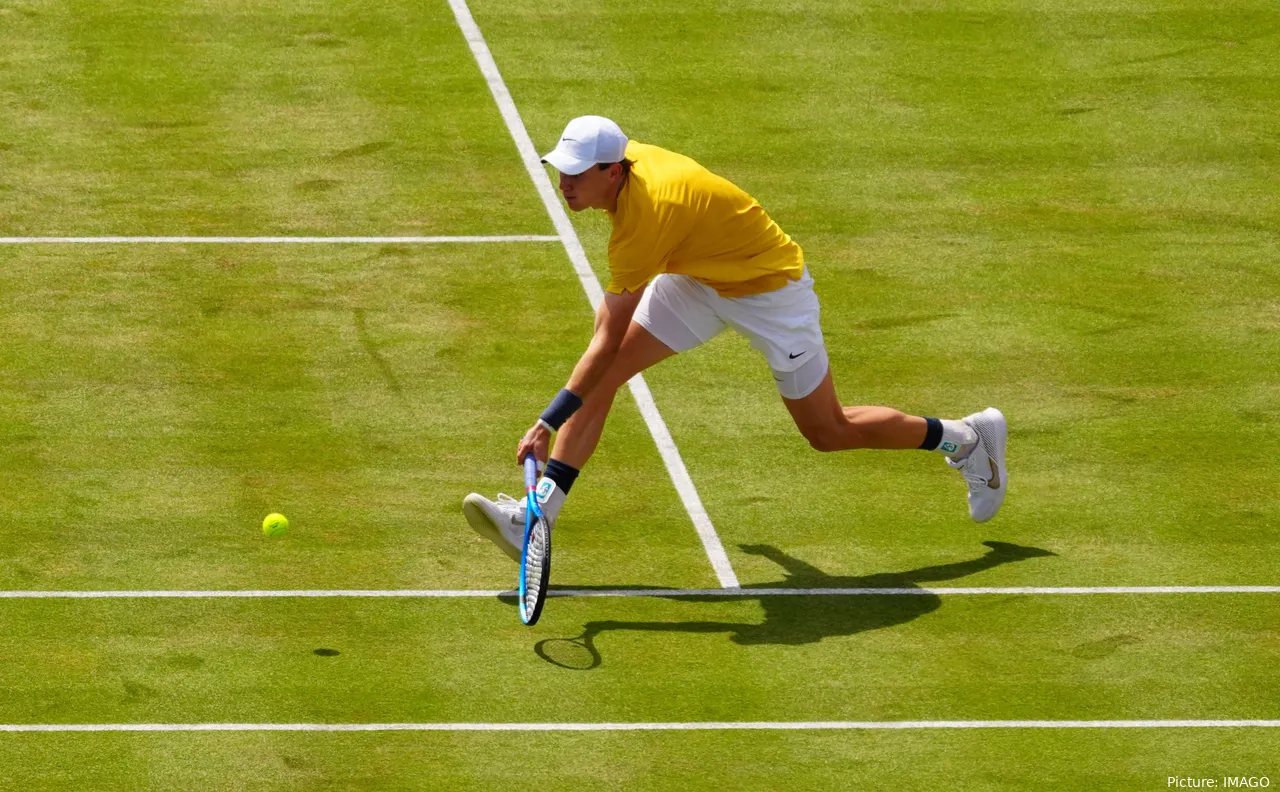
Roddick described grass court tennis as structurally distinct due to the way the ball interacts with the surface after impact, producing lower bounce and increased skid compared to clay and hard courts.
“The way I see it is simple. On a slow hard court like Indian Wells, the surface grips the ball, absorbs energy and creates a higher bounce. On grass, the opposite happens. The ball skids through the surface with much less friction, which reduces reaction time. That is why first-strike tennis becomes more important than on any other surface.”
He added that defensive play is structurally constrained on grass, requiring earlier commitment to positioning and shot selection, with fewer opportunities to recover through sliding or extended rally construction.
Scheduling, taxation and why players skip UK events
Roddick also addressed external factors influencing scheduling decisions during the grass court swing, particularly taxation differences between the United Kingdom and continental Europe. He said these differences can materially affect net earnings even when prize money levels are similar across tournaments.
He noted that events such as Queen’s and Halle may offer comparable financial incentives on paper, but result in significantly different take-home earnings depending on the country’s tax regime.
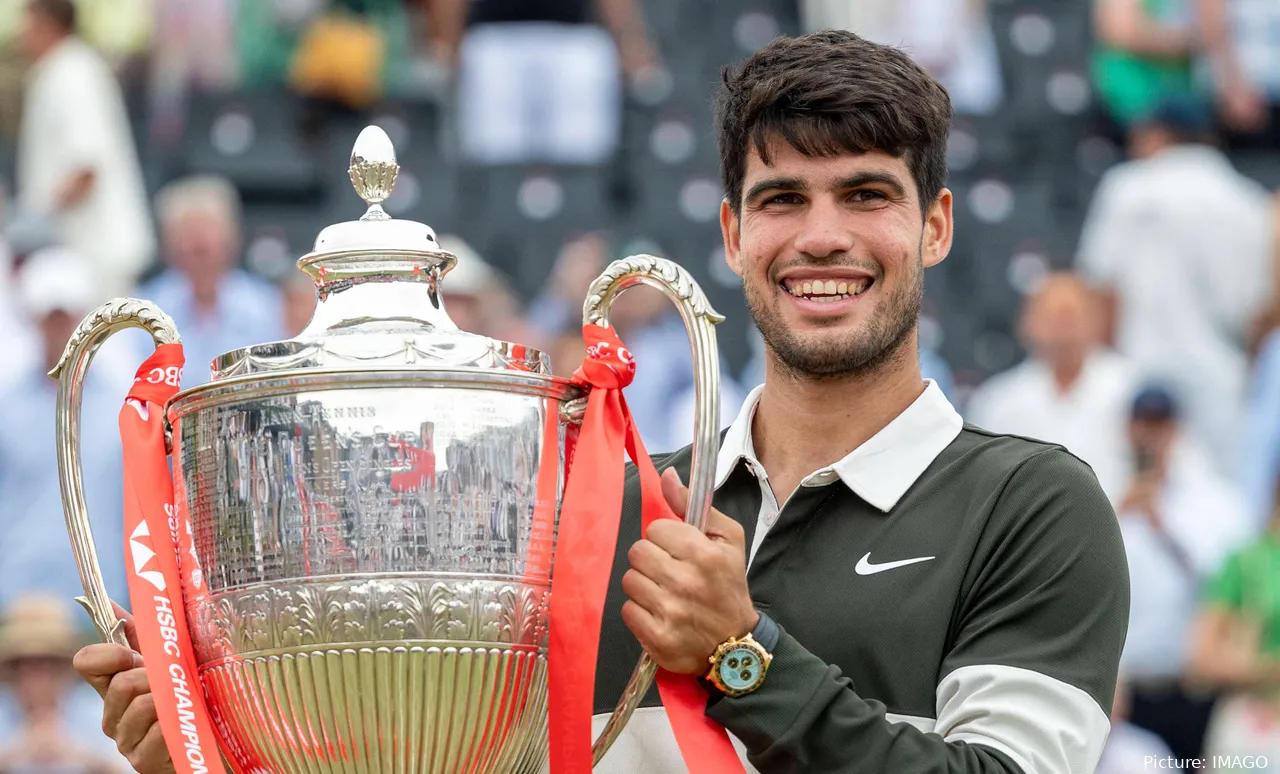
“A 40 percent tax difference changes everything. If you win tournaments like Halle and Queen’s, the prize money is the same, but the net income after taxes can differ by around 160,000 dollars."
"Players are essentially making the same sporting decision, but the financial outcome is very different. On top of that, tennis is fragmented. The slams have their own sponsors, the tour has its own sponsors, and individual tournaments operate under separate contracts that often run on different timelines.”

Cristhián AvilaTennis Journalist
Cristhián Ávila is a tennis journalist based in Santiago, Chile, and has been part of the TennisUpToDate team since early 2023. He covers the ATP and WTA Tours as well as all four Grand Slams, producing breaking news, match reports, analysis, and regular liveblogs from major tournaments.
His reporting combines statistical analysis with clear explanation, helping readers understand tactical developments, player form, and broader storylines across the tour. Working fluently in both Spanish and English, Cristhián collaborates with an international editorial team and contributes to comprehensive global coverage. As part of his work, he has conducted interviews and media interactions with leading figures in the sport, including Caroline Wozniacki and John McEnroe.
In his journalism, Cristhián places strong emphasis on careful sourcing, editorial accuracy, and updating articles promptly when new, verified information becomes available. His coverage is grounded in research, context, and direct engagement with professional tennis.
claps 0visitors 0
Just In


Popular News

Latest Comments
- Does Sinner need that 4.5 mil? I doubt it. He can make that with three modelling gigs!😅🤣Rapunzel21-10-2026
- Did "People Magazine" purchase this website? This nonstop storyline is bullshit.
 mandoist21-10-2026
 - Listen... this is of no concern to anyone but these two. Deal with your own issues -- most of us have our own. Thanks, media, for these insignificant follow-ups which are meaningless.mandoist21-10-2026
- This is so very very sad, for all three of them. I truly thought they had an unbreakable bond, but life throws up so many differing challenges. Having your homeland suffering in such a terrible way, makes happiness lose out to guilt as well. Our thoughts are with them. X💔bjsexton20-10-2026
- I have lost all respect for Svitolina! Could she not have waited until he had played at the Paris Masters!!! She is selfish and don't give a damn about Gael. That is NOT how love is demonstrated Elina!!Rapunzel19-10-2026
- Perhaps convenient tennis tour sex is not a strong enough experience in which to base a marriage?mandoist19-10-2026
- Fight the Good Fight... Tennis (sports in general) need more Humans such as yourself.mandoist18-10-2026
- When is WTA going to mandate Genetic Testing (DNA) ???mandoist18-10-2026
- Hey, Dan... you just wake up from a coma? Regardless -- Thanks for the comedy this morning!mandoist18-10-2026
- Two Things: 1. Stop allowing these Spoiled Trust-Fund Elitists to behave badly. Your little hand-slaps do not deter them. 2. STOP the incessantly annoying "towel wiping" nonsense!!!!mandoist15-10-2026

Loading