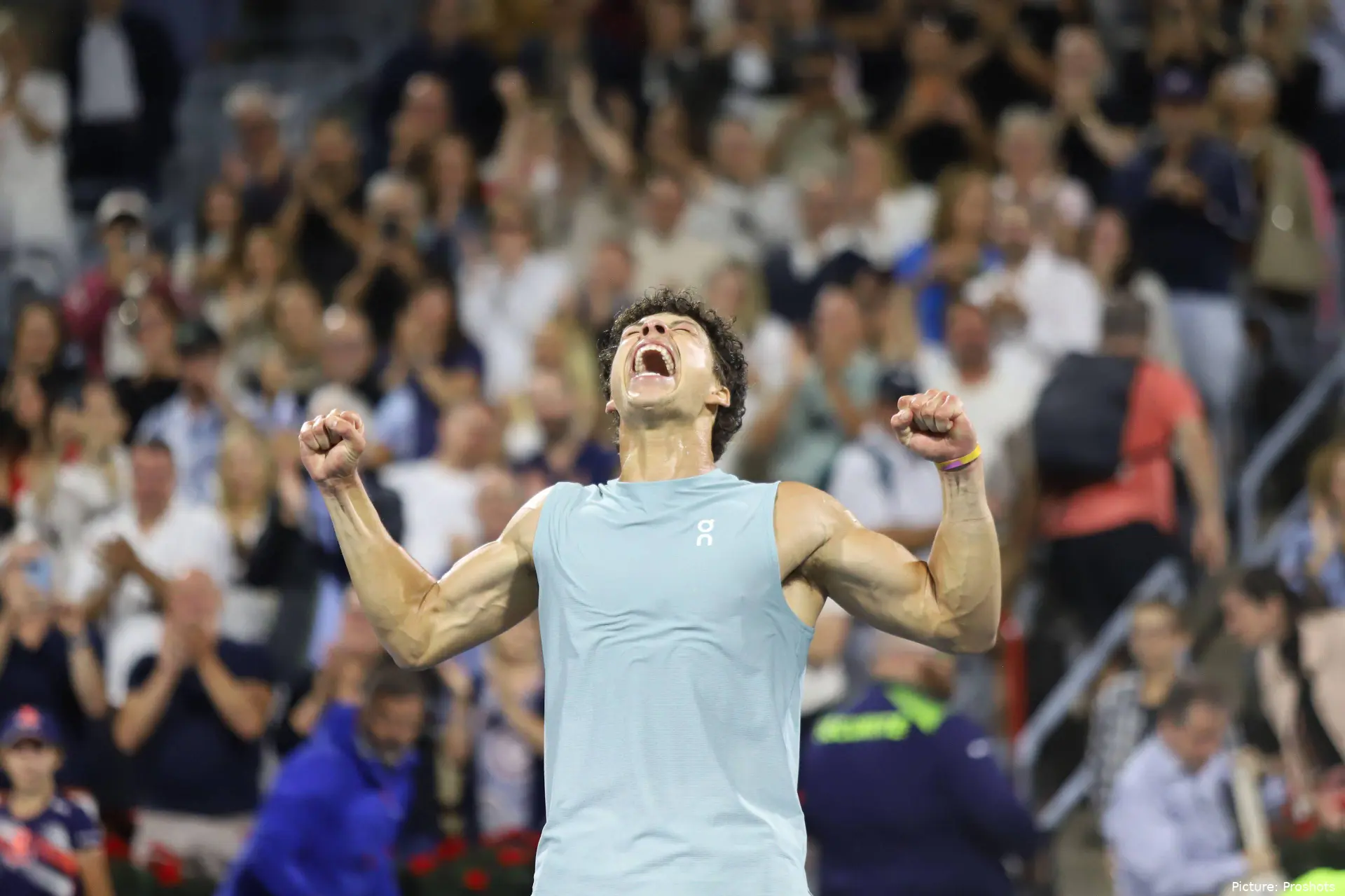
Ben Shelton is 23 years old, and by Sunday afternoon he will walk onto Arthur Ashe Stadium carrying more history than most players accumulate across an entire career. There is the 23-year wait since an American man last won a Grand Slam.
There is the specific weight of playing that match on a court named for a man whose own barrier Shelton is already being compared to. There is the shadow of Andy Roddick, the last American man to actually do this. And there is an entire generation of American men's tennis — Tiafoe, Fritz, Paul, Michelsen and Tien — whose hopes are now, fairly or not, wrapped up in whether Shelton can finish the job that began Friday night.
That is an enormous amount to place on one player, at one tournament, in his first-ever Grand Slam final. The question worth asking is not whether Shelton can handle it — he has shown throughout this fortnight that he can. It is whether it is reasonable to have asked him to carry it in the first place.
The scale of the drought is almost hard to process alongside what came before it. Between 1980 and 2003, American men won 37 Grand Slam singles titles. Since Roddick beat Juan Carlos Ferrero in the 2003 US Open final, American men have reached exactly six more major finals — and lost every single one.
For Shelton, this will be his first Grand Slam final, but he arrives with an established place among the leading players of his generation. He has already won two Masters 1000 titles and reached two previous Grand Slam semifinals before making his breakthrough at this US Open. The expectations placed on him have been building for some time, and so far, he has lived up to them. Now, he has one more step to take if he is to return the American flag to the top of men's Grand Slam tennis.
American men's Grand Slam finals since Roddick's 2003 win
| Year | Tournament | Player | Result | Score |
| 2004 | Wimbledon | Andy Roddick | Lost to Roger Federer | 6-4, 5-7, 6-7, 4-6 |
| 2005 | Wimbledon | Andy Roddick | Lost to Roger Federer | 2-6, 6-7, 6-6, 4-6 |
| 2005 | US Open | Andre Agassi | Lost to Roger Federer | 3-6, 6-2, 6-7, 1-6 |
| 2006 | US Open | Andy Roddick | Lost to Roger Federer | 2-6, 6-4, 5-7, 1-6 |
| 2009 | Wimbledon | Andy Roddick | Lost to Roger Federer | 7-5, 6-7, 6-7, 6-3, 14-16 |
| 2024 | US Open | Taylor Fritz | Lost to Jannik Sinner | 3-6, 4-6, 5-7 |
Shelton isn't just trying to win a tennis match on Sunday. He's trying to be the answer to a question American tennis has been asking, with growing discomfort, for 23 years — a question that outlasted an entire generation of players who came before him and carried exactly the same burden into exactly these kinds of matches, only to fall short every time.

The weight of Arthur Ashe Stadium, literally
Layered on top of the title drought is a second, more specific piece of history. By beating Frances Tiafoe in Friday's all-American semifinal, Shelton became the first Black American man to reach a US Open final since Arthur Ashe himself, in 1972 — and the first Black American man to reach a Grand Slam final of any kind since MaliVai Washington at Wimbledon in 1996, three decades ago. He'll play that final on the court that carries Ashe's name, a coincidence of scheduling that nobody involved is treating as incidental.
Ashe's legacy in tennis extends well beyond his playing career — he broke barriers as a Black man in a sport that offered him almost none, and became one of its most respected statesmen off the court in the process.
Asking a 23-year-old to carry that symbolic weight into a match, on top of everything else riding on it, is asking him to be a historical bookend and a hungry competitor at the same time. Shelton, for his part, has leaned into it rather than away from it, dedicating his semifinal win to the grandmother his father lost this year and asking the crowd directly to return Sunday and back him.
A generation's expectations, arriving all at once
None of this is happening in isolation from the rest of American men's tennis, either. Tiafoe has now lost three career Grand Slam semifinals, all at this tournament. Fritz already knows exactly what Sunday feels like, having been the last American man to get this far, in 2024.
Younger players such as Learner Tien and Alex Michelsen are being talked about as the sport's next wave precisely because Shelton's generation is supposed to be the one that finally breaks through. Every match Shelton wins this week does not just extend his own run — it becomes further evidence, for better or worse, that he is the player who is supposed to deliver something an entire era of American men could not.
That is a lot of other people's stories to inherit in a single fortnight. Shelton entered this US Open with a career record of 0-17 against top-three opponents. He leaves it, regardless of Sunday's result, as the player who ended that streak against defending champion Carlos Alcaraz at 3:33 in the morning and then beat his own countryman in a five-set emotional slugfest to reach his maiden major final. However Sunday goes, he has already done far more than simply survive the pressure being placed on him.
Is this fair to a 23-year-old?
Probably not, if fairness means proportionality. No single match, let alone one involving a player still just three years into his tour-level career, should reasonably have to resolve two decades of accumulated national frustration, a specific historical echo tied to the very stadium where he is playing, and the expectations of an entire generational cohort, all at once. Grand Slam finals are difficult enough to win without also being asked to mean something for everyone else watching.
Read also
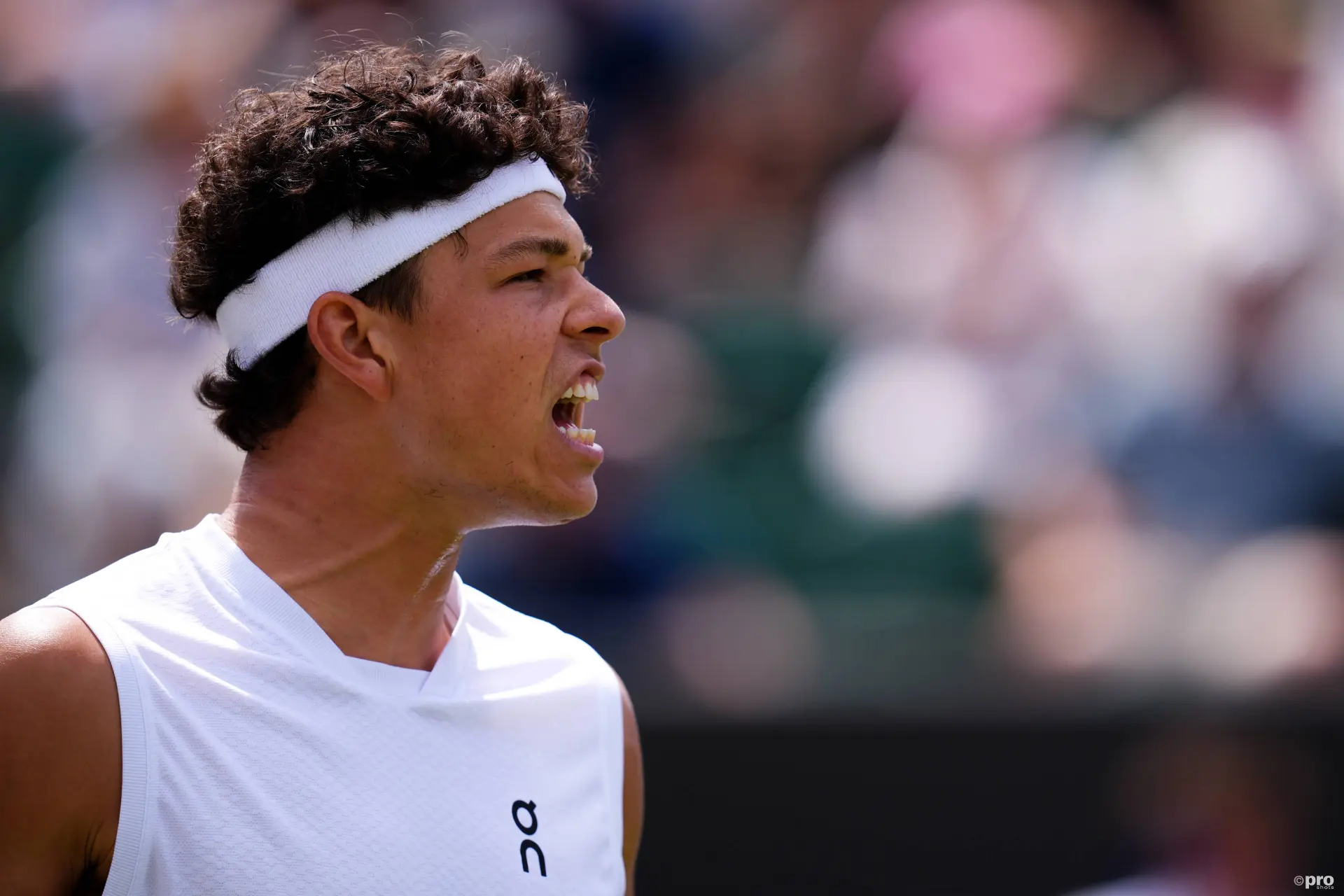
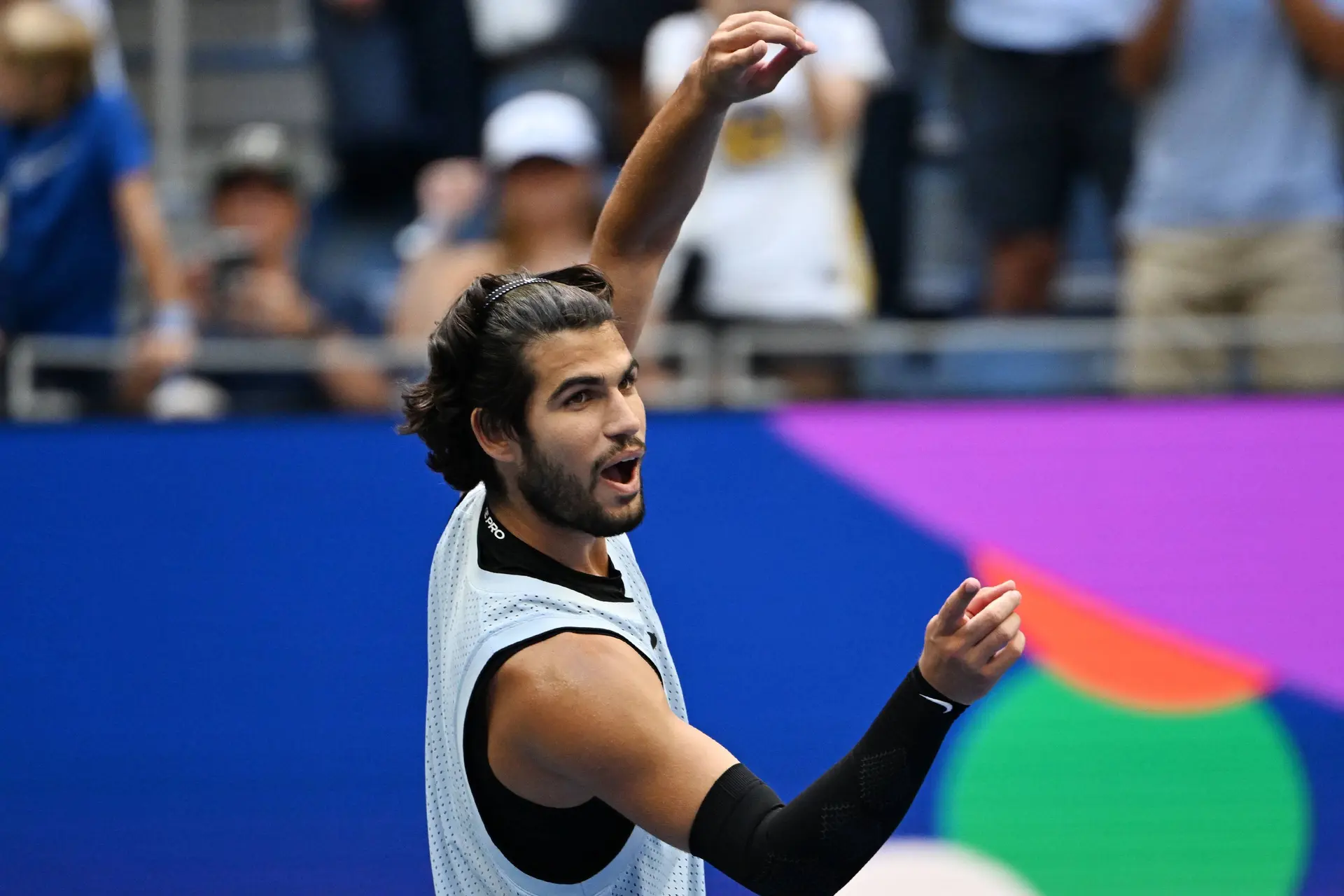
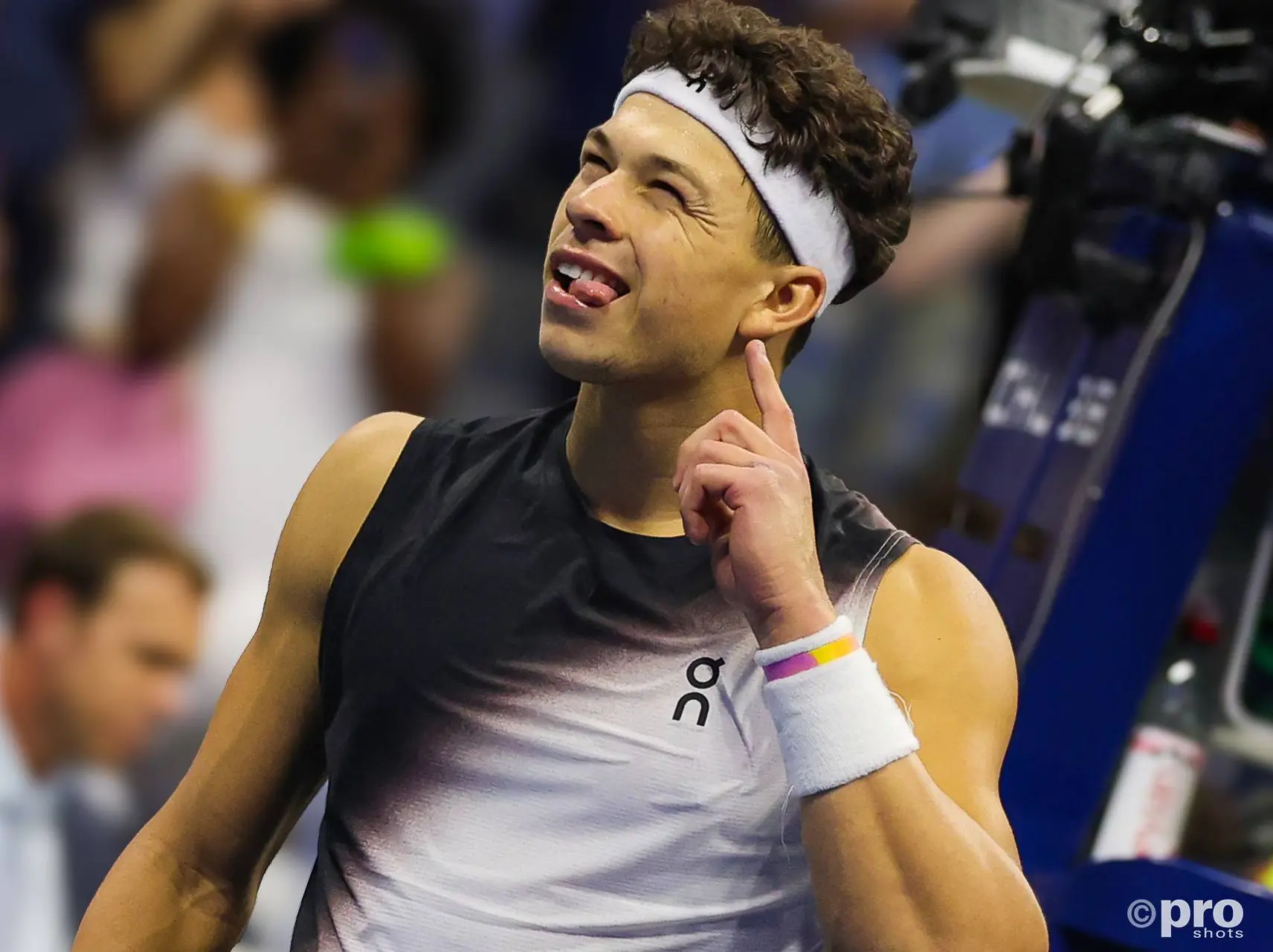
Shelton arrives with genuine chances, while also benefiting from the fact that his first Grand Slam final will not be against Alcaraz, Sinner or even Djokovic. Zverev, already a Grand Slam champion, carries a different status after finally winning his maiden major title, but he still appears closer to Shelton's level than the likes of Alcaraz and Sinner do. The American therefore has legitimate reasons to believe he can compete for the title.
From a talent perspective, Shelton has the weapons to trust his chances, while the setting and conditions also appear favourable to his game. He has already produced an impressive run, defeating Hubert Hurkacz, Stefanos Tsitsipas, Frances Tiafoe and defending champion Alcaraz on his way to the final. Sunday's match will be another step up, but Shelton has already demonstrated that he belongs on this stage.

Cristhián AvilaTennis Journalist
Cristhián Ávila is a tennis journalist based in Santiago, Chile, and has been part of the TennisUpToDate team since early 2023. He covers the ATP and WTA Tours as well as all four Grand Slams, producing breaking news, match reports, analysis, and regular liveblogs from major tournaments.
His reporting combines statistical analysis with clear explanation, helping readers understand tactical developments, player form, and broader storylines across the tour. Working fluently in both Spanish and English, Cristhián collaborates with an international editorial team and contributes to comprehensive global coverage. As part of his work, he has conducted interviews and media interactions with leading figures in the sport, including Caroline Wozniacki and John McEnroe.
In his journalism, Cristhián places strong emphasis on careful sourcing, editorial accuracy, and updating articles promptly when new, verified information becomes available. His coverage is grounded in research, context, and direct engagement with professional tennis.
claps 0visitors 0
Just In

Popular News

Latest Comments
- Does Sinner need that 4.5 mil? I doubt it. He can make that with three modelling gigs!😅🤣Rapunzel21-10-2026
- Did "People Magazine" purchase this website? This nonstop storyline is bullshit.
 mandoist21-10-2026
 - Listen... this is of no concern to anyone but these two. Deal with your own issues -- most of us have our own. Thanks, media, for these insignificant follow-ups which are meaningless.mandoist21-10-2026
- This is so very very sad, for all three of them. I truly thought they had an unbreakable bond, but life throws up so many differing challenges. Having your homeland suffering in such a terrible way, makes happiness lose out to guilt as well. Our thoughts are with them. X💔bjsexton20-10-2026
- I have lost all respect for Svitolina! Could she not have waited until he had played at the Paris Masters!!! She is selfish and don't give a damn about Gael. That is NOT how love is demonstrated Elina!!Rapunzel19-10-2026
- Perhaps convenient tennis tour sex is not a strong enough experience in which to base a marriage?mandoist19-10-2026
- Fight the Good Fight... Tennis (sports in general) need more Humans such as yourself.mandoist18-10-2026
- When is WTA going to mandate Genetic Testing (DNA) ???mandoist18-10-2026
- Hey, Dan... you just wake up from a coma? Regardless -- Thanks for the comedy this morning!mandoist18-10-2026
- Two Things: 1. Stop allowing these Spoiled Trust-Fund Elitists to behave badly. Your little hand-slaps do not deter them. 2. STOP the incessantly annoying "towel wiping" nonsense!!!!mandoist15-10-2026

Loading