“I believe it made all of us who competed in that era better”: Feliciano Lopez reflects on competing against the Big Four in their prime
ATP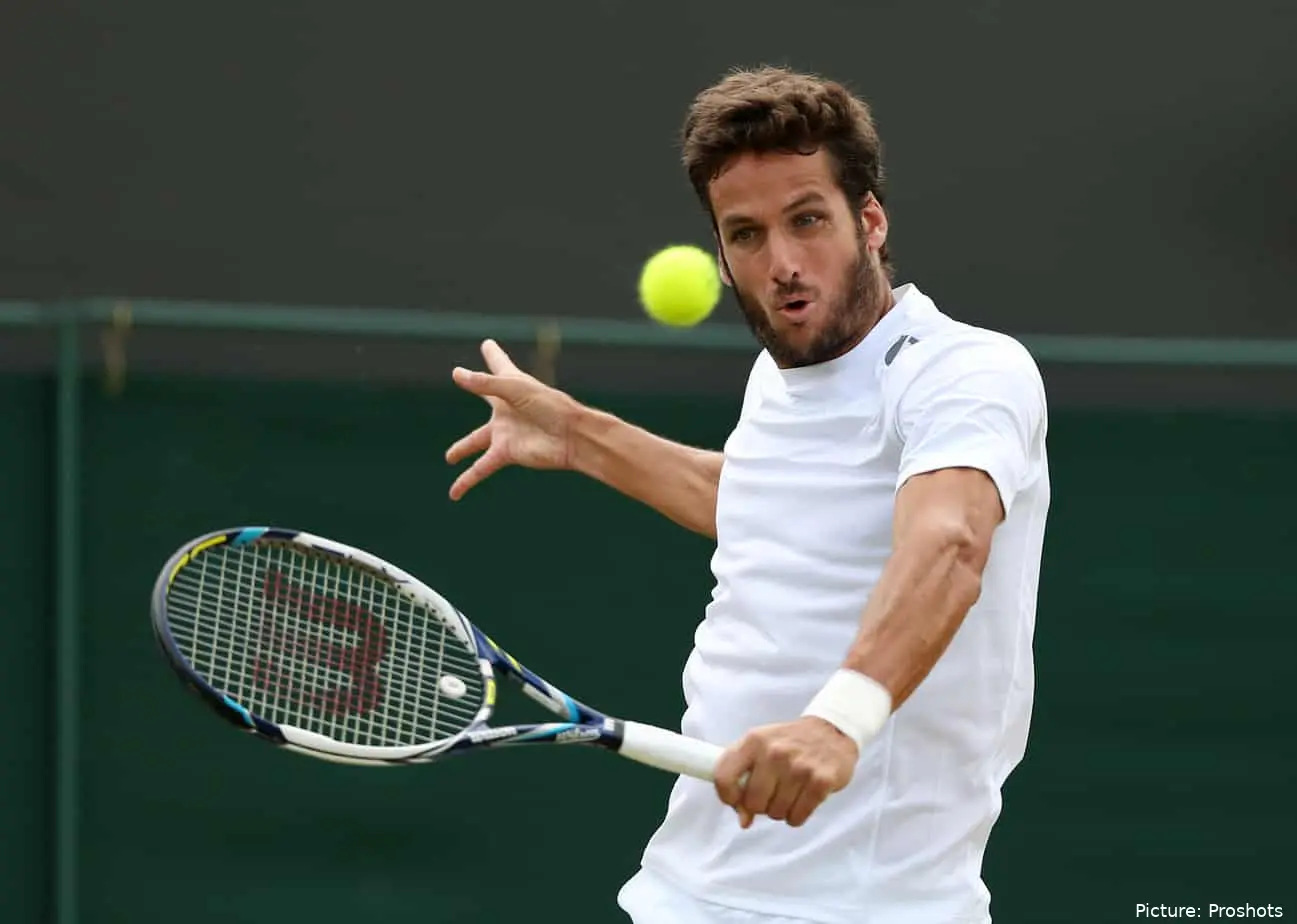
Feliciano Lopez recalls with precision the density of talent that defined his generation, marked by the presence of Novak Djokovic, Rafael Nadal, Roger Federer, and Andy Murray in their prime – and while comparisons between eras resurface, the former world No. 7 does not doubt which was the best era for men’s tennis.
During his career, Lopez regularly faced these players in Grand Slams and Masters 1000 events. He achieved a total of 39 wins against top-10 opponents in his career, the first against Marat Safin in 2002 – and the last against Andrey Rublev in 2021, Russians who are currently associated as coach-player – a clear demonstration of how Lopez managed to compete across different generations.
Over more than twenty years on tour, Lopez experienced the intensity of Grand Slams first-hand. Advancing to the third or fourth round often meant facing established top-10 players, including active champions and veterans with experience in major finals. “The good part is that we played in the best era in tennis history,” López commented in a recent interview with El Chiringuito. “No one can take that away from me: having played against Djokovic, Rafa, Federer, and Murray in their prime.”
Beyond the Big 3 and Murray, players such as Juan Martín del Potro, David Ferrer, Jo-Wilfried Tsonga, or Tomas Berdych represented significant obstacles in every tournament. López emphasizes that, despite never reaching a Grand Slam final, competing under these circumstances forged a mentality and level of play that is difficult to match in later generations. “I believe it made all of us who competed in that era better, even if it may have deprived us of some more important titles.”
Historical rivalries and learning
For López, direct competition with Federer, Nadal, Djokovic, and Murray was not only a sporting challenge but also constant learning. Each tournament required specific technical and tactical adjustments, from fast-court hard courts to extended battles on clay.
“I remember that when you went to a Grand Slam, usually from the third round you faced a seeded player. And when you reached the round of 16, you faced Wawrinka, David Ferrer, tennis legends. And I said: let’s play. And that made you feel lucky.”
For him, the mentality toward these duels was different from other players: “You took out the Big Four and you said, as a tennis player, another guy would now say: ‘Damn, I got Wawrinka, what bad luck I have.’ No, not here. Here you said: ‘Damn, let’s play, you will probably beat me or not, but we’re going to play on equal terms.’”
The new elite: Alcaraz and Sinner
López recognizes that the current generation, led by Carlos Alcaraz and Jannik Sinner, shows a technical, physical, and mental superiority that is hard to match. Both players have already reached the top positions in the ATP rankings, with Alcaraz winning 7 Grand Slam titles at 22 years old and Sinner claiming 4.
“The likes of Wawrinka, Ferrer, Del Potro… I could tell you thousands of players we competed against at levels… now that doesn’t happen,” López commented. “As it is now, the level… what is the level now? The level now is that there are two guys, Sinner and Alcaraz, who are incredibly good in everything, better than their rivals technically, physically, mentally, in everything. And there isn’t a group behind them who, at certain moments, can really trouble them.”
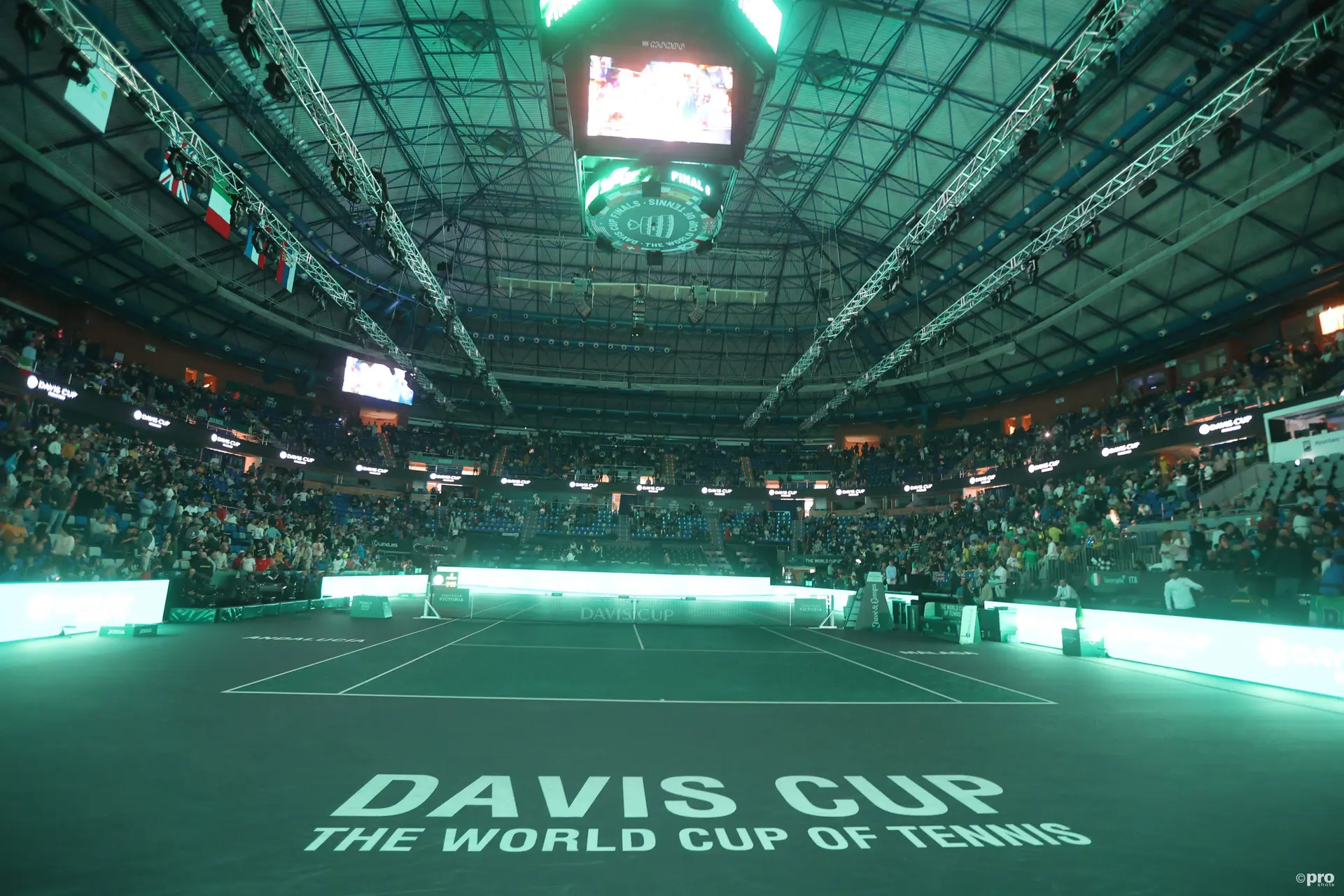
Regarding the relationship between Alcaraz and Ferrero, López describes the split as premature and emotionally intense: “Now he suffers the breakup with his coach. How have you seen it? What do you think about it? I thought it was premature, I said so publicly. No, premature in the sense that I saw a very strong bond between them and that there are coach-player relationships that are stronger than others. And I felt Alcaraz still needed Ferrero a lot, which is why I said publicly that it seemed a bit premature.”
Alcaraz’s ability to maintain performance despite changes in his technical team, as demonstrated at the Australian Open, confirms the competitive maturity López observes: “The proof is that he went to Australia at a moment when many people said: ‘Well, he has broken with Ferrero, this will affect him,’ and then he wins in Australia.”
Finally, López emphasizes that Alcaraz’s gratitude and respect for Ferrero remain, even without public gestures: “I am sure, internally, he remembers him, because he has reached this point thanks to him, despite the work Samuel is now doing individually.”

Cristhián AvilaTennis Journalist
Cristhián Ávila is a tennis journalist based in Santiago, Chile, and has been part of the TennisUpToDate team since early 2023. He covers the ATP and WTA Tours as well as all four Grand Slams, producing breaking news, match reports, analysis, and regular liveblogs from major tournaments.
His reporting combines statistical analysis with clear explanation, helping readers understand tactical developments, player form, and broader storylines across the tour. Working fluently in both Spanish and English, Cristhián collaborates with an international editorial team and contributes to comprehensive global coverage. As part of his work, he has conducted interviews and media interactions with leading figures in the sport, including Caroline Wozniacki and John McEnroe.
In his journalism, Cristhián places strong emphasis on careful sourcing, editorial accuracy, and updating articles promptly when new, verified information becomes available. His coverage is grounded in research, context, and direct engagement with professional tennis.
claps 0visitors 0
Just In

Popular News
Latest Comments
- A healthy Qinwen may be hard to stop next season. She was already scaring her opponents before her medical leave(s). Unfortunately, Zheng insisted on singing again. On the positive side -- Mirra did not sing!! ;~}
 mandoist11-10-2026
 - Where is it written that athletes, entertainers... People in general... are mandated to keep looking at -- or even using [anti]Social Media? Public & private figures consistently complain and reveal their concerns about negativity and violence thrown at them -- yet they insist on participating. Avoid it, don't use it, don't read it. It's okay to occasionally look up at the World instead beating your eyes & thumbs to death on The Inventions out there.mandoist11-10-2026
- great articlestennisseserver07-10-2026
- Medvedev was leading Djokovic 7-5, 3-5 when an attempted return..' NO you ignorants, Djokovic was leading .weiss05-10-2026
- No more bullshit "Wildcards" to these two. Qualify like everyone else -- there will be cameras there, too. Time to scream... WTF ????!!!!mandoist29-09-2026
- Let's not BS the general public -- Sabalenka started showing cracks in her game last season. Her losses and near-losses started at about the same time she began being distracted by Fame (constant Selfies, making TV commercials, magazine shoots, endless Social Media nonsense, etc., etc.) One would think even Saba could recognize the parallels with others who failed before her -- Raducanu, Giorgi, Bouchard to name a few.mandoist25-09-2026
- Gross!! Hey Raducanu, Giorgi, and Bouchard -- reserve a seat at your Social Media Selfie table for Saba + Naomi. They're heading in your direction soon enough.mandoist24-09-2026
- And then these same players will complain about how lengthy their season’s were and need more time-off. I’m all for more tennis but the amount of tennis we get now is actually kind of crazy! We all need a break, especially the players.DaveyWavey23-09-2026
- You should do a comparison article for "different kinds of justice" the courts decide for tennis players. I can think of at least three players who received very small bans of a few months, however Tara Moore has been fighting for her literal survival the past few years. It seems odd considering she is not a "name" player, unlike the other cases.DaveyWavey22-09-2026
- PRIZE MONEY & POINTS Winner - $185,500 Finalist - $114,500 Semi-Finalist - $66,003 Quarter-Finalist - $35,000 Round of 16 - $18,045 Round of 32 - $13,005 Winner - 500 Finalist - 325 Semi-Finalist - 195 Quarter-Finalist - 108 Round of 16 - 60 Round of 32 - 1DaveyWavey20-09-2026

Loading