“I will focus on the matches ahead”: Alexander Zverev rejects Roland-Garros 2026 favourite pressure
ATPMonday, 01 June 2026 at 02:30
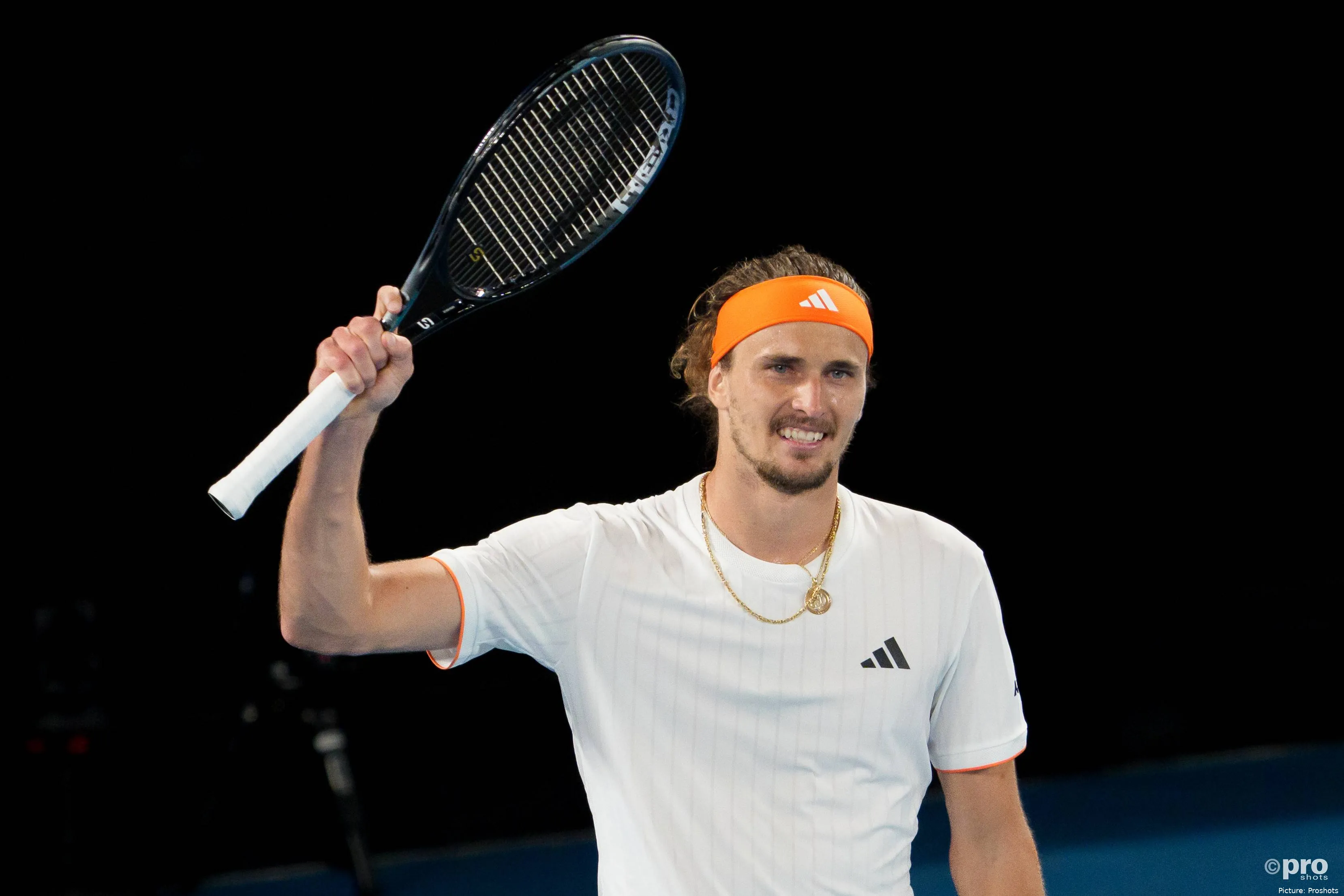
Alexander Zverev continued his Roland-Garros campaign with another controlled progression through the early rounds, recovering from a slow start against Jesper de Jong before reasserting authority to close out the match. The world No. 3 briefly trailed 0-3 before stabilising his baseline game and taking control of the encounter.
The German has now moved through Benjamin Bonzi, Tomas Machac, Quentin Halys and De Jong in Paris, dropping only one set so far in the tournament. His path has so far avoided top-40 opposition, but the level of difficulty is expected to rise as he moves deeper into the draw.
Zverev arrives in Paris as one of the most experienced contenders at Roland-Garros, holding a 42–10 record at the tournament and having reached at least the quarter-finals in eight editions, including six consecutive years. He was also a finalist in 2024 and has reached three Grand Slam finals in his career.
The dominant theme of his press conference was not performance itself, but his rejection of external framing around expectation, pressure and favourite status, which he repeatedly dismissed in favour of a narrow, match-by-match approach.
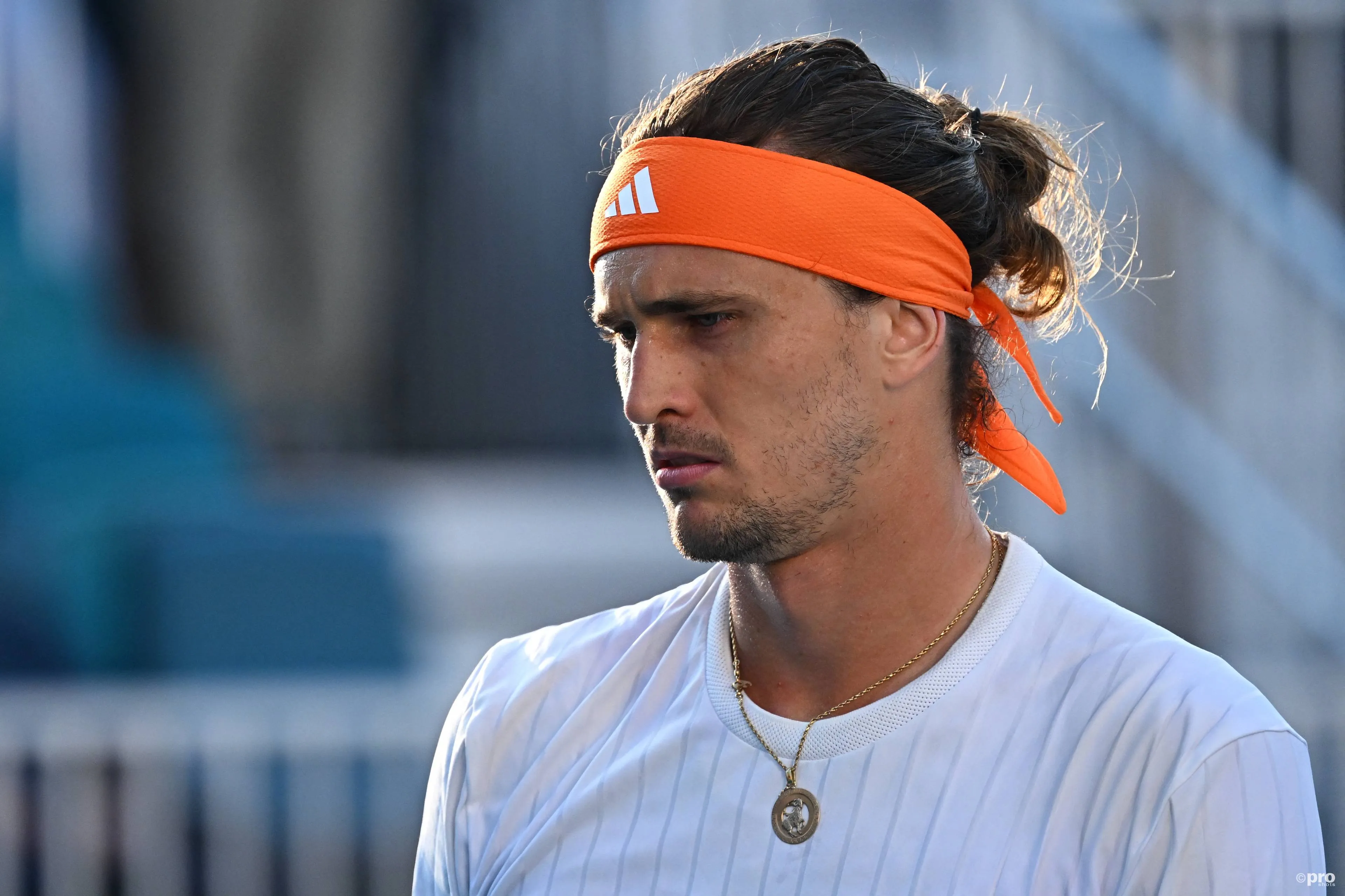
“I will focus on the matches ahead” — rejecting the favourite narrative
Zverev’s central message throughout the press conference was consistent: he refuses to engage with questions about pressure or status as one of the main title contenders in Paris. Instead, he returned repeatedly to control, process and immediate execution.
“No, I'll give the same answer I gave two days ago. I will focus on the matches that are ahead of me. This is the only thing that I can control. I focused on De Jong. I played a good match. I won. I'm going to focus on Jodar next and hopefully play a good match. That's the only thing that isn't my concern.”

That framing extended beyond single matches into his broader approach to the tournament. Even when pressed on expectations tied to his ranking and results history, Zverev avoided engaging with external projections and maintained a strictly operational mindset focused on the next opponent.
The German also addressed how he structurally limits exposure to outside noise during Grand Slams, pointing to a long-standing routine of digital isolation that he says has been part of his tournament preparation for years. “My phone is off but it's been off for like seven years during Grand Slams, so I don't have social media.”
The same controlled framing applied to his assessment of physical condition after matches that have included early deficits and momentum swings. He described his current level as stable, linking confidence directly to how he feels on court rather than external expectations.
“I feel fine. I felt like the previous match was still challenging but I feel good. For me, as long as my tennis is coming together and I feel well on the court and confident, I'm happy. My back's fine.”
Pressure reframed: experience versus expectation
Beyond the immediate match context, Zverev was asked to reflect on pressure dynamics and what it means to operate as a top player in a Grand Slam environment. His response contrasted the early-career freedom of younger players with the structural experience he now carries after a decade at the top level.
He described the difference not in emotional terms, but in terms of situational management and familiarity with high-pressure moments, suggesting that experience has replaced the uncertainty of his early years on tour.
“Yeah, it's a fun time. It's a fun time for any player when you're first coming up, because you've got no pressure, you play freely, you experience all these big things for the first time, and it's a lot of fun to be in that position. But I think it's also fun to be in a position that I'm in, where I've been at this level for 10 years and I play my matches, I know how to handle certain situations.”
He also highlighted the rapid emergence of younger players, noting one opponent who has moved from outside the top 100 at the start of the clay season to inside the top 20 within weeks. For Zverev, that trajectory reflects both the volatility and competitiveness of the current tour landscape.
“But yeah, I think he's amazing. I mean, he was what, outside top 100 at the start of the clay court season or something like that, close to it, and now he's top 20 after this week. So I think he deserves a lot of credit. He's playing amazing tennis and I'm looking forward to our first meeting, which is going to be hopefully an entertaining one.”
Read also

Tactical evolution and control of variables
Alongside mental framing, Zverev also addressed adjustments in his game, which he linked to an increased willingness to take risks and introduce variation in baseline exchanges. These changes, he suggested, are aimed at altering opponent perception and preventing predictable patterns.
“I think I talked about it quite a lot. One thing was the opportunity to take more chances, to take more risks. I think ball speed was another one, to keep the ball speed up a little bit more on the ground strokes. Different varieties, different changes like the drop shot, like a surfer volley sometimes. All those things to just give a different perspective to the opponent.”
That tactical evolution sits alongside his broader competitive stability in Paris, where he has so far managed early setbacks without allowing them to define matches. In multiple encounters, including against De Jong, he has recovered from slow starts to regain control through longer baseline exchanges and improved shot tolerance. “I feel like I'm handling situations quite well. I will do everything possible to continue doing that.”
Roland-Garros record underlines expectations he refuses to discuss
Despite his reluctance to engage with expectations, Zverev’s statistical profile at Roland-Garros remains one of the strongest in the draw. His 42–10 record in Paris, combined with eight quarter-final appearances and six consecutive deep runs, places him among the most consistent performers on clay in recent years.
That record, along with his 2024 final appearance and three Grand Slam finals overall, forms the underlying context of the pressure narrative he continues to reject in public. For now, however, his messaging remains unchanged: match focus, controlled exposure, and resistance to external framing of his status in the tournament hierarchy.

claps 0visitors 0
Just In
Popular News
Latest Comments
- People like Tiafoe, who lose sight of their roots, need to be reminded of who they once were! It's almost too late...
 mandoist31-05-2026
 - She gonna dress like a Tennis Player or Minnie Mouse this time? Unserious brain.mandoist31-05-2026
- "...that way I can talk through my clothes" Wow! Ironically 'mentality' is mentioned in this needless article. Geez.mandoist27-05-2026
- I did the common sense thing... turned it off.mandoist27-05-2026
- Osaka seems to have 'lost the plot' some time ago. Distraction, distraction, distraction.. WTA lost The Plot quite some time ago as well.mandoist27-05-2026
- This one continues to find ways to distract herself from The Game; more than anyone since her "heroes" The Williams. Hope she's not turning into her 'unnecessarily opinionated' father.mandoist27-05-2026
- How unfortunate. Martinez stands far & above these others in effective coaching (and personality).mandoist26-05-2026
- What a Simp.mandoist26-05-2026
- I do not think it is that bad. Many countries do not have a top 10 player on the ATP Tour. The ladies' is indeed not so good since Ash Barty stopped playing suddenly.
 AceOfBase26-05-2026
 - Like Saba :-)AceOfBase26-05-2026

Loading