“It just kind of puts you off”: Bryan Shelton calls out Alexander Zverev’s 12,000-bounce US Open habit
ATP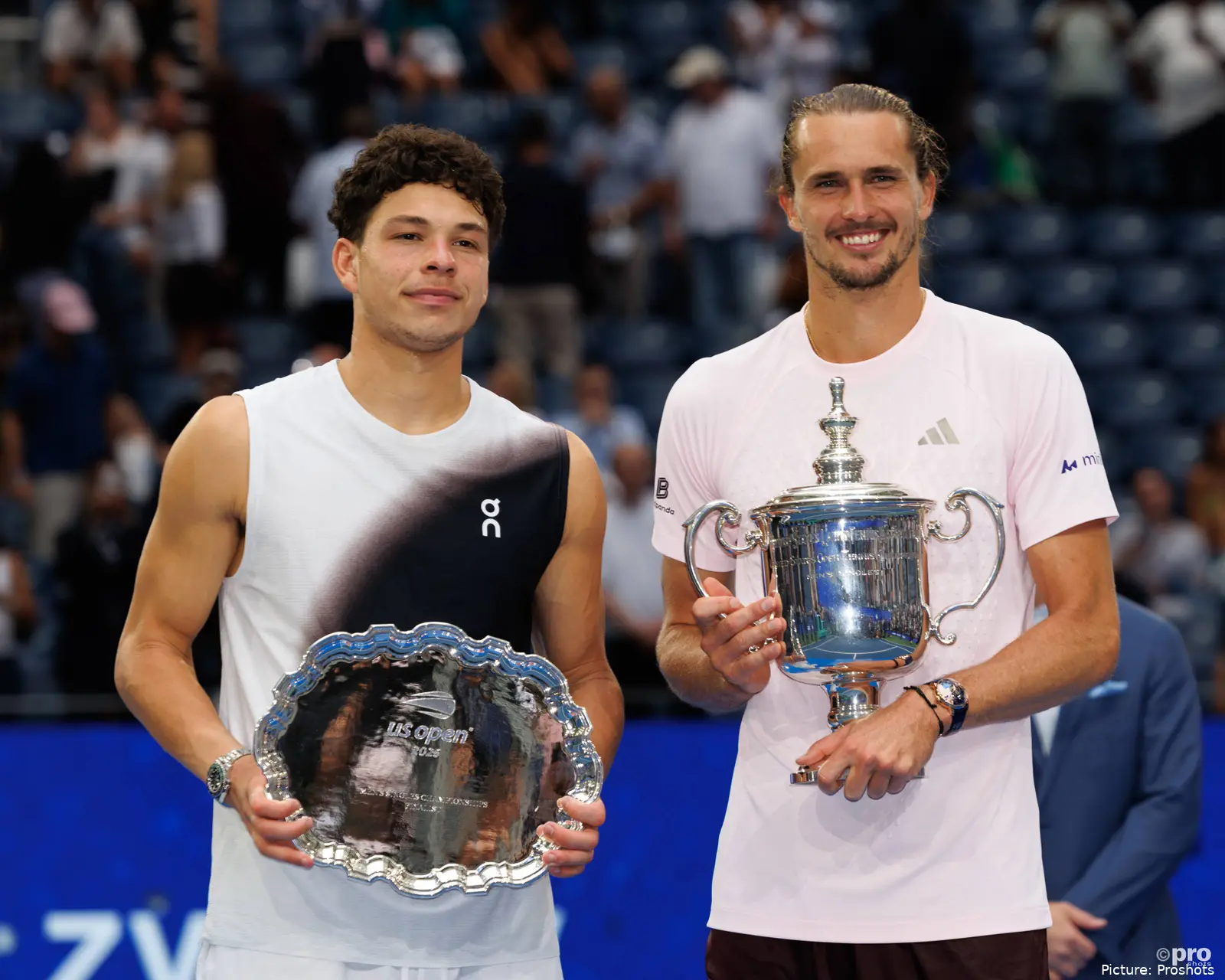
Bryan Shelton did not hold back when discussing one of the most unusual aspects of Alexander Zverev's game during the US Open final, as Ben Shelton struggled to find his rhythm against the eventual champion.
Zverev's ball-bouncing routine had already attracted plenty of attention throughout the tournament, with the German repeatedly taking considerable time before beginning his service motion. Karen Khachanov had complained about the habit following his semifinal defeat, saying it was frustrating for opponents trying to prepare for Zverev's serve.
The issue became particularly noticeable in the final, with Ben Shelton seen speaking to the umpire while Zverev prepared to serve. The German was subsequently encouraged to be "a little bit quicker" as sections of the Arthur Ashe Stadium crowd grew restless.
Bryan, Ben's father and coach and a former ATP player himself, was watching from his son's box and spoke to ESPN during the match. After Zverev won the opening set, he was asked what adjustments Ben could make to turn the match around.
Bryan Shelton explains the problem with Zverev's rhythm
Bryan initially focused on Ben's own performance, believing his son needed to take some pressure off his serve and make better use of his tactical opportunities against Zverev. “I think just little things. You know, Ben was pressing a little bit with the serve. Just got to relax on that a little bit more and hit his targets.”
The American coach also identified the kick serve toward Zverev's forehand as an important tactical option, while emphasizing the need for Ben to adjust to the rhythm of Zverev's service games.
“Obviously, the kick out to Sasha's forehand can be effective. He's just got to use that a little bit more and then just get used to the rhythm of returning.”

Alexander Zverev of Germany and Ben Shelton of the United States pose for photos during the awarding ceremony after their men's singles final match at the 2026 US Open
That rhythm, however, was precisely where Bryan acknowledged that Zverev's ball-bouncing could become a factor. The German repeatedly bounced the ball before serving, creating an unusual pause that Shelton's team felt Ben needed to adjust to.
“You know, Sasha bounces the ball so many times it just kind of puts you off. But, you know, we've had a set of that now. So I think Ben will relax, find his rhythm there, and play with a little more shape on his backhand side, where he's made some net errors.”
Bryan's comments echoed the frustration expressed by Khachanov after their semifinal. The Russian had argued that Zverev's routine made it difficult to know when to prepare for the serve, although he also acknowledged that there was little to complain about as long as the German stayed within the rules.
Zverev insists the ball-bouncing is not deliberate
The routine has become increasingly noticeable this season, but Zverev has maintained that he does not deliberately bounce the ball a specific number of times before serving.
Ahead of the final, the German was asked about statistics showing that he had bounced the ball more than 12,000 times during the tournament. Zverev admitted he had no explanation for the habit.
“I have no idea why,” Zverev said, as he rejected the idea that the routine was a conscious tactic designed to disrupt his opponents. “I'm not doing it on purpose. I saw the stat. Like, I bounced it 12,000 times or something like that."
Read also


"That's quite funny. I'm not counting in my head. I'm not getting a certain number or anything like that.”
Zverev ultimately managed to maintain his rhythm while keeping Shelton under pressure, defeating the American 6-3, 7-6(2), 5-7, 6-2 to claim his second Grand Slam title of the season. For Shelton, the defeat ended a historic run to his first major final. For Zverev, meanwhile, the victory came despite another night in which his unusual serving routine became a talking point.

Cristhián AvilaTennis Journalist
Cristhián Ávila is a tennis journalist based in Santiago, Chile, and has been part of the TennisUpToDate team since early 2023. He covers the ATP and WTA Tours as well as all four Grand Slams, producing breaking news, match reports, analysis, and regular liveblogs from major tournaments.
His reporting combines statistical analysis with clear explanation, helping readers understand tactical developments, player form, and broader storylines across the tour. Working fluently in both Spanish and English, Cristhián collaborates with an international editorial team and contributes to comprehensive global coverage. As part of his work, he has conducted interviews and media interactions with leading figures in the sport, including Caroline Wozniacki and John McEnroe.
In his journalism, Cristhián places strong emphasis on careful sourcing, editorial accuracy, and updating articles promptly when new, verified information becomes available. His coverage is grounded in research, context, and direct engagement with professional tennis.
claps 0visitors 0
Just In

Popular News


Latest Comments
- Does Sinner need that 4.5 mil? I doubt it. He can make that with three modelling gigs!😅🤣Rapunzel21-10-2026
- Did "People Magazine" purchase this website? This nonstop storyline is bullshit.
 mandoist21-10-2026
 - Listen... this is of no concern to anyone but these two. Deal with your own issues -- most of us have our own. Thanks, media, for these insignificant follow-ups which are meaningless.mandoist21-10-2026
- This is so very very sad, for all three of them. I truly thought they had an unbreakable bond, but life throws up so many differing challenges. Having your homeland suffering in such a terrible way, makes happiness lose out to guilt as well. Our thoughts are with them. X💔bjsexton20-10-2026
- I have lost all respect for Svitolina! Could she not have waited until he had played at the Paris Masters!!! She is selfish and don't give a damn about Gael. That is NOT how love is demonstrated Elina!!Rapunzel19-10-2026
- Perhaps convenient tennis tour sex is not a strong enough experience in which to base a marriage?mandoist19-10-2026
- Fight the Good Fight... Tennis (sports in general) need more Humans such as yourself.mandoist18-10-2026
- When is WTA going to mandate Genetic Testing (DNA) ???mandoist18-10-2026
- Hey, Dan... you just wake up from a coma? Regardless -- Thanks for the comedy this morning!mandoist18-10-2026
- Two Things: 1. Stop allowing these Spoiled Trust-Fund Elitists to behave badly. Your little hand-slaps do not deter them. 2. STOP the incessantly annoying "towel wiping" nonsense!!!!mandoist15-10-2026

Loading