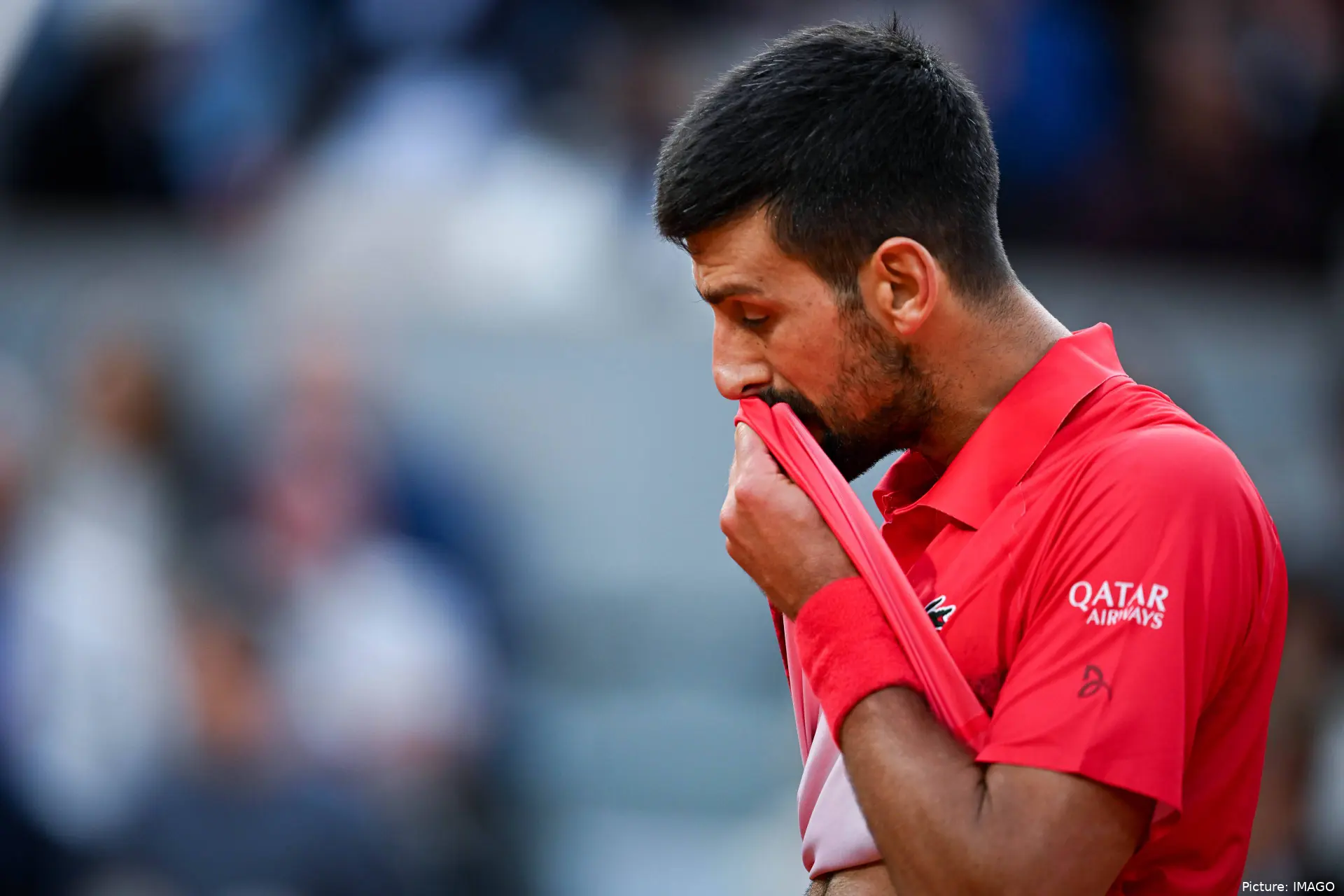
Novak Djokovic is supposed
to walk onto the court at Flushing Meadows tomorrow, but as of today, he is
still not even in America. For most players, that would feel like chaos, but
for Djokovic, it’s a moment that tells you a lot about where he is in his career,
his priorities, and the strange crossroads of time he’s standing at.
The US
Open has so often been the site of his highest triumphs and deepest
frustrations. He has lifted the trophy four times in New York, but he’s also
lost five finals here. At 38 years old, he is now balancing more than just
opponents across the net, he is battling his body, his schedule, and the
expectations of an audience that has grown used to him chasing history every
time he plays.
What makes his late arrival,
so puzzling is the silence surrounding it. This summer, Djokovic has been
noticeably absent from the hard-court grind. He skipped Toronto, citing a groin
injury, and then pulled out of Cincinnati without offering a medical reason,
something almost unheard of in his meticulous career planning. That means he
comes into this US Open without a single hard-court match in months, an unusual
choice for a man who has always treated preparation as seriously as the
tournaments themselves.
Some close to the tour whisper that rest has become just
as important to him as rhythm. Others wonder whether he is managing something
behind the scenes that he hasn’t shared publicly. Whatever the truth, his
absence has turned his preparation into a mystery.
And yet, this is Djokovic.
He has defied odds so many times that doubt often feels foolish. He has won
titles when written off, stormed back from injuries that looked career-ending,
and found ways to silence the cheers for his rivals in stadiums that seemed set
against him. He lives for that defiance. But it is hard not to wonder whether
this time is different. The image of him arriving in New York at the last
minute, possibly tired and jet-lagged, doesn’t exactly align with the picture
of control he has always projected.
Read also

Mixed doubles awaits
There’s also the matter of
the new mixed doubles event, a sideshow turned spectacle at this year’s US
Open, which Djokovic has entered alongside fellow Serbian Olga Danilovic. It is
meant to be fun, fast paced, and full of star power, but it also adds one more
wrinkle to his schedule. If he lands and heads straight into that competition,
it could either serve as the sharpener he badly needs or a distraction that
drains the energy he wants to conserve for singles. He has admitted more than
once this year that he no longer recovers like he did in his twenties, and that
every match feels heavier on the body. Those words carry weight when you’re
staring at the longest hard-court Slam of them all.
For years, fans have
measured time in tennis by Djokovic’s dominance. Every Slam was framed by
whether he would extend his total, how many weeks he would add to his reign,
how much longer he could keep younger rivals at bay. Now the conversation has
shifted. Jannik Sinner, Carlos Alcaraz, and other new forces aren’t just
nipping at his heels, they’re beating him in matches that used to feel
inevitable. Djokovic, to his immense credit, acknowledges this reality. After
his Wimbledon loss to Sinner, he admitted openly that it was harder and harder
to keep his energy full across the biggest matches. That kind of honesty from
him, once the ultimate machine of tennis, shows how human this stage of his
career has become.
Still, if there’s one thing
tennis has taught us, it’s to never dismiss Novak Djokovic until the very last
point. He has made a career out of reminding the world that he can bend
narratives to his will. Arriving late could look like chaos, but if he goes on
to win, it will become another legendary chapter: the champion who strolled in
with no preparation and conquered anyway. If he struggles, it may be remembered
as the moment when time finally started to take more than even, he could give.
For now, all anyone can do is wait for him to show up in New York and see which
version of Novak Djokovic takes the court.

claps 0visitors 0
Just In

Popular News
Latest Comments
- A healthy Qinwen may be hard to stop next season. She was already scaring her opponents before her medical leave(s). Unfortunately, Zheng insisted on singing again. On the positive side -- Mirra did not sing!! ;~}
 mandoist11-10-2026
 - Where is it written that athletes, entertainers... People in general... are mandated to keep looking at -- or even using [anti]Social Media? Public & private figures consistently complain and reveal their concerns about negativity and violence thrown at them -- yet they insist on participating. Avoid it, don't use it, don't read it. It's okay to occasionally look up at the World instead beating your eyes & thumbs to death on The Inventions out there.mandoist11-10-2026
- great articlestennisseserver07-10-2026
- Medvedev was leading Djokovic 7-5, 3-5 when an attempted return..' NO you ignorants, Djokovic was leading .weiss05-10-2026
- No more bullshit "Wildcards" to these two. Qualify like everyone else -- there will be cameras there, too. Time to scream... WTF ????!!!!mandoist29-09-2026
- Let's not BS the general public -- Sabalenka started showing cracks in her game last season. Her losses and near-losses started at about the same time she began being distracted by Fame (constant Selfies, making TV commercials, magazine shoots, endless Social Media nonsense, etc., etc.) One would think even Saba could recognize the parallels with others who failed before her -- Raducanu, Giorgi, Bouchard to name a few.mandoist25-09-2026
- Gross!! Hey Raducanu, Giorgi, and Bouchard -- reserve a seat at your Social Media Selfie table for Saba + Naomi. They're heading in your direction soon enough.mandoist24-09-2026
- And then these same players will complain about how lengthy their season’s were and need more time-off. I’m all for more tennis but the amount of tennis we get now is actually kind of crazy! We all need a break, especially the players.DaveyWavey23-09-2026
- You should do a comparison article for "different kinds of justice" the courts decide for tennis players. I can think of at least three players who received very small bans of a few months, however Tara Moore has been fighting for her literal survival the past few years. It seems odd considering she is not a "name" player, unlike the other cases.DaveyWavey22-09-2026
- PRIZE MONEY & POINTS Winner - $185,500 Finalist - $114,500 Semi-Finalist - $66,003 Quarter-Finalist - $35,000 Round of 16 - $18,045 Round of 32 - $13,005 Winner - 500 Finalist - 325 Semi-Finalist - 195 Quarter-Finalist - 108 Round of 16 - 60 Round of 32 - 1DaveyWavey20-09-2026

Loading