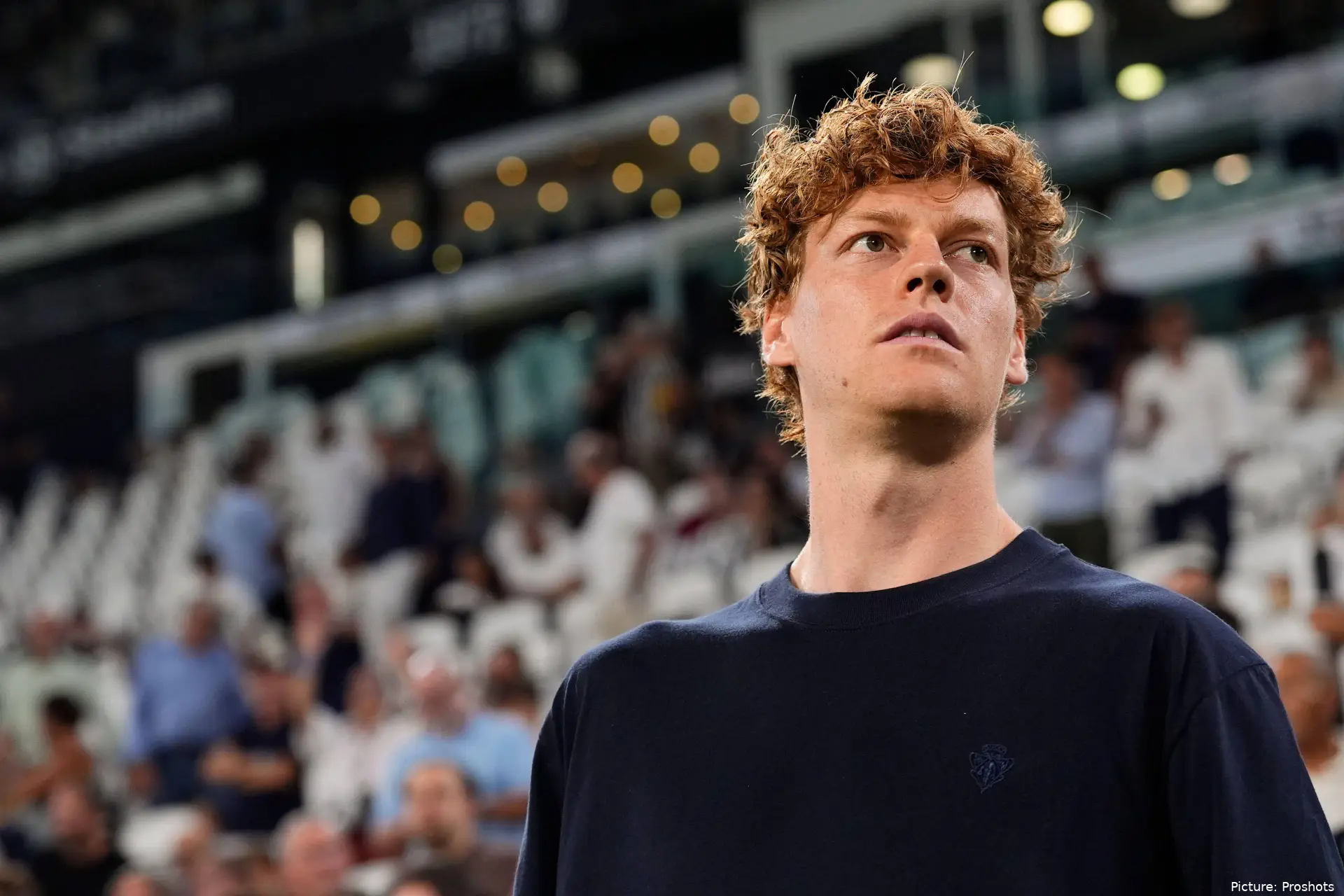
Jannik Sinner is on course to finish at the top of the 2026 ATP Masters 1000 and ATP Bonus Pool standings, but he could receive none of the money attached to that achievement. Despite his dominant results throughout the season, the Italian is facing the loss of his entire allocation from the $21.5 million fund because he has not met the mandatory participation requirements.
Alexander Zverev's semifinal defeat to Alejandro Davidovich Fokina at the Shanghai Masters strengthened Sinner's position at the top of the standings. The Italian has accumulated enough points to remain ahead of his German rival, regardless of the results at the Paris Masters. However, finishing first in the Bonus Pool standings does not automatically guarantee a player the associated prize money.
Sinner has played five Masters 1000 tournaments in 2026, but only four count towards the ATP's Bonus Pool participation requirement. The reason is that Monte-Carlo is not one of the eight mandatory events used to determine eligibility for this particular bonus. The Italian must therefore be assessed as having played four of the eight required tournaments, rather than five.
Under the ATP's rules, players who compete in only four of the eight mandatory Masters 1000 events forfeit 100% of their Bonus Pool allocation. The regulations apply regardless of the reason for missing an event, meaning injury-related absences do not automatically protect a player's bonus.
On-site promotional activities can reduce certain penalties for players who miss fewer mandatory tournaments, but they do not change the outcome for four or more missed events. Unless an applicable individual exception changes Sinner's situation, he is therefore set to forfeit his entire allocation despite finishing first in the standings.
Why Sinner could lose his entire Bonus Pool prize
The ATP's 2026 Masters 1000 and Nitto ATP Finals Bonus Pool is set at $21,537,813, with payments distributed among the top 30 players in the standings. The fund is divided into two components: 70% is allocated as fixed amounts according to finishing position, while the remaining 30% is distributed according to a value-per-point calculation determined after the season concludes.

The fixed allocation for first place is $3,918,315. When the variable component is included, the overall payment for the leading player can be estimated at approximately $4.5 million, although the final amount depends on the completed standings and the value assigned to each point. Sinner's position at the top of the table does not override the separate eligibility conditions.
The rulebook specifies that a player must compete in every mandatory Masters 1000 event for which he is a direct acceptance to receive the full allocation. Missing one event ordinarily reduces the bonus by 25%, while missing two or three results in reductions of 50% and 75%, respectively. Four or more missed tournaments trigger a complete forfeiture, with no reduction available through the promotional-work provisions.
| Mandatory Masters 1000 events played | Bonus forfeited | Bonus retained |
| 8 of 8 | 0% | 100% |
| 7 of 8 | 25% | 75% |
| 6 of 8 | 50% | 50% |
| 5 of 8 | 75% | 25% |
| 4 or fewer | 100% | 0% |
* Sinner just played 4 mandatory Masters 1000 events (Indian Wells, Miami, Madrid and Rome).
That distinction matters because the rules do not treat an injury as an automatic exemption from the participation requirement. Promotional appearances can help players recover some of the money deducted for a limited number of missed tournaments, subject to the regulations and a $200,000 cap. However, the reduction remains at 100% for players who miss four or more mandatory Masters 1000 events.
The ATP also explicitly states that forfeited bonus money is not redistributed to other players, and the standings do not extend to the next player to compensate for the loss. Sinner's potential forfeiture would therefore remain with the fund rather than increasing the allocation awarded to Zverev, Fils or another contender.
Zverev and Fils fight for the second-place allocation
While Sinner's eligibility is the central financial issue, Zverev and Arthur Fils are competing for second place in the standings. With the Paris Masters still to come, Zverev holds 2,460 points to Fils' 2,260, leaving the Frenchman within striking distance if he produces a strong result at the final Masters 1000 event of the season.
| Player | Tournaments | Points | |
| 1 | Jannik Sinner | 5 | 5000 |
| 2 | Alexander Zverev | 8 | 2460 |
| 3 | Arthur Fils | 7 | 2260 |
| 4 | Daniil Medvedev | 8 | 1620 |
| 5 | Rafael Jodar | 7 | 1560 |
| 6 | Casper Ruud | 8 | 1320 |
| 7 | Brandon Nakashima | 7 | 1230 |
| 8 | Alejandro Davidovich Fokina | 5 | 1210 |
| 9 | Jiri Lehecka | 7 | 1210 |
| 10 | Carlos Alcaraz | 4 | 1150 |
Second place carries a fixed allocation of $1,959,157. The additional value-per-point component could take the total payment to approximately $2.5 million, although that figure remains an estimate until the ATP completes its end-of-season calculations. The result in Paris could therefore have a significant financial impact on both players.
Read also
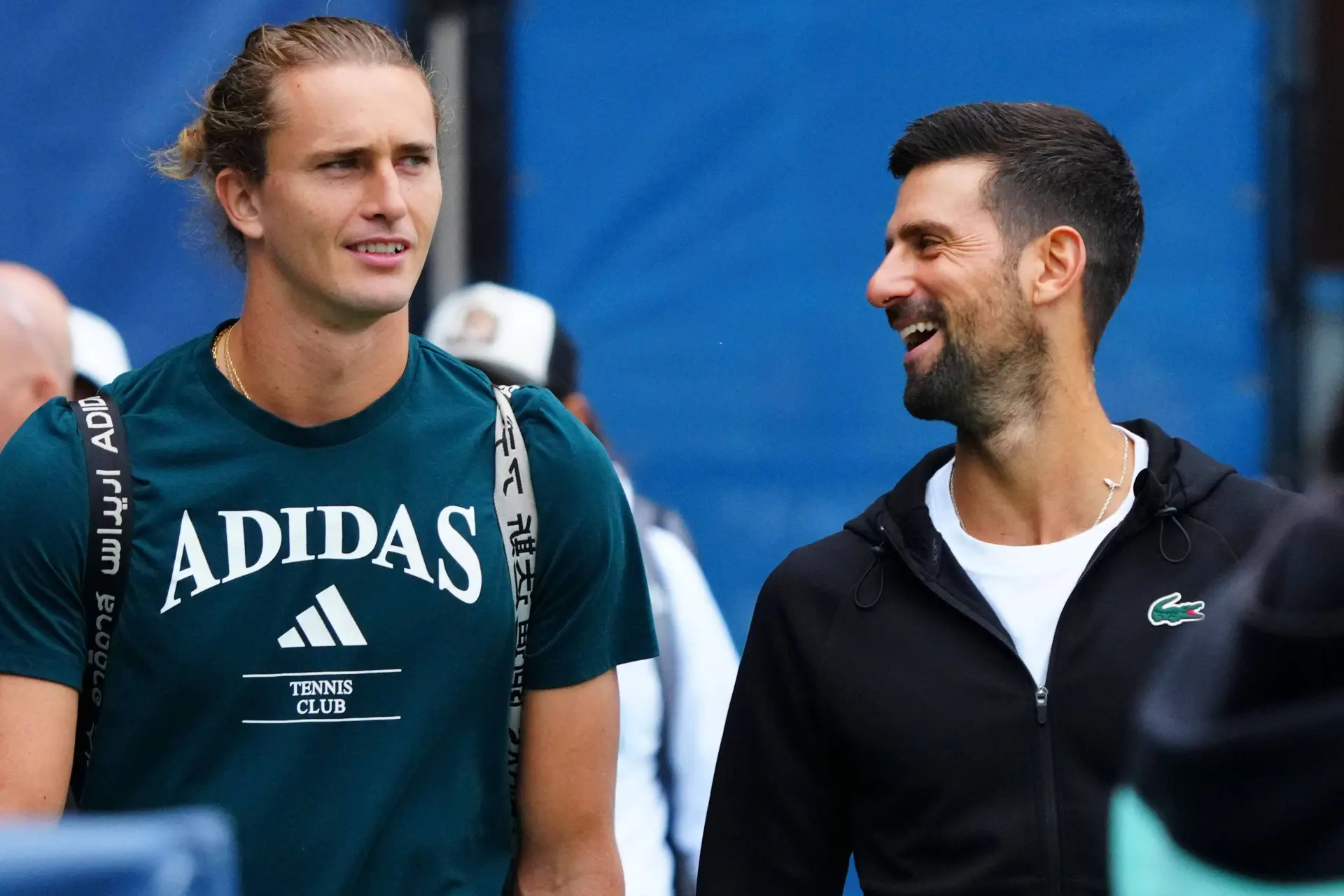
Zverev has built his position through consistent results across the Masters 1000 circuit, while Fils has an opportunity to close the gap before the standings are finalised. Their contest remains independent of Sinner's eligibility: even if the Italian forfeits the entire amount associated with first place, neither player will receive his money as a result.
The final distribution will depend on the completed standings and the ATP's eligibility rules. Sinner can finish first in points and still collect nothing, while Zverev and Fils continue competing for the separate second-place allocation. The situation underlines the difference between earning the most points in the Bonus Pool and satisfying the conditions required t

Cristhián AvilaTennis Journalist
Cristhián Ávila is a tennis journalist based in Santiago, Chile, and has been part of the TennisUpToDate team since early 2023. He covers the ATP and WTA Tours as well as all four Grand Slams, producing breaking news, match reports, analysis, and regular liveblogs from major tournaments.
His reporting combines statistical analysis with clear explanation, helping readers understand tactical developments, player form, and broader storylines across the tour. Working fluently in both Spanish and English, Cristhián collaborates with an international editorial team and contributes to comprehensive global coverage. As part of his work, he has conducted interviews and media interactions with leading figures in the sport, including Caroline Wozniacki and John McEnroe.
In his journalism, Cristhián places strong emphasis on careful sourcing, editorial accuracy, and updating articles promptly when new, verified information becomes available. His coverage is grounded in research, context, and direct engagement with professional tennis.
claps 0visitors 0
Just In

Popular News

Latest Comments
- Fight the Good Fight... Tennis (sports in general) need more Humans such as yourself.
 mandoist18-10-2026
 - When is WTA going to mandate Genetic Testing (DNA) ???mandoist18-10-2026
- Hey, Dan... you just wake up from a coma? Regardless -- Thanks for the comedy this morning!mandoist18-10-2026
- Two Things: 1. Stop allowing these Spoiled Trust-Fund Elitists to behave badly. Your little hand-slaps do not deter them. 2. STOP the incessantly annoying "towel wiping" nonsense!!!!mandoist15-10-2026
- A healthy Qinwen may be hard to stop next season. She was already scaring her opponents before her medical leave(s). Unfortunately, Zheng insisted on singing again. On the positive side -- Mirra did not sing!! ;~}mandoist11-10-2026
- Where is it written that athletes, entertainers... People in general... are mandated to keep looking at -- or even using [anti]Social Media? Public & private figures consistently complain and reveal their concerns about negativity and violence thrown at them -- yet they insist on participating. Avoid it, don't use it, don't read it. It's okay to occasionally look up at the World instead beating your eyes & thumbs to death on The Inventions out there.mandoist11-10-2026
- great articlestennisseserver07-10-2026
- Medvedev was leading Djokovic 7-5, 3-5 when an attempted return..' NO you ignorants, Djokovic was leading .weiss05-10-2026
- No more bullshit "Wildcards" to these two. Qualify like everyone else -- there will be cameras there, too. Time to scream... WTF ????!!!!mandoist29-09-2026
- Let's not BS the general public -- Sabalenka started showing cracks in her game last season. Her losses and near-losses started at about the same time she began being distracted by Fame (constant Selfies, making TV commercials, magazine shoots, endless Social Media nonsense, etc., etc.) One would think even Saba could recognize the parallels with others who failed before her -- Raducanu, Giorgi, Bouchard to name a few.mandoist25-09-2026

Loading