Patrick McEnroe explains why American men have gone 20 years without a Grand Slam title: “we need that one player that can break through”
ATP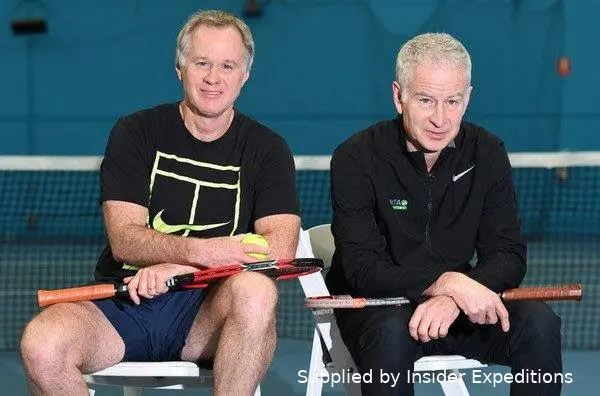
Patrick McEnroe believes American men's tennis is facing a problem that goes well beyond a lack of elite players. The former world No. 28 and Davis Cup captain says the United States has been caught between two extraordinary generations, with one dominant era ending only for another to emerge almost immediately.
That has left American men without a Grand Slam singles title since Andy Roddick won the 2003 US Open. Taylor Fritz came closest to ending the drought in 2024, reaching the US Open final before losing to Jannik Sinner, but that run also highlighted how difficult the final step has become. Fritz was the first American man to reach a major final since Roddick at Wimbledon in 2009.
McEnroe, who is now a prominent voice on American tennis, argues that the timing has been particularly unfortunate. Just as the United States appeared to have an opportunity after Roger Federer, Rafael Nadal and Novak Djokovic began moving toward the end of their dominance, another generation led by Sinner and Carlos Alcaraz took control of the biggest tournaments.
The result is a drought that has lasted more than two decades despite the United States producing considerable depth. McEnroe points out that America currently has more players inside the ATP and WTA top 100 than any other country. For him, therefore, the question is not whether American tennis is producing talent, but whether one player can finally turn that depth into a major championship.

The Big Three ended, but Sinner and Alcaraz arrived
McEnroe first points to the extraordinary strength of the players who dominated the sport before the current generation. “There’s three names, first of all, Federer, Nadal, and Djokovic,” he said, before noting that Andy Murray and Stan Wawrinka were among the few players able to break through that dominance.
American players were not alone in struggling to win majors during that period. McEnroe noted that several highly ranked players from the rest of the world also waited for an opportunity, including Alexander Zverev, Daniil Medvedev, Stefanos Tsitsipas and Andrey Rublev.

The expectation was that the retirement or decline of the Big Three would open the door. Instead, Sinner and Alcaraz immediately raised the standard again.
“And then along comes Sinner, along comes Alcaraz, sort of elevating the entire men’s game to a whole another level,” McEnroe explained. “They had a run there until the French Open happened this year, where they dominated the majors in the last two and a half years.”
That distinction is important. American tennis has not necessarily failed to produce players capable of reaching the latter stages of tournaments. The problem has been producing someone capable of beating the very best over five sets when a Grand Slam title is on the line.
The numbers suggest American tennis is not broken
McEnroe was careful to separate the Grand Slam drought from the broader health of American tennis. The United States currently has more top-100 players than any other nation, giving the country significant depth across both tours.
“We’ve got a lot of really good players now,” he said. “In fact, we have the most top hundred players on the men’s side and the women’s side of any other country.”
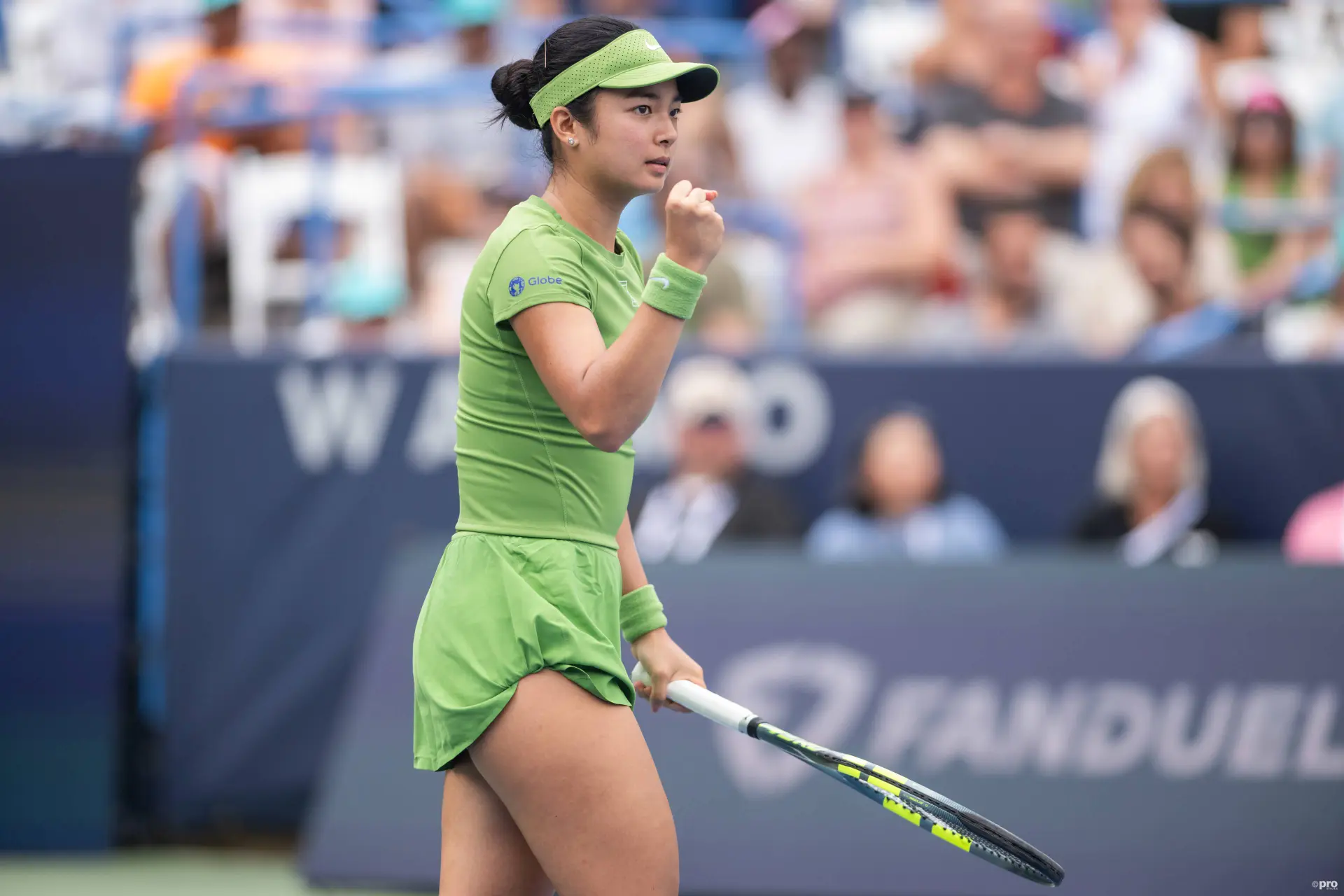
That makes the drought more difficult to explain through a simple lack of talent. Fritz, Frances Tiafoe, Tommy Paul, Ben Shelton and others have all established themselves around the upper levels of the ATP, while Fritz's 2024 US Open final marked the first American men's Grand Slam final in 15 years.
McEnroe believes the missing ingredient is a player who can convert that depth into one defining result. “But when you haven’t won a major, people want to say, ‘What’s wrong with American tennis?’ Well, there’s a lot right with it, because, as I said, numbers-wise, we have the most players,” he said. “But we need that one player that can break through and win one.”

American women tell a different story
The contrast becomes even more striking when the American women are considered separately. The United States has continued to produce Grand Slam champions and finalists in recent years, including Sloane Stephens, Sofia Kenin, Madison Keys and Coco Gauff.
The difference is not simply the number of trophies. American women have repeatedly put themselves in position to win majors, while the men's side has produced only one Grand Slam finalist since Roddick's 2009 Wimbledon appearance. Amanda Anisimova's 2025 season provided another example: she reached consecutive Grand Slam finals at Wimbledon and the US Open, losing to Iga Swiatek and Aryna Sabalenka respectively.
Fritz's 2024 US Open run therefore remains significant even without the trophy. He became the first American man since Roddick to play a Grand Slam final, ending a 15-year wait, and his semifinal against Tiafoe was the first all-American men's Grand Slam semifinal since the 2005 US Open.
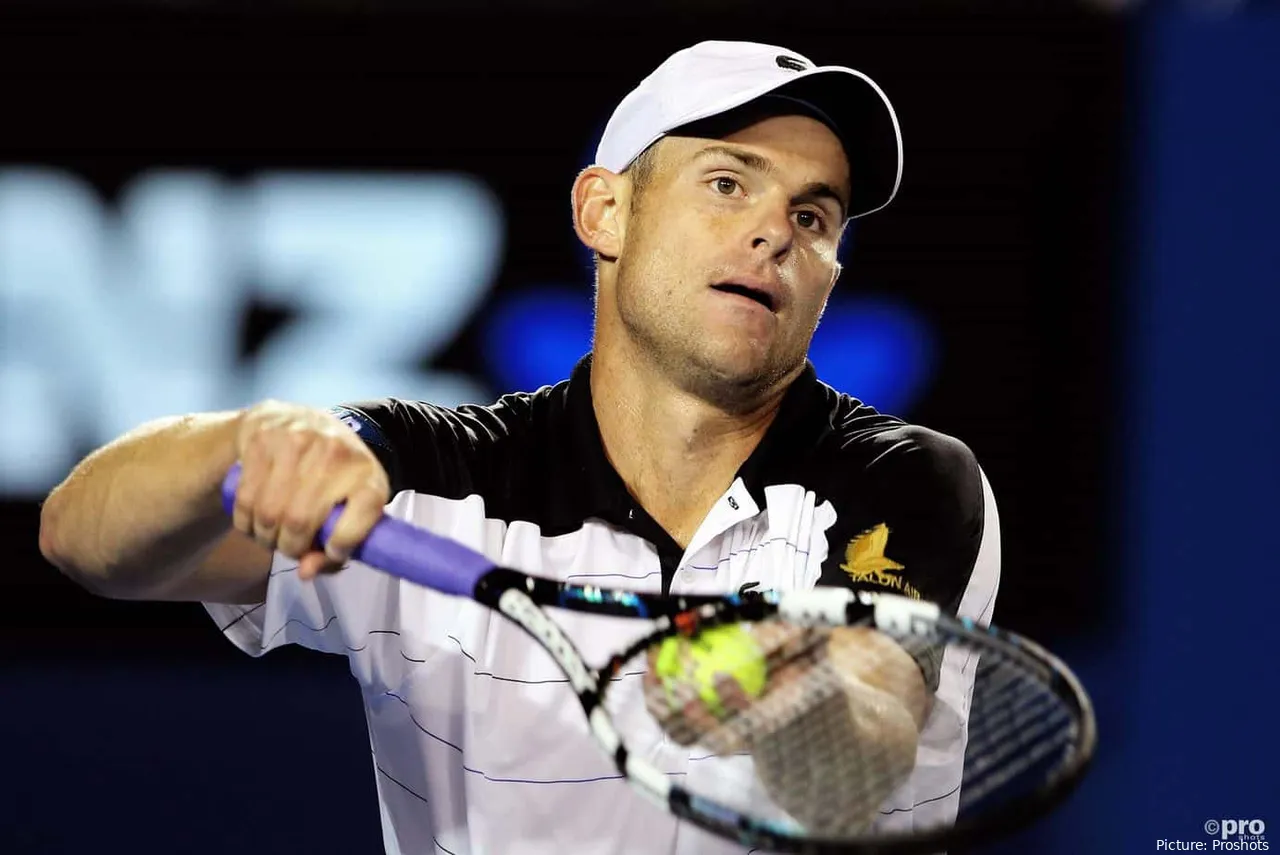
Andy Roddick set to serve at the 2012 Australian Open
For McEnroe, though, the answer ultimately comes down to the same challenge that has confronted American men throughout the modern era: finding someone capable of surviving the biggest matches.
“You see the upsets happen a little bit more in the best two out of three tournaments,” he said. “But once you get to the majors, best of five, biggest stages in tennis, if these guys are at their best, basically they’ve been unbeatable.”
“So that’s been the problem for American tennis,” McEnroe concluded. “That would be very nice to see,” he said of finally producing another men's major champion, “to not have to answer this question for another 20-some years.”

Cristhián AvilaTennis Journalist
Cristhián Ávila is a tennis journalist based in Santiago, Chile, and has been part of the TennisUpToDate team since early 2023. He covers the ATP and WTA Tours as well as all four Grand Slams, producing breaking news, match reports, analysis, and regular liveblogs from major tournaments.
His reporting combines statistical analysis with clear explanation, helping readers understand tactical developments, player form, and broader storylines across the tour. Working fluently in both Spanish and English, Cristhián collaborates with an international editorial team and contributes to comprehensive global coverage. As part of his work, he has conducted interviews and media interactions with leading figures in the sport, including Caroline Wozniacki and John McEnroe.
In his journalism, Cristhián places strong emphasis on careful sourcing, editorial accuracy, and updating articles promptly when new, verified information becomes available. His coverage is grounded in research, context, and direct engagement with professional tennis.
claps 0visitors 0
Just In


Popular News
Latest Comments
- Does Sinner need that 4.5 mil? I doubt it. He can make that with three modelling gigs!😅🤣Rapunzel21-10-2026
- Did "People Magazine" purchase this website? This nonstop storyline is bullshit.
 mandoist21-10-2026
 - Listen... this is of no concern to anyone but these two. Deal with your own issues -- most of us have our own. Thanks, media, for these insignificant follow-ups which are meaningless.mandoist21-10-2026
- This is so very very sad, for all three of them. I truly thought they had an unbreakable bond, but life throws up so many differing challenges. Having your homeland suffering in such a terrible way, makes happiness lose out to guilt as well. Our thoughts are with them. X💔bjsexton20-10-2026
- I have lost all respect for Svitolina! Could she not have waited until he had played at the Paris Masters!!! She is selfish and don't give a damn about Gael. That is NOT how love is demonstrated Elina!!Rapunzel19-10-2026
- Perhaps convenient tennis tour sex is not a strong enough experience in which to base a marriage?mandoist19-10-2026
- Fight the Good Fight... Tennis (sports in general) need more Humans such as yourself.mandoist18-10-2026
- When is WTA going to mandate Genetic Testing (DNA) ???mandoist18-10-2026
- Hey, Dan... you just wake up from a coma? Regardless -- Thanks for the comedy this morning!mandoist18-10-2026
- Two Things: 1. Stop allowing these Spoiled Trust-Fund Elitists to behave badly. Your little hand-slaps do not deter them. 2. STOP the incessantly annoying "towel wiping" nonsense!!!!mandoist15-10-2026

Loading