“Sometimes going at the body is the only option”: Jack Draper delivers blunt take on on-court tactics
ATP
Jack Draper’s 2025 season ended without a match, but not without strong opinions. Sitting down for an end-of-year conversation, the British left-hander reacted to a series of “unpopular tennis opinions” and didn’t hold back. Rather than giving safe, media-trained answers, Draper spoke openly about how tennis is played, how it could evolve, and where the modern game sometimes contradicts its own traditions.
“Sometimes the only thing to do is to go at them,” Draper said when asked about hitting an opponent with the ball during an interview with The Tennis Mentor. “It’s part of the game.” His words set the tone for the interview: honest, practical, and rooted in real match situations. Draper wasn’t interested in abstract debates, but in how tennis actually feels on court.
That perspective carried through every topic. Draper balanced respect for etiquette with a clear competitive mindset. “I think you should always apologise,” he explained, “but I don’t think the person should always be upset for it.”
As the conversation unfolded, Draper emerged as a player thinking deeply about tennis’s direction. Whether discussing rules, tactics, or legends of the sport, his answers reflected awareness of history without being trapped by it. At 23, he already sounds like someone shaping opinions, not just absorbing them.

“It’s part of the game”: Draper on tactics and on-court reality
Serving rules quickly became a focal point. Asked whether tennis should eliminate second serves, Draper admitted the idea had appeal. “That would make the game very fun,” he said. “It would also make it a lot more of an even playing field.” Still, he wasn’t convinced. “I don’t like it, though, to be honest, because I miss a lot of first serves.”
Instead, Draper proposed a compromise. “One twist I thought… was instead of eliminating the serve, every game starts at love–15,” he explained. “For the returner.” The idea, he said, “kind of levels things out a bit, but you can still bomb down that first serve.” It was a rare glimpse into a player actively imagining rule tweaks rather than rejecting them outright.
On underarm serves, Draper was firm. “It’s a great tactic,” he said. “A lot of guys return back. I know myself, I return back a lot.” He dismissed crowd backlash entirely. “Fair game,” Draper insisted, even admitting he never practises it. “That’s why it’s shocking,” he laughed. “But I need to start practising it more.”
The same realism applied to so-called moonballers. “There ain’t many moonballers on the tour,” Draper said. “Everyone’s just hitting the ball as hard as they can.” His conclusion was simple: “You’ve got to win at all costs. Let them do anything.”
“Their tennis is out of this world”: Draper on greatness and the future
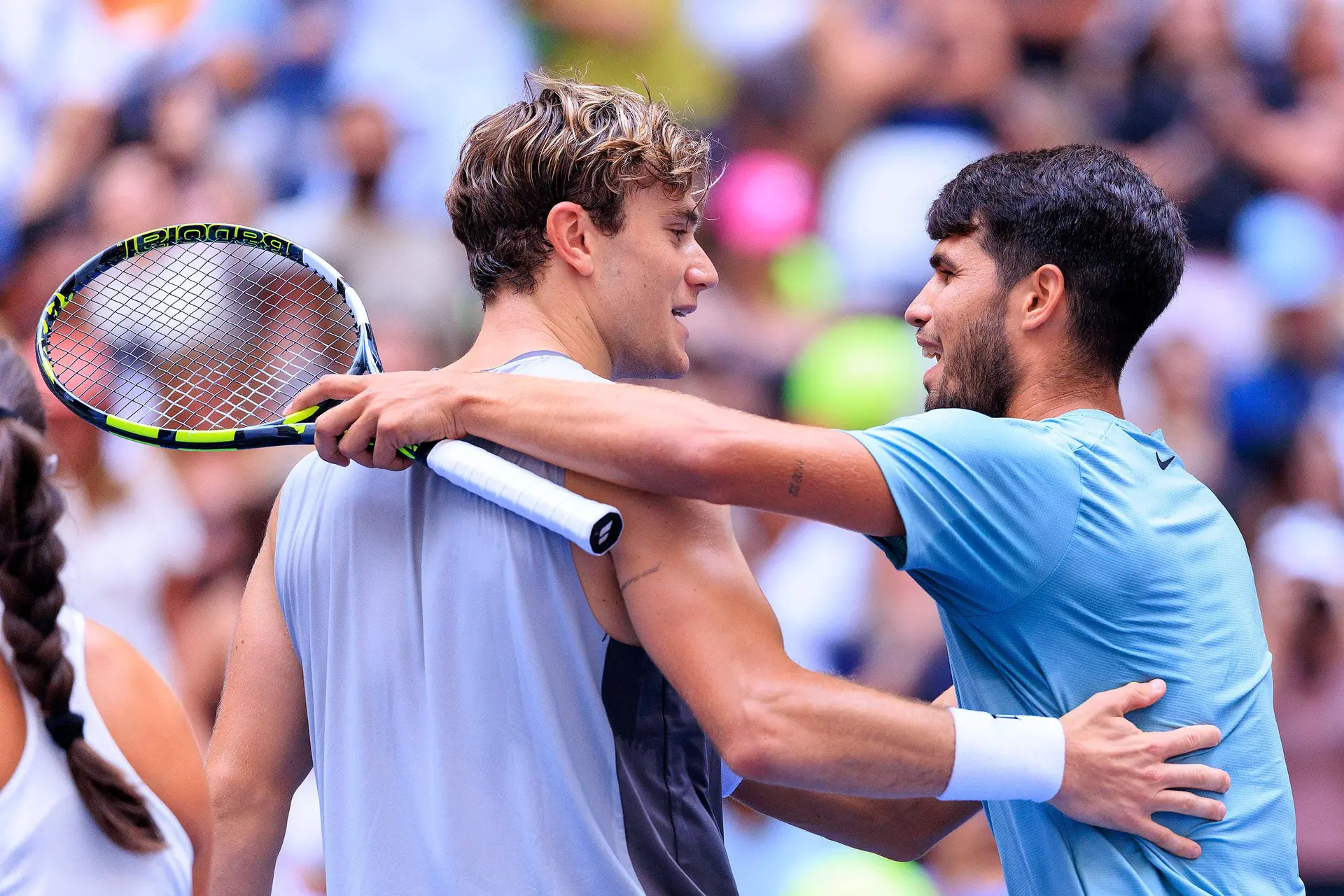
The biggest question concerned Carlos Alcaraz and Jannik Sinner—and whether they could beat the Big Three in their prime. Draper didn’t rush his answer. “It’s tough,” he said. “They've done it for so many years and they've been so consistent and you can't match them to those guys just yet,” Draper stated. “But I think from a purely a tennis perspective in what they're doing on the court, I think some of their top level has been as good as those guys in their prime. So I think they've probably got a long way to go to be like, in with that sort of crowd because they've achieved so much.”
For Draper, the distinction comes down to time. “They’ve got a long way to go to be in that sort of crowd,” he said, referring to Federer, Nadal, and Djokovic. When asked for his own unpopular opinion, Draper smiled. “I think no warm-ups would be pretty cool,” he said, before circling back to rule tweaks. “The let on the first serve might bring a bit of spice.”


Cristhián AvilaTennis Journalist
Cristhián Ávila is a tennis journalist based in Santiago, Chile, and has been part of the TennisUpToDate team since early 2023. He covers the ATP and WTA Tours as well as all four Grand Slams, producing breaking news, match reports, analysis, and regular liveblogs from major tournaments.
His reporting combines statistical analysis with clear explanation, helping readers understand tactical developments, player form, and broader storylines across the tour. Working fluently in both Spanish and English, Cristhián collaborates with an international editorial team and contributes to comprehensive global coverage. As part of his work, he has conducted interviews and media interactions with leading figures in the sport, including Caroline Wozniacki and John McEnroe.
In his journalism, Cristhián places strong emphasis on careful sourcing, editorial accuracy, and updating articles promptly when new, verified information becomes available. His coverage is grounded in research, context, and direct engagement with professional tennis.
claps 0visitors 0
Just In



Popular News


Latest Comments
- Does Sinner need that 4.5 mil? I doubt it. He can make that with three modelling gigs!😅🤣Rapunzel21-10-2026
- Did "People Magazine" purchase this website? This nonstop storyline is bullshit.
 mandoist21-10-2026
 - Listen... this is of no concern to anyone but these two. Deal with your own issues -- most of us have our own. Thanks, media, for these insignificant follow-ups which are meaningless.mandoist21-10-2026
- This is so very very sad, for all three of them. I truly thought they had an unbreakable bond, but life throws up so many differing challenges. Having your homeland suffering in such a terrible way, makes happiness lose out to guilt as well. Our thoughts are with them. X💔bjsexton20-10-2026
- I have lost all respect for Svitolina! Could she not have waited until he had played at the Paris Masters!!! She is selfish and don't give a damn about Gael. That is NOT how love is demonstrated Elina!!Rapunzel19-10-2026
- Perhaps convenient tennis tour sex is not a strong enough experience in which to base a marriage?mandoist19-10-2026
- Fight the Good Fight... Tennis (sports in general) need more Humans such as yourself.mandoist18-10-2026
- When is WTA going to mandate Genetic Testing (DNA) ???mandoist18-10-2026
- Hey, Dan... you just wake up from a coma? Regardless -- Thanks for the comedy this morning!mandoist18-10-2026
- Two Things: 1. Stop allowing these Spoiled Trust-Fund Elitists to behave badly. Your little hand-slaps do not deter them. 2. STOP the incessantly annoying "towel wiping" nonsense!!!!mandoist15-10-2026

Loading