Tennis Legends - Pat Rafter: Dual US Open champion who was the last new men's world number one of the 20th century
ATP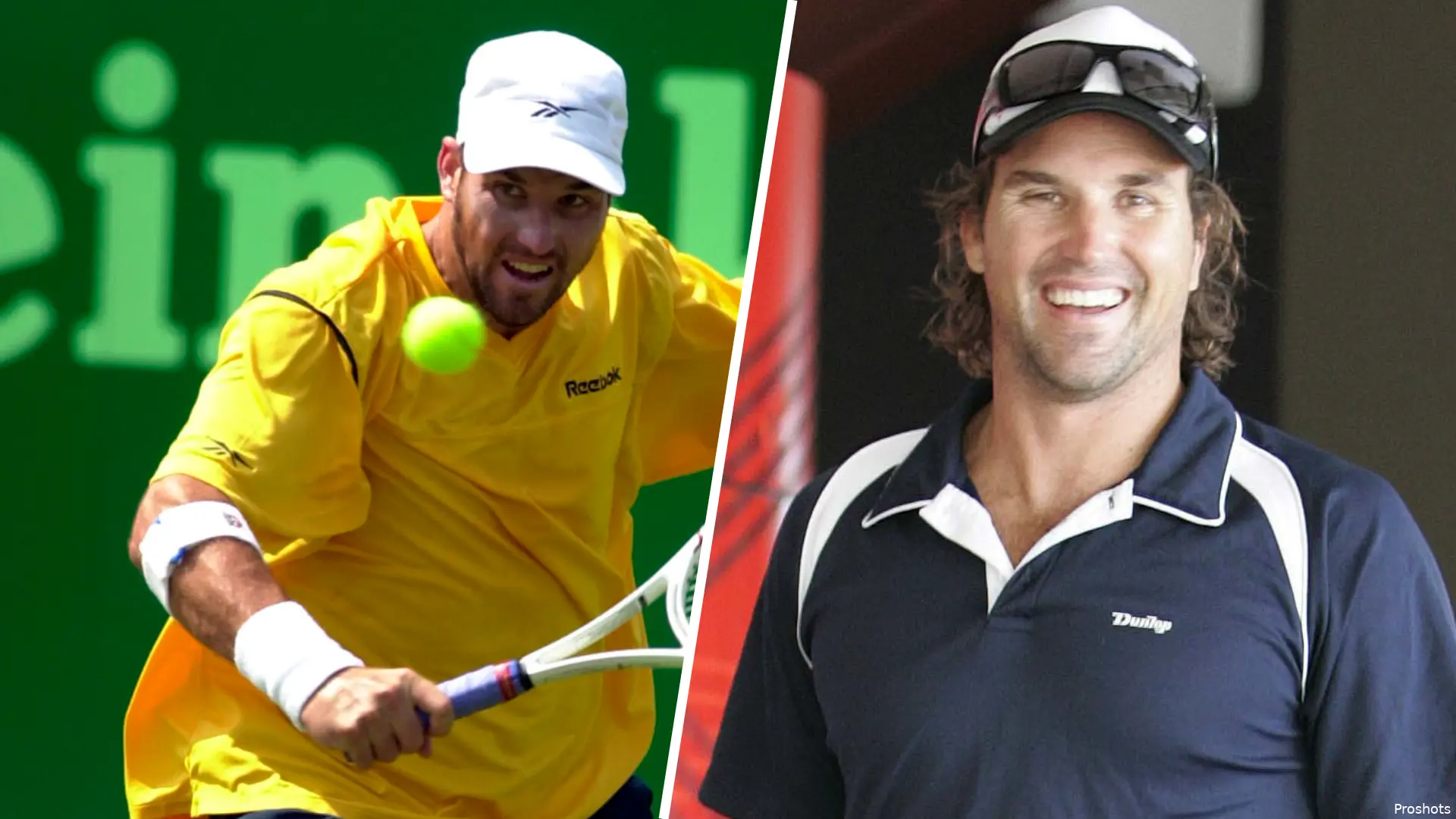
Australian Pat Rafter was a serve and volley exponent who became the last person to hit top spot in the ATP rankings in the 20th century. He's one of just 29 men to reach the summit. His career was highlighted by back-to-back triumphs at the US Open. Patrick Michael Rafter was born on the 28th December 1972 in Mount Isa, Queensland. He opted to turn professional in 1991.
Gradual progress in his early years including maiden title in Manchester
Rafter made his main draw debut at a Grand Slam in his home major. The 1992 Australian Open saw Rafter lose in the opening round.
After losing in the opening round again in Melbourne, Rafter posted his first match win at a Grand Slam later in 1993 at Wimbledon. He qualified for the main draw and defeated compatriot Simon Youl in round one. Andre Agassi ended up halting Rafter’s progression in the third round. He finished the campaign ranked at 66, his first time ending a campaign inside the world's top 100.
The 1994 season witnessed Rafter advance to his first two career finals. He lost the first in Hong Kong to American Michael Chang. Then, two months later, prevailed against South Africa’s Wayne Ferreira in the Manchester Open final on grass. Rafter's ranking soared into the top 20 by the season's climax. A rise also underpinned by his best showing at a major tournament date - the last 16 of the French Open.
Read also
Rafter slides down the rankings as the next two years prove frustrating
The likeable Australian struggled to build on the advancements made during a breakout 1994 season over the next two campaigns. Rafter's 1995 season started promisingly enough, with him progressing to the round of 16 at the Australian Open. His best run this far at the Queenslander’s home major.
The season tailed off considerably. He failed to go past round three at any of the year's Masters events or the other three Grand Slams. He finished the season ranked at 66, a drop of 46 places from his position at the end of 1994. 1996 was a year in which Rafter treaded water. The only minor highlights were a quarter-final appearance at the Canadian Open, and a first visit to the last 16 of Wimbledon. His end of season ranking was fractionally higher at 62.
Stunning triumph in New York sees Rafter reach the big time
Rafter's form began to pick up significantly during the 1997 season. He made seven finals this term. Only once did he lift the trophy, but it was the biggest one of the septet.
The run of finals began with a loss in Philadelphia to Pete Sampras. Rafter then finished runner-up in Hong Kong, St Poelten, New Haven and Long Island. His consistency was rewarded with entry into the top 20 and a seeding of 13 for the US Open
At the New York major, Rafter's fourth round win over past winner Andre Agassi felt like a statement win. Into his first Grand Slam quarter-final, Rafter bested Swede Magnus Larsson in straight sets.
Rafter brushed past Michael Chang,a former French Open winner, in the semi-finals. It set up a final clash with big-serving Brit Greg Rusedski.
The title match went the way of Australia’s newest star, coming through in four sets. He became the first Australian to win the men's singles at the US Open since John Newcombe in 1973.
Rafter answers the critics calling him a ‘one-slam wonder’ by defending his US Open title
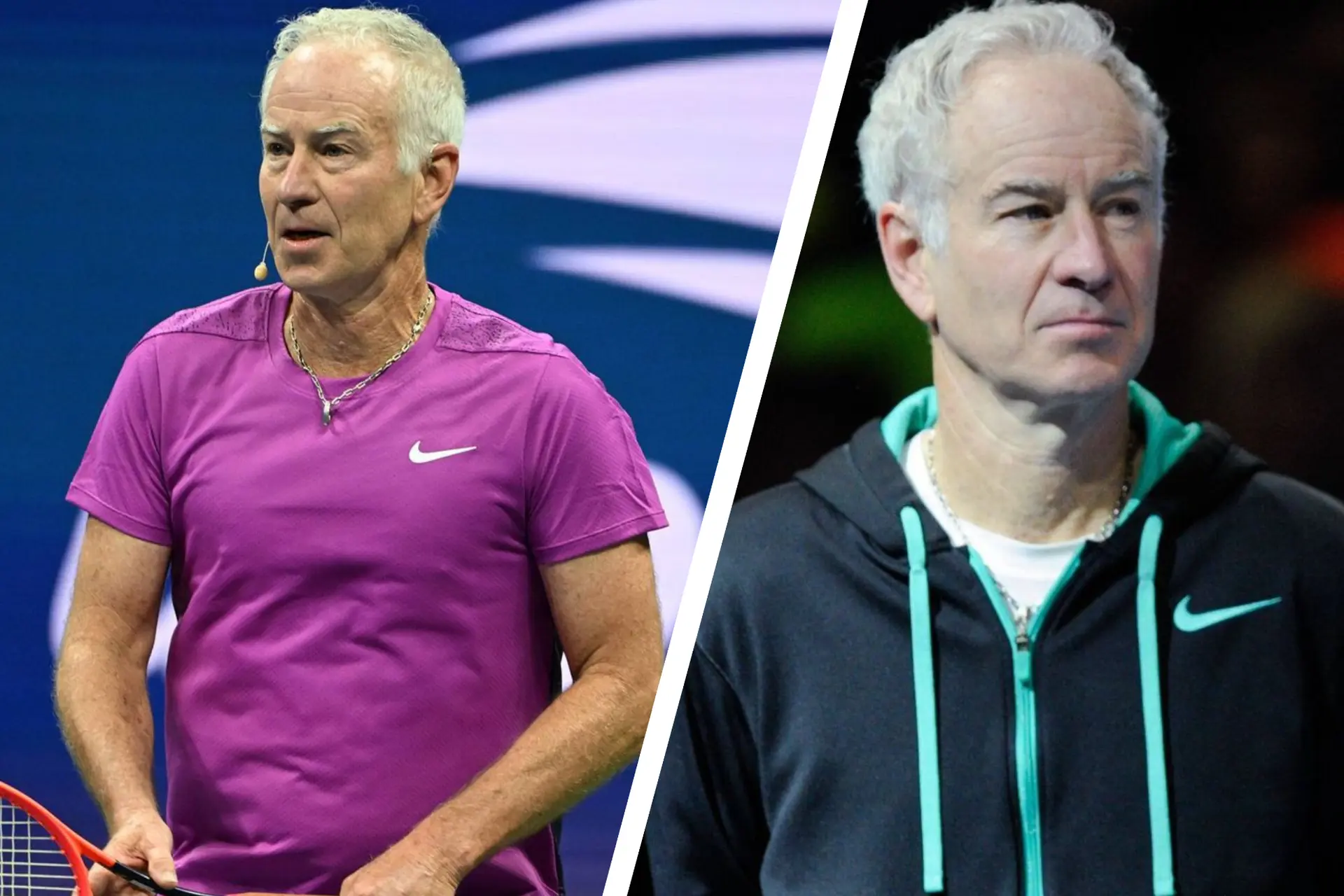
John McEnroe, now working as a tennis summarizer, harshly called Rafter a “one-slam wonder” after his New York glory. This seemed premature and not fully respecting the quality of the opposition he beat to win the US Open.
The 1998 season enjoyed by Rafter acted as a firm rebuttal of his critics. He amassed six titles and dominated the North American hardcourt season.
Rafter lifted his first title of the campaign in the Indian city of Madras. Then, two months later, won a second grasscourt title after triumphing at the Wimbledon warm-up in Hertogenbosch.
With the defence of his US Open title looming, Rafter went through the gears to achieve the Canadian Open/Cincinnati double. These two events are the biggest before New York. A further title in Long Island only reinforced his strong chances of defending his maiden Grand Slam.
Rafter is one of only four men - the others being Agassi, Andy Roddick and Rafael Nadal - to win the Canadian and Cincinnati titles in the same season.
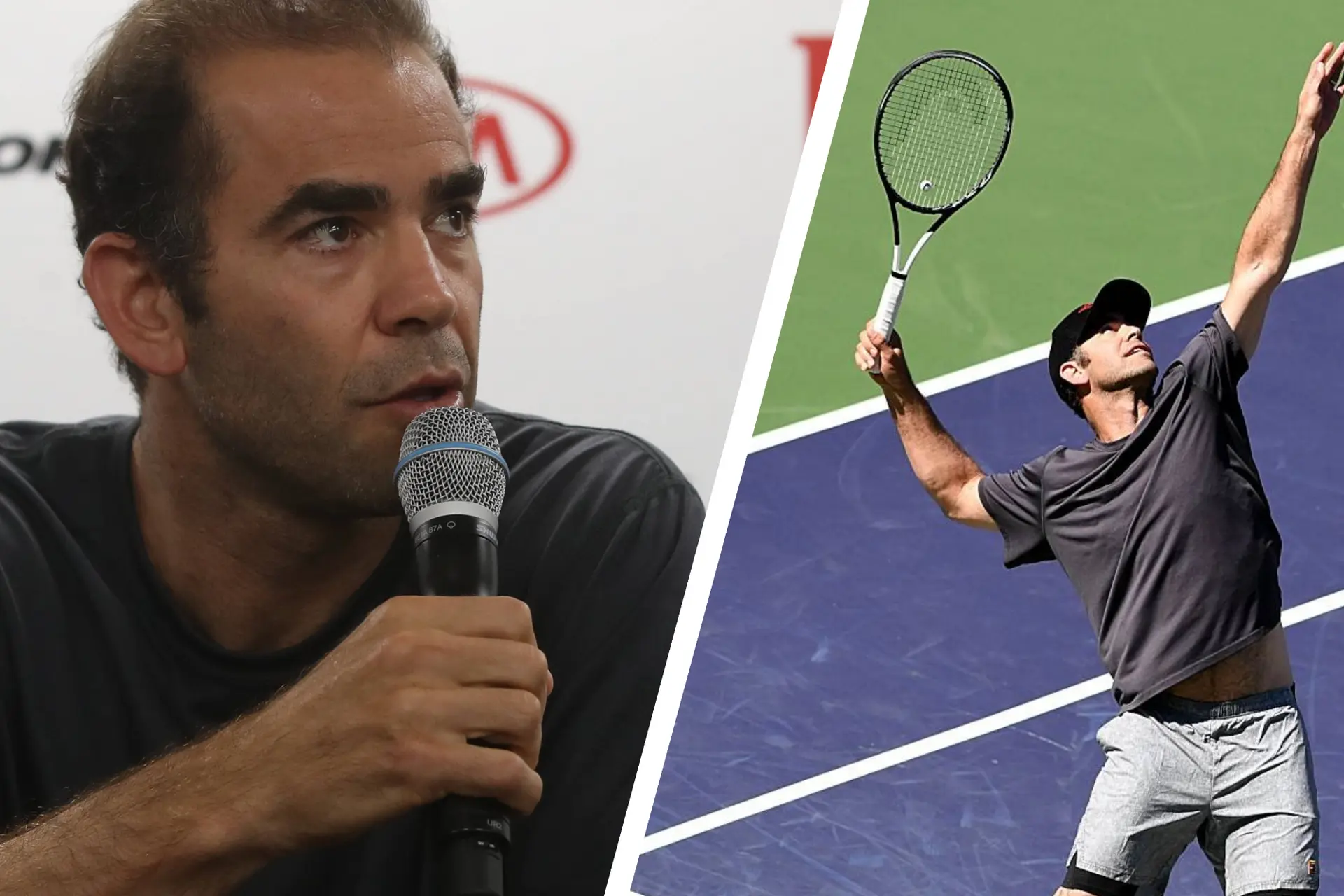
The excellent form in the preparatory events continued in the Big Apple. He moved into the semis and a clash with the world number one Sampras. Before the match, Rafter was somewhat dismissed by his opponent who, when asked about the difference between the pair, Sampras replied “ten Grand Slams”.
Rafter had the last laugh with an epic five set victory over the American. In the final, playing fellow Aussie Mark Philipoussis, Rafter claimed a four set victory that saw him lose just two games in the last two sets.
Rafter experiences near misses at Wimbledon as career ends in 2001
Now ranked four in the world, Rafter struggled to replicate the career peak of 1998. A retention of his title in Hertogenbosch represented a solitary singles title during the 1999 campaign.
The form on grass was carried over into Wimbledon as he progressed to a first semi at SW19, losing to Agassi.
He was also a runner-up at both the Italian and Cincinnati Opens in 1999. The strong display over the summer helped lift Rafter to the world number one spot in July. He was the last male player to reach the top spot for the first time in the 20th century.
The 2000 season was illuminated by another impressive grasscourt campaign. A third successive victory in Hertogenbosch teed up Rafter for a tilt at winning Wimbledon.
At the All England Club, Rafter reversed the result of his semi-final with Agassi the previous year to reach a third major final.
The final was delayed by rain and once underway, conditions were nippy and cloudy. Sampras was the opponent, who was aiming for a record-breaking 13th Grand Slam singles title. With dusk descending on Centre Court, at around 9pm, Sampras won in four sets.
For a third year in succession, Rafter and Agassi clashed on the Wimbledon last four. Rafter again prevailed and would face Goran Ivanisevic in the final.
A backlog in the schedule of Wimbledon 2001 led the men's singles final to be played on an additional Monday rather than its traditional Sunday slot. This led to a very different audience watching the contest. Many who queued up overnight were Australians or Croats wanting to support Ivanisevic.
It created a spine-tingling atmosphere, more akin to a Davis Cup tie. Ivanisevic, a three-time runner-up, was arguably the neutral’s preference. In a final that went the distance, Croatia were left celebrating as Ivanisevic exorcised his demons by holding serve to win 9-7 in the fifth set.
Rafter would follow this galling loss by making the finals of both Cincinnati and Montreal. He added a title at Indianapolis too. Rafter would finish the year ranked at seven.
Due to injury, Rafter played no matches on tour in 2002. He then announced his retirement in January 2003, stating no desire to carry on competing at the highest level. Rafter claimed 11 singles titles from 25 finals.
Davis Cup and Grand Slam doubles glory in 1999
Rafter was part of a victorious Australian Davis Cup squad in 1999. Injury prevented him from playing in the final but he'd won important matches in the ascent to a final victory over France.
He did, however, play in losing finals to Spain in 2000 and France in 2001. He also lifted the ATP World Team Championship in 1999 and 2001.
Rafter is one of only three men, along with Rod Laver and Stefan Edberg, to reach the semi-finals of all singles and doubles majors in the Open Era.
In partnership with Swede Jonas Bjorkman, doubles Grand Slam glory came Rafter's way at the 1999 Australian Open. Rafter accrued 10 doubles titles from 18 finals. He reached a highest ranking of six.

Pat Rafter adored by fans.
Post tennis life and legacy
Rafter was inducted into the International Tennis Hall of Fame in 2006. Rafter spent much time living in Bermuda, mostly due to favourable tax laws. This led to an element of controversy when he was awarded Australian of the Year in 2002. The main show court at the Brisbane International tournament is named after Rafter.
Rafter is a member of both the Australia Sports Hall of Fame and the Australian Tennis Hall of Fame. He was appointed Davis Cup Captain for Australia in 2010, leaving the role in 2015. Rafter made a brief comeback, partnering Lleyton Hewitt, in the doubles at the 2014 Australian Open. They lost in round one.
In 2004, Rafter married his partner Lara at an intimate ceremony in Fiji. They have two children together, son Joshua and daughter India, both now adults. Rafter's career was relatively short. His greatest hour was the second US Open crown as it shuts down the preposterous talk of how lucky and undeserving he'd been to win in a New York earlier.
Wimbledon glory eluded him narrowly, but the all round record he possessed in singles and doubles majors makes him a worthy Hall of Fame inductee.

Jay Brannon is a sports journalist from Sutton Coldfield, England, with a lifelong passion for athletic competition and storytelling. For the past 1.5 years, he has been a prominent voice at TennisUpToDate.com, where he has authored more than 3,000 articles, specializing in deep-dive columns, tactical analyses, liveblogs, and comprehensive match reports for the ATP and WTA tours.
Jay’s tennis reporting blends rigorous, real-time statistical analysis with on-the-ground coverage. He frequently travels to tournaments to cover the action firsthand from the press box and player press conferences. This direct access allows him to deliver sharp insight into player form and tour developments—a dedication sparked by his earliest sporting memory of the iconic 1991 Wimbledon final between Michael Stich and Boris Becker.
Beyond the court, Jay brings a versatile background in live broadcasting and media. His professional experience includes serving as a sports reporter for BHBN Hospital Radio—where he delivered live updates and analysis for West Bromwich Albion and Wolverhampton Wanderers matches—as well as working as a match reporter for Sutton Coldfield Town.
Jay holds a degree in Music Journalism and Broadcasting from Staffordshire University, a foundational training that shaped his voice as a thoughtful, authentic storyteller. Grounded in core journalistic ethics, he places a strict emphasis on careful sourcing, editorial accuracy, and swift, verified updates.
claps 0visitors 0
Just In


Popular News



Latest Comments
- Does Sinner need that 4.5 mil? I doubt it. He can make that with three modelling gigs!😅🤣Rapunzel21-10-2026
- Did "People Magazine" purchase this website? This nonstop storyline is bullshit.
 mandoist21-10-2026
 - Listen... this is of no concern to anyone but these two. Deal with your own issues -- most of us have our own. Thanks, media, for these insignificant follow-ups which are meaningless.mandoist21-10-2026
- This is so very very sad, for all three of them. I truly thought they had an unbreakable bond, but life throws up so many differing challenges. Having your homeland suffering in such a terrible way, makes happiness lose out to guilt as well. Our thoughts are with them. X💔bjsexton20-10-2026
- I have lost all respect for Svitolina! Could she not have waited until he had played at the Paris Masters!!! She is selfish and don't give a damn about Gael. That is NOT how love is demonstrated Elina!!Rapunzel19-10-2026
- Perhaps convenient tennis tour sex is not a strong enough experience in which to base a marriage?mandoist19-10-2026
- Fight the Good Fight... Tennis (sports in general) need more Humans such as yourself.mandoist18-10-2026
- When is WTA going to mandate Genetic Testing (DNA) ???mandoist18-10-2026
- Hey, Dan... you just wake up from a coma? Regardless -- Thanks for the comedy this morning!mandoist18-10-2026
- Two Things: 1. Stop allowing these Spoiled Trust-Fund Elitists to behave badly. Your little hand-slaps do not deter them. 2. STOP the incessantly annoying "towel wiping" nonsense!!!!mandoist15-10-2026

Loading