Tennis Legends: Pete Sampras - 'The GOAT of Grass' known as Pistol Pete who previously held record Grand Slam haul
ATP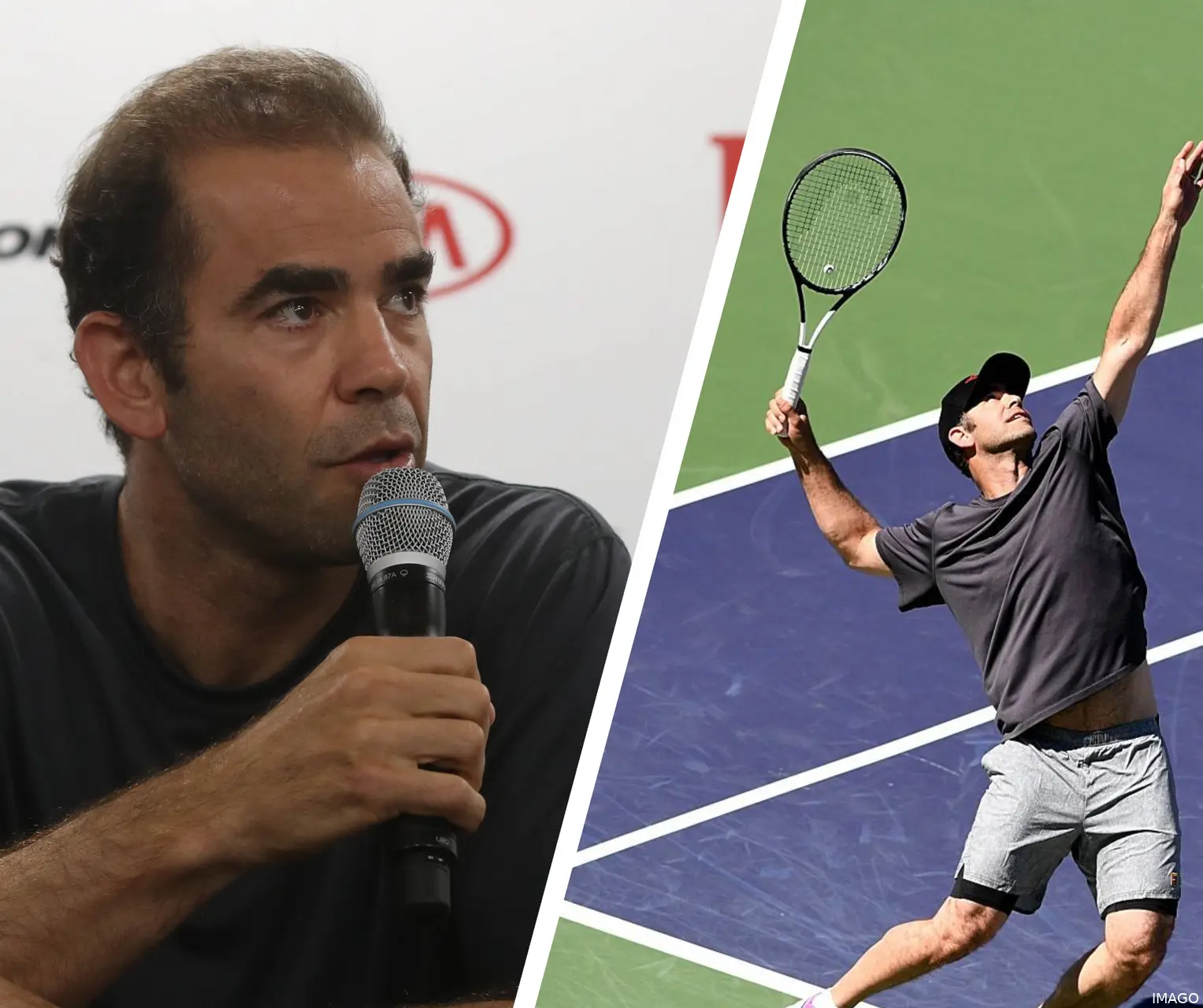
Pete Sampras dominated tennis in the 1990s. He was near unplayable on fast courts at his best. A tally of seven Wimbledon titles in eight years supports claims that Sampras remains the GOAT on grass. He retired in 2003 holding the record for the most Grand Slam singles titles won.
Pistol Pete rises to tennis stardom
Born on August 12, 1971, in Washington, D.C., to parents Soterios and Georgia. Both of his parents have Greek heritage. He has three other siblings, two sisters and a brother. His oldest sister Stella is a women's tennis coach at UCLA.
The Sampras family moved to California when Pete was seven, allowing him to play tennis all year round. His idol was Australian legend Rod Laver, whom he met at the age of 11. Sampras joined the Jack Kramer Club. The coaching he received there saw Sampras switch from a double-handed backhand to a single hander.
Pistol Pete turned professional in 1988. Within a year, Sampras rose from 893 to 97 in the world rankings. The following season featured his first wins at Grand Slams and a slight rise up the rankings to 81 by the season's climax.
The 1990 season would see the American teenager make a huge breakthrough. He secured a first professional title at the defunct US Indoor tournament in Philadelphia. A maiden grass court title materialised in June, at Manchester. It was at the season's final Slam in New York where Sampras would elevate his standing in a grand manner.
The maverick with a burgeoning rivalry
Still only 19, Sampras carried himself to US Open glory, becoming the event's youngest men's champion. A quarter-final victory over Ivan Lendl, snapping the Czech’s streak of eight successive US Open finals, was pivotal in giving him added belief. The final saw the beginning of an iconic rivalry that shaped tennis in the 1990s. He beat Andre Agassi in straight sets. This rivalry fitted the old adage that ‘styles make matches’. Sampras championed the serve-and-volley approach in contrast to the powerful baseline game of the maverick Agassi.
Sampras, now firmly established in the top ten, struggled with the increased expectation in the first half of the 1991 season. He didn't win a title until July (Los Angeles Open). Further success in Indianapolis fuelled optimism that he could defend his US Open title. These hopes were dashed when losing to Jim Courier in the last eight. No Grand Slams in 1991 were somewhat compensated for when he pocketed the first of five ATP Finals crowns.
The 1992 campaign followed a similar pattern. Five titles were claimed, but another blank regarding the Grand Slams. The standout triumph came at the Cincinnati Masters, a first triumph at what are now 1000 events. Jim Courier regained atop the rankings, and Sampras had to wait until 1993 before overthrowing his compatriot at the summit of men's tennis.
Sampras started the year winning in Sydney and losing to Stefan Edberg in the semi-finals of the Australian Open. A portent of what was to come later in the year surfaced at the Hong Kong Open when Sampras defeated the man he’d recently replaced as World Number One, Jim Courier, in the final. The pair would clash again in the Wimbledon final. Sampras emphasised the power shift with a four-set win over Courier. Sampras then made it back-to-back Slams by dominating Cedric Pioline to win a second US Open title. He finished season-end number one for the first time. Sampras would finish each of the next five seasons in the top ranking.
Upping his tally further, including grass court supremacy
Following the capture of eight titles in 1993, Sampras upped his tally to nine during the 1994 campaign. This included a first Australian Open title. His fourth Grand Slam triumph saw him beat Todd Martin to win the Melbourne showpiece. Masters titles followed in Indian Wells, Miami and Rome - his first and biggest title on clay. He completed a successful Wimbledon defence in July, beating Goran Ivanisevic in a serve-dominated final. The season finished with glory at the ATP Finals.
Five titles in 1995, including a pair of majors, maintained Sampras’ supremacy. He warmed up for Wimbledon with his first success at Queens Club. A third consecutive title followed at SW19, coming from a set down to win in four over Boris Becker, a man he'd displaced as the new king of Centre Court. A third US Open title was added later in the term, when Sampras beat Agassi in four sets.
Sampras experienced a prolific 1996 season. He accrued another octet of titles. This included him retaining the US Open with a straight-sets victory over Michael Chang. His run of Wimbledon titles was temporarily halted by a big-serving Dutchman. An inspired Richard Krajicek sent Sampras packing in the quarters. This represented Sampras’ only defeat at Wimbledon in an eight-year period. The season concluded with Sampras defending his ATP Finals title.
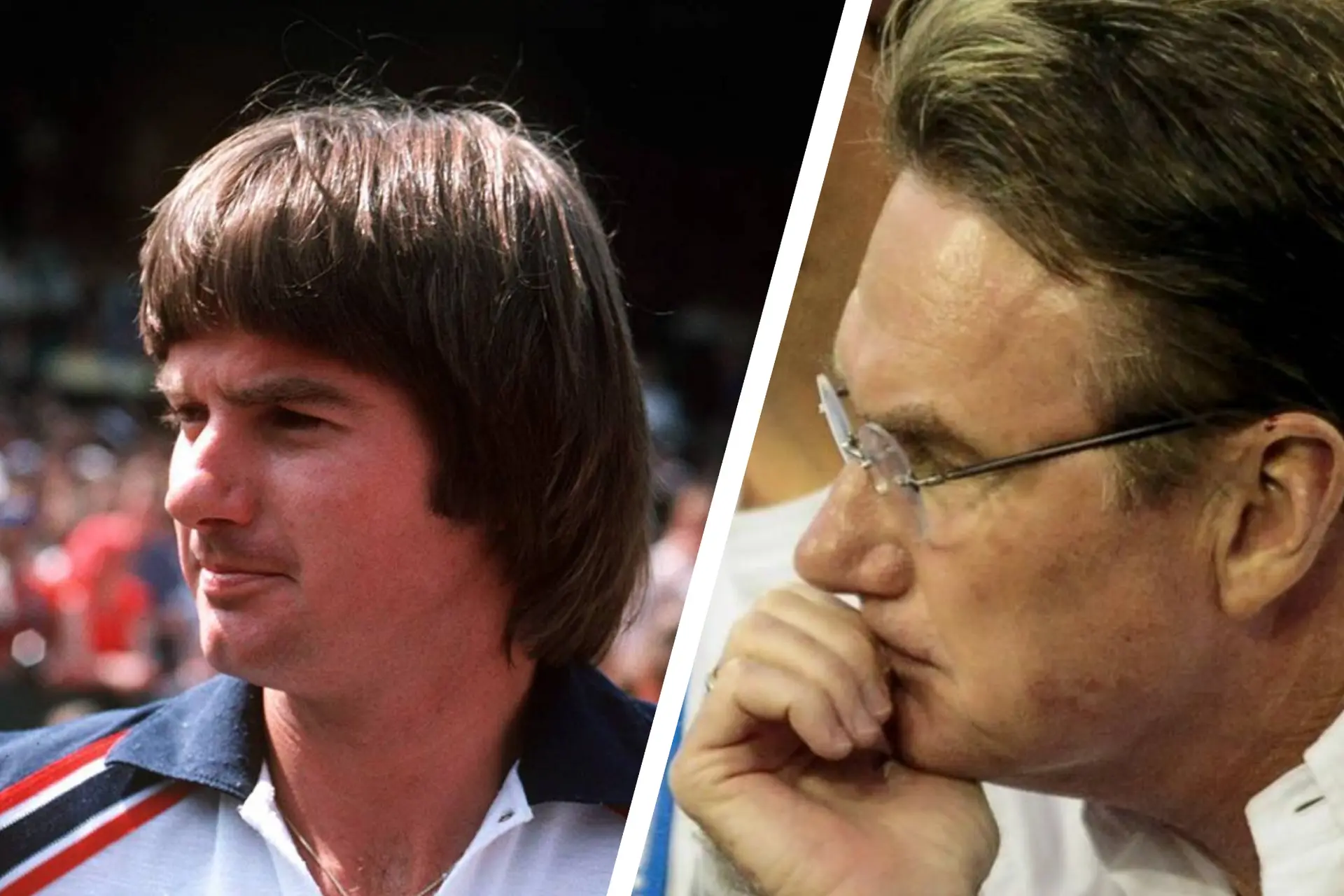
The 1997 season was arguably his finest. He bagged another eight tournament wins and emulated Jimmy Connors by finishing as season-end number one for a fifth year in a row. Grand Slam triumphs came at the Australian Open and Wimbledon. He also clinched a hat-trick of ATP Finals titles.
Sampras had a relatively quiet 1998 heading into Wimbledon. Titles had been secured in Philadelphia and Atlanta. In a repeat of the 1994 final, Sampras faced a stiffer test with the Croat, Ivanisevic. He eventually prevailed 6-2 in the fifth set. This year would see Sampras finish World Number One for a sixth consecutive year.
His first title of 1999 was a second triumph at the Queen's Club. He then completed the Queens/Wimbledon double with a masterclass against Andre Agassi in the final. Esteemed sports journalist Simon Barnes has often cited this display as an example of sporting excellence that should be marvelled at rather than turned off by the dominance Sampras created at SW19. The LA Lakers fan ended the decade with a record-equalling fifth ATP Finals trophy. However, his run of finishing number one at the season's end was stopped by old foe Agassi.
Powers begin to wane
Sampras's powers began to wane in the 21st century. He would only win three more tournaments, but two of these came in Grand Slams. A triumph at the millennium edition of Wimbledon, in July 2000, saw him overtake Roy Emerson for the record of men's Grand Slam singles titles. A 13th major success came to fruition with a four-set victory over Patrick Rafter. This success was made all the sweeter as it was the only time his parents were there to watch him win a Grand Slam.
His 2001 campaign proved fruitless for Sampras. He went without a title victory for the first time since 1989. One defeat that signalled a changing of the guard in the near future was a memorable five-set defeat to an emerging Roger Federer at Wimbledon in the round of 16. This ended the 31-match winning streak Sampras had constructed at the grass court major. Despite reaching a US Open final, losing to Lleyton Hewitt, Sampras finished the year ranked at 10, his lowest position for twelve years.
Sampras began 2002 with a fourth-round loss to Marat Safin at the Australian Open. In what turned out to be his final Wimbledon appearance, Sampras was humiliated by the world number 145 Georg Bastl in the second round. The shock loss was made all the more embarrassing as the seven-time Wimbledon champion was shamefully placed out on Court Two rather than one of the main showcourts. Talk was growing of retirement, and the American was beginning to look a spent force.
Read also
He decided to call up former coach Paul Annacone to work with him for the US Open. A five-set win over Greg Rusedski in round three was a turning point. The defeated Brit's comments saying Sampras’ movement had declined and he would lose in the next round. Sampras then surged into an eighth US Open final, equalling Ivan Lendl's record for US Open final appearances, to set up a clash with Andre Agassi. Pistol Pete continued to roll back the years with a four-set triumph.
Sampras never played again, but he chose to leave the official retirement announcement until the following year's US Open. This meant his final total of 14 Grand Slams stood as a record in the men's game. The feeling then was that it could stand for decades to come. It was first passed by Federer in 2009, before Rafael Nadal and Novak Djokovic usurped Sampras. He finished with 64 singles titles from 88 finals.
French Open success evaded Sampras. A semi-final showing in 1996 was his best effort in Paris. Sampras boasted an impressive strike rate in Grand Slam finals, winning 14 of his 18 contests.
Sampras formed part of two Davis Cup winning squads in 1992 and 1995. He delivered a herculean effort in the second triumph. He won both of his singles matches and played in a winning doubles rubber in a 3-2 victory over Russia.
The initial benchmark and life after tennis
A total of 286 weeks at World Number One is the third highest total of all-time. Djokovic is the only player to have finished a season at number one more times than Sampras.
The ascent of Sampras to the sport’s dominant figure in the mid 1990s came under the tutelage of Tim Gullikson. In late 1994, Gullikson started to experience seizures. While with Sampras at the 1995 Australian Open, he collapsed. This resulted in poignant scenes where Sampras became visibly tearful during a quarter-final win over Jim Courier. He eventually lost the final to Agassi. In his post-match speech, he dedicated this tournament and any future events to Gullikson. It was soon revealed that his coach had an inoperable brain cancer. Gullikson died in May 1996. Tim's twin brother, Tom, would briefly coach Sampras in the early 2000s.
Life after tennis for Sampras has been significantly low profile. He played a few exhibitions towards the end of the naughties. Sampras and his wife were guests at the 2009 Wimbledon final. A match that saw Roger Federer surpass his record haul of majors.
Sampras married on September 30, 2000, with actress and former Miss Teen USA Bridgette Wilson. She was diagnosed with ovarian cancer in December 2022. They've had two sons together, both now grown up.
In 2007, Sampras was inducted into the International Tennis Hall of Fame. He's one of only three players, alongside Ken Rosewall and Rafael Nadal, to win a men's singles Grand Slam in their teens, twenties and thirties.
When Pete Sampras retired, many observers felt he was the GOAT. Those claims are unheard since Federer, Nadal and Djokovic soared past his Grand Slam tally. Very few wouldn’t have him inside the all-time top 10, but a top 5 placing feels justified given his ranking supremacy and majors record. In the 1990s, Sampras was a byword for sporting excellence and dominance. He was a comparable achiever that decade with luminaries such as Michael Jordan, Stephen Hendry and Michael Johnson. Known for his Slam dunk smash, Pistol Pete set a new benchmark at the start of the 21st century.
Read also
Pete Sampras: Career Titles and Major Achievements
| Category | Achievement | Details |
| Singles Grand Slams | 14 | Wimbledon (7), US Open (5), Australian Open (2) |
| Total ATP Titles | 64 | Includes 5 ATP Tour World Championships (1991, 94, 96, 97, 99) |
| Year-End No. 1 | 6 Consecutive | All-time Record: Finished No. 1 every year from 1993–1998 |
| World No. 1 | 286 Weeks | Held the record for most weeks at No. 1 until 2012 |
| Wimbledon Dominance | 7 Titles | Won 7 titles in 8 years (1993–2000); 53-1 record in that span |
| Davis Cup Titles | 2 | Lead USA to victory in 1992 and 1995 |
| Oldest/Youngest | US Open Record | Youngest male US Open champion (19) and oldest (31) in Open Era |
| Hall of Fame | Inductee | Inducted into the International Tennis Hall of Fame (2007) |
Pete Sampras: Major Finals and Milestones
| Year | Competition / Tournament | Result | Category |
| 1990 | US Open | Winner | 1st Grand Slam Title (Youngest champion at 19y, 28d) |
| 1991 | ATP Tour World Chp. | Winner | 1st Year-End Championship (Defeated Jim Courier) |
| 1992 | Davis Cup | Winner | Member of the "Dream Team" with Agassi, McEnroe, Courier |
| 1993 | Wimbledon | Winner | 1st Wimbledon Title; began 7-year era of dominance |
| 1993 | US Open | Winner | Reached World No. 1 for the first time this season |
| 1994 | Australian Open | Winner | 1st Title in Melbourne (Defeated Todd Martin) |
| 1995 | Wimbledon | Winner | Completed a "Three-peat" at SW19 |
| 1997 | Australian Open | Winner | 2nd Australian Open title (Defeated Carlos Moyá) |
| 1999 | Wimbledon | Winner | Defeated Andre Agassi in what he called his "perfect match" |
| 2000 | Wimbledon | Winner | Surpassed Roy Emerson’s record with 13th Grand Slam |
| 2002 | US Open | Winner | 14th Major Title; retired after defeating Agassi in the final |
Jay Brannon is a sports journalist from Sutton Coldfield, England, with a lifelong passion for athletic competition and storytelling. For the past 1.5 years, he has been a prominent voice at TennisUpToDate.com, where he has authored more than 3,000 articles, specializing in deep-dive columns, tactical analyses, liveblogs, and comprehensive match reports for the ATP and WTA tours.
Jay’s tennis reporting blends rigorous, real-time statistical analysis with on-the-ground coverage. He frequently travels to tournaments to cover the action firsthand from the press box and player press conferences. This direct access allows him to deliver sharp insight into player form and tour developments—a dedication sparked by his earliest sporting memory of the iconic 1991 Wimbledon final between Michael Stich and Boris Becker.
Beyond the court, Jay brings a versatile background in live broadcasting and media. His professional experience includes serving as a sports reporter for BHBN Hospital Radio—where he delivered live updates and analysis for West Bromwich Albion and Wolverhampton Wanderers matches—as well as working as a match reporter for Sutton Coldfield Town.
Jay holds a degree in Music Journalism and Broadcasting from Staffordshire University, a foundational training that shaped his voice as a thoughtful, authentic storyteller. Grounded in core journalistic ethics, he places a strict emphasis on careful sourcing, editorial accuracy, and swift, verified updates.
claps 0visitors 0
Just In

Popular News
Latest Comments
- A healthy Qinwen may be hard to stop next season. She was already scaring her opponents before her medical leave(s). Unfortunately, Zheng insisted on singing again. On the positive side -- Mirra did not sing!! ;~}
 mandoist11-10-2026
 - Where is it written that athletes, entertainers... People in general... are mandated to keep looking at -- or even using [anti]Social Media? Public & private figures consistently complain and reveal their concerns about negativity and violence thrown at them -- yet they insist on participating. Avoid it, don't use it, don't read it. It's okay to occasionally look up at the World instead beating your eyes & thumbs to death on The Inventions out there.mandoist11-10-2026
- great articlestennisseserver07-10-2026
- Medvedev was leading Djokovic 7-5, 3-5 when an attempted return..' NO you ignorants, Djokovic was leading .weiss05-10-2026
- No more bullshit "Wildcards" to these two. Qualify like everyone else -- there will be cameras there, too. Time to scream... WTF ????!!!!mandoist29-09-2026
- Let's not BS the general public -- Sabalenka started showing cracks in her game last season. Her losses and near-losses started at about the same time she began being distracted by Fame (constant Selfies, making TV commercials, magazine shoots, endless Social Media nonsense, etc., etc.) One would think even Saba could recognize the parallels with others who failed before her -- Raducanu, Giorgi, Bouchard to name a few.mandoist25-09-2026
- Gross!! Hey Raducanu, Giorgi, and Bouchard -- reserve a seat at your Social Media Selfie table for Saba + Naomi. They're heading in your direction soon enough.mandoist24-09-2026
- And then these same players will complain about how lengthy their season’s were and need more time-off. I’m all for more tennis but the amount of tennis we get now is actually kind of crazy! We all need a break, especially the players.DaveyWavey23-09-2026
- You should do a comparison article for "different kinds of justice" the courts decide for tennis players. I can think of at least three players who received very small bans of a few months, however Tara Moore has been fighting for her literal survival the past few years. It seems odd considering she is not a "name" player, unlike the other cases.DaveyWavey22-09-2026
- PRIZE MONEY & POINTS Winner - $185,500 Finalist - $114,500 Semi-Finalist - $66,003 Quarter-Finalist - $35,000 Round of 16 - $18,045 Round of 32 - $13,005 Winner - 500 Finalist - 325 Semi-Finalist - 195 Quarter-Finalist - 108 Round of 16 - 60 Round of 32 - 1DaveyWavey20-09-2026

Loading