Tennis Legends - Stefan Edberg: Swedish legend with unique World No.1 feat renowned for stylish serve and volley
ATP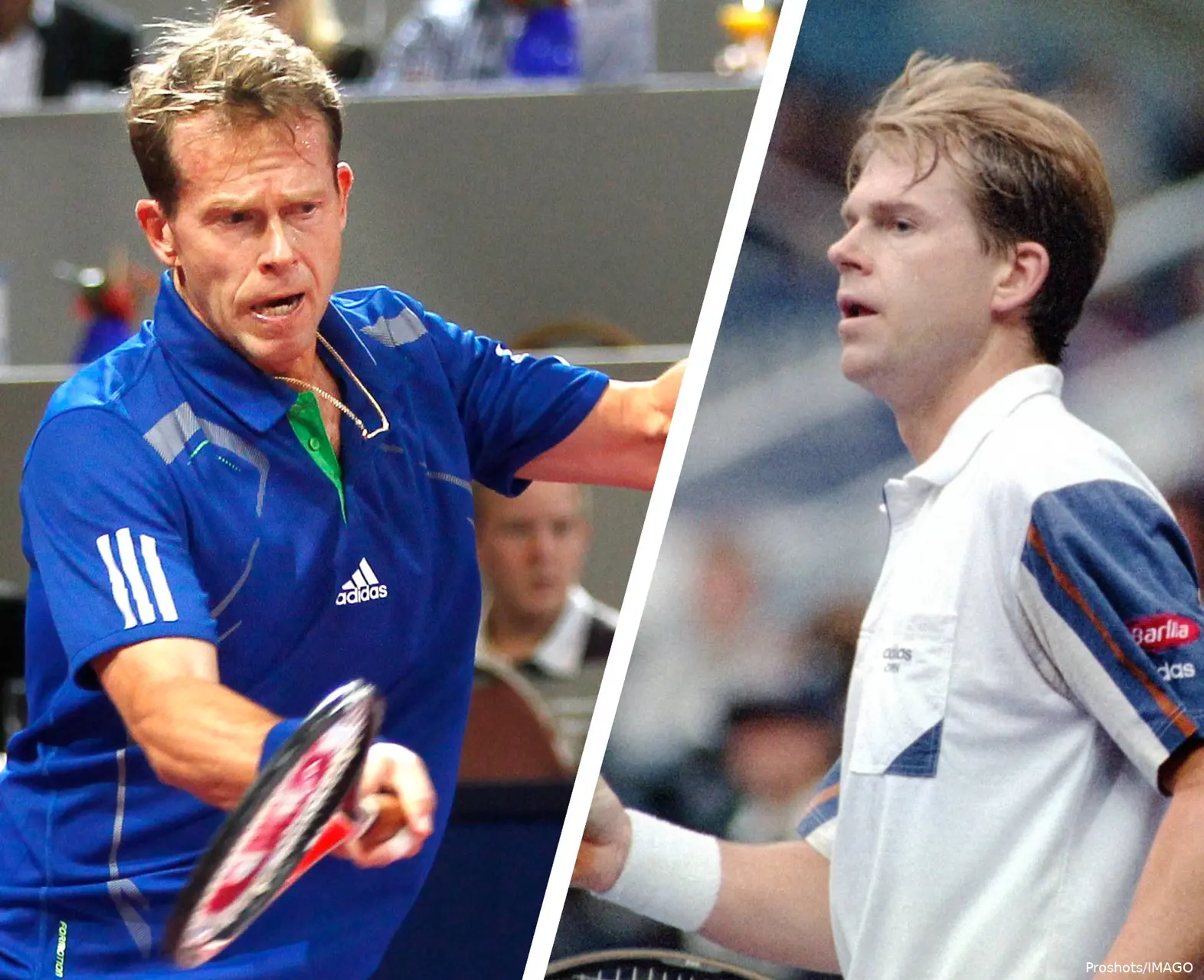
Following in the footsteps of Swedish legend Bjorn Borg came Stefan Edberg, a player similar in temperament but with a style of game very different to his compatriot. Edberg was renowned for a stylish serve and volley approach, which yielded six Grand Slam singles titles. Edberg, in addition to John McEnroe, is the only man to be ranked number one in singles and doubles during the Open Era.
Stefan Edberg: Early life and tennis beginnings
Born on January 19, 1966, to parents Bengt and Barbro in the Swedish city of Vastervik, Edberg was a prodigious junior talent, winning both the European under-14 and under-16 titles in the early 1980s. The teenage Swede then achieved a unique and remarkable feat of completing a Junior Calendar Grand Slam. He remains the only player to accomplish this.
Turning professional a year later, Edberg quickly entered the winner’s circle. Edberg’s first title came at an indoor tournament, in March 1984, on the fast carpet of Milan. He defeated compatriot and future great Mats Wilander in the final.
The 1985 season produced a quartet of trophies, highlighted by the capture of his maiden Grand Slam success at the Australian Open, then held in December. A five-set win over Ivan Lendl, in a semi-final played over two days due to rain, was a victory that fuelled belief heading into a first major final. Once again, Wilander was the beaten opponent, going down in straight sets. Edberg was still only 19 when he triumphed in Melbourne.
Post Grand Slam slump
Edberg didn't reach any further Grand Slam finals in the campaign of 1986. A semi-final showing at the US Open proved to be his best effort across the four majors. Three more titles were added to his resume, the pick of which was home success in Stockholm. This was Edberg’s first victory in what are now referred to as 1000 Tournaments.
As a consequence of a decision to permanently move the Australian Open from December to January, Edberg had to wait a little longer to defend his title. He duly obliged by staving off home favourite Pat Cash's fightback. Edberg closed it out 6-3 in the fifth set. The Vastervik native went on to claim an additional half dozen titles in 1987, including a first triumph in the Cincinnati Open and retention of his Stockholm title. He would conclude the season at a then career-high ranking of number two.
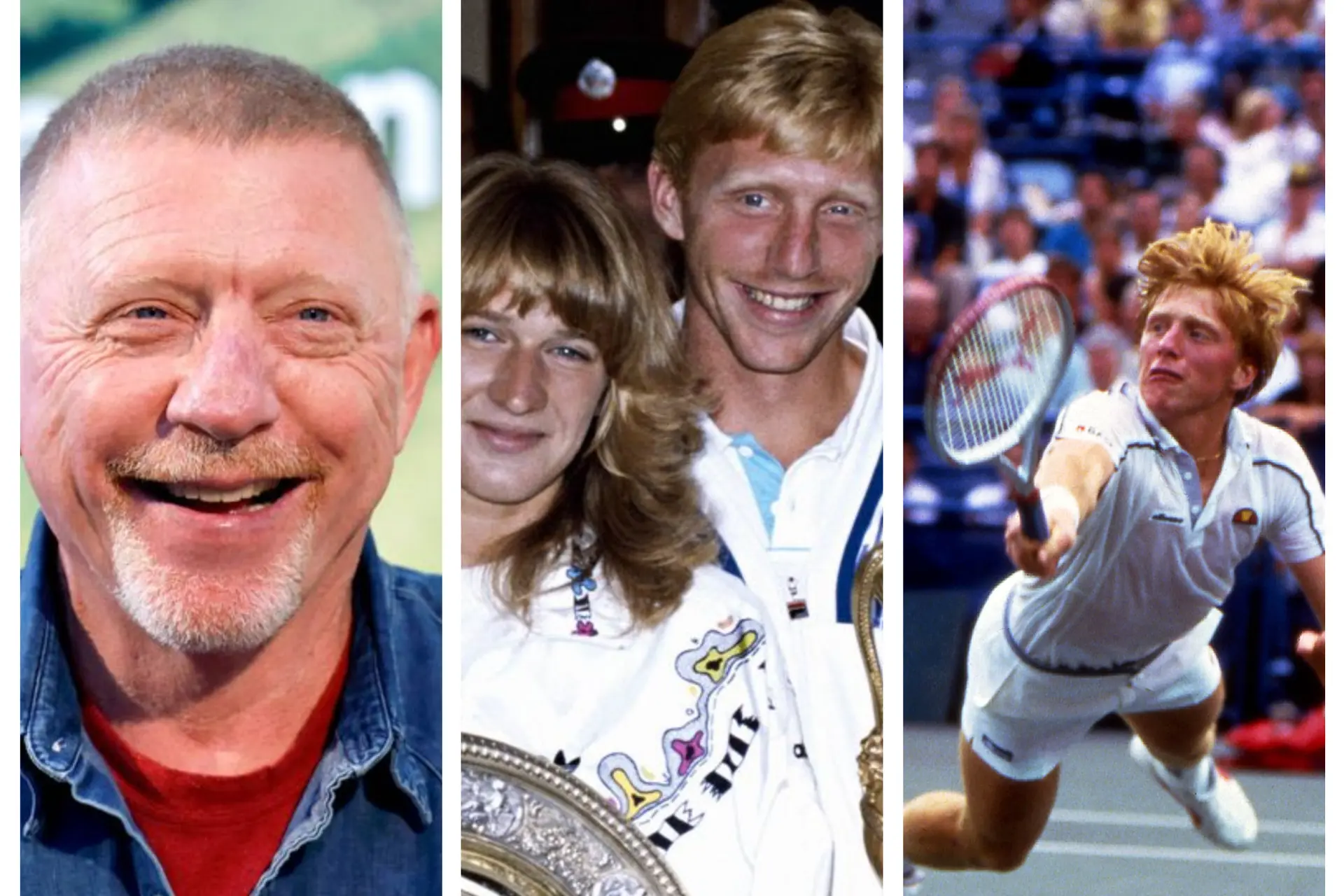
Edberg’s 1988 season reached its peak on the hallowed courts of Wimbledon. Playing what would be the first of three successive Wimbledon finals against Boris Becker, Edberg fought back from a set down to win in four and secure a third Grand Slam title. At this point, Edberg and Becker were unquestionably the two standout players on grass. Two other titles were added in another fine season.
Defeats in consecutive major finals in Paris and London left Edberg frustrated in 1989. The Roland Garros showpiece placed the Swedish stylist against the tenacious American baseliner Michael Chang, aged only 17. In a seesaw five-set contest, Chang became the youngest male winner of a singles Grand Slam. It proved to be the closest Edberg would get in attempting to win the one major title that ultimately eluded him. He then went on to lose in straight sets to Becker in their Wimbledon final rematch. The season finished on a high, though, when Edberg pocketed a first success at the season-ending Grand Prix Masters (now the ATP Finals) in New York, defeating Becker in four sets.
His 1990 season began with him forced to withdraw injured in the Australian Open final. He trailed Lendl by two sets and 2-5 when retiring. The rest of Edberg’s effort proved extremely successful, winning seven tournaments. The centrepiece was his retaining of the Wimbledon crown, following a five-set thriller with old foe Becker. It turned out to be the year where Edberg first reached number one, assuming the mantle in August, from Ivan Lendl.
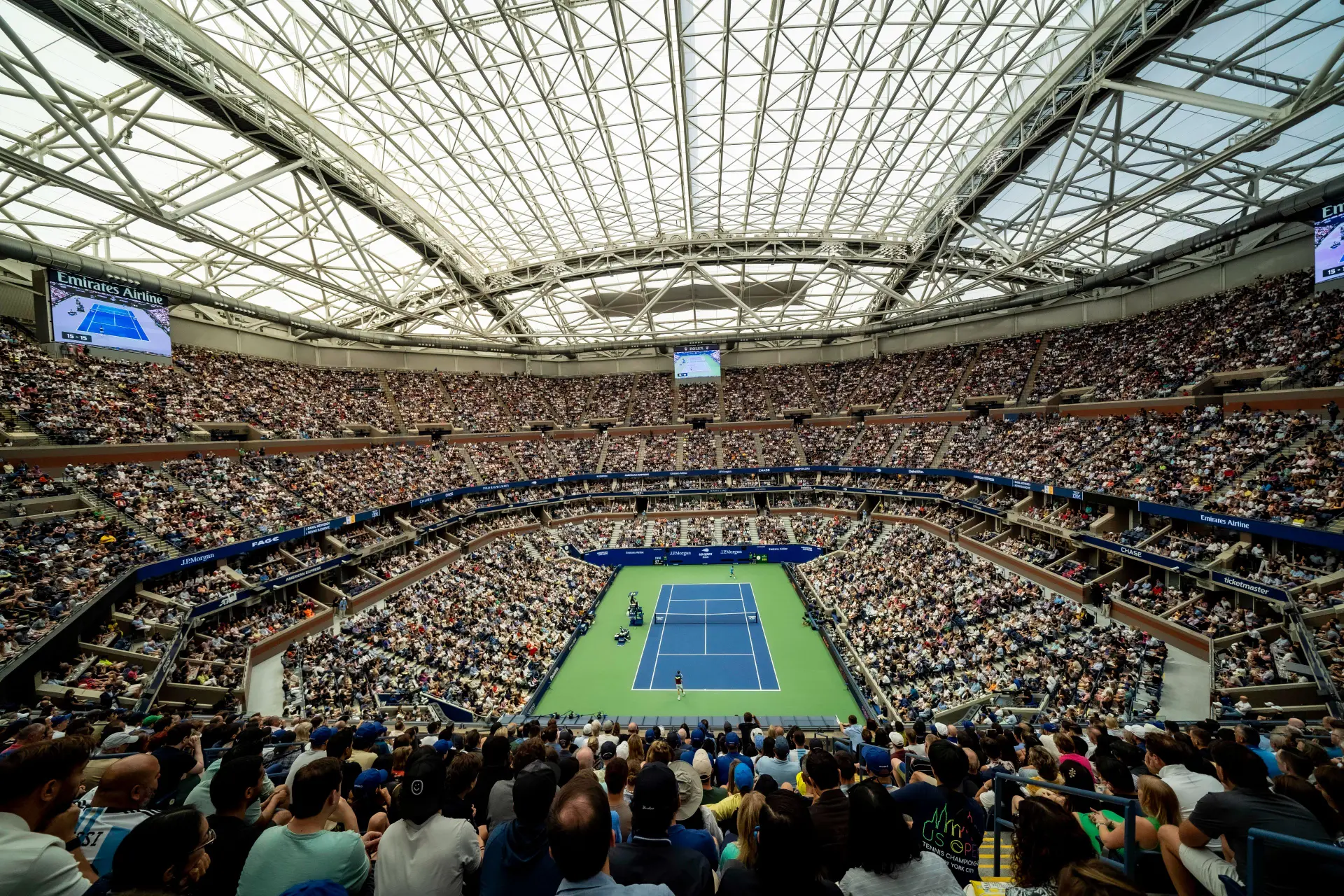
Six tournament victories in 1991 cemented Edberg’s position as world number one. He claimed a fourth title at the Tokyo Outdoor event in April. Edberg added to his tapestry of grass court trophies when emerging as the winner at June's Queens Club Championships. The seasonal highlight occurred in New York, where the laconic Swede bagged a fifth Grand Slam singles title and his first at the US Open. In the final, Edberg lost just six games in a brutal dismantling of Jim Courier.
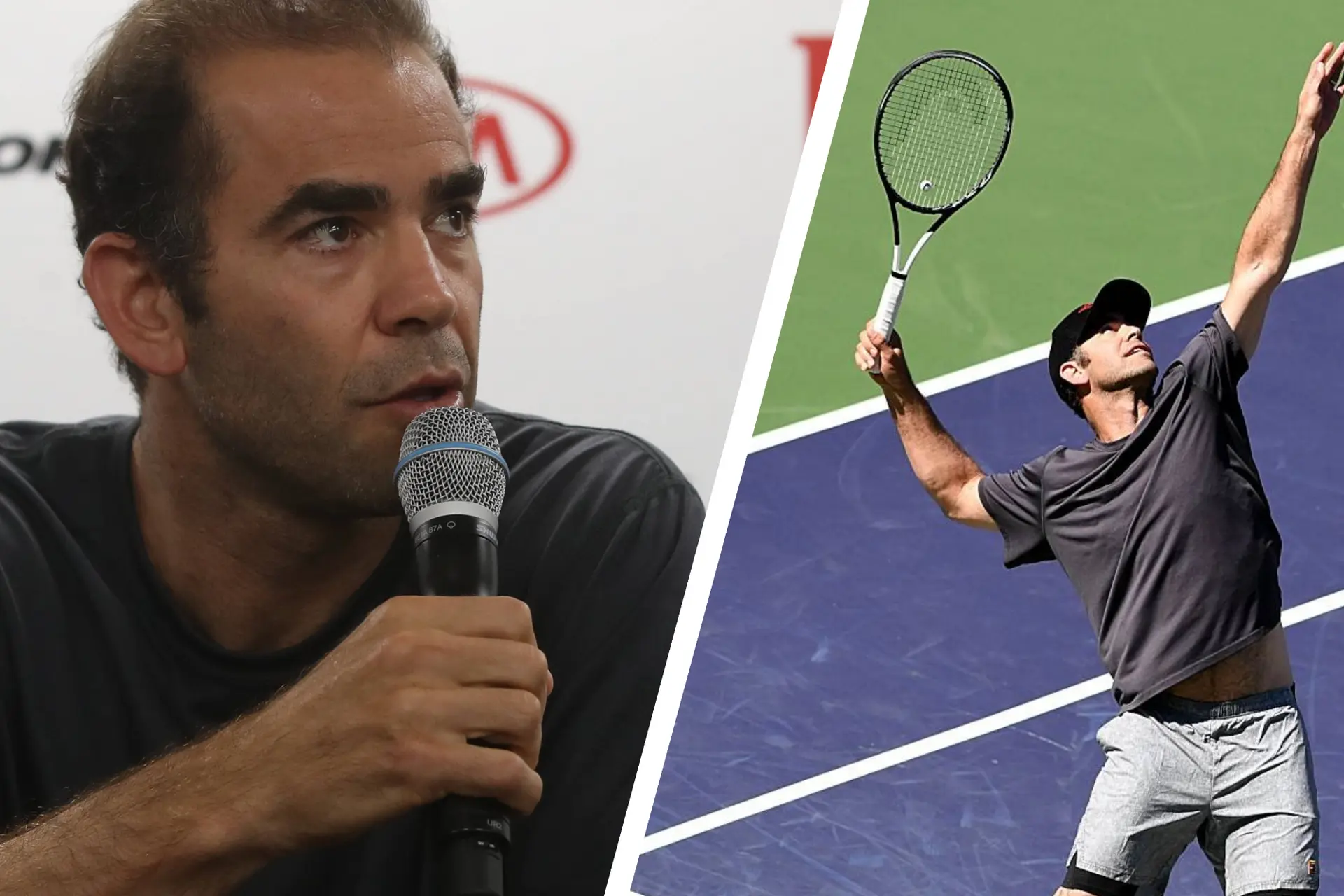
Edberg would cede the number one ranking in 1992, but he did succeed in defending his US Open title. The finals witnessed Edberg come through in four sets over the fast-rising Pete Sampras. It was one of three titles he won that term.
Edberg reached the last of his eleven Grand Slam singles finals in 1993, losing to Courier in a four-set defeat. His solitary title of the season took place on clay in Madrid. His straight-sets victory over Sergi Bruguera was arguably the most satisfying of his career on clay courts.
The last few years of Edberg’s career witnessed diminishing returns. Three titles were accrued in 1994, but after a semi-final loss at the Australian Open, Edberg failed to progress beyond the third round in the season's other Grand Slams. Edberg began the 1995 season with a trophy in Doha. This would ultimately prove to be Edberg’s last singles title. The elegant Swede finished his career in 1996 with a final tally of 41 wins from 77 finals. He spent the entire duration of his career being coached by Tony Pickard. Edberg spent 72 weeks as World Number One in singles.
Read also
Excellence in singles and doubles
Edberg was one of the last premier singles players to combine it with a successful doubles career. He accumulated 18 titles, including three Grand Slams. Much of his success was in tandem with compatriot Anders Jarryd. They aligned to win both the Australian Open and US Open doubles titles in 1087, having lost their previous pair of major doubles finals. In partnership with Czech Peter Korda, a third Grand Slam doubles tally was added at the 1996 Australian Open.
Playing for his country saw Edberg clinch four Davis Cup titles. He was part of triumphs in 1984, 1985, 1987 and 1994. Edberg also played in the singles and doubles competitions at the 1988 Seoul Olympics, reaching the semi-finals of both events and then claiming a bronze medal in the third/fourth place playoff. At the 1984 Games, held in Los Angeles, he won gold when tennis was a demonstration sport.
Edberg built a reputation for showing great nerve in fifth sets. When triumphant at the 1992 US Open, Edberg came from a break down in deciding sets in three consecutive matches.
Edberg briefly went into coaching when Roger Federer, who had idolised the Swede as a young boy, asked him to undertake coaching duties at the end of 2013. He was credited with improving Federer's serve and volley game. The Swiss legend didn't add to his major tally on Edberg’s watch, but still amassed 10 Masters 1000 titles.
Once his tennis career had finished, Edberg embarked on a competitive squash career. He developed into an elite player within Swedish circles. He also undertook what was then a fledgling sport in racketlon, a combination of tennis, squash, badminton and table tennis.

Stefan Edberg returning to the baseline during his illustrious career.
Post tennis life
The great Swede played for a time in seniors tennis, winning a title on clay in Paris. In 2012, he lost a one set exhibition with Jo Wilfried Tsonga. He's often seen as a spectator at Grand Slam events, especially Wimbledon.
Until 2016, Edberg's distinctive service action acted as silhouette logo for the Australian Open.
Boris Becker and Edberg are the only male tennis players to win the United International Athlete of the Year Award. Edberg won it in 1990. He also received the ATP Sportsmanship Award on five occasions. Following his retirement in 1996, the ATP permanently named the award after him, the "Stefan Edberg Sportsmanship Award". The same year, he was bestowed with the Philippe Chatrier Award. Edberg’s induction to the International Tennis Hall of Fame came in 2004. Other awards he received included back-to-back ATP Player of the Year gongs in 1990 and 1991.
Edberg has been married for 33 years. His wedding to Annette Hjort Olsen took place in April 1992. They've had two children, Emilie and Christopher. The bride had previously been in a relationship with fellow Swedish great Mats Wilander.
Away from tennis, Edberg is a follower of Leeds United in football and the ice hockey outfit Vaxjo Lakers.
Six Grand Slam titles in singles play place him level with, among others, Boris Becker, whom he got the better of in their trilogy of Grand Slam finals. Edberg’s tally of four Slams won on grass is bettered in the Open Era by just four men: Roger Federer (8), Pete Sampras (7), Novak Djokovic (7) and Bjorn Borg (5). He's level with Rod Laver in fifth place. One of the finest serve and volley exponents, he proved to be the last of Sweden's holy tennis trinity. Borg remains the benchmark, but Wilander and Edberg joined him soon after. To win three different majors on multiple occasions places Edberg in very exclusive company.
Stefan Edberg: Career Titles and Major Achievements
| Category | Achievement | Details |
| Singles Grand Slams | 6 | Wimbledon (2), Australian Open (2), US Open (2) |
| Doubles Grand Slams | 3 | Australian Open (2), US Open (1) |
| World No. 1 (Singles) | 72 Weeks | First reached the top spot in August 1990 |
| World No. 1 (Doubles) | 15 Weeks | One of only two men to be No. 1 in both Singles and Doubles |
| Junior Grand Slam | Golden Slam | Only player to win all 4 Junior Majors in one calendar year (1983) |
| Davis Cup Titles | 4 | Lead Sweden to victory in 1984, 1985, 1987, and 1994 |
| Olympic Medals | 2 Bronze | 1988 Seoul Olympics (Singles & Doubles) |
| Sportsmanship Award | 5 Times | The ATP Sportsmanship Award was renamed in his honor in 1996 |
Stefan Edberg: Major Finals and Milestones
| Year | Competition / Tournament | Result | Category |
| 1983 | Junior Grand Slam | Winner | Only player to win all 4 Junior Slams in a calendar year |
| 1985 | Australian Open | Winner | 1st Grand Slam Singles Title (Defeated Mats Wilander) |
| 1987 | Australian Open | Winner | 2nd Title in Melbourne (Defeated Pat Cash) |
| 1987 | US Open | Winner | 1st Grand Slam Doubles Title (w/ Anders Järryd) |
| 1988 | Wimbledon | Winner | 1st Wimbledon Title; began legendary trilogy vs. Boris Becker |
| 1989 | French Open | Runner-up | Closest attempt at Career Slam (Lost to Michael Chang) |
| 1990 | Wimbledon | Winner | Defeated Boris Becker in a classic five-set final |
| 1990 | ATP Rankings | No. 1 | Reached the summit of the world rankings for the first time |
| 1991 | US Open | Winner | Masterclass 6-2, 6-4, 6-0 win over Jim Courier |
| 1992 | US Open | Winner | Final Grand Slam Title; won three consecutive 5-setters |
| 1996 | Wimbledon | Runner-up | Final Grand Slam final (Doubles w/ Petr Korda) |

Jay Brannon is a sports journalist from Sutton Coldfield, England, with a lifelong passion for athletic competition and storytelling. For the past 1.5 years, he has been a prominent voice at TennisUpToDate.com, where he has authored more than 3,000 articles, specializing in deep-dive columns, tactical analyses, liveblogs, and comprehensive match reports for the ATP and WTA tours.
Jay’s tennis reporting blends rigorous, real-time statistical analysis with on-the-ground coverage. He frequently travels to tournaments to cover the action firsthand from the press box and player press conferences. This direct access allows him to deliver sharp insight into player form and tour developments—a dedication sparked by his earliest sporting memory of the iconic 1991 Wimbledon final between Michael Stich and Boris Becker.
Beyond the court, Jay brings a versatile background in live broadcasting and media. His professional experience includes serving as a sports reporter for BHBN Hospital Radio—where he delivered live updates and analysis for West Bromwich Albion and Wolverhampton Wanderers matches—as well as working as a match reporter for Sutton Coldfield Town.
Jay holds a degree in Music Journalism and Broadcasting from Staffordshire University, a foundational training that shaped his voice as a thoughtful, authentic storyteller. Grounded in core journalistic ethics, he places a strict emphasis on careful sourcing, editorial accuracy, and swift, verified updates.
claps 0visitors 0
Just In

Popular News
Latest Comments
- A healthy Qinwen may be hard to stop next season. She was already scaring her opponents before her medical leave(s). Unfortunately, Zheng insisted on singing again. On the positive side -- Mirra did not sing!! ;~}
 mandoist11-10-2026
 - Where is it written that athletes, entertainers... People in general... are mandated to keep looking at -- or even using [anti]Social Media? Public & private figures consistently complain and reveal their concerns about negativity and violence thrown at them -- yet they insist on participating. Avoid it, don't use it, don't read it. It's okay to occasionally look up at the World instead beating your eyes & thumbs to death on The Inventions out there.mandoist11-10-2026
- great articlestennisseserver07-10-2026
- Medvedev was leading Djokovic 7-5, 3-5 when an attempted return..' NO you ignorants, Djokovic was leading .weiss05-10-2026
- No more bullshit "Wildcards" to these two. Qualify like everyone else -- there will be cameras there, too. Time to scream... WTF ????!!!!mandoist29-09-2026
- Let's not BS the general public -- Sabalenka started showing cracks in her game last season. Her losses and near-losses started at about the same time she began being distracted by Fame (constant Selfies, making TV commercials, magazine shoots, endless Social Media nonsense, etc., etc.) One would think even Saba could recognize the parallels with others who failed before her -- Raducanu, Giorgi, Bouchard to name a few.mandoist25-09-2026
- Gross!! Hey Raducanu, Giorgi, and Bouchard -- reserve a seat at your Social Media Selfie table for Saba + Naomi. They're heading in your direction soon enough.mandoist24-09-2026
- And then these same players will complain about how lengthy their season’s were and need more time-off. I’m all for more tennis but the amount of tennis we get now is actually kind of crazy! We all need a break, especially the players.DaveyWavey23-09-2026
- You should do a comparison article for "different kinds of justice" the courts decide for tennis players. I can think of at least three players who received very small bans of a few months, however Tara Moore has been fighting for her literal survival the past few years. It seems odd considering she is not a "name" player, unlike the other cases.DaveyWavey22-09-2026
- PRIZE MONEY & POINTS Winner - $185,500 Finalist - $114,500 Semi-Finalist - $66,003 Quarter-Finalist - $35,000 Round of 16 - $18,045 Round of 32 - $13,005 Winner - 500 Finalist - 325 Semi-Finalist - 195 Quarter-Finalist - 108 Round of 16 - 60 Round of 32 - 1DaveyWavey20-09-2026

Loading