
The ATP Tour has moved to amend its rules on video review and hindrance following a controversial incident involving Jack Draper and Daniil Medvedev at Indian Wells. The changes come after sustained criticism from players, officials, and commentators over how and when reviews can be used during points.
The controversy unfolded during the quarter-final clash between Draper, the defending champion, and Medvedev, in what had otherwise been a high-level contest. A disputed call late in the match shifted attention away from the tennis itself, raising broader questions about consistency and fairness in officiating.
At the centre of the issue was a hindrance decision made after the conclusion of a point, a scenario that some players have long argued creates ambiguity. The ruling ultimately handed Medvedev a critical advantage at a decisive stage of the second set, influencing the match’s trajectory.
In the days following the match, discussion intensified around the application of video review, particularly whether players should be allowed to challenge decisions after knowing the outcome of a rally. The ATP has now responded with two specific rule changes aimed at addressing those concerns.
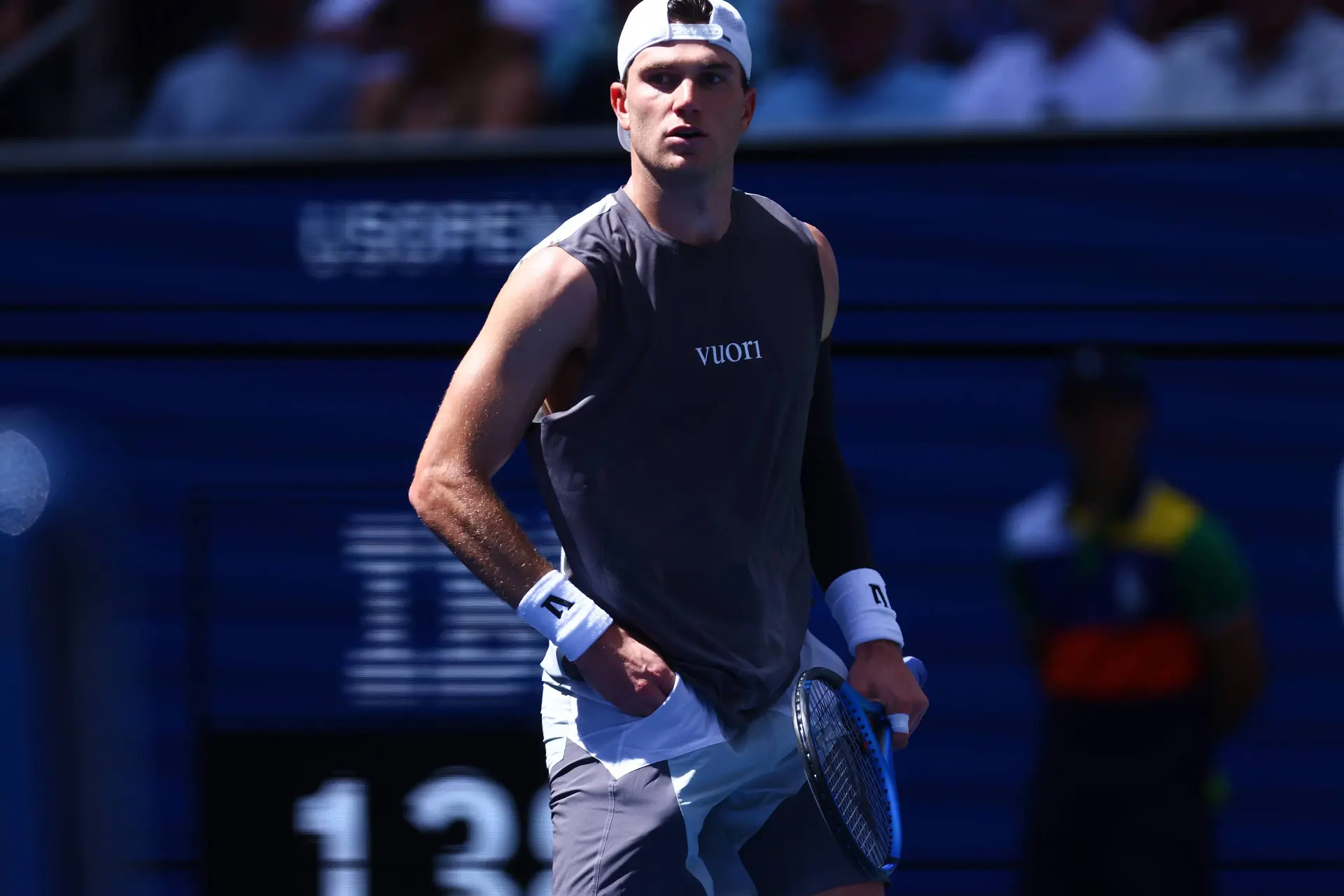
Controversial Draper-Medvedev moment triggers action
The key moment came with the second set finely poised at 5-5. During a rally, Draper raised his arms mid-point in reaction to a line call, appealing to chair umpire Aurélie Tourte. Although the rally continued, the situation was later reviewed, with officials determining that Draper’s gesture constituted a hindrance.
The decision proved costly. The point was awarded to Medvedev, giving him a 0-30 lead at a crucial juncture. From there, the Russian was able to capitalise, shifting momentum decisively in his favour. Draper, who had been competing strongly, was unable to recover from the setback.
The incident quickly became a focal point for debate, with critics highlighting the unusual timing of the review. Rather than being addressed in real time, the hindrance call was made after the rally had ended, prompting questions about whether such interventions undermine the natural flow of play.
Journalist Jon Wertheim later outlined the ATP’s response, confirming that the governing body had acted to prevent similar scenarios in the future.
"Two ATP Tour rule changes to watch.
a) Video review of hindrance after the point (a la Medvedev/Draper)... (in effect no longer trialled).
b) Video review challenges are unlimited but chair ‘will retain control over the process’ and has discretion to deny any unreasonable requests.”
Two @atptour rule changes to watch:
— Jon Wertheim (@jon_wertheim) March 17, 2026
a) video review of hindrance *after the point* (a la Medvedev/Draper) ... (in effect no longer trialed)
b) Video review challenges are unlimited *but* chair "will retain control over the process" and has discretion to deny unreasonable…

Cristhián AvilaTennis Journalist
Cristhián Ávila is a tennis journalist based in Santiago, Chile, and has been part of the TennisUpToDate team since early 2023. He covers the ATP and WTA Tours as well as all four Grand Slams, producing breaking news, match reports, analysis, and regular liveblogs from major tournaments.
His reporting combines statistical analysis with clear explanation, helping readers understand tactical developments, player form, and broader storylines across the tour. Working fluently in both Spanish and English, Cristhián collaborates with an international editorial team and contributes to comprehensive global coverage. As part of his work, he has conducted interviews and media interactions with leading figures in the sport, including Caroline Wozniacki and John McEnroe.
In his journalism, Cristhián places strong emphasis on careful sourcing, editorial accuracy, and updating articles promptly when new, verified information becomes available. His coverage is grounded in research, context, and direct engagement with professional tennis.
claps 0visitors 0
Just In


Popular News
Latest Comments
- A healthy Qinwen may be hard to stop next season. She was already scaring her opponents before her medical leave(s). Unfortunately, Zheng insisted on singing again. On the positive side -- Mirra did not sing!! ;~}
 mandoist11-10-2026
 - Where is it written that athletes, entertainers... People in general... are mandated to keep looking at -- or even using [anti]Social Media? Public & private figures consistently complain and reveal their concerns about negativity and violence thrown at them -- yet they insist on participating. Avoid it, don't use it, don't read it. It's okay to occasionally look up at the World instead beating your eyes & thumbs to death on The Inventions out there.mandoist11-10-2026
- great articlestennisseserver07-10-2026
- Medvedev was leading Djokovic 7-5, 3-5 when an attempted return..' NO you ignorants, Djokovic was leading .weiss05-10-2026
- No more bullshit "Wildcards" to these two. Qualify like everyone else -- there will be cameras there, too. Time to scream... WTF ????!!!!mandoist29-09-2026
- Let's not BS the general public -- Sabalenka started showing cracks in her game last season. Her losses and near-losses started at about the same time she began being distracted by Fame (constant Selfies, making TV commercials, magazine shoots, endless Social Media nonsense, etc., etc.) One would think even Saba could recognize the parallels with others who failed before her -- Raducanu, Giorgi, Bouchard to name a few.mandoist25-09-2026
- Gross!! Hey Raducanu, Giorgi, and Bouchard -- reserve a seat at your Social Media Selfie table for Saba + Naomi. They're heading in your direction soon enough.mandoist24-09-2026
- And then these same players will complain about how lengthy their season’s were and need more time-off. I’m all for more tennis but the amount of tennis we get now is actually kind of crazy! We all need a break, especially the players.DaveyWavey23-09-2026
- You should do a comparison article for "different kinds of justice" the courts decide for tennis players. I can think of at least three players who received very small bans of a few months, however Tara Moore has been fighting for her literal survival the past few years. It seems odd considering she is not a "name" player, unlike the other cases.DaveyWavey22-09-2026
- PRIZE MONEY & POINTS Winner - $185,500 Finalist - $114,500 Semi-Finalist - $66,003 Quarter-Finalist - $35,000 Round of 16 - $18,045 Round of 32 - $13,005 Winner - 500 Finalist - 325 Semi-Finalist - 195 Quarter-Finalist - 108 Round of 16 - 60 Round of 32 - 1DaveyWavey20-09-2026

Loading