Tennis Legends: Mats Wilander - the legendary Swede who delivered on the big occasion and only missed one Grand Slam from his collection
ATP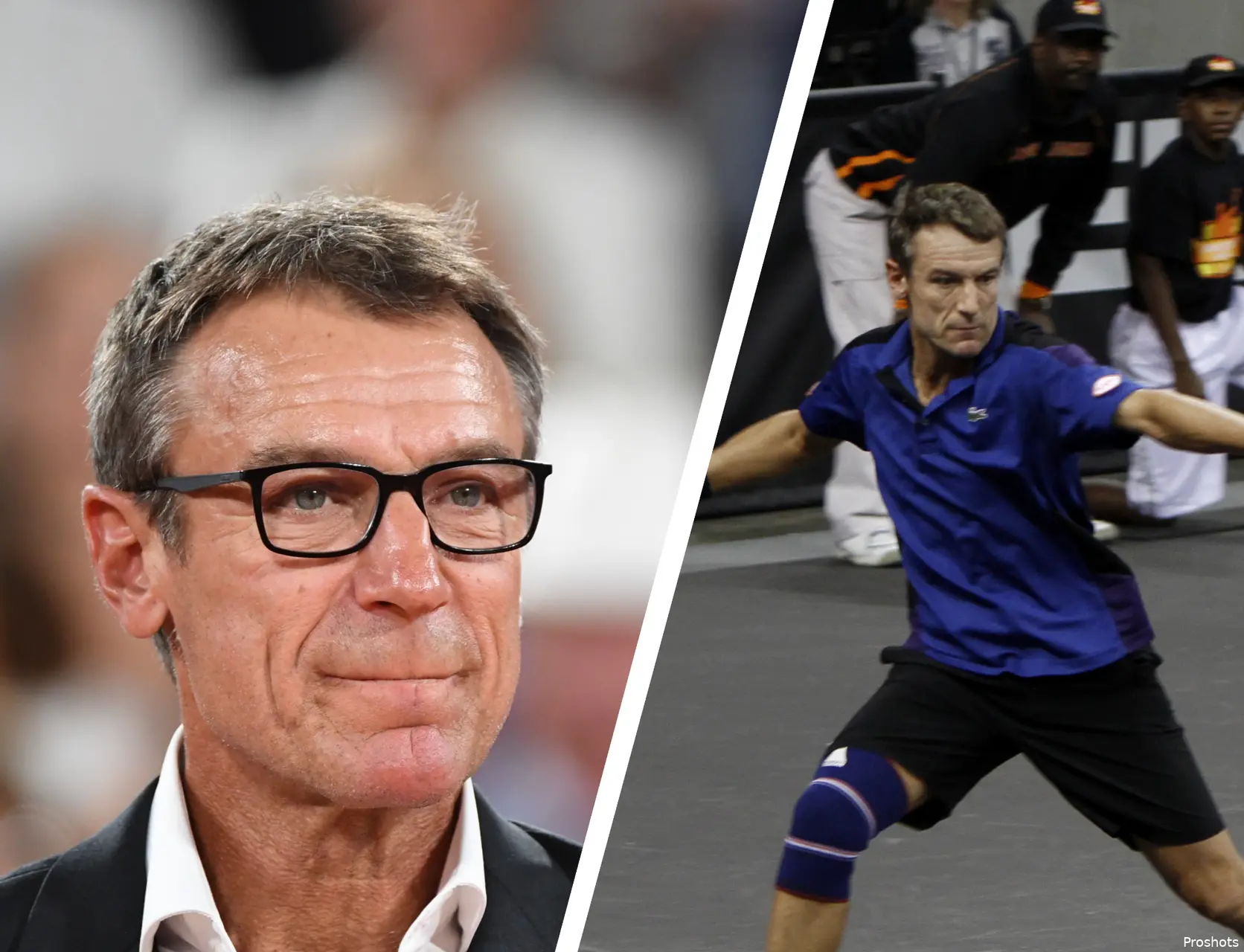
One of a small group of teenage Grand Slam champions in the Open Era, Sweden’s Mats Wilander specialised in delivering on big occasions. Seven of his 33 career singles titles came on the sport’s biggest stages. Wimbledon was the only Grand Slam to elude him.
Mats Wilander: Early life and start of tennis career
Mats Wilander was born in the remote Swedish locality of Alvesta (the population is just over 8,000) on August 22, 1964. His parents, Einar and Kari,n played a significant part in young Mats' tennis development. His dad, Einar, even erected a court for him to play in.
As a junior, Wilander was hugely successful. He claimed the French Open juniors title and was champion at the European U-18 and U-16 titles. A success at the renowned junior event Orange Bowl, in the U-16 category, was arguably the pinnacle of a stellar junior career.
Wilander turned professional in 1979. He reached his first ATP final in November 1981 at an event in Bangkok, where American Bill Scanlon downed the teenage Swede in straight sets.
A second final loss occurred at an indoor Brussels event in March 1982. Wilander, still only 17, reached a third final three months later. This was a surprise run to the French Open showpiece. Playing in his first Grand Slam final, Wilander belied his inexperience by coming from a set down against Argentine Guillermo Vilas. It was an epic contest, including a point lasting 90 strokes! His sensational triumph made him briefly the youngest men's Grand Slam singles champion.
Building on incredible breakthrough
Wilander built on this seismic breakthrough by accumulating four additional titles in 1982, cementing him as one of the world's best players.
The 1983 season yielded further Grand Slam joy. It was also the Swede’s most prolific campaign in terms of titles won, finishing with nine in total. The last of these was a second Grand Slam singles crown. He trounced Ivan Lendl in straight sets to become, at 19 years and four months, the youngest men's champion at the Australian Open. Other notable titles during this term included successes at what are now termed 1000 events in Monte Carlo and Cincinnati. He also retained his Swedish Open title.
Wilander claimed three tournament victories in the 1984 season. The highlight was a successful defence at the Australian Open. He came from a set down to topple South African Kevin Curren in the final.
The year 1985 saw Wilander reach ten finals, but he would've been somewhat disappointed to convert these appearances into only three victories. One of these trophy lifts materialised at Roland Garros, following a four-set victory over Ivan Lendl. His second Grand Slam at the Parisien major meant he'd won four Grand Slams before turning 21.
A pair of titles in 1986 included a third success in Cincinnati. However, Wilander suffered a drop off in form at the majors. In the three he entered, fourth round showings at Wimbledon and the US Open represented his best efforts.
Wilander returned in the 1987 season with a remodelled serve. His results improved markedly. He amassed a quintet of titles, including a second crown at the Monte Carlo clay court event. The Swede also proved to be a big factor in the Slams again. He lost the French Open and US Open finals to Ivan Lendl.
The gold standard of Wilander's career
The 1988 season proved to be the absolute gold standard of Wilander's career. He achieved the rare feat of winning a trio of Grand Slams in a calendar year. The year began with a third triumph at the Australian Open, beating local favourite Pat Cash in an epic five-set thriller. Wilander became the only player to win the Australian Open on grass and hard courts. At the French Open final, playing Frenchman Henri Leconte, Wilander secured the title in straight sets, missing just two of 73 first serves. His third major of the year saw Wilander outlast Ivan Lendl in a US Open final lasting nearly five hours. A consequence of this success was Wilander reaching the world number one spot. He stayed there for twenty weeks.
Wilander's career went into reverse following his annus mirabilis. The 1989 season produced just one appearance in a final, and his Grand Slam efforts peaked at quarter-final showings in London and Paris. From his mid-20s onwards, Wilander never returned to the upper echelons of the rankings.
A combination of new challengers, declining motivation and injuries accelerated Wilander's decline in the 1990s. A semi-final run at the 1990 Australian Open turned out to be the last time he would progress beyond the quarter-finals of a Grand Slam. Wilander pocketed the 33rd and last singles title of his career when claiming the trophy at the Itaparica tournament in Brazil.
Appearances became increasingly sporadic for the rest of the decade before Wilander finally retired in 1996. He finished with seven Grand Slam singles titles from eleven finals. His 33 singles titles materialised from 59 finals. Wilander finished in the season-end top 10 for seven successive years from 1982 to 1988.
Despite claiming an Australian Open on grass, Wilander couldn't translate this into success on the green lawns of Wimbledon. Three runs to the quarter-finals proved to be the summit of his achievement at SW19 in singles play.
Heart of the Swedish Davis Cup Dynasty
Wilander was at the heart of a Swedish Davis Cup dynasty in the 1980s. The Swedes reached seven consecutive finals from 1983 to 1989. They were crowned champions in 1984, 1985, and 1987. In his maiden final of 1983, Wilander won both his singles rubbers in a 3-2 defeat to Australia. He skipped the 1986 final loss due to getting married. Wilander finished with a 36-16 record in singles and 7-2 in doubles, playing his last match in 1995. His most storied Davis Cup contest was not in any of the finals, but a marathon quarter-final rubber against John McEnroe. The Swede lost 8-6 in the fifth set after a six-hour and 32-minute contest, which is the second-longest match in Davis Cup history. Wilander would later have a spell as Davis Cup Captain.
Wilander picked up seven doubles titles. The highlight was a 1986 Wimbledon success alongside compatriot Joakim Nystrom. He and Nystrom were also beaten in the 1984 Australian Open and 1986 US Open finals. His last two doubles titles, in 1994, were won in tandem with Czech Karel Novacek. His highest doubles ranking was number 3.
From drug ban to coaching
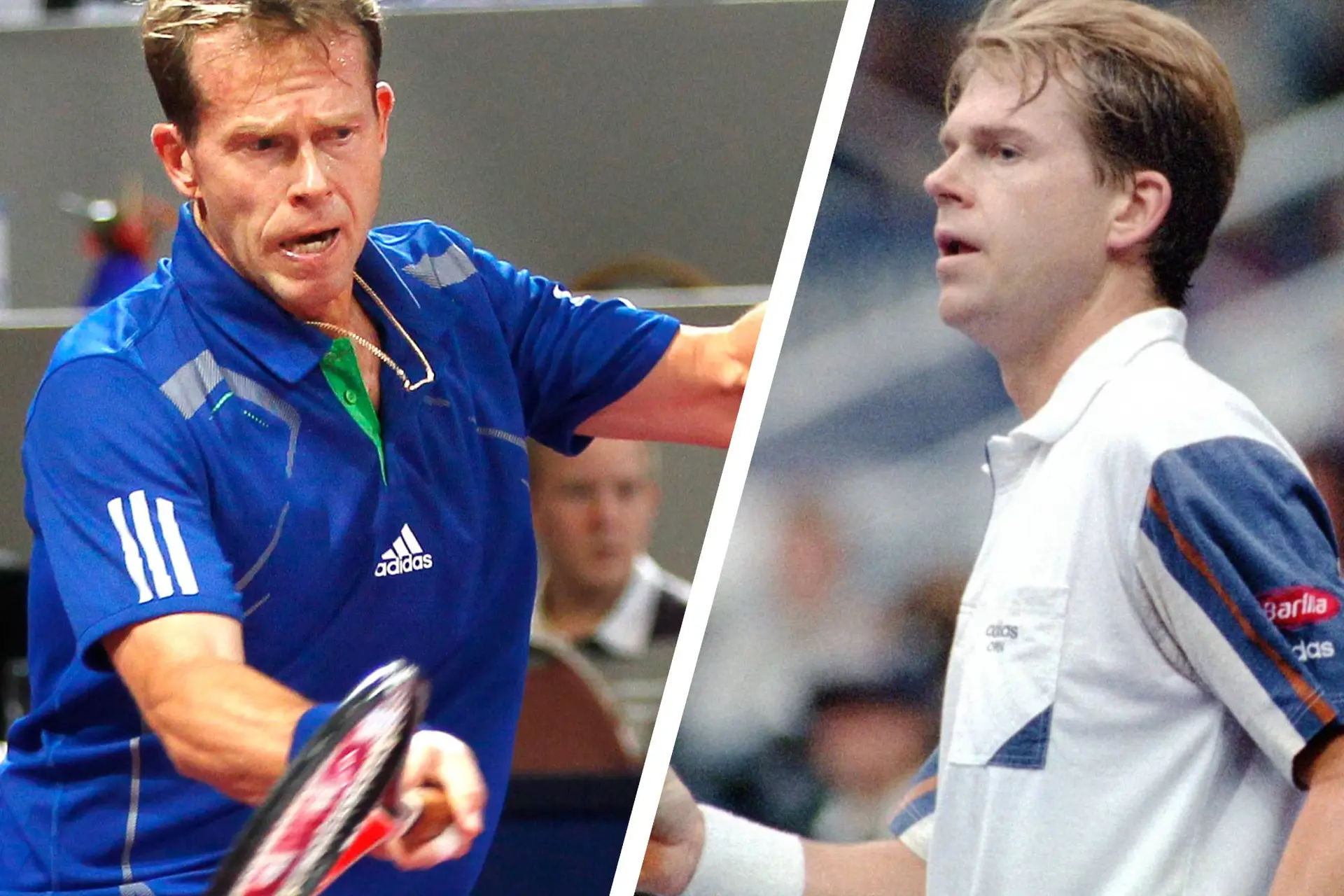
Wilander was inducted into the International Tennis Hall of Fame in 2002. Along with Bjorn Borg and Davis Cup teammate Stefan Edberg, Sweden has three bonafide tennis greats.
In 1983, Wilander won the Jerring Award. This is given to the Swedish sports figure of the year. He was also awarded the Jean Borotra Sportsmanship Award in 2012 from the International Club.
During the 1995 French Open, Wilander and doubles partner Karel Novacek tested positive for cocaine use. After deciding against appealing, they were both banned for three months. Wilander forfeited his ranking points and prize money from the event.
Wilander briefly dipped his toe into coaching. He embarked on short relationships with French players Tatiana Golovin and Paul Henri-Mathieu.
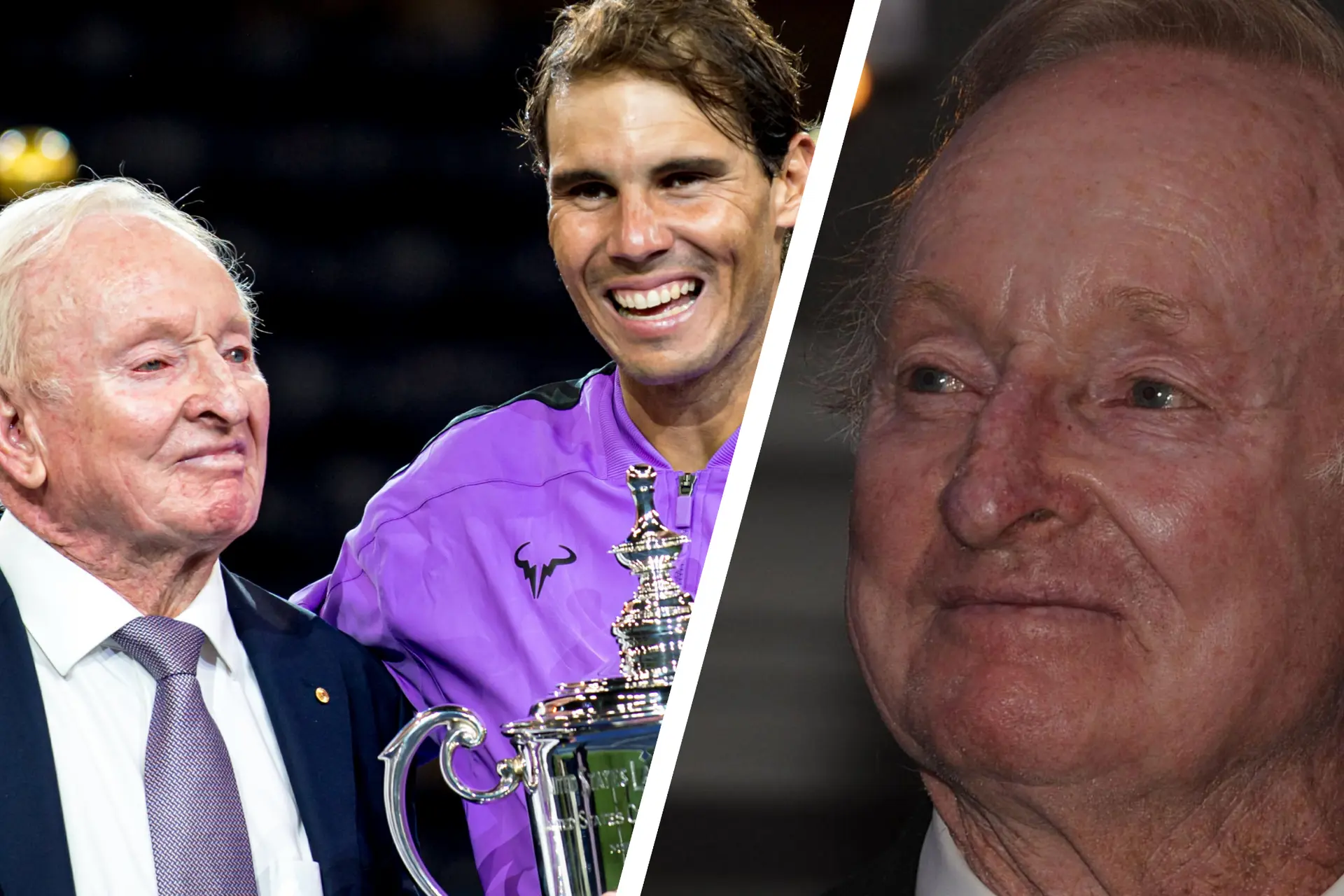
The Swedish great eventually settled in Hailey, Idaho. He lives on an 81-acre estate with his wife Sonya (née Mulholland), who was born in South Africa and was once a model. Wilander had previously been in a relationship with a woman who went on to marry Stefan Edberg.
Wilander has four children, Emma, Karl, Erik, and Oskar. His son, Erik, suffers from a relatively mild form of epidermolysis bullosa. The cool air of Idaho assists in tempering Erik's symptoms. The Wilanders have engaged in various fundraising campaigns to fund research into the disease.
Mat's brother Andras was the Mayor of the Swedish municipality Tranas from 2006-2020.

Mats Wilander now a familiar analyst on TNT Sports.
Wilander's broadcasting career and legacy
To the generations that followed his playing career, Wilander is best known as a tennis broadcaster. He's currently working for TNT Sports in the UK. His role is largely as a summariser, often courtside, interacting with the mikesmiths in the commentary booth. When Eurosport still existed in the UK, Wilander fronted his own tennis magazine show, "Game, Set and Mats".
Wilander’s broadcasting style leans on dry humour laced with punchy analysis that has ruffled feathers occasionally. At the 2006 French Open, Wilander criticised Roger Federer and Kim Clijsters for missing the competitive edge to defeat their toughest rivals. After Federer was beaten by Rafael Nadal in that year's final, Wilander said that “Federer, today, unfortunately came out with no balls… You don't find too many champions in any sport in the world without heart or balls. He might have them, but they shrank to a very small size, and it's not once, it's every time.”
Wilander's legacy is unusual, as for all players in the men's Open era to win seven Grand Slams or more, Wilander has won the fewest singles titles overall. It emphasises just how much the Grand Slams are used to define a player's legacy. Very few have enjoyed success quite so young as Wilander. The most impressive statistic about Wilander is that he's one of only four men, alongside Novak Djokovic, Rafael Nadal and Carlos Alcaraz, to win at least two Grand Slams on three different surfaces. It's some company to be involved with.
Mats Wilander: Career Titles and Major Achievements
| Category | Achievement | Details |
| Singles Grand Slams | 7 | Australian Open (3), French Open (3), US Open (1) |
| Doubles Grand Slams | 1 | Wimbledon (1986) |
| Total ATP Titles | 33 | Includes 33 Singles and 7 Doubles titles |
| World No. 1 | 20 Weeks | Reached the top spot in September 1988 |
| Surface Versatility | 3 Surfaces | One of only few men to win Slams on Grass, Clay, and Hard courts |
| Davis Cup Titles | 3 | Lead Sweden to victory in 1984, 1985, and 1987 |
| Year-End No. 1 | 1988 | Finished the season as the world's top-ranked player |
| Hall of Fame | Inductee | Inducted into the International Tennis Hall of Fame (2002) |
Mats Wilander: Major Finals and Milestones
| Year | Competition / Tournament | Result | Category |
| 1982 | French Open | Winner | 1st Grand Slam Title (Unseeded, age 17) |
| 1983 | Australian Open | Winner | 1st Australian title (Won on Grass at Kooyong) |
| 1984 | Australian Open | Winner | Successfully defended his Australian Open title |
| 1985 | French Open | Winner | 2nd Roland Garros title (Defeated Ivan Lendl) |
| 1986 | Wimbledon | Winner | Men's Doubles Title (w/ Joakim Nyström) |
| 1987 | French Open | Runner-up | Lost final to Ivan Lendl |
| 1987 | US Open | Runner-up | First US Open final appearance |
| 1988 | Australian Open | Winner | 1st winner in Melbourne on Hard courts (Flinders Park) |
| 1988 | French Open | Winner | 3rd Roland Garros title; completed a 3-Slam season |
| 1988 | US Open | Winner | Defeated Ivan Lendl in a nearly 5-hour record final |
| 1996 | Beijing | Finalist | Final professional singles final of his career |

Jay Brannon is a sports journalist from Sutton Coldfield, England, with a lifelong passion for athletic competition and storytelling. For the past 1.5 years, he has been a prominent voice at TennisUpToDate.com, where he has authored more than 3,000 articles, specializing in deep-dive columns, tactical analyses, liveblogs, and comprehensive match reports for the ATP and WTA tours.
Jay’s tennis reporting blends rigorous, real-time statistical analysis with on-the-ground coverage. He frequently travels to tournaments to cover the action firsthand from the press box and player press conferences. This direct access allows him to deliver sharp insight into player form and tour developments—a dedication sparked by his earliest sporting memory of the iconic 1991 Wimbledon final between Michael Stich and Boris Becker.
Beyond the court, Jay brings a versatile background in live broadcasting and media. His professional experience includes serving as a sports reporter for BHBN Hospital Radio—where he delivered live updates and analysis for West Bromwich Albion and Wolverhampton Wanderers matches—as well as working as a match reporter for Sutton Coldfield Town.
Jay holds a degree in Music Journalism and Broadcasting from Staffordshire University, a foundational training that shaped his voice as a thoughtful, authentic storyteller. Grounded in core journalistic ethics, he places a strict emphasis on careful sourcing, editorial accuracy, and swift, verified updates.
claps 0visitors 0
Just In

Popular News
Latest Comments
- A healthy Qinwen may be hard to stop next season. She was already scaring her opponents before her medical leave(s). Unfortunately, Zheng insisted on singing again. On the positive side -- Mirra did not sing!! ;~}
 mandoist11-10-2026
 - Where is it written that athletes, entertainers... People in general... are mandated to keep looking at -- or even using [anti]Social Media? Public & private figures consistently complain and reveal their concerns about negativity and violence thrown at them -- yet they insist on participating. Avoid it, don't use it, don't read it. It's okay to occasionally look up at the World instead beating your eyes & thumbs to death on The Inventions out there.mandoist11-10-2026
- great articlestennisseserver07-10-2026
- Medvedev was leading Djokovic 7-5, 3-5 when an attempted return..' NO you ignorants, Djokovic was leading .weiss05-10-2026
- No more bullshit "Wildcards" to these two. Qualify like everyone else -- there will be cameras there, too. Time to scream... WTF ????!!!!mandoist29-09-2026
- Let's not BS the general public -- Sabalenka started showing cracks in her game last season. Her losses and near-losses started at about the same time she began being distracted by Fame (constant Selfies, making TV commercials, magazine shoots, endless Social Media nonsense, etc., etc.) One would think even Saba could recognize the parallels with others who failed before her -- Raducanu, Giorgi, Bouchard to name a few.mandoist25-09-2026
- Gross!! Hey Raducanu, Giorgi, and Bouchard -- reserve a seat at your Social Media Selfie table for Saba + Naomi. They're heading in your direction soon enough.mandoist24-09-2026
- And then these same players will complain about how lengthy their season’s were and need more time-off. I’m all for more tennis but the amount of tennis we get now is actually kind of crazy! We all need a break, especially the players.DaveyWavey23-09-2026
- You should do a comparison article for "different kinds of justice" the courts decide for tennis players. I can think of at least three players who received very small bans of a few months, however Tara Moore has been fighting for her literal survival the past few years. It seems odd considering she is not a "name" player, unlike the other cases.DaveyWavey22-09-2026
- PRIZE MONEY & POINTS Winner - $185,500 Finalist - $114,500 Semi-Finalist - $66,003 Quarter-Finalist - $35,000 Round of 16 - $18,045 Round of 32 - $13,005 Winner - 500 Finalist - 325 Semi-Finalist - 195 Quarter-Finalist - 108 Round of 16 - 60 Round of 32 - 1DaveyWavey20-09-2026

Loading