Tennis Legends - Andre Agassi: A Career Golden Slam master famed for swagger, theatre and mercurial brilliance
ATP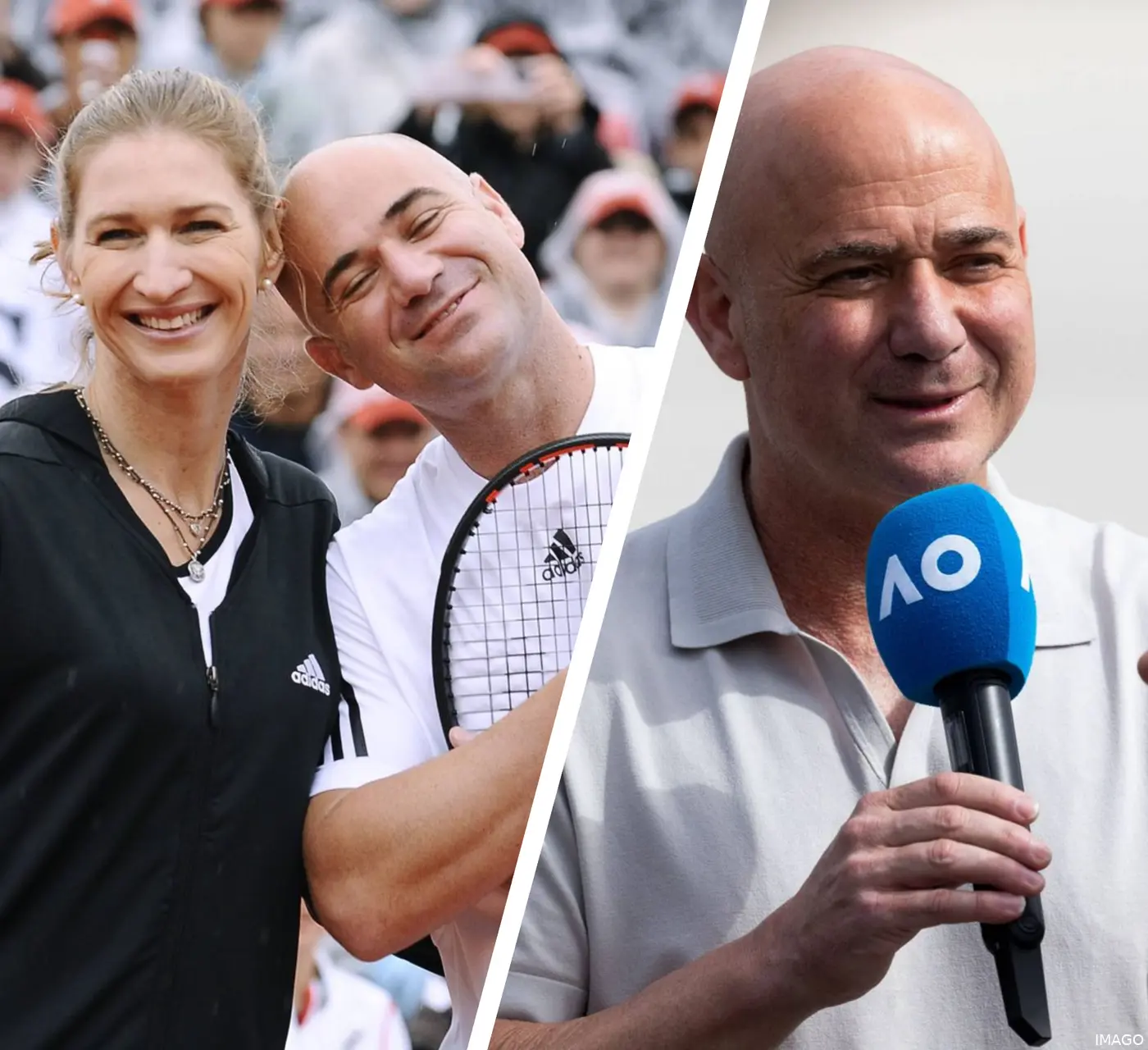
Men’s tennis in the 1990s was enlivened by the swagger, theatre and mercurial brilliance of Andre Agassi. A returner of the highest quality, Agassi is one of only three players, alongside Rafael Nadal and Novak Djokovic, to win the Career Golden Slam of all four majors and Olympic Singles gold. Agassi and Djokovic are the only two to complete the lesser-known Career Super Slam - the Golden Slam supplemented by victory in the ATP Tour Finals.
Andre Agassi: Early life and rise of a pro
Agassi was born in Las Vegas, Nevada, on April 29, 1970, to Emmanuel “Mike” Agassi, a former Olympic boxer of Armenian descent from Salmas, Iran and American Elizabeth “Betty” Agassi. Agassi’s grandfather on his father’s side was born in Kiev, Ukraine, and later in life fled to Iran following political unrest in Russia. His parents wedded after just two months and produced three other children, Rita (once married to ex pro Pancho Gonzales), Philip and Tami.
At the age of 13, Agassi was sent to the much revered Nick Bollettieri Academy in Florida. The Agassi family could only afford three months training, but Bollettieri recognised a great natural talent and facilitated Agassi staying for free.
Turning professional in 1986, Agassi ended his first season inside the top 100 of the world rankings. The following season yielded a first career title at the defunct Sul American Open in Itaparica, Brazil. This victory assisted the Las Vegas native to finish his season ranked 25th.
Read also
Rise to prominence and the 1988 breakthrough
The standing of Agassi increased further in 1988 when he accumulated six titles. It was a year that saw Agassi leave an imprint on the Grand Slams for the first time. He made the semi-finals of both the French and the US Opens. Agassi hindered himself from greater progression in the majors by not entering the Australian Open until 1995. Agassi was the last of the very top players to generally skip the Melbourne major. He also boycotted Wimbledon between 1988 and 1990 for traditions, such as the all-white clothing policy, that he deemed outdated and restrictive.
Agassi pocketed a solitary title in 1989, at a hard court event in Orlando. A run to the last four at the US Open witnessed his maiden five set triumph over Jimmy Connors. He eventually lost to Ivan Lendl in the semis.
Four titles during the 1990 campaign included a first Miami Open crown and winning the season-ending showpiece at the ATP Finals in Frankfurt, beating Stefan Edberg in a four-set final. The US maverick reached his maiden Grand Slam final at Roland Garros. Despite being the favourite, Agassi lost in four sets to Ecuador's Andres Gomez. He later cited in his autobiography "Open", the fear of the wig he was wearing coming off as a factor.
The 1991 season was illuminated by title successes in Orlando and Washington, and reaching a second consecutive French Open final. This time Agassi came second best in a five set thriller with compatriot Jim Courier. On his return to Wimbledon, Agassi made the quarter-finals.
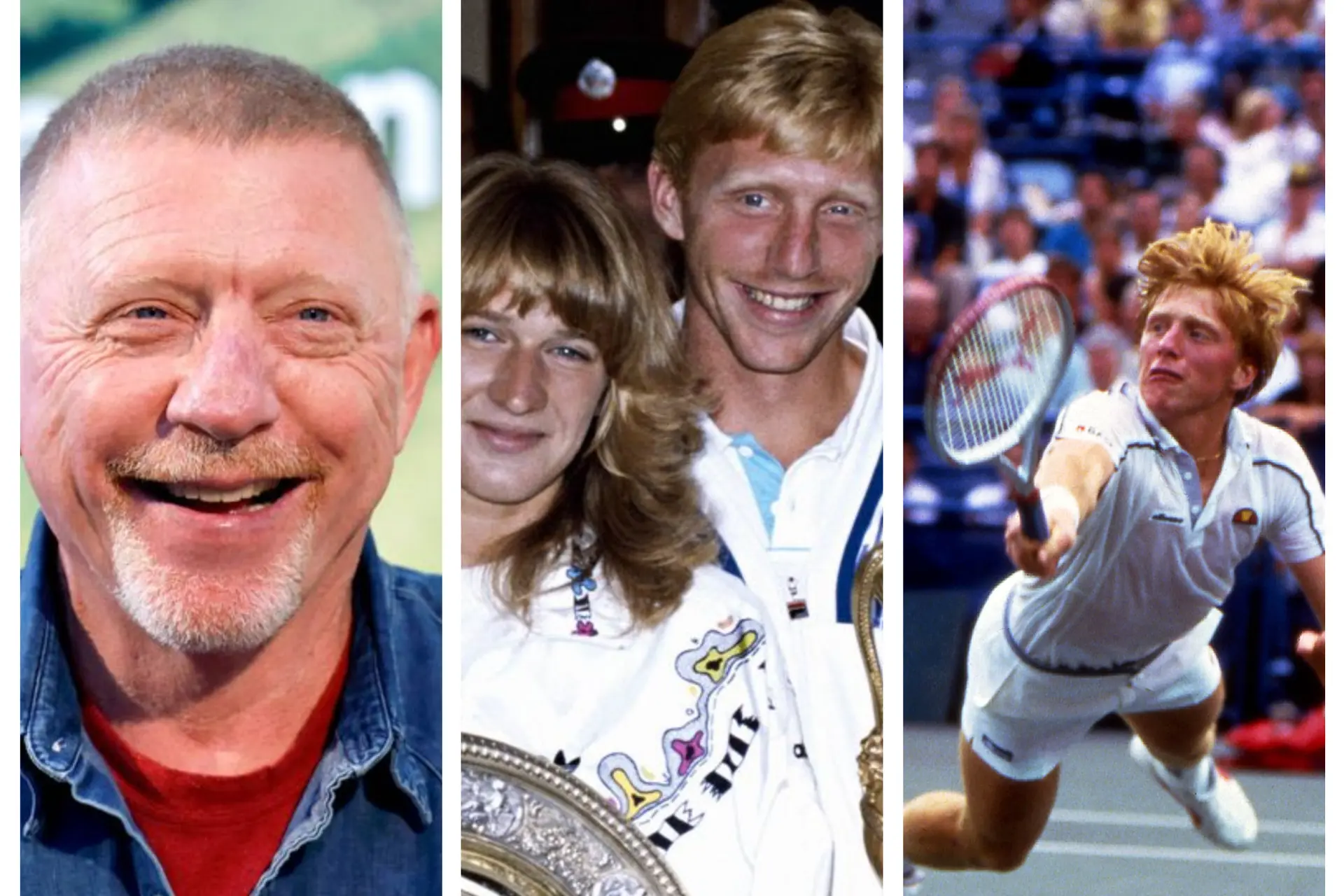
Grand Slam glory, which had been much touted for Agassi, materialised in the 1992 season at the least likely of venues. Agassi had been open in his antipathy for what he perceived as a stuffiness in the All England Club's approach to tennis. He was also lightly raced on a grass known at the time for favouring serve and volley as opposed to Agassi’s powerful baseline game. Overcoming grass court masters Boris Becker and John McEnroe prior to the final helped Agassi acclimatise to the green stuff. The men's singles final offered him a clash with big-serving lefty Goran Ivanisevic. In a topsy-turvy contest, Agassi prevailed 6-4 in the fifth set to win a first Slam title. It was one of three tournaments he bagged that season.
Two titles in February of 1993 proved his lot in a season where a quarter-final appearance at Wimbledon was the best he fared at the two majors he played in. He was plagued by injuries throughout the season and, as a consequence, dropped to 24 in the rankings by the season's conclusion.
Read also
Agassi vs Sampras rivalry
In the season of 1994, Agassi returned to the top ten and amassed five titles. The undoubted zenith was triumph at his home Grand Slam in New York. A straight-sets victory in the final over Michael Stich gave Agassi his second Grand Slam singles crown. He finished the year at a career high of two. His rivalry with number one Pete Sampras was now at its apex.
The two would meet in the Australian Open final at the beginning of the 1995 season. Sampras was suffering from the emotional impact of his coach, Tim Gullikson, being ill. Agassi defeated Sampras in four sets to clinch back-to-back Slams. Agassi would go on and accrue a further six titles in 1995, including a quartet of trophies during the North American swing leading into the US Open. He and Sampras would contest the last Slam final of the year in New York, with Pistol Pete gaining revenge for his loss Down Under.
A third Miami Open title in March 1996 was the first of three titles Agassi secured this year. A semi-finalist in both the Australian and US Opens. However, Olympic singles gold at his home Games in Atlanta offered ample compensation. A dominant straight-sets win over Spanish clay courter Sergi Bruguera allowed him to achieve something his father hadn't managed in boxing.
Agassi experienced a remarkable descent the following year. A wrist injury was the key trigger for his decline, but in later years, he admitted to using crystal methamphetamine. He failed a drug test but wrote a false letter claiming a friend spiked his drink. By the end of the year, Agassi had slumped to 141 and was considered by some observers to be a spent force in an irreversible slide.
The renaissance of Andre Agassi in the late 1990s is one of the sport’s greatest narratives. A total of five titles in the 1998 season, including his fourth win at both San Jose and Washington, laid the platform for the following season that would prove to be Agassi’s finest.
Resurgence and further Grand Slam success
His resurgence in 1999 developed into him winning two Grand Slams and finishing a season as World Number One for the only time. Agassi needed a French Open title to become the fifth man to complete a Career Grand Slam. He made a third Roland Garros final. Ukraine's Andrei Medvedev stood between him and tennis immortality. The American went two sets down before constructing a stirring comeback to win in five sets. A victory that ranks as his greatest moment. He then reached the next two Grand Slam finals, losing at Wimbledon to a grass court clinic from old foe Sampras. He then prevailed in a five-set classic with Todd Martin in the US Open final.
The early 2000s witnessed Agassi establish a dynasty at the Australian Open. His second Melbourne title, in 2000, was the first of three Australian Open titles in four years. In the final, he came from a set down to defeat Russian Yevgeny Kalfenikov. It was Agassi’s only title of the year.
Agassi mounted a successful defence of his Melbourne crown in January of 2001 after he thrashed surprise French finalist Arnaud Clement in the final. He went on to collect three other titles this season, and lost for the second year running in the Wimbledon semis to Pat Rafter.
The 2002 season included a fifth Miami Open title as the standout success of a campaign that produced a quintet of trophies.
A fourth Australian Open title in 2003 gave Agassi an eighth and last Grand Slam singles title from 15 finals. Three more titles followed on home soil, including a then record-extending sixth Miami Open title.
Agassi’s Indian summer of success began to diminish in 2004, with a triumph in Cincinnati his only trophy. The last of his 60 titles, from 90 finals, came in the 2005 Los Angeles Open. Later in the year, Agassi lost in four sets to Roger Federer in his last Grand Slam final at the US Open.
The 2006 season would prove to be his final campaign. He bowed out at the US Open. Following a third round loss to Benjamin Becker, he delivered an emotional speech reflecting on his career.
In addition to Olympic gold, Agassi was part of successful Davis Cup winning squads for the USA, triumphing in 1990 and 1992.
In his greatly acclaimed autobiography Open, at the heart of his memoir is a love/hate relationship with tennis. Agassi is seemingly resentful of being pushed into the sport by his domineering father. However, this is somewhat contradicted by the glowing terms in which he describes some of his career highlights.
Personal life and accolades
The sport has also given him his longtime wife, fellow tennis legend Steffi Graf. Prior to his relationship with the German, he was involved in high-profile relationships with Barbara Streisand and Brooke Shields. His relationship with Graf saw them get married in 2001, with their mothers the only witnesses. They've had two children, Jaden and Jazz, who are both now grown up.
Named ATP Player of the Year in 1999, Agassi has received many accolades in his career. One of these was him receiving the 1992 BBC Overseas Sports Personality of the Year.
Agassi has been engaged in several business projects since he retired. This has included restaurants, nightclubs and casinos.
The Andre Agassi Charitable Foundation was founded in 1994, aimed to assist young people in Las Vegas. In 2001, he opened the Andre Agassi Preparatory Academy to allow at-risk children to enjoy tuition-free education. Agassi’s charity supports the Clark County residential facility for abused children.
Agassi was the sport’s box office draw in the 1990s. The rebellion, fashion and being an antidote to a lot of the serve and volley prevalent in his era, were factors in Agassi’s popularity outstripping any other player at this stage. He's one of the few players to have his name attached to a series of computer games.
His achievements firmly place Agassi at the very least inside the top 20 of all-time. He is one of just eight players to have won a career Grand Slam and is in a more exclusive club of three to complete a Golden Career Slam. His comeback in the late 90s from 141 in the world rankings to number one in around two years is a turnaround very few have achieved in tennis history. When you consider Sampras, John McEnroe, Bjorn Borg and Jimmy Connors never achieved a Career Slam, you can see just how great the Las Vegas showman was.
Andre Agassi: Career Titles and Major Achievements
| Category | Achievement | Details |
| Singles Grand Slams | 8 | Australian Open (4), US Open (2), Wimbledon (1), French Open (1) |
| Career Golden Slam | Achieved | Only man to win all 4 Majors, Olympic Gold, and the ATP Finals |
| Total ATP Titles | 60 | Includes 17 Masters 1000 titles and 1990 ATP Finals |
| World No. 1 | 101 Weeks | First reached the top spot in April 1995 |
| Olympic Medals | Gold | 1996 Atlanta Olympics (Singles) |
| Davis Cup Titles | 3 | Lead USA to victory in 1990, 1992, and 1995 |
| Grand Slam Longevity | Record | At 33, became the oldest World No. 1 (until surpassed by Federer) |
| Career Transformation | Rankings | Rose from World No. 141 (1997) back to No. 1 (1999) |
Andre Agassi: Major Finals and Milestones
| Year | Competition / Tournament | Result | Category |
| 1987 | Itaparica | Winner | 1st Career ATP Title at age 17 |
| 1990 | ATP Finals | Winner | Won year-end title (Defeated Stefan Edberg) |
| 1992 | Wimbledon | Winner | 1st Grand Slam Title (Defeated Goran Ivanišević) |
| 1994 | US Open | Winner | First unseeded player in Open Era to win the US Open |
| 1995 | Australian Open | Winner | Won title on debut in Melbourne (Defeated Pete Sampras) |
| 1996 | Atlanta Olympics | Gold Medal | Defeated Sergi Bruguera in the final |
| 1999 | French Open | Winner | Completed Career Grand Slam (Defeated Andrei Medvedev) |
| 1999 | US Open | Winner | 2nd Title in New York; regained World No. 1 |
| 2003 | Australian Open | Winner | 8th and Final Grand Slam Singles Title |
| 2005 | US Open | Runner-up | Final Grand Slam final at age 35 (Lost to Roger Federer) |
| 2006 | US Open | 3rd Round | Final professional match (Emotional exit vs. B. Becker) |

Jay Brannon is a sports journalist from Sutton Coldfield, England, with a lifelong passion for athletic competition and storytelling. For the past 1.5 years, he has been a prominent voice at TennisUpToDate.com, where he has authored more than 3,000 articles, specializing in deep-dive columns, tactical analyses, liveblogs, and comprehensive match reports for the ATP and WTA tours.
Jay’s tennis reporting blends rigorous, real-time statistical analysis with on-the-ground coverage. He frequently travels to tournaments to cover the action firsthand from the press box and player press conferences. This direct access allows him to deliver sharp insight into player form and tour developments—a dedication sparked by his earliest sporting memory of the iconic 1991 Wimbledon final between Michael Stich and Boris Becker.
Beyond the court, Jay brings a versatile background in live broadcasting and media. His professional experience includes serving as a sports reporter for BHBN Hospital Radio—where he delivered live updates and analysis for West Bromwich Albion and Wolverhampton Wanderers matches—as well as working as a match reporter for Sutton Coldfield Town.
Jay holds a degree in Music Journalism and Broadcasting from Staffordshire University, a foundational training that shaped his voice as a thoughtful, authentic storyteller. Grounded in core journalistic ethics, he places a strict emphasis on careful sourcing, editorial accuracy, and swift, verified updates.
claps 0visitors 0
Just In


Popular News
Latest Comments
- Does Sinner need that 4.5 mil? I doubt it. He can make that with three modelling gigs!😅🤣Rapunzel21-10-2026
- Did "People Magazine" purchase this website? This nonstop storyline is bullshit.
 mandoist21-10-2026
 - Listen... this is of no concern to anyone but these two. Deal with your own issues -- most of us have our own. Thanks, media, for these insignificant follow-ups which are meaningless.mandoist21-10-2026
- This is so very very sad, for all three of them. I truly thought they had an unbreakable bond, but life throws up so many differing challenges. Having your homeland suffering in such a terrible way, makes happiness lose out to guilt as well. Our thoughts are with them. X💔bjsexton20-10-2026
- I have lost all respect for Svitolina! Could she not have waited until he had played at the Paris Masters!!! She is selfish and don't give a damn about Gael. That is NOT how love is demonstrated Elina!!Rapunzel19-10-2026
- Perhaps convenient tennis tour sex is not a strong enough experience in which to base a marriage?mandoist19-10-2026
- Fight the Good Fight... Tennis (sports in general) need more Humans such as yourself.mandoist18-10-2026
- When is WTA going to mandate Genetic Testing (DNA) ???mandoist18-10-2026
- Hey, Dan... you just wake up from a coma? Regardless -- Thanks for the comedy this morning!mandoist18-10-2026
- Two Things: 1. Stop allowing these Spoiled Trust-Fund Elitists to behave badly. Your little hand-slaps do not deter them. 2. STOP the incessantly annoying "towel wiping" nonsense!!!!mandoist15-10-2026

Loading