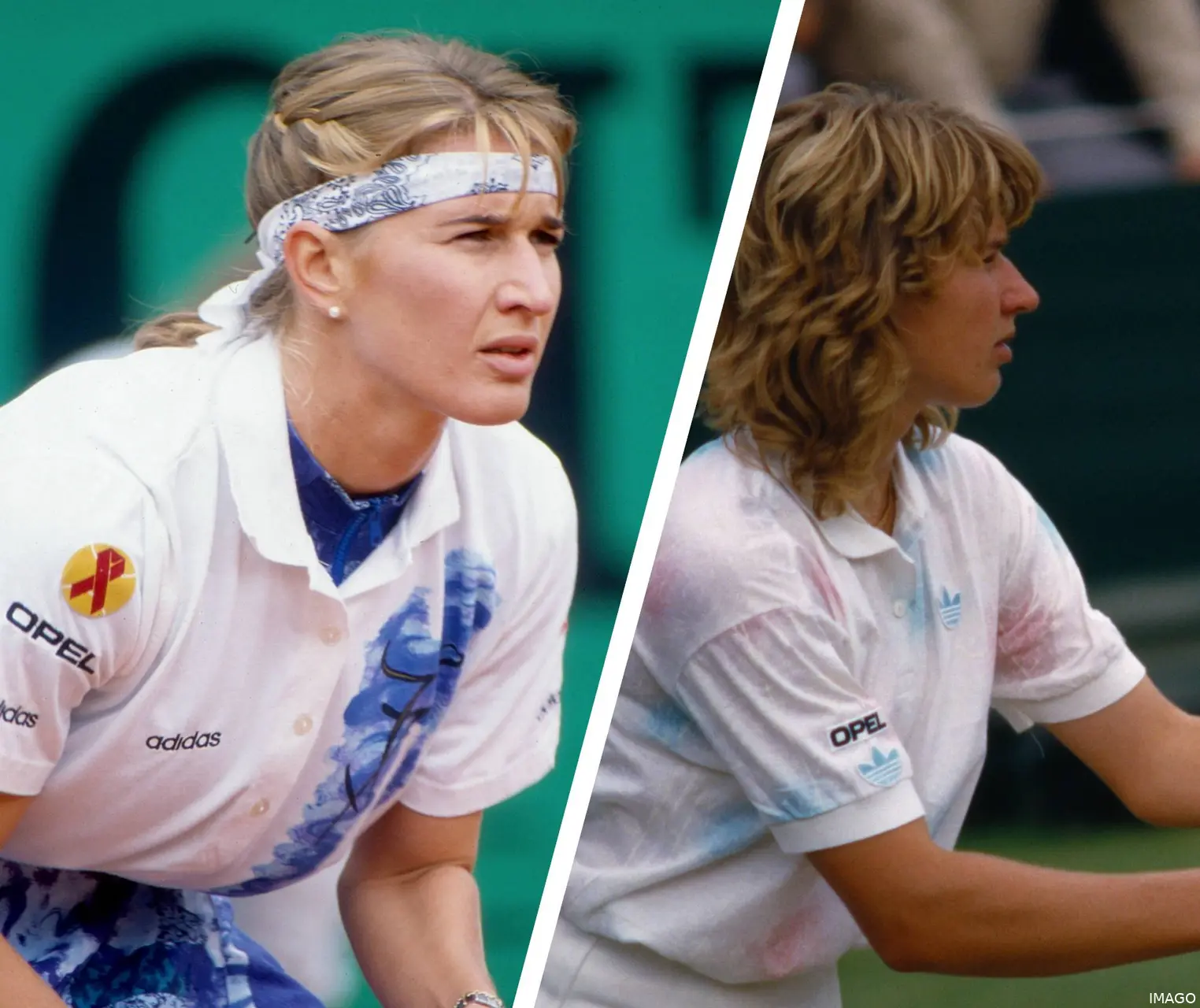
A dominant force for much of her career, Steffi Graf spent the most weeks at world number one in the women's game. She also stands alone as the only player to achieve the calendar year Golden Slam - winning all four Slams in a calendar year and Olympic singles gold. Another outstanding record Graf holds is an unsurpassed 377 weeks at world number one, which was only surpassed in 2023 by Novak Djokovic.
Steffi Graf: Early life and first titles
Born on June 14, 1969, in Mannheim, to parents Peter and Heidi-Schalk, with her father acting as her initial coach. Graf has a younger brother, Michael. Her father introduced his daughter to tennis at the age of just three. Graf quickly adapted to the sport and was dominating age-group events before she reached her teenage years.
At just 13, Graf played in the main singles draw at the 1983 French Open, something current age restrictions wouldn't currently allow. The German reached the second round.
Graf made steady progress in the next couple of years before, when aged 16, she went deep at a Grand Slam for the first time, making the last four at the 1985 US Open.
It was 1986 when Graf developed into a serial title winner. She pocketed her maiden success at Hilton Head, USA, and accumulated a further seven titles that season. The octet of titles included a title on home soil in Berlin. Graf now has a court named after her in the German capital, which is used for a grass-court event leading up to Wimbledon.
Graf's rise continued in 1987, claiming eleven titles, including her first Grand Slam title. She defeated Martina Navratilova
to win the 1987 French Open championship. The year finished in glorious
fashion when capturing her first Virginia Slims Championship (now WTA
Tour Finals) crown in New York. It's an honour Graf would capture an
additional four times in 1989, 1993, 1995 and 1996. August 1987 saw Graf
reach the summit of the world rankings for the very first time.
Steffi Graf’s Historic Golden Slam
The year 1988 would represent the zenith of Graf's tennis career. She achieved a unique Golden Slam (all four Slams and Olympic singles gold) within the same calendar year. A career Golden Slam has only been accomplished by four other players, so for Graf to record this in the same season remains one of the sport’s greatest achievements. The second of the Slams won, the French Open, saw Graf destroy Natasha Zvereva, of the then Soviet Union, 6-0, 6-0 in the quickest Grand Slam singles final ever at just 34 minutes. The Golden Slam was completed when Graf secured a gold medal at the 1988 Seoul Olympics. This was the first time since 1924 that tennis had featured as a medal sport at the Olympics.
By now, Graf had firmly supplanted Navratilova as the game's premier player. Her dominance continued in 1989. She won 14 titles, a seasonal high for Graf. This total included three more Grand Slam successes, with only the French Open eluding her from making it to back-to-back calendar year Grand Slams.
The commencement of the 1990s led to Graf's dominance being upended by American teenage sensation Monica Seles. Success at the Australian Open of 1990 was business as usual, but a failure to win any of the three remaining Slams that year, two of which were won by Seles, left Graf's aura dented.
Graf continued to play second fiddle in her rivalry with Seles in 1991. The younger American triumphed at three of the Slams, with Graf besting Seles at Wimbledon. Graf didn't even reach the final in Melbourne, Paris or New York. The first few years of the nineties saw Graf only able to prevent the supremacy of Seles on grass.
The German retained her Wimbledon title in 1992, but remained unable to deny Seles taking the other Slams for a second successive year. At that year's French Open final, Seles won a classic showpiece 10-8 in the third set.
The balance of power shifted in 1993 in circumstances that were hard to comprehend and terribly sad. Seles, playing an event in Hamburg in April 1993, was stabbed while sitting down at a changeover. It was later disclosed that the perpetrator was a deranged Steffi Graf supporter who was unhappy with the continued status of Seles as world number one. The incident forced Seles out of the sport for over two years, and she never recovered her dominance once she'd returned. It wasn't long before Graf started to hoover up Slams with a similar regularity to the late 1980s.
The final three Slams of 1993 were taken by the powerful German baseliner. Her victory at Wimbledon that year was helped in part by Jana Novotna squandering a 4-1 lead in the deciding set.
Graf made it an impure Grand Slam - holding all four majors but not in the same year - when she won the Australian Open at the beginning of 1994. Surprisingly, Graf failed to win any further Slams that season. At Wimbledon, she became the first defending champion to lose in the opening round when stunned by American Lori McNeill.
The following season witnessed Graf reassert her dominance when harvesting nine titles, including a trio of Grand Slam successes at the French Open, Wimbledon, and finishing by defeating old foe Seles in the US Open final. This was Seles playing her first Grand Slam since the stabbing incident.
She would retain all three majors in a stellar 1996 campaign. Aranxta Sanchez-Vicario lost in both the Paris and Wimbledon showpiece matches. The former contest was a seminal match, with Graf prevailing 10-8 in the deciding set.
Injuries take hold
Injuries and motivation began to prove problematic in the late nineties. She won just one tournament in 1997, as Swiss prodigy Martina Hingis took over the women's game by winning three Grand Slams that season.
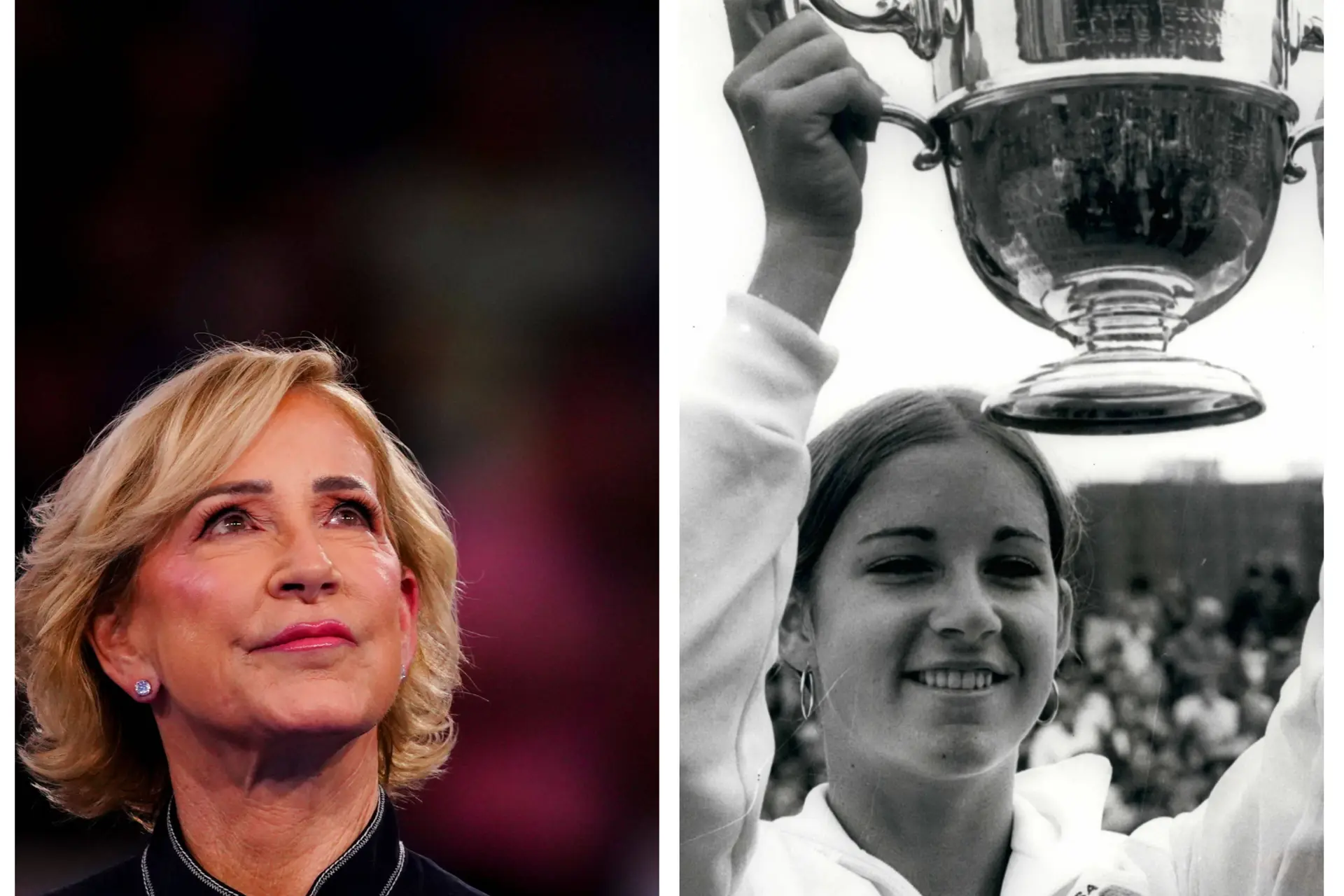
The year 1998 would yield three WTA titles, but another blank regarding Slams. The following year would prove to be Graf's swansong. Her last appearance at Roland Garros resulted in a sixth title, one shy of Chris Evert's record seven, when beating Hingis in a final showdown best remembered for the Swiss player's tantrums. Graf would conclude her at Wimbledon the following month. The seven-time champion fell just short when losing to Lindsay Davenport in the final.
Graf finished with a then Open Era record 22 Grand Slam titles. It was eventually bettered by Serena Williams. She remains the only woman or man to win each of the four majors on at least four occasions. The final breakdown is seven Wimbledons, six French Opens, five US Opens and four Australian Opens.
A final tally of 107 singles titles is only bettered by Evert and Navratilova in the Open Era. She only lost 31 of her 138 singles finals.

Steffi Graf celebrating good causes.
Graf's Olympic gold in 1988 was the peak of her success when representing her nation, but Graf was also part of two Fed Cup-winning squads in 1987 and 1992. She also partnered 1991 Wimbledon champion Michael Stich to lift the Hopman Cup in 1993. The defence of her Olympic title, in the 1992 Games in Barcelona, resulted in a bronze medal.
Graf played little doubles outside the embryonic years of her career. Her solitary Grand Slam doubles title came in her Golden Slam year of 1988, when claiming the Wimbledon crown in alliance with Argentine crowd favourite Gabriela Sabatini. It was one of 11 doubles titles Graf secured.
The German was revered for the brilliance of her forehand. It became referred to as the ‘Fraulein Forehand’ and was considered to be Graf's prime weapon. The movement she possessed was also regarded as the best of her generation. Her serve reached highs of 114mph.
Marriage to Agassi and moving on from tennis
Graf's love life was often speculated on, and she engaged in a seven-year relationship with motor racing driver Michael Bartels in the nineties. After this relationship dissolved, she began dating fellow tennis superstar Andre Agassi. The duo was married in October 2001, with only their respective mothers present to witness the wedding. They have two children together, son Jaden Gil and daughter Jaz, both of whom are now grown-up. The family, including Graf's mother and brother, reside in Las Vegas. Father Peter passed on in 2013.
Graf, who now prefers to be known as Stefanie, is the founder and chairperson for non-profit organisation, Children for Tomorrow. Meanwhile, the Steffi Graf Tennis Centre was opened in Leipzig.

Steffi Graf with her fellow iconic husband Andre Agassi.
Her glittering career inevitably resulted in many awards. She's been named WTA Player of the Year on a record eight occasions. Five victories in the German Sportsperson of the Year award offer evidence of how significant her success was to her own people. Graf was inducted into the International Tennis Hall of Fame in 2004 and the German Sports Hall of Fame in 2008.

Graf has maintained an incredibly low profile since retirement. She once turned down a seven-figure sum from the promoters of a German tournament just to take on untaxing ambassador work. All documentary requests have been politely rebutted. She also declined to attend a WTA Gala celebrating forty years of the World rankings in 2013. Graf also didn't take up an invitation to Flushing Meadows when Novak Djokovic had the opportunity to become the first player since Graf to achieve a calendar-year Grand Slam.
At the denouement of the 20th century, Graf was declared the greatest female player of the 20th century by the Associated Press. Billie Jean King once called her the GOAT, but that was before Serena eclipsed Graf for the number of Slams won. Others would also argue against Graf being at the very top, given that for a three-year period in her prime, she was usurped by Seles as the best player in the world. However, Graf's unique Golden Slam and vast accumulation of titles ensure Germany's golden girl remains very much in the greatest ever conversation.
Read also
Steffi Graf: Career Titles and Major Achievements
| Category | Achievement | Details |
| Singles Grand Slams | 22 | Wimbledon (7), French Open (6), US Open (5), Australian Open (4) |
| Golden Slam | 1988 | Only player (male or female) to win all 4 Majors and Olympic Gold in one year |
| Total WTA Titles | 107 | 3rd highest in Open Era history |
| Weeks at No. 1 | 377 | Held the WTA record for 26 years (surpassed by Djokovic in 2023) |
| Year-End No. 1 | 8 Times | All-time Record (1987, 88, 89, 90, 93, 94, 95, 96) |
| Quadruple Career Slam | Achieved | Only player to win each Grand Slam at least 4 times |
| Surface Versatility | Record | Only player to win a "Sextuple Slam" (6 titles) on three different surfaces |
| Olympic Medals | 3 | Gold (1988 Singles), Silver (1992 Singles), Bronze (1988 Doubles) |
Steffi Graf: Major Finals and Milestones
| Year | Competition / Tournament | Result | Category |
| 1982 | Stuttgart | Debut | Professional debut at age 13 |
| 1986 | Family Circle Cup | Winner | 1st Career Title (Defeated Chris Evert) |
| 1987 | French Open | Winner | 1st Grand Slam Title (Defeated Navratilova) |
| 1988 | Australian Open | Winner | 1st step toward the Golden Slam |
| 1988 | French Open | Winner | Defeated Natasha Zvereva 6-0, 6-0 in 32 minutes |
| 1988 | Seoul Olympics | Gold Medal | Completed the "Golden Slam" |
| 1990 | Australian Open | Winner | Completed a non-calendar "Graf Slam" (88-90) |
| 1995 | US Open | Winner | Defeated Monica Seles in her return to Grand Slam tennis |
| 1996 | US Open | Winner | Final Grand Slam title without losing a set |
| 1999 | French Open | Winner | 22nd and Final Grand Slam Title (Defeated Martina Hingis) |
| 1999 | Wimbledon | Runner-up | Final Grand Slam match of her career |

Jay Brannon is a sports journalist from Sutton Coldfield, England, with a lifelong passion for athletic competition and storytelling. For the past 1.5 years, he has been a prominent voice at TennisUpToDate.com, where he has authored more than 3,000 articles, specializing in deep-dive columns, tactical analyses, liveblogs, and comprehensive match reports for the ATP and WTA tours.
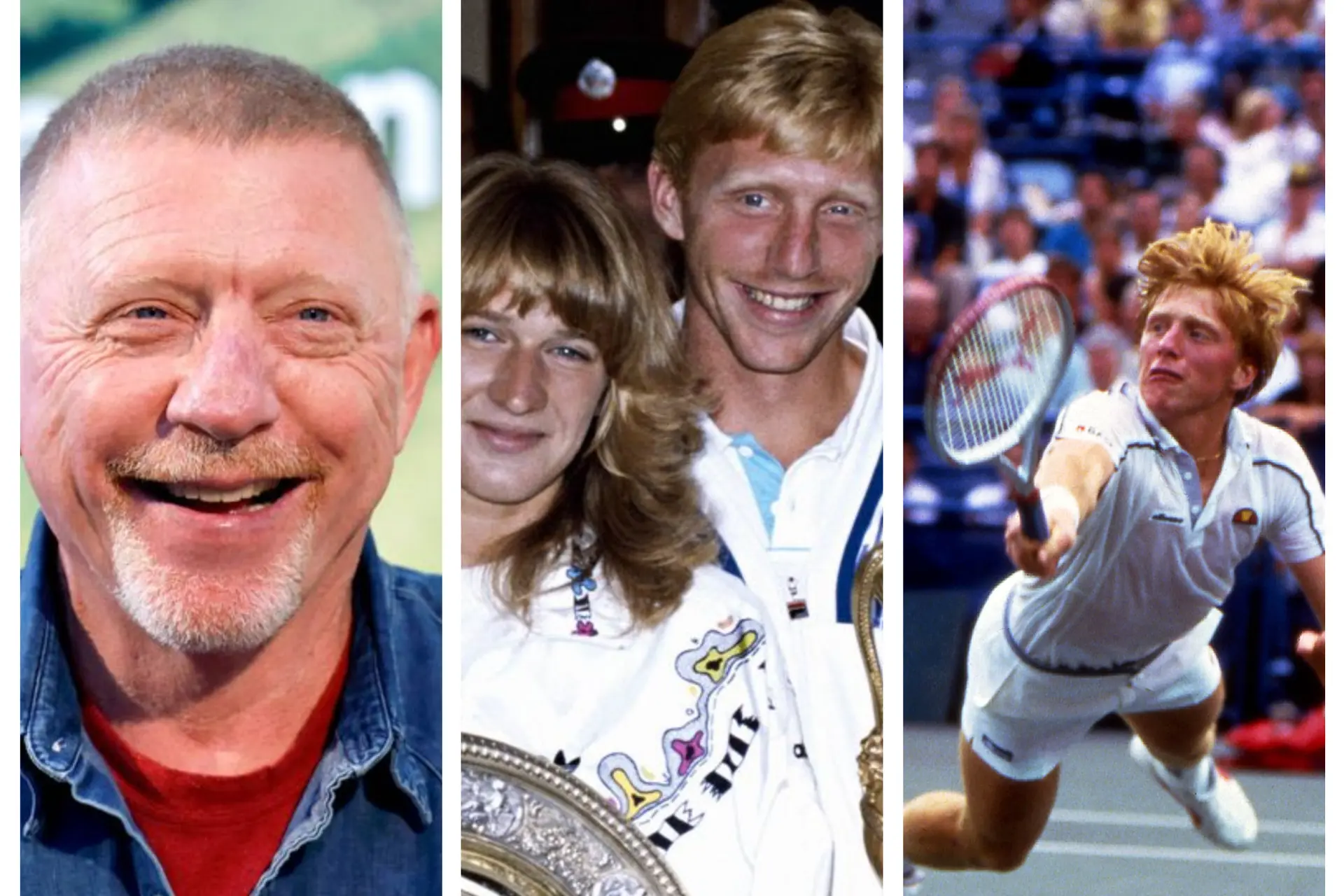
Jay’s tennis reporting blends rigorous, real-time statistical analysis with on-the-ground coverage. He frequently travels to tournaments to cover the action firsthand from the press box and player press conferences. This direct access allows him to deliver sharp insight into player form and tour developments—a dedication sparked by his earliest sporting memory of the iconic 1991 Wimbledon final between Michael Stich and Boris Becker.
Beyond the court, Jay brings a versatile background in live broadcasting and media. His professional experience includes serving as a sports reporter for BHBN Hospital Radio—where he delivered live updates and analysis for West Bromwich Albion and Wolverhampton Wanderers matches—as well as working as a match reporter for Sutton Coldfield Town.
Jay holds a degree in Music Journalism and Broadcasting from Staffordshire University, a foundational training that shaped his voice as a thoughtful, authentic storyteller. Grounded in core journalistic ethics, he places a strict emphasis on careful sourcing, editorial accuracy, and swift, verified updates.
claps 0visitors 0
Just In

Popular News
Latest Comments
- A healthy Qinwen may be hard to stop next season. She was already scaring her opponents before her medical leave(s). Unfortunately, Zheng insisted on singing again. On the positive side -- Mirra did not sing!! ;~}
 mandoist11-10-2026
 - Where is it written that athletes, entertainers... People in general... are mandated to keep looking at -- or even using [anti]Social Media? Public & private figures consistently complain and reveal their concerns about negativity and violence thrown at them -- yet they insist on participating. Avoid it, don't use it, don't read it. It's okay to occasionally look up at the World instead beating your eyes & thumbs to death on The Inventions out there.mandoist11-10-2026
- great articlestennisseserver07-10-2026
- Medvedev was leading Djokovic 7-5, 3-5 when an attempted return..' NO you ignorants, Djokovic was leading .weiss05-10-2026
- No more bullshit "Wildcards" to these two. Qualify like everyone else -- there will be cameras there, too. Time to scream... WTF ????!!!!mandoist29-09-2026
- Let's not BS the general public -- Sabalenka started showing cracks in her game last season. Her losses and near-losses started at about the same time she began being distracted by Fame (constant Selfies, making TV commercials, magazine shoots, endless Social Media nonsense, etc., etc.) One would think even Saba could recognize the parallels with others who failed before her -- Raducanu, Giorgi, Bouchard to name a few.mandoist25-09-2026
- Gross!! Hey Raducanu, Giorgi, and Bouchard -- reserve a seat at your Social Media Selfie table for Saba + Naomi. They're heading in your direction soon enough.mandoist24-09-2026
- And then these same players will complain about how lengthy their season’s were and need more time-off. I’m all for more tennis but the amount of tennis we get now is actually kind of crazy! We all need a break, especially the players.DaveyWavey23-09-2026
- You should do a comparison article for "different kinds of justice" the courts decide for tennis players. I can think of at least three players who received very small bans of a few months, however Tara Moore has been fighting for her literal survival the past few years. It seems odd considering she is not a "name" player, unlike the other cases.DaveyWavey22-09-2026
- PRIZE MONEY & POINTS Winner - $185,500 Finalist - $114,500 Semi-Finalist - $66,003 Quarter-Finalist - $35,000 Round of 16 - $18,045 Round of 32 - $13,005 Winner - 500 Finalist - 325 Semi-Finalist - 195 Quarter-Finalist - 108 Round of 16 - 60 Round of 32 - 1DaveyWavey20-09-2026

Loading