Tennis Legends: Billie Jean King - The most influential figure in tennis history with impact wider than 39 Grand Slams
WTA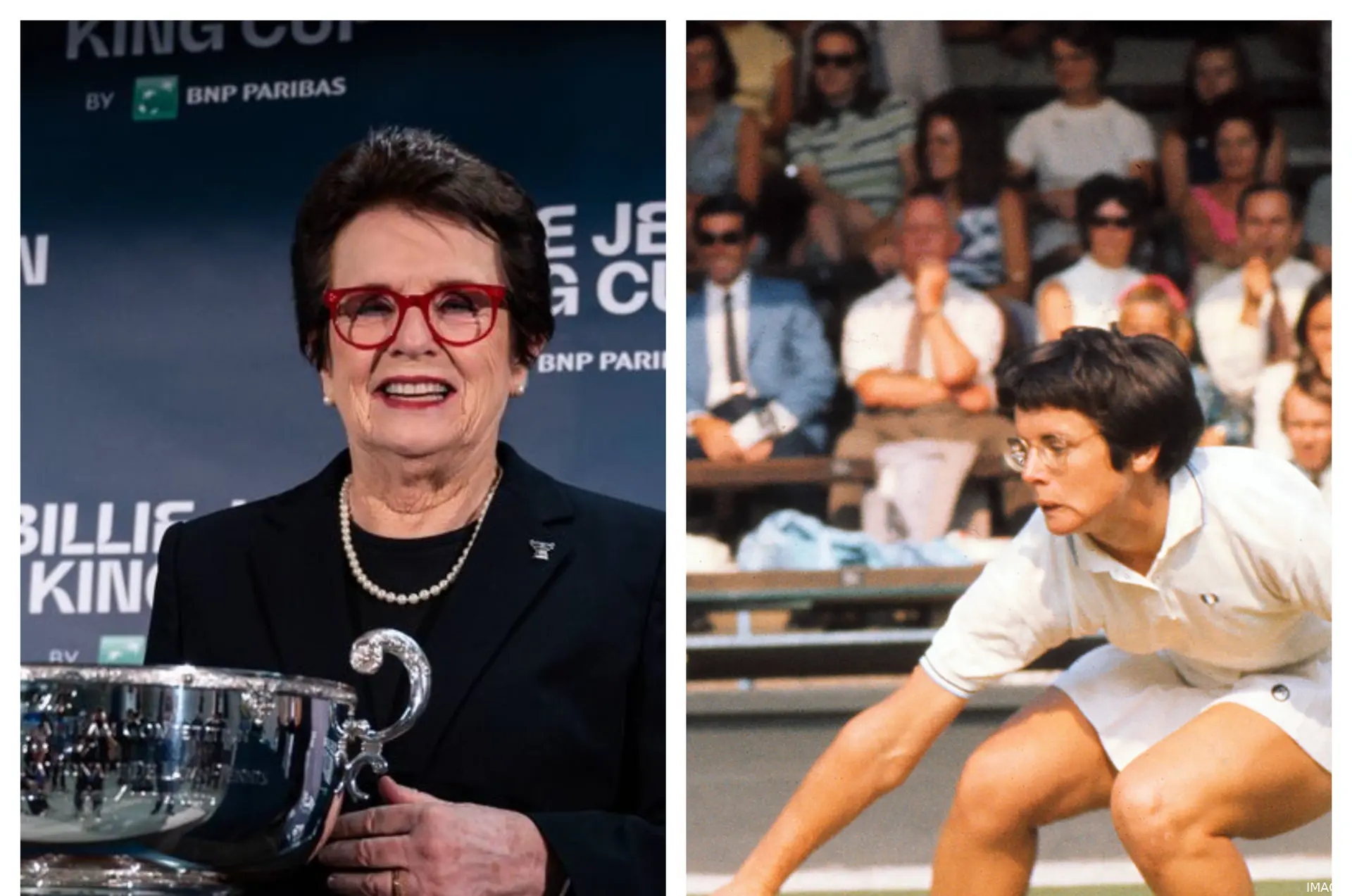
Billie Jean King is one of the most influential figures in tennis history. Her impact goes far beyond the Americans’ mightily impressive haul of 39 Grand Slams. The tenacity and drive she's displayed in championing women's tennis make her a game-changer. No player before or since has shaken up the tennis landscape in the way King has over many decades.
Billie Jean King: Early Life and Successes
Born Bille Jean Moffit, on November 27, 1943, to parents Betty and Bill. Her brother Randy became a successful pitcher in Major League Baseball. She initially commenced her sporting journey by playing softball before turning her attention to tennis.
King's success in tennis straddled the amateur and Open eras. Her tally of 129 singles titles features 78 won on the WTA circuit that she helped to create. The Grand Slams total read as 12 in singles, 16 in women's doubles, and a further eleven in mixed. King has often claimed she derived her greatest pleasure from the mixed doubles triumphs. Eight of her 11 triumphs in that discipline came with fellow American Owen Davidson.
Her tally of 12 Grand Slam singles titles includes six triumphs at Wimbledon. She achieved a treble ('66-'68) before losing to Britain's Ann Jones in the 1969 final. Then, in 1970, Margaret Court defeated her 14-12, 11-9 in a final featuring the most games in any women's singles final at SW19. King would regain the title in 1972, and then add further triumphs in 1973 and 1975. King dominated women's doubles at the grass court major. She took the title on ten occasions, a litany of success that stretched from 1961 to 1979. Five of them were won alongside her most frequent doubles partner, Rosie Casals. Two were with Karen Susman, and solitary triumphs in alliance with Maria Bueno, Betty Stove, and Martina Navratilova. Four mixed doubles titles see her total rise to 20 Wimbledon titles, matched only by Navratilova. In 1967 and 1973, King achieved the incredibly rare feat of the Wimbledon Triple Crown - all three titles in the same year.
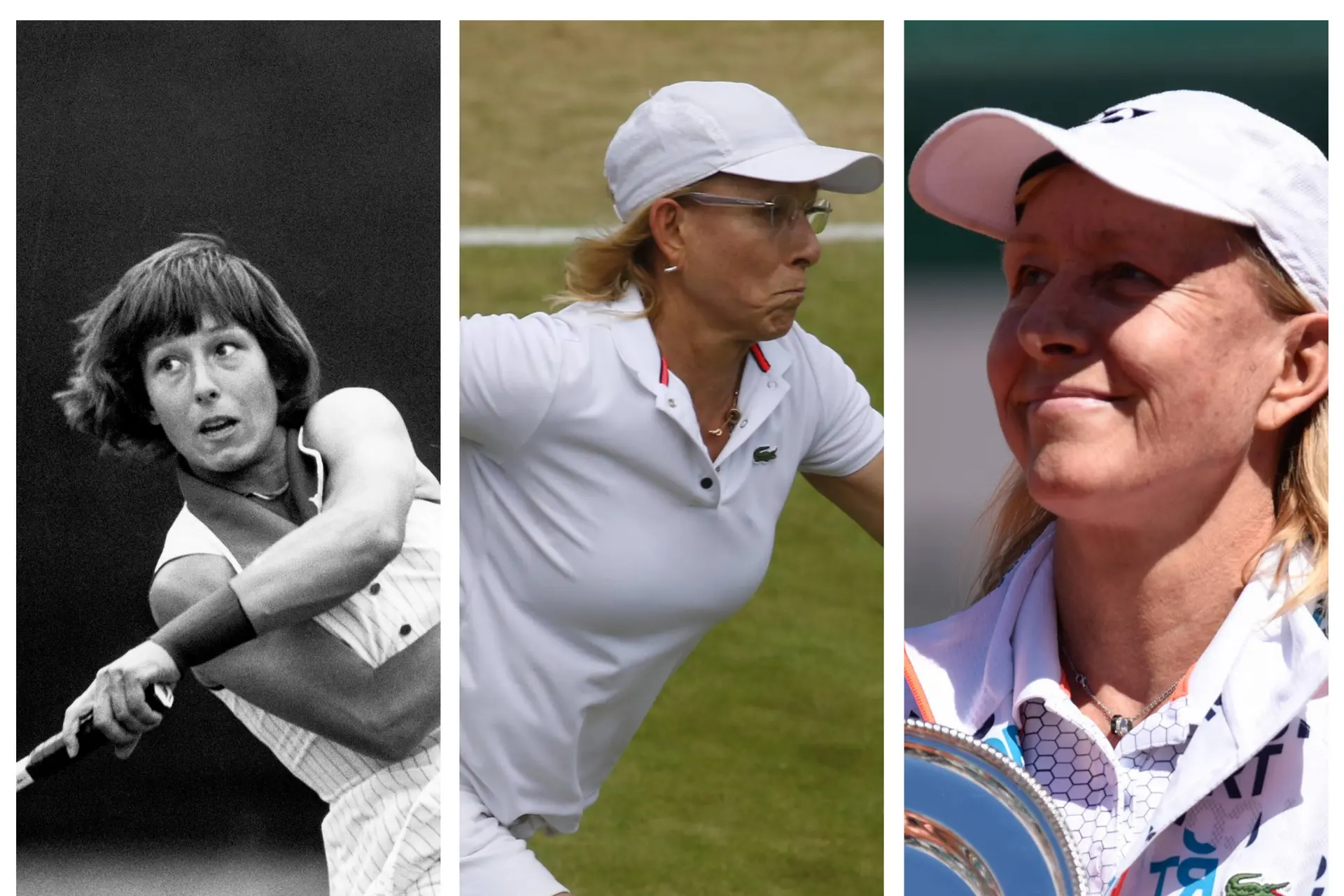
The six Grand Slam singles titles accrued outside London were four US Opens ('67, '71, '72, and '74), an Australian Open win in 1968, and a French Open championship in 1972. Her participation in Melbourne and Paris was considerably less than in the other two Slams. She appeared in 51 singles Slams, but only 12 of those came in Australia or France. King was the fifth woman to complete a career Grand Slam.
In addition to ten Wimbledon women's doubles titles, King claimed five US Open doubles titles ('64, '67, '74, '78, and '80) and the French Open in 1972. The Australian Open women's doubles title was the only one to elude her in singles, doubles or mixed Grand Slam competition.
King supplemented her four mixed doubles Wimbledon crowns with four in New York ('67, '71, '73, and '76), two in Paris ('67 and '70) and the Australian Open in 1968 which gave her a Career Slam in mixed.
The legendary Statesider reached an astonishing 183 singles finals, winning 129 of them. Her first title came in August 1960, at the Philadelphia District and Women's Grass Court Championships. King's last title was 23 years later, again on grass, in the UK’s second city of Birmingham. Victory, at the age of 39, in the Birmingham Classic, makes her the oldest winner of a WTA title. King's best year was arguably the 1971 season, when she won 112 out of 125 singles matches. These remain records for the most wins and matches played in a single campaign. She also set a record that year for most singles and doubles titles combined in a season, at 38. The following year, she became the first woman to be named Sports Illustrated Sportsperson of the Year.
As a player, King was part of seven victorious American Fed Cup teams. She would later captain the US team to a quarter of successes. Her tenure as a skipper would later end in mild acrimony when she divided opinion by dropping Jenifer Capriati for a tie in 2002, when King took umbrage at Capriati bringing her own personal coaches. Several players disagreed with the decision, and America would go on to subsequently lose the tie. King's stint as captain was brought to an end at the end of the 2002 season. In honour of King's outstanding and unprecedented record in the competition, it was decided to rename the event, starting in 2022, the Billie Jean King Cup. King had spells ranked world number one, but much of this was when the rankings weren't official. She first reached the top ten in 1960 and was last ranked in that bracket during 1982.
Impact in fight for equal prize money and Battle of the Sexes
King's activism has fostered huge growth in women's tennis and paved the way for equal prize money at the Grand Slams. Unhappy with the meagre remuneration women were receiving at the height of her career, King resolved to change things and with the help of founder Gladys Heldman and funding through Joseph Cullman, to create the first professional women's tour. It was originally called the Virginia Slims tour and is now a multi-million behemoth called the WTA Tour. Some players were initially resistant, but King's tenacity and vision won them over, and now they readily acknowledge the seismic impact King has had in reshaping the perception and rewards for the women's game.
In the same year this tour was created, King embarked on a match that would define her more than any of the 18 Grand Slam singles finals she contested. Bobby Riggs, a chauvinist retired ex-pro, made provocative remarks about how he could easily defeat any current female player. Now 55, Riggs had previously been a Grand Slam champion and had defeated King’s great rival Margaret Court earlier in 1973 for a loss of just a few games. Looking for acceptance of her new tour, she needed a win to provide extra validation for the women's game.
The match was held in September 1973 at the Houston Astrodome. They opted for a best-of-5 format. King, playing smartly and exposing Riggs’ conditioning, defeated him in straight sets 6-4, 6-3, 6-3. An audience of 90 million worldwide tuned in to see a moment that placed King at the vanguard of change in not just tennis but women's sport at large. It helped to diminish the sniffiness and cynicism around women playing sports. The match established an attendance record of 30,472, which remains the highest for a tennis match in the United States.

Billie Jean King's name is also a symbol for women's tennis after having the cup named after her.
First prominent female gay athlete, but not by choice
She had married Larry King in 1965, but was wrestling with her affections for women. She was eventually outed as gay in 1981, after she had an affair with Marilyn Barrett. The affair began in 1971 when Barrett was residing with Billie and Larry. They asked her to move out in 1979, and Barrett refused, threatening to leak records and receipts given to her by Billie Jean over the years. Events took a dramatic twist when, sadly, Barrett tried to commit suicide by jumping off the balcony of their house. She was left paraplegic. Barrett would then attempt to sue the Kings for their income and the house. This led to King revealing her romantic relationship with Barrett, and she became the first openly gay athlete. The court case hurt King to the tune of 2 million dollars and was a factor in extending her tennis career throughout the 1980s on a sporadic basis. Barrett was eventually found guilty of extortion. While, ironically, the house they were contesting was eventually damaged irreparably in storms in 1983. The Kings later divorced in 1987 but remained on good terms, with Billie taking on godmother status to one of Larry's children with another wife. King herself later found love with Ilana Kloss, and they got married in 2018. They can often be seen together at tournaments.
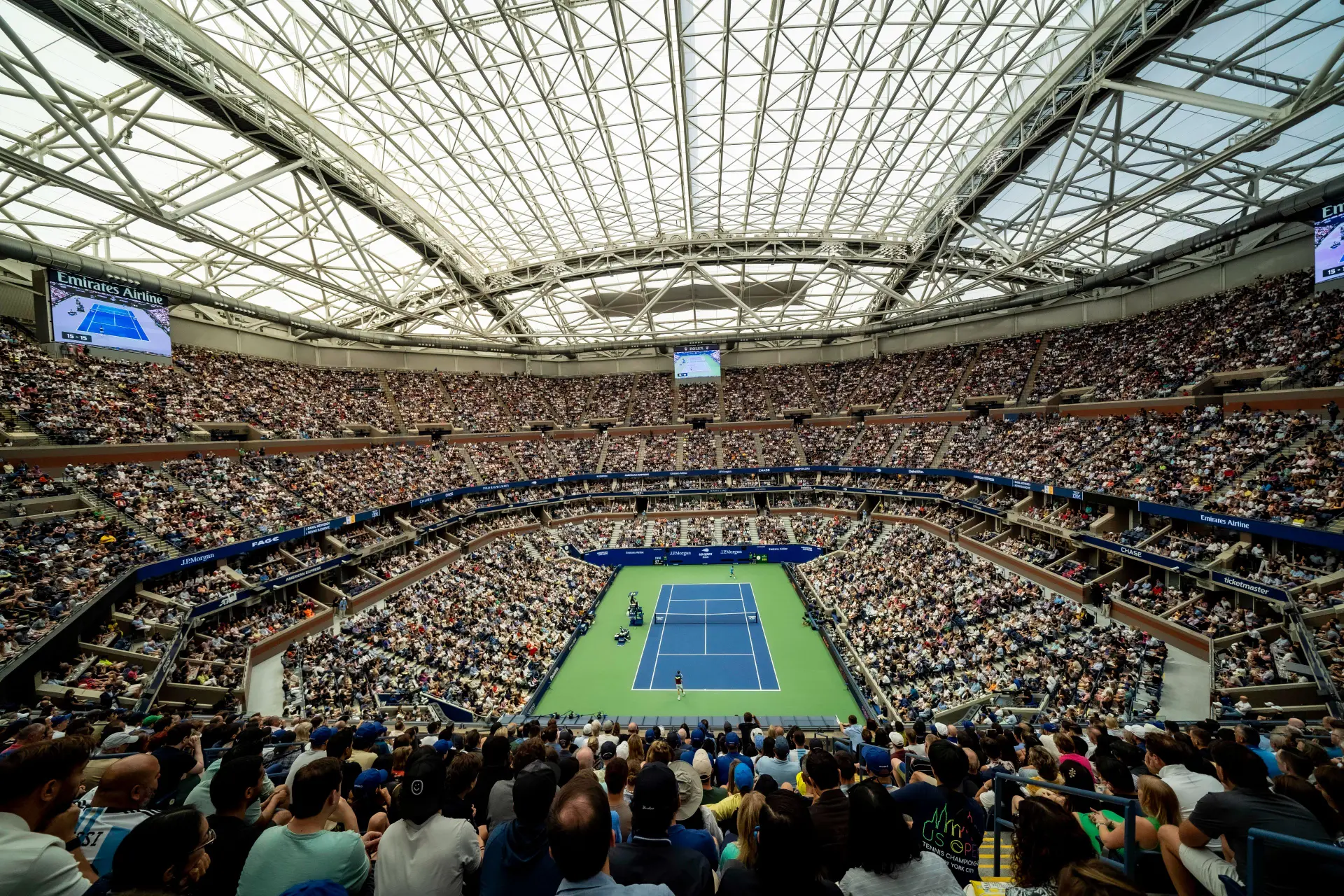
King has been recognised in many different ways since her retirement. This includes The USTA National Tennis Center, home of the US Open, is called the Billie Jean King Tennis Center. She was inducted into the International Tennis Hall of Fame in 1987. In 1999, she received the Arthur Ashe Courage Award. Meanwhile, the BBC gave her a lifetime achievement award at the 2016 BBC Sports Personality of the Year. Her hometown of Long Beach named its library after her in 2019. The Laureus Sports Awards, a kind of sporting Oscars, gave her a Lifetime Achievement Award. The highest French civilian honour came her way in 2022 when French President Emmanuel Macron awarded her the Legion of Honour to mark the 50th anniversary of her French Open Singles triumph.
King has never been too consistently involved with broadcasting, but has appeared for many years on the BBC's Wimbledon coverage, offering analysis in the lead-up and aftermath of games. She is a part-owner of the LA Dodgers baseball team. They've triumphed in two World Series since King invested. King is a figure that transcends the sport. A sign of this came in a BBC TV series called Icons, in which a number of different categories were created where four individuals would feature, and it was up to the public to decide which one was regarded as the most important. The sport category nominations included King alongside boxing titan Muhammad Ali, Brazilian footballing superstar Pele and 11-time Paralympic champion Tanni Grey-Thompson. Ali won, but it underlined how King's impact went far beyond the sport of tennis.
Read also
Billie Jean King: Career Titles and Major Achievements
| Category | Achievement | Details |
| Singles Grand Slams | 12 | Wimbledon (6), US Open (4), French Open (1), Australian Open (1) |
| Total Grand Slam Titles | 39 | 12 Singles, 16 Doubles, 11 Mixed Doubles |
| Career Titles (All-Time) | 129 Singles | 67 of these achieved in the Open Era |
| World No. 1 | 6 Years | Ranked No. 1 in 1966-68, 1971-72, and 1974 |
| Fed Cup Titles | 7 | Won as a player: 1963, 1966, 1967, 1976, 1977, 1978, 1979 |
| Wimbledon Dominance | 20 Titles | Joint record for most total titles (Singles, Doubles, Mixed) |
| Battle of the Sexes | Winner | Defeated Bobby Riggs in straight sets (1973) |
| Boxed Set | Achieved | Won all 4 Slams in Singles, Doubles, and Mixed Doubles |
Billie Jean King: Major Finals and Milestones
| Year | Competition / Tournament | Result | Category |
| 1961 | Wimbledon | Winner | 1st Grand Slam Title (Doubles w/ Karen Hantze) |
| 1966 | Wimbledon | Winner | 1st Grand Slam Singles Title |
| 1967 | US Championships | Winner | Triple Crown (Singles, Doubles, Mixed in one week) |
| 1968 | Australian Open | Winner | 1st Open Era Grand Slam Title |
| 1971 | US Open | Winner | 1st Woman to earn over $100k in a single season |
| 1972 | French Open | Winner | Completed Career Grand Slam (Singles) |
| 1973 | US Open | Winner | Won title during the founding year of the WTA |
| 1973 | Battle of the Sexes | Winner | Historic exhibition win vs. Bobby Riggs |
| 1975 | Wimbledon | Winner | 6th and final Wimbledon Singles Title |
| 1983 | Wimbledon | Semi-finalist | Final Grand Slam run (at age 39) |

Jay Brannon is a sports journalist from Sutton Coldfield, England, with a lifelong passion for athletic competition and storytelling. For the past 1.5 years, he has been a prominent voice at TennisUpToDate.com, where he has authored more than 3,000 articles, specializing in deep-dive columns, tactical analyses, liveblogs, and comprehensive match reports for the ATP and WTA tours.
Jay’s tennis reporting blends rigorous, real-time statistical analysis with on-the-ground coverage. He frequently travels to tournaments to cover the action firsthand from the press box and player press conferences. This direct access allows him to deliver sharp insight into player form and tour developments—a dedication sparked by his earliest sporting memory of the iconic 1991 Wimbledon final between Michael Stich and Boris Becker.
Beyond the court, Jay brings a versatile background in live broadcasting and media. His professional experience includes serving as a sports reporter for BHBN Hospital Radio—where he delivered live updates and analysis for West Bromwich Albion and Wolverhampton Wanderers matches—as well as working as a match reporter for Sutton Coldfield Town.
Jay holds a degree in Music Journalism and Broadcasting from Staffordshire University, a foundational training that shaped his voice as a thoughtful, authentic storyteller. Grounded in core journalistic ethics, he places a strict emphasis on careful sourcing, editorial accuracy, and swift, verified updates.
claps 1visitors 1
Just In

Popular News
Latest Comments
- A healthy Qinwen may be hard to stop next season. She was already scaring her opponents before her medical leave(s). Unfortunately, Zheng insisted on singing again. On the positive side -- Mirra did not sing!! ;~}
 mandoist11-10-2026
 - Where is it written that athletes, entertainers... People in general... are mandated to keep looking at -- or even using [anti]Social Media? Public & private figures consistently complain and reveal their concerns about negativity and violence thrown at them -- yet they insist on participating. Avoid it, don't use it, don't read it. It's okay to occasionally look up at the World instead beating your eyes & thumbs to death on The Inventions out there.mandoist11-10-2026
- great articlestennisseserver07-10-2026
- Medvedev was leading Djokovic 7-5, 3-5 when an attempted return..' NO you ignorants, Djokovic was leading .weiss05-10-2026
- No more bullshit "Wildcards" to these two. Qualify like everyone else -- there will be cameras there, too. Time to scream... WTF ????!!!!mandoist29-09-2026
- Let's not BS the general public -- Sabalenka started showing cracks in her game last season. Her losses and near-losses started at about the same time she began being distracted by Fame (constant Selfies, making TV commercials, magazine shoots, endless Social Media nonsense, etc., etc.) One would think even Saba could recognize the parallels with others who failed before her -- Raducanu, Giorgi, Bouchard to name a few.mandoist25-09-2026
- Gross!! Hey Raducanu, Giorgi, and Bouchard -- reserve a seat at your Social Media Selfie table for Saba + Naomi. They're heading in your direction soon enough.mandoist24-09-2026
- And then these same players will complain about how lengthy their season’s were and need more time-off. I’m all for more tennis but the amount of tennis we get now is actually kind of crazy! We all need a break, especially the players.DaveyWavey23-09-2026
- You should do a comparison article for "different kinds of justice" the courts decide for tennis players. I can think of at least three players who received very small bans of a few months, however Tara Moore has been fighting for her literal survival the past few years. It seems odd considering she is not a "name" player, unlike the other cases.DaveyWavey22-09-2026
- PRIZE MONEY & POINTS Winner - $185,500 Finalist - $114,500 Semi-Finalist - $66,003 Quarter-Finalist - $35,000 Round of 16 - $18,045 Round of 32 - $13,005 Winner - 500 Finalist - 325 Semi-Finalist - 195 Quarter-Finalist - 108 Round of 16 - 60 Round of 32 - 1DaveyWavey20-09-2026

Loading