“At No.250 you’re not making money”: Alex Michelsen reveals ranking moment that nearly sent him to college
ATP
Alex Michelsen’s rise on the ATP Tour has been rapid, but the American recently revealed that his professional career almost took a very different direction. Speaking on Andy Roddick’s Served podcast, the Californian explained that only a few seasons ago he was seriously considering the college route while struggling to break through the lower tiers of the rankings.
At the time, Michelsen was hovering around No.250 in the world — a position where, as he put it, “you’re not making any money.” Players in that range often depend on Challenger events and qualifying draws, with prize money barely covering travel and coaching costs across the circuit.
Those circumstances made the college option appealing to his family. Michelsen comes from an education-focused household, with his father a lawyer and his mother a teacher. While he had always hoped to succeed as a professional, he admitted that continuing his studies was a realistic alternative if results did not arrive.
Everything changed within a matter of weeks. A Challenger title followed by a run to the final of the ATP 250 in Newport lifted his ranking close to the Top 140 and removed any remaining doubts about pursuing the professional route.

The crossroads: when No.250 meant considering college
Michelsen described that period around No.250 as the moment when the realities of professional tennis became clear. Outside the top levels of the sport, the financial and competitive margins are extremely thin, making it difficult for young players to sustain a career without consistent results.
His parents, strongly rooted in academic careers, encouraged him to think seriously about the college pathway. It was a conversation many young players face when their ranking stalls in the Challenger range. “My parents really wanted me to go to school. My dad’s a lawyer, my mom is a teacher. They’re very school-oriented people and they really wanted me to go to school. Trust me, I didn’t want to go to school.”
The ranking itself was the biggest factor in that discussion. Remaining around No.250 meant uncertain income and a schedule dominated by Challenger events. “I remember I was around 250 for three or four months and they were like, ‘Well, you’re not making any money at 250, so you might as well go to school.’ I was like, ‘Yeah, you’re right. I don’t got too much money to my name.’”
Challenger breakthrough and the Newport turning point
The situation changed dramatically once Michelsen produced the first major results of his young career. He captured a Challenger title before reaching the final of the ATP 250 event in Newport, a run that quickly pushed his ranking upward.
That surge lifted him from roughly No.250 into the vicinity of the Top 140, opening the door to ATP qualifying draws and stronger competition. “Then all of a sudden I won a Challenger and I finaled Newport and I was around 140. From there it was kind of a no-brainer. But yeah, trust me, I didn’t want to go to school. So I’m happy to be playing some ball.”
With the ranking breakthrough came opportunities to compete against higher-profile opponents on the ATP Tour. Michelsen has since faced several top players as he continues establishing himself on the circuit.
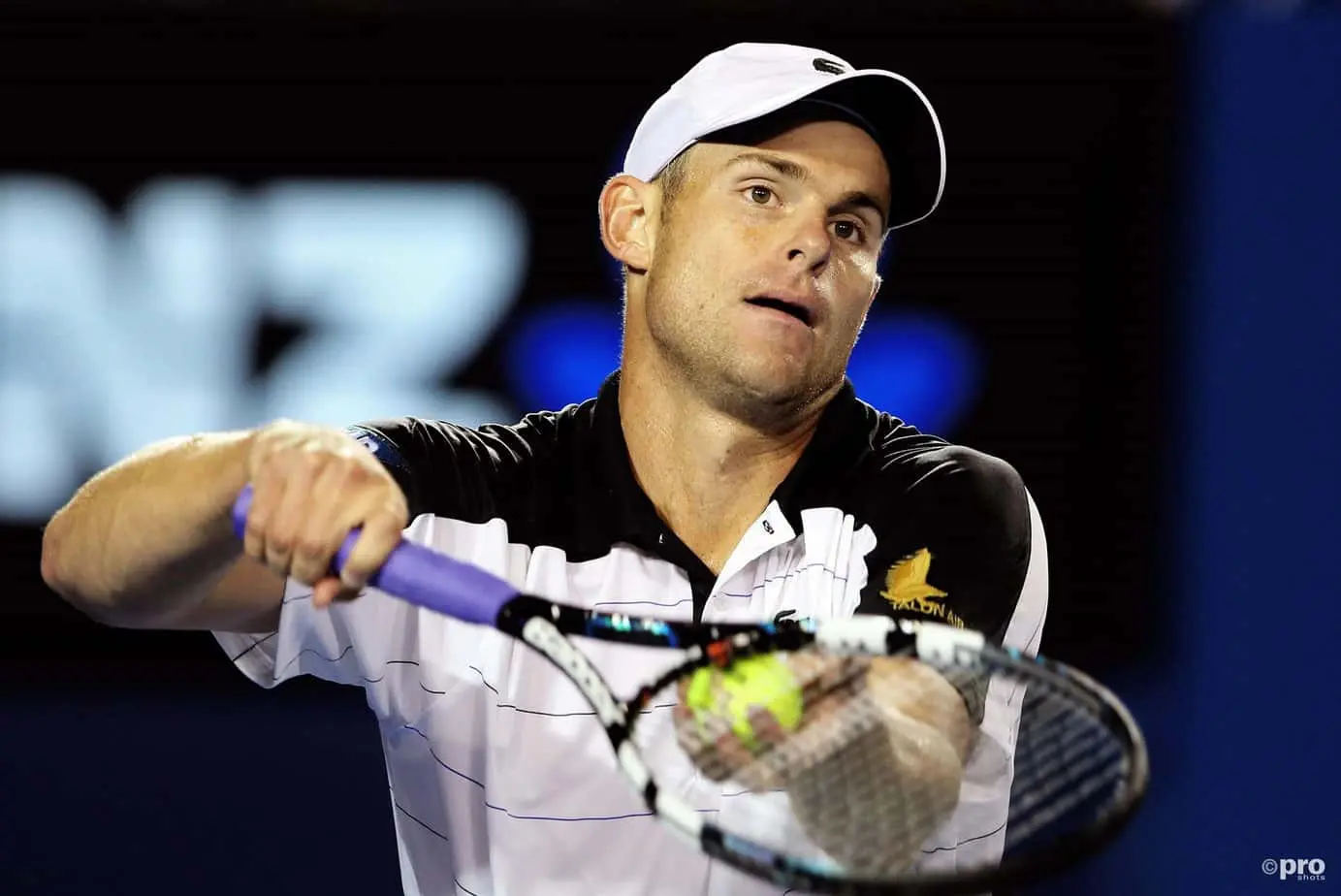
Learning the difference between the Top 100 and the rest
As he gained experience at ATP level, Michelsen began to notice what separates the best players from the rest of the field. According to him, the biggest difference is not necessarily shot-making ability but the way elite players perform under pressure.
In particular, he pointed to decisive moments such as break points, where the top competitors consistently deliver their strongest tennis. “I think the guys in the top 100 play the pressure points unbelievably well compared to the guys that aren’t top 100. Every time I’m playing a guy that’s really good and I have a break point, they’re making a first serve like 80 percent of the time.”
Facing the tour’s elite has also highlighted the importance of matchups. Michelsen referenced his own struggles against certain opponents while discussing how styles can clash on the ATP Tour. “I’m like asking him, how do you beat Medvedev? I’m like, I don’t know how you do it. The guy dices me every time.”
Despite those challenges, the American acknowledges how quickly his career has evolved since those months spent debating college tennis. “Once I was around 140, I was like, ‘Okay, now this is my life.’”
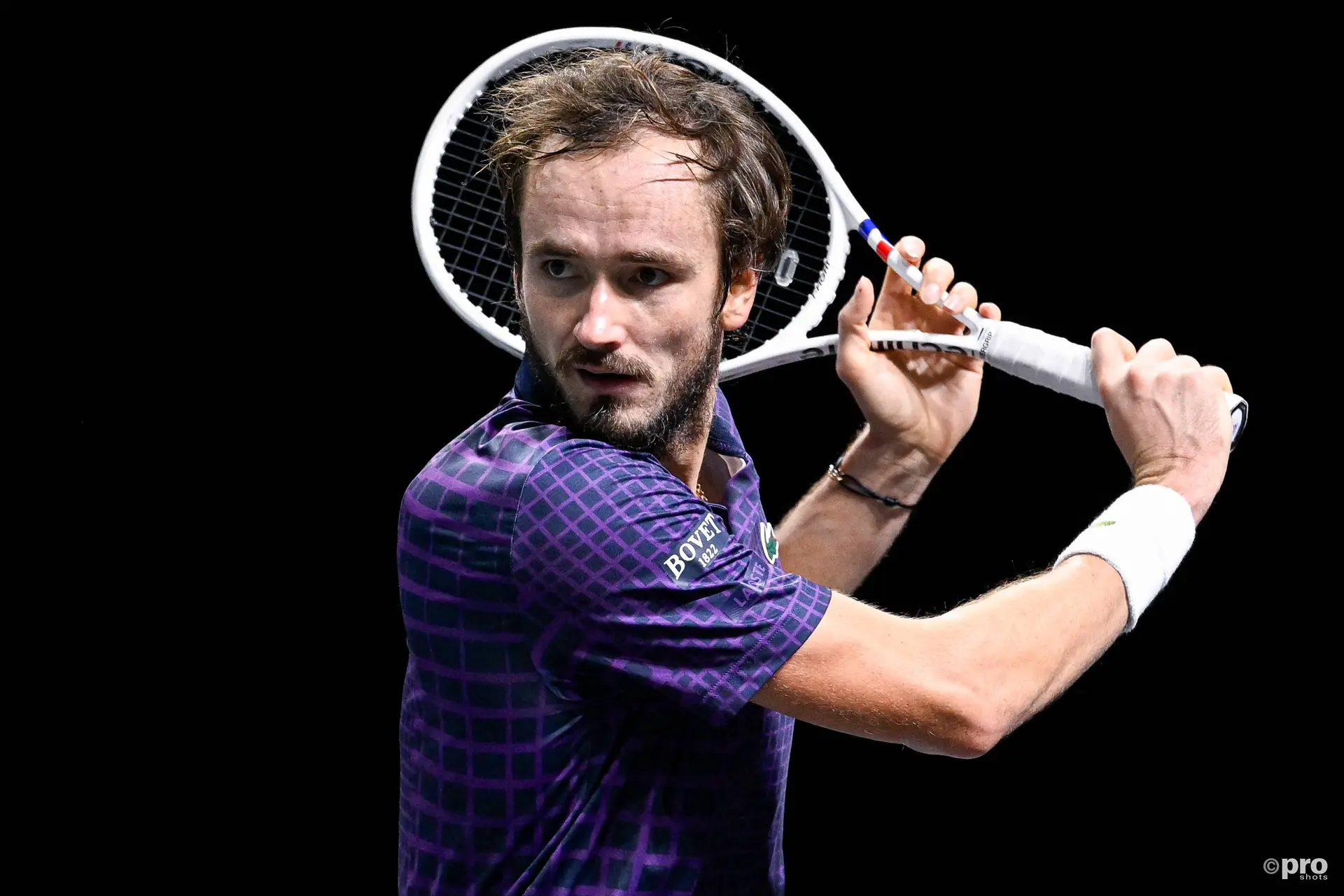
Laver Cup experience alongside Agassi and the Tour’s biggest names
Another milestone in Michelsen’s rapid rise came with his participation in the Laver Cup, the team competition that pits Team World against Team Europe. The American was selected for Team World and played under the leadership of Andre Agassi, alongside captain Patrick Rafter. The event featured some of the sport’s biggest names, including Carlos Alcaraz, Daniil Medvedev and Alexander Zverev on the European side.
For Michelsen, the experience of sharing a locker room with established ATP stars and competing in the team format was unlike anything he had previously experienced on tour. He described the atmosphere as intense and emotionally charged, particularly with Agassi heavily invested in every match.
“One of the best weeks of my life," the world No. 44 said. "Seeing him there, the amount of energy, how much he wanted us to win — he wanted us to win so bad. You could see in the matches he was tight, but in a good way.”
The American ended the competition with one win from four matches, but the results were secondary to the experience gained in a high-profile environment against some of the strongest players in the world. The packed arena and team dynamic created a unique pressure compared with standard ATP tournaments.
“I came out tight as a rope and he really helped me out in that match. Seeing him there — how can you not get inspired with Agassi? And Rafter too. I only won one match out of four, but I still had a lot of fun.”

Cristhián AvilaTennis Journalist
Cristhián Ávila is a tennis journalist based in Santiago, Chile, and has been part of the TennisUpToDate team since early 2023. He covers the ATP and WTA Tours as well as all four Grand Slams, producing breaking news, match reports, analysis, and regular liveblogs from major tournaments.
His reporting combines statistical analysis with clear explanation, helping readers understand tactical developments, player form, and broader storylines across the tour. Working fluently in both Spanish and English, Cristhián collaborates with an international editorial team and contributes to comprehensive global coverage. As part of his work, he has conducted interviews and media interactions with leading figures in the sport, including Caroline Wozniacki and John McEnroe.
In his journalism, Cristhián places strong emphasis on careful sourcing, editorial accuracy, and updating articles promptly when new, verified information becomes available. His coverage is grounded in research, context, and direct engagement with professional tennis.
claps 0visitors 0
Just In


Popular News
Latest Comments
- A healthy Qinwen may be hard to stop next season. She was already scaring her opponents before her medical leave(s). Unfortunately, Zheng insisted on singing again. On the positive side -- Mirra did not sing!! ;~}
 mandoist11-10-2026
 - Where is it written that athletes, entertainers... People in general... are mandated to keep looking at -- or even using [anti]Social Media? Public & private figures consistently complain and reveal their concerns about negativity and violence thrown at them -- yet they insist on participating. Avoid it, don't use it, don't read it. It's okay to occasionally look up at the World instead beating your eyes & thumbs to death on The Inventions out there.mandoist11-10-2026
- great articlestennisseserver07-10-2026
- Medvedev was leading Djokovic 7-5, 3-5 when an attempted return..' NO you ignorants, Djokovic was leading .weiss05-10-2026
- No more bullshit "Wildcards" to these two. Qualify like everyone else -- there will be cameras there, too. Time to scream... WTF ????!!!!mandoist29-09-2026
- Let's not BS the general public -- Sabalenka started showing cracks in her game last season. Her losses and near-losses started at about the same time she began being distracted by Fame (constant Selfies, making TV commercials, magazine shoots, endless Social Media nonsense, etc., etc.) One would think even Saba could recognize the parallels with others who failed before her -- Raducanu, Giorgi, Bouchard to name a few.mandoist25-09-2026
- Gross!! Hey Raducanu, Giorgi, and Bouchard -- reserve a seat at your Social Media Selfie table for Saba + Naomi. They're heading in your direction soon enough.mandoist24-09-2026
- And then these same players will complain about how lengthy their season’s were and need more time-off. I’m all for more tennis but the amount of tennis we get now is actually kind of crazy! We all need a break, especially the players.DaveyWavey23-09-2026
- You should do a comparison article for "different kinds of justice" the courts decide for tennis players. I can think of at least three players who received very small bans of a few months, however Tara Moore has been fighting for her literal survival the past few years. It seems odd considering she is not a "name" player, unlike the other cases.DaveyWavey22-09-2026
- PRIZE MONEY & POINTS Winner - $185,500 Finalist - $114,500 Semi-Finalist - $66,003 Quarter-Finalist - $35,000 Round of 16 - $18,045 Round of 32 - $13,005 Winner - 500 Finalist - 325 Semi-Finalist - 195 Quarter-Finalist - 108 Round of 16 - 60 Round of 32 - 1DaveyWavey20-09-2026

Loading