Tennis Legends - Monica Seles: The youngest French Open champion who survived stabbing to change course of history
WTA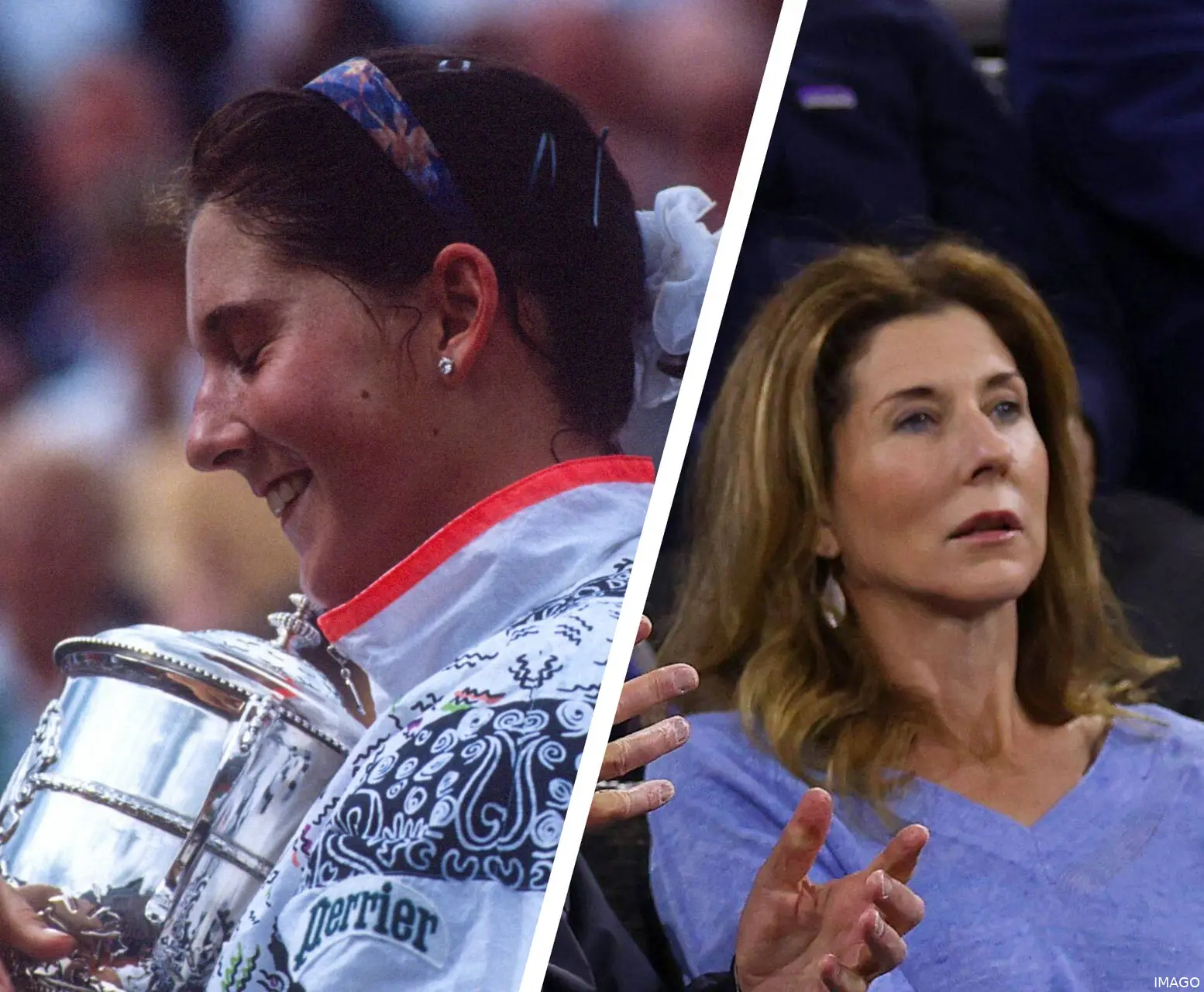
A teenage sensation, Monica Seles overthrew Steffi Graf's dominance of the sport. The early 90s belonged to big-hitting Seles before a near-fatal stabbing incident in Germany changed the course of tennis history.
Monica Seles: Early life and emigration to the USA
Seles was born in Novi Sad, part of what was then Yugoslavia, on December 2, 1973. She was born into an ethnically Hungarian family. Her parents, Ester and Karolj, brought her and her brother Zoltan up in the decade prior to the Yugoslav Wars. Her father coached her from the age of five. He was a skilled cartoonist, and his drawn pictures depicting tennis shots enabled him to make the sport more fun for the precocious youngster.
In the early part of 1986, Seles and her brother moved to the USA and joined the highly regarded Nick Bollettieri Academy. She went on to play her first professional tournament at just 14, before claiming her first title a year later in Houston. The same year, aged only 15, she made the semi-finals of the 1989 French Open, losing to Steffi Graf. Seles finished the season ranked sixth in the world.
The year 1990 was when Seles developed into a serial winner and began to challenge Graf's hegemony in the women's game. Nine titles were accumulated through the season, including a maiden Grand Slam success at the French Open, defeating Graf 7-6, 6-4 in the Roland Garros showpiece. The season climaxed with the capture of the elite WTA Tour Finals. She retained this title for the next two campaigns.
In the 1991 season, the balance of power in women's tennis shifted from Germany’s Graf to the teenage Yugoslav. Seles triumphed at three of the four Grand Slams. She claimed the Australian Open on her main draw debut, coming from a set down to beat Czech Jana Novotna in the finals. The French Open title was defended, and then she beat legend Martina Navratilova to win her first US Open crown. A trio of Slams were part of a ten-title haul that included a second consecutive title at the Miami Open. Graf did manage to win Wimbledon, but there was no doubt at the end of 1991 who was positioned as the game's standard bearer.
Seles managed to replicate her career high of ten titles in a season during the 1992 campaign. She also retained all three Grand Slam titles from the previous year. Her success at the 1992 French Open came after a classic final with Graf. Seles eventually prevailed 10-8 in an epic final set. The German did take revenge in the Wimbledon final a month later. This would represent the only final for Seles at the London major. The big-hitting Seles ended the year at number one and had now firmly supplanted Graf as the dominant force in the women's game.
The stabbing that changed the course of tennis history
The 1993 season continued where the last few had left off. Seles won a third consecutive Australian Open title, emphasizing her pre-eminent status over Graf by defeating the German in the finals. This win meant Seles had now been victorious in seven of the last nine Grand Slams. Another title was picked up in February. However, Seles’ ascent in the sport was viciously halted at a clay court event in Hamburg in April of 1993. Still only 19, Seles was a set up against Bulgarian Maggie Maleeva. Sitting down at a changeover during the second set, a rotund German man clambered onto the court with a 10-inch knife and stabbed Seles in the back. The injuries were serious, but fortunately proved not to be life-threatening. It was later revealed that the attacker was a deranged supporter of Steffi Graf who had a history of mental health issues. He was never given a custodial sentence. A decision which led Seles to never play in Germany again after she felt let down by their justice system.
The recovery from such a shocking incident took roughly two years before Seles returned to the WTA Tour. Much of this recuperation was about processing the psychological impact of what transpired as much as the physical impact. A band, Young Elders, penned a track called “Fly Monica Fly” while she was recovering. She would eventually meet the band and cited the song as inspiration when attempting her comeback.
During her absence, Graf visited her rival in the hospital. However, Graf, like all the players who voted, rejected a proposal for Seles' number-one ranking to be frozen. Further consequences of the attack were bouts of depression and the development of an eating disorder.
When Seles returned to the Tour in the summer of 1995, she had now taken American nationality. Despite insensitive opposition from certain players such as Aranxta Sanchez-Vicario and Gigi Fernandez, the WTA, supported by now president Martina Navratilova, opted to install Seles as a joint world number one with Graf. Remarkably, Seles became champion at her first tournament back, the Canadian Open, beating Amanda Coetzer in the final. She established a new record for the fewest games lost during the whole event. Her form continued a few weeks later when she made the final of the US Open, the first Grand Slam of her comeback. She won the first set of the final against Graf, before losing 6-0, 6-3 in the next two sets.
A bittersweet return and a 'false dawn'
Seles continued her excellent comeback at the commencement of the 1996 season. The Sydney International was added to her title haul before playing at the Australian Open. The naturalised American had won on each of her three previous appearances in Melbourne. She maintained her 100% strike rate when besting German Anke Huber in the final. A ninth Grand Slam title for Seles, but it would prove to be her last. The immediate success of her return turned into something of a false dawn. Although Seles remained a leading player for the next few years, Grand Slam success would elude her.
The 1996 season did yield an additional three titles, including a maiden grass court title at Eastbourne. Six more titles were pocketed for the remainder of the 1990s, including a fourth Canadian Open triumph. The last of her 13 Grand Slam finals came at the French Open, losing to Sanchez-Vicario. That year saw her lose for the first time at the Australian Open, a tournament in which she ended up with a 91% win rate.
Three titles in 2000 included a second Italian Open title. She also lost in the final of the WTA Finals, a sign she remained amongst the elite of the women's rankings. Four tournament successes materialised in 2001, and a brace of titles in 2002. The last of those in Madrid ended up being Seles’ 53rd and last singles title. Seles managed to accrue six doubles titles. After reaching the final of the French Open in 1998, Seles would only reach a further three Grand Slam semi-finals. Her last appearance at a Slam was the 2003 French Open.
In representing her new country, the USA, Seles was part of the victorious Fed Cup squads in 1996, 1997 and 2000. Seles managed a bronze medal at the Sydney Olympics in 2000, when playing for the US in the singles. She also partnered Goran Prpic in the 1991 Hopman Cup, when still competing under the Yugoslav flag.
Monica Seles’ legacy and personal life post-tennis
Monica Seles remains the youngest winner of the French Open. Her total of 178 weeks at world number one places her sixth on the all-time list. She finished year-end number one on three occasions. Her last match was in 2003, but she didn't officially retire until 2008.
The game style of Seles was based on brutal power hitting from the baseline. Her style of power tennis influenced the Williams sisters and the 21st century of big-hitting ball strikers dominating the upper echelons of women's tennis. Seles would also adopt Hungarian citizenship in 2007. A couple of years later, an autobiography entitled "Getting A Grip: On My Body, My Mind, My Self" came out chronicling her recovery from the stabbing incident and her battle with binge eating and depression.
A relationship with businessman Tom Golisano, 32 years her senior, began in 2009. They became engaged in 2014. In 2015, Seles became a spokesperson for Shire Pharmaceuticals, the creators of the first Food and Drug administration to treat binge eating disorder.
The popular American featured in the TV sitcom The Nanny, and she was fictionalised in an episode of the highly acclaimed Seinfeld sitcom. The episode, from 1993, focused on her potential return to tennis after her stabbing ordeal. Seles was a contestant on the 2008 "Dancing with the Stars" series.
Earlier this year, Seles went public with the news that she'd been diagnosed with a condition called myasthenia gravis. It's a disease that leads to skeletal weakness.
The Yugoslav-born American’s career is split into two halves by an on-court incident that reshaped the path of both Seles and Graf's careers. Before the stabbing in Hamburg, Seles was dominating women's tennis and on a trajectory where it was conceivable that many records, including most Grand Slams won, were a realistic target for a true game changer. Her courageous return, following a hiatus of over two years, initially suggested those predictions could still be attained. Perhaps inevitably, after such a traumatic incident, Seles never managed to replicate the heights of her late teens. What she achieved in those years had already certified her as a bona fide great.
Monica Seles: Career Titles and Major Achievements
| Category | Achievement | Details |
| Singles Grand Slams | 9 | Australian Open (4), French Open (3), US Open (2) |
| Total WTA Titles | 53 | 9th highest in Open Era history |
| World No. 1 | 178 Weeks | 6th all-time in the WTA rankings |
| French Open Record | Youngest Champion | Won at 16 years, 6 months old (1990) |
| Grand Slam Streak | 33-0 | Won 33 consecutive Grand Slam matches between 1991 and 1993 |
| Year-End No. 1 | 2 Times | Finished as the top-ranked player in 1991 and 1992 |
| Olympic Medals | Bronze | 2000 Sydney Olympics (Singles) |
| Fed Cup Titles | 3 | Won with the United States: 1996, 1999, 2000 |
Monica Seles: Major Finals and Milestones
| Year | Competition / Tournament | Result | Category |
| 1989 | Houston | Winner | 1st Career Title (Defeated Chris Evert) |
| 1990 | French Open | Winner | 1st Grand Slam Title (Youngest-ever winner) |
| 1990 | WTA Championships | Winner | Won the first-ever 5-set women's final (vs. Sabatini) |
| 1991 | Australian Open | Winner | 1st step toward dominating the early 90s |
| 1991 | US Open | Winner | Captured 3 of 4 Majors in a single season |
| 1992 | French Open | Winner | Defeated Steffi Graf 10-8 in a classic 3rd set |
| 1993 | Australian Open | Winner | 8th Major title before the age of 20 |
| 1995 | Canadian Open | Winner | Successful return to tennis after a 2-year hiatus |
| 1995 | US Open | Runner-up | First Grand Slam final following her return |
| 1996 | Australian Open | Winner | 9th and Final Grand Slam Singles Title |
| 2003 | French Open | 1st Round | Final professional match (lost to Nadia Petrova) |

Jay Brannon is a sports journalist from Sutton Coldfield, England, with a lifelong passion for athletic competition and storytelling. For the past 1.5 years, he has been a prominent voice at TennisUpToDate.com, where he has authored more than 3,000 articles, specializing in deep-dive columns, tactical analyses, liveblogs, and comprehensive match reports for the ATP and WTA tours.
Jay’s tennis reporting blends rigorous, real-time statistical analysis with on-the-ground coverage. He frequently travels to tournaments to cover the action firsthand from the press box and player press conferences. This direct access allows him to deliver sharp insight into player form and tour developments—a dedication sparked by his earliest sporting memory of the iconic 1991 Wimbledon final between Michael Stich and Boris Becker.
Beyond the court, Jay brings a versatile background in live broadcasting and media. His professional experience includes serving as a sports reporter for BHBN Hospital Radio—where he delivered live updates and analysis for West Bromwich Albion and Wolverhampton Wanderers matches—as well as working as a match reporter for Sutton Coldfield Town.
Jay holds a degree in Music Journalism and Broadcasting from Staffordshire University, a foundational training that shaped his voice as a thoughtful, authentic storyteller. Grounded in core journalistic ethics, he places a strict emphasis on careful sourcing, editorial accuracy, and swift, verified updates.
claps 0visitors 0
Just In


Popular News
Latest Comments
- A healthy Qinwen may be hard to stop next season. She was already scaring her opponents before her medical leave(s). Unfortunately, Zheng insisted on singing again. On the positive side -- Mirra did not sing!! ;~}
 mandoist11-10-2026
 - Where is it written that athletes, entertainers... People in general... are mandated to keep looking at -- or even using [anti]Social Media? Public & private figures consistently complain and reveal their concerns about negativity and violence thrown at them -- yet they insist on participating. Avoid it, don't use it, don't read it. It's okay to occasionally look up at the World instead beating your eyes & thumbs to death on The Inventions out there.mandoist11-10-2026
- great articlestennisseserver07-10-2026
- Medvedev was leading Djokovic 7-5, 3-5 when an attempted return..' NO you ignorants, Djokovic was leading .weiss05-10-2026
- No more bullshit "Wildcards" to these two. Qualify like everyone else -- there will be cameras there, too. Time to scream... WTF ????!!!!mandoist29-09-2026
- Let's not BS the general public -- Sabalenka started showing cracks in her game last season. Her losses and near-losses started at about the same time she began being distracted by Fame (constant Selfies, making TV commercials, magazine shoots, endless Social Media nonsense, etc., etc.) One would think even Saba could recognize the parallels with others who failed before her -- Raducanu, Giorgi, Bouchard to name a few.mandoist25-09-2026
- Gross!! Hey Raducanu, Giorgi, and Bouchard -- reserve a seat at your Social Media Selfie table for Saba + Naomi. They're heading in your direction soon enough.mandoist24-09-2026
- And then these same players will complain about how lengthy their season’s were and need more time-off. I’m all for more tennis but the amount of tennis we get now is actually kind of crazy! We all need a break, especially the players.DaveyWavey23-09-2026
- You should do a comparison article for "different kinds of justice" the courts decide for tennis players. I can think of at least three players who received very small bans of a few months, however Tara Moore has been fighting for her literal survival the past few years. It seems odd considering she is not a "name" player, unlike the other cases.DaveyWavey22-09-2026
- PRIZE MONEY & POINTS Winner - $185,500 Finalist - $114,500 Semi-Finalist - $66,003 Quarter-Finalist - $35,000 Round of 16 - $18,045 Round of 32 - $13,005 Winner - 500 Finalist - 325 Semi-Finalist - 195 Quarter-Finalist - 108 Round of 16 - 60 Round of 32 - 1DaveyWavey20-09-2026

Loading