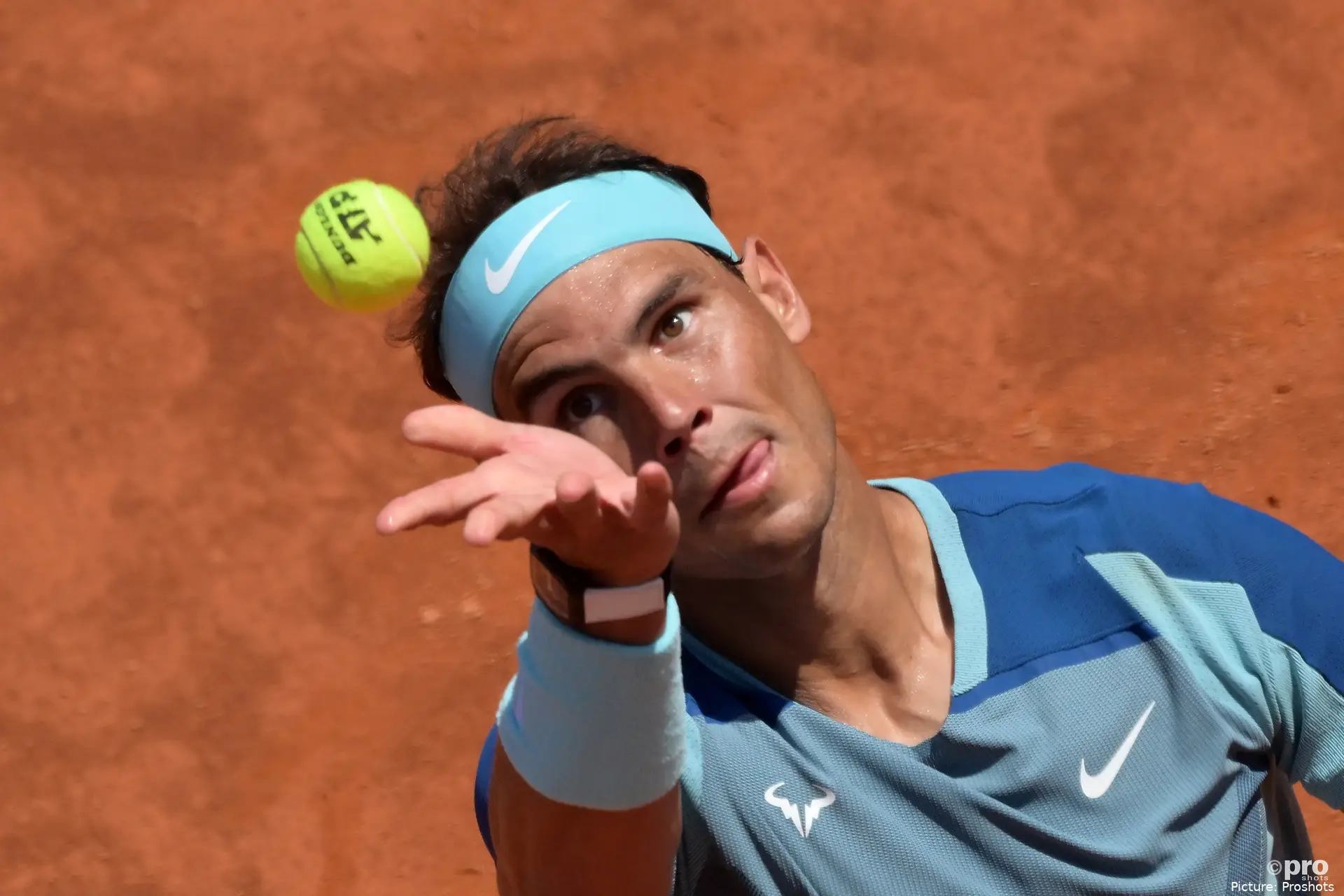
Time has a curious way of moving fast, especially when you realize we're experiencing our first clay court season without Rafael Nadal. And in this unfamiliar stretch of the calendar, it’s hard not to drift back in time. On this occasion, we revisit the beginning of Nadal’s clay court reign—a journey that started with his breakthrough triumph at the 2005 Rolex Monte-Carlo Masters. It was a title that didn’t just mark a victory—it signaled the dawn of a domination so complete, it’s hard to imagine it ever being repeated.
At just 17, Rafael Nadal had already offered glimpses of greatness. His 2004 win over world No. 1 Roger Federer in Miami wasn’t merely an upset; it was a warning shot. But it wasn’t until the following year that the world truly grasped the scale of what was coming.
The red clay would prove the perfect stage for Nadal’s heavy topspin forehand, a weapon that disrupted rhythm, pushed opponents off balance, and left them grappling with shoulder-high balls that were nearly impossible to counter with pace. Monte Carlo, with its breathtaking Mediterranean backdrop and rich tennis heritage, set the scene for what would become a historic first ATP Masters 1000 title.
Read also

A Young Contender Arrives
When Nadal arrived in the Principality in 2005, he had just cracked the ATP top 20, sitting at No. 17 in the world. He had already collected three career titles: Sopot in 2004, and back-to-back wins in Costa do Sauipe and Acapulco earlier that year. His form on the South American clay was electric, and he had once again pushed Federer to the brink in Miami—this time in a five-set final.
Though it wasn’t his Monte Carlo debut (he’d reached the third round as a 16-year-old in 2003), few could have predicted the storm he was about to unleash in his second visit to the iconic venue.
A Dominant March to the Final
Sporting his signature sleeveless shirt and long shorts, the young Spaniard launched his campaign with a confident 6-3, 6-2 win over France’s Gaël Monfils—remarkably, the only player from that draw still active today.
Next came Belgium’s Xavier Malisse, who felt the full force of Nadal’s game in a 6-0, 6-3 rout that lasted just over an hour. In the third round, it was another Belgian, Olivier Rochus, who stood no chance in a 6-1, 6-2 defeat.
By the time Nadal reached the quarterfinals, he had dropped just 11 games—an astonishing display of dominance.
There, a formidable test awaited: reigning Roland-Garros champion Gastón Gaudio. Earlier that season, Gaudio had been the only man to beat Nadal on clay, dismantling him 0-6, 6-0, 6-1 at the Buenos Aires event. But Monte Carlo told a different story.
This time, Nadal steamrolled the world No. 6 in just under an hour, 6-3, 6-0—a seismic shift that left no doubt: a new power on clay had arrived.
Gasquet Pushes, Nadal Prevails
The semifinal brought a familiar face from the junior ranks—Richard Gasquet. The Frenchman managed to take a set off Nadal, becoming the first to do so in the tournament. But history would repeat itself throughout their careers: Gasquet would never manage a victory in their 18 meetings.
Nadal eventually prevailed 6-7(6), 6-4, 6-3, booking his spot in a Masters 1000 final for the first time.
A Clay Court Epic Against Coria
Awaiting him in the final was Guillermo Coria, a fearsome force on clay and widely regarded as the best on the surface at the time. A finalist at Roland-Garros in 2004 and the defending champion in Monte Carlo, Coria was the ultimate test.
What followed was a titanic battle of stamina, strategy, and steel. Nadal came out swinging, claiming the first two sets 6-3, 6-1. But Coria struck back emphatically, delivering a 6-0 statement in the third to extend the match.
The fourth set became a test of resilience. And in a gripping conclusion, it was the 18-year-old Nadal who held his nerve, closing it out 7-5 after more than three hours of play to win his first Masters 1000 title.
The Start of Something Extraordinary
That victory in Monte Carlo wasn’t just a trophy—it was a harbinger of the dominance to come. Six weeks later, Nadal would capture his first Grand Slam at Roland-Garros. By season’s end, he’d amassed 11 titles, setting the tone for an era where clay belonged almost exclusively to him.
Monte Carlo 2005 was more than a breakthrough—it was the moment Rafael Nadal planted his flag on the surface he would go on to rule for nearly two decades.

Nadal holding the Roland Garros trophy.

Samuel GillEditor-in-Chief
Samuel Gill is the Chief Content Officer (CCO) of TennisUpToDate.com, a role he has held since 2020. He is responsible for editorial governance across the platform, including setting content standards, overseeing accuracy and consistency, and guiding long-term editorial strategy. Since joining, he has contributed more than 10,000 articles and editorial pieces across the TennisUpToDate network, playing a central role in the daily operation and development of the site.
Based in Leicester, Samuel has a broad background in tennis media. In his current role, he works closely with editors and writers to ensure coverage meets clear journalistic standards, with particular attention to verification, consistency, and timely updates when new information becomes available.
claps 0visitors 0
Just In

Popular News
Latest Comments
- One step by another step -- WTA continues to 'lose the plot'. Too many hi-tech microphones being installed at most venues!!! Remove them (especially those along the hallways, sidewalks, and pathways throughout the venues. Not to mention (most of all) remove the mic's from the Players/Coaches Box.
 mandoist06-11-2026
- Enough of her bullshit. Go marry someone.mandoist06-11-2026
- Don't you just love this young lady!? We fans often expect athletes to be supermen and superwomen, often forgetting that they WILL GET TIRED! I love Alex's perspective. Tiredness for an athlete should never be viewed as a negative, especially if you are healthy, taking care of your body and mental health and putting in the work. What a mature perspective. Good for you, Alex!Rapunzel05-11-2026
- Jess is absolutely correct! But the disrespect is a trait I have noticed in most of the Russian players. Mirra is good but very immature and lacks humility. Conceivable needs to get a handle on that!Rapunzel05-11-2026
- Having spent weeks and weeks through the years on tour, I can say with confidence that Conchita was (is) one of the very few who realize the surprising level of maturity (and sometimes lack of) which Mirra seems to have developed in such a demanding adult world of Pro-Tennis. While at the same time reminding herself (Conchita, that is) that Mirra is still young and developing mentally and physically. The general public may forget at times, or not at all realize, these modern era young athletes do not have a 'normal' Youth. It's a major sacrifice, among countless sacrifices, these athletes must make. People who blow-off that fact are ignorant and unfair when they blurt out, "They choose fame so they have to put up with the intrusions on their lives". No, they do not.mandoist05-11-2026
- Okay... someone with a camera was EAVESDROPPING on a private conversation. Shouldn't that be the point of discussion here? Regardless of the sensationalist crap by media, Pegula (and anyone) has a right to an opinion. There used to be an expectation that private conversations were respected, regardless of 'stardom' and whatever other defensive excuses media tries to shove in our faces. Boo-hoo if feelings are hurt. BTW: Having been employed at various tourney venues, etc., I can't tell you how nasty and offensive players can be when discussing their opponents and colleagues... in "private". Well, I could, but won't. I also challenge anyone to deny what Jessica said is false.mandoist05-11-2026
- Vacherot is Mongasque, rather than Swiss. The tournament was Swiss :DTrwd7702-11-2026
- After a couple decades traveling to IIHF tourneys overseas... our family is done with it... and I will not be the only one!! Bad enough the NHL allows Ovachenko (a Putin Supporter and Campaigner) to live and play in the USA. Let's not forget the STATE SPONSORED RUSSIAN DOPING PROGRAMS still in effect today.mandoist31-10-2026
- Osaka's mental state apparently does not allow her to reach any more Quarter Finals? I mean, she doesn't really have the time for tennis with all the pre-planning that must go into her 12 year-old "fashion" goals.mandoist29-10-2026
- With her money one would think she could afford a better team of Psychiatrists?mandoist29-10-2026
