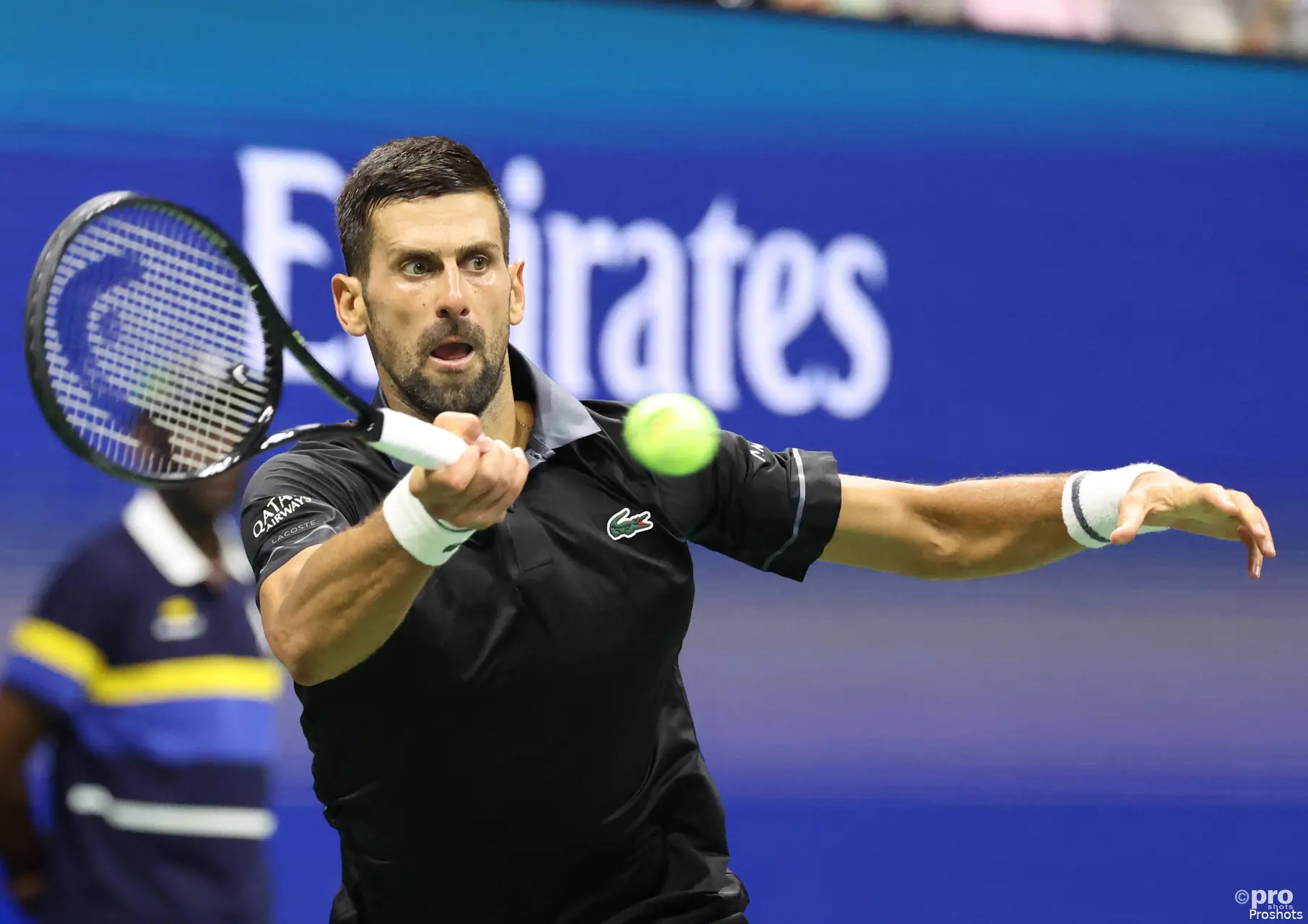
The scoreline will say 7-6(5), 5-7, 4-6, 6-2, 6-1, a four-hour, 36-minute defeat to world No. 48 Mariano Navone in the first round of the US Open. But the scoreline isn't really what anyone who watched it will remember.
What they'll remember is Novak Djokovic vomiting courtside, grabbing at a cramping foot, swallowing pills handed to him by a doctor, and fighting back tears during a medical timeout before the fifth set even began.
For two decades, Djokovic has built much of his legend around his ability to survive exactly these kinds of matches. Five-set battles, physical exhaustion and opponents who appeared fresher have repeatedly worked in his favor, making the scenes in New York particularly difficult to watch at 39 years old.
This time, however, Djokovic's body appeared to have finally reached its limit. The 24-time Grand Slam champion had never previously lost in the first round of the US Open, but Navone stayed with him through the physical collapse and eventually won 11 of the final 12 games to complete one of the biggest victories of his career.
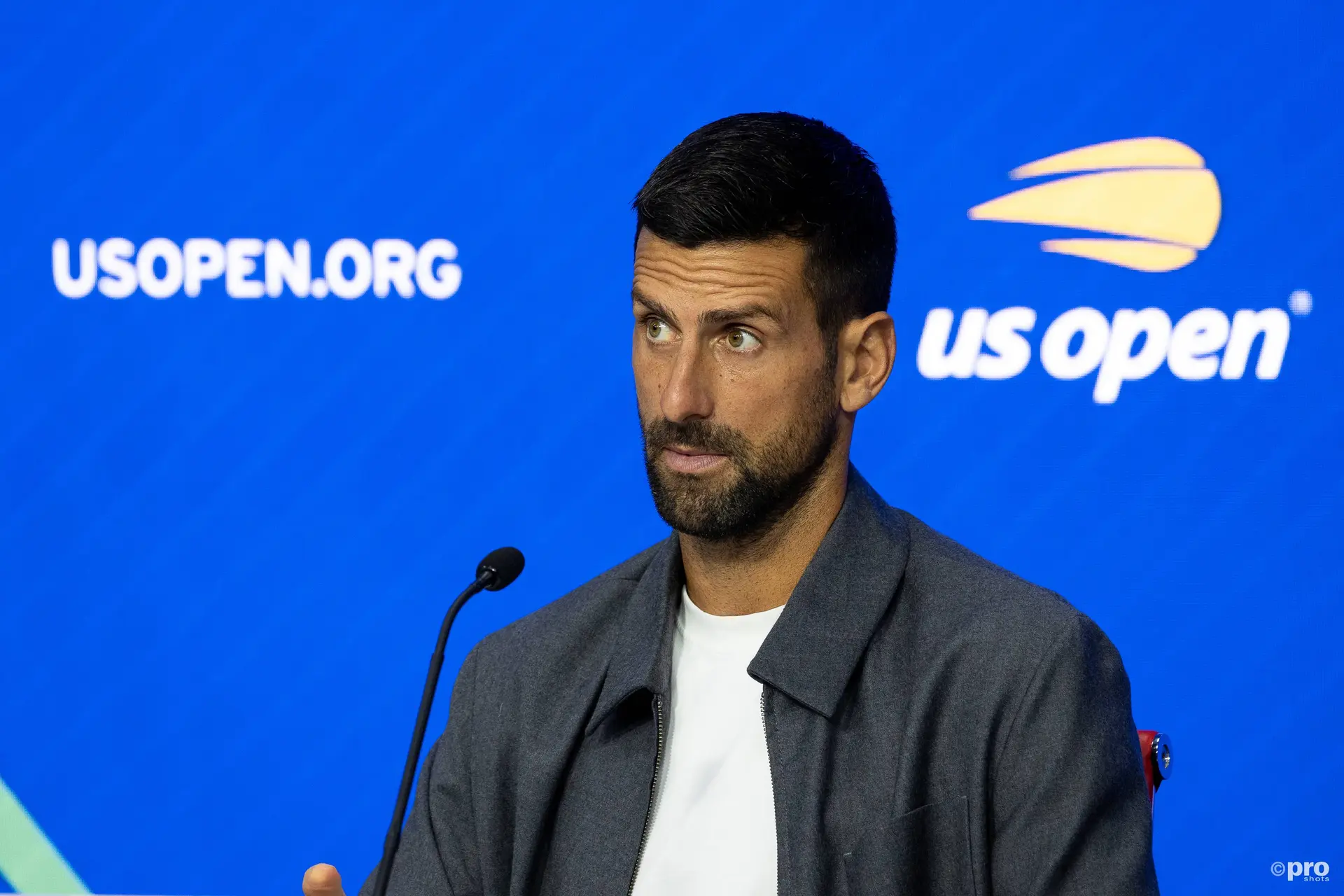
A record that had never been touched
Djokovic had never lost in the first round of the US Open in 19 previous appearances there. The defeat was also his first opening-round loss at any Grand Slam in two decades, since the 2006 Australian Open, and just the third such loss of his entire career. Records like these don't fall to unseeded players in their mid-20s who've never beaten you before. This one did.
Throughout his 20 appearances at Flushing Meadows, Djokovic won 4 titles in 10 finals, amassing a total of 95 victories and only 16 defeats (86%). He had never exited so early in New York, but the loss to Navone signals a turning point for the Serb.

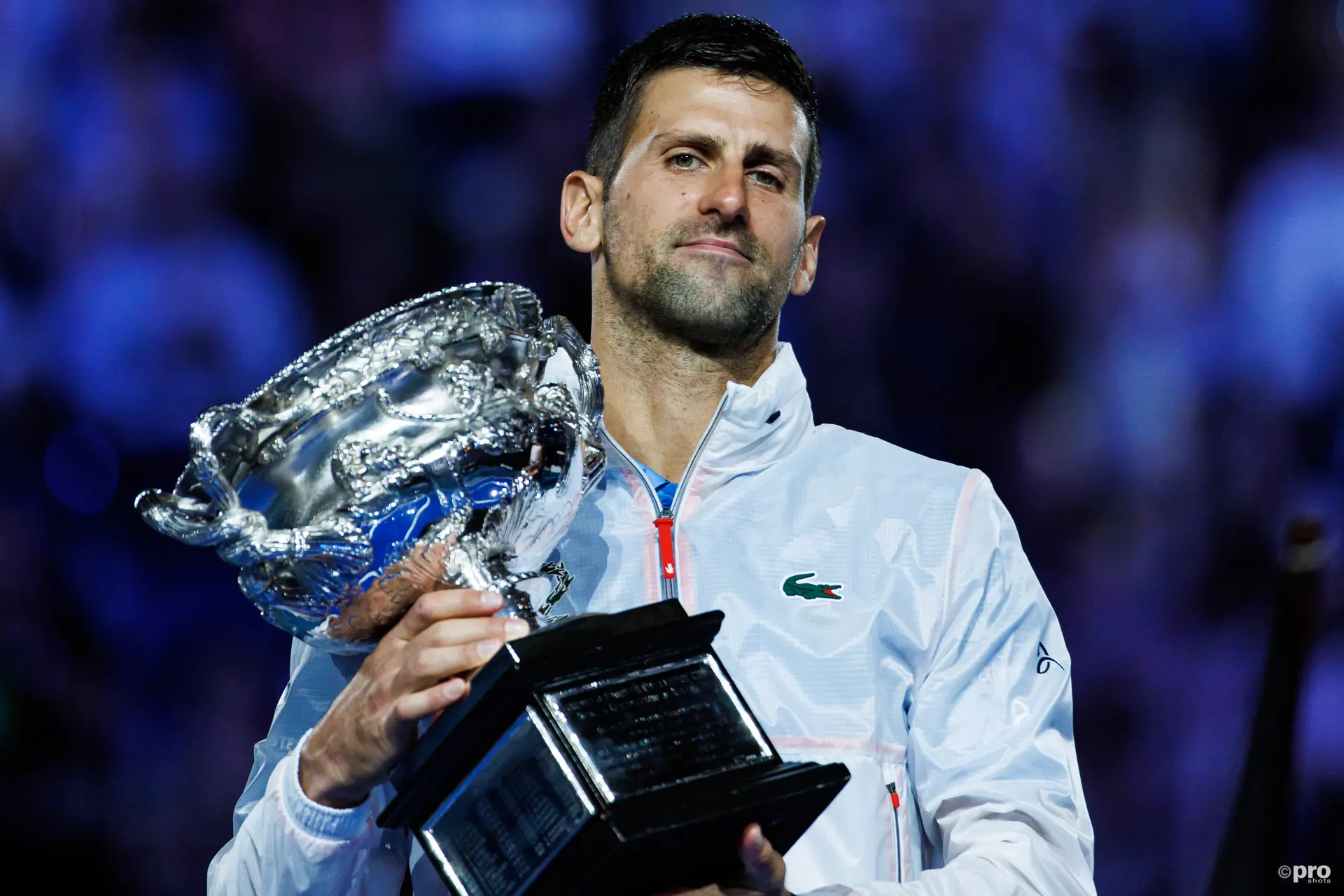
Novak Djokovic at US Open.
Djokovic's US Open win record, entering 2026
| Wins | |
| Jimmy Connors (1971-1992) | 98 |
| Novak Djokovic (entering 2026) | 95 |
| Roger Federer (career) | 89 |
No man in the Open Era has ever reached 100 career match wins at the US Open. Djokovic arrived needing just four more victories to become the first, and three to draw level with Connors' all-time record. After Sunday, he remains stuck on 95 — the milestone still unclaimed, and now, for the first time, genuinely uncertain to ever be his.
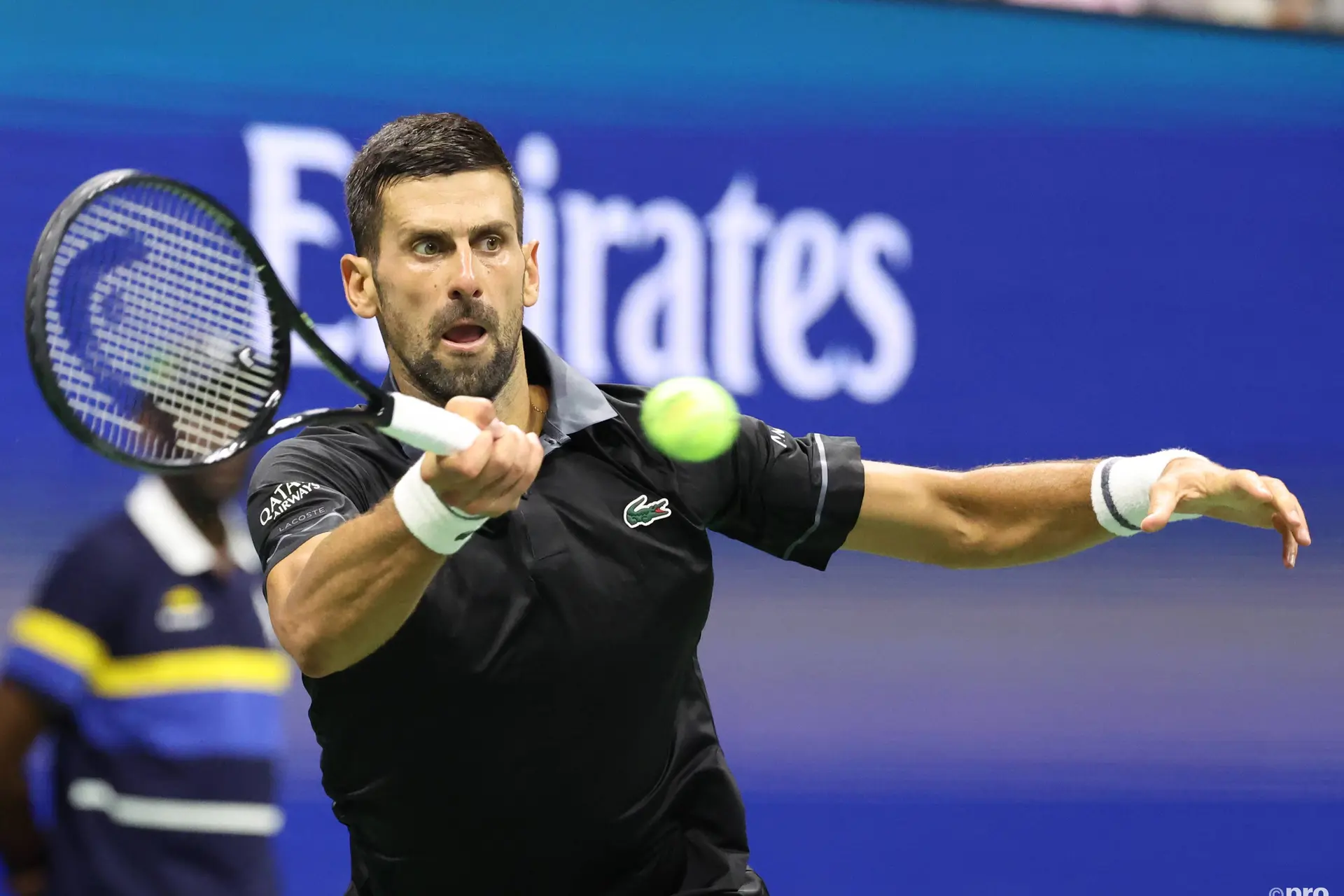
The physical collapse, point by point
Everything looked ordinary for a stretch. Djokovic led 4-1 in the opening set before Navone clawed it back to a tiebreak and won it. Djokovic answered by taking the next two sets, breaking early in the fourth to lead two sets to one plus a break — the position of a man cruising toward a routine second-round appearance. Then, by his own account, his body began shutting down.
"I think it was obvious that it was an awful feeling on the court for me," Djokovic said afterward, describing an issue he said has followed him through most of this season. He required a medical timeout for his back before the deciding fifth set, receiving a massage and pills courtside, and looked, in his words, like he "pretty much despised every moment" he spent on court in the closing stages.
Navone making noise 🗣️
— US Open Tennis (@usopen) August 31, 2026
He takes the first set over Novak on Ashe 👀 pic.twitter.com/jazkpgpVKl
Navone, for his part, never let the moment overwhelm him — extending rallies, forcing extra balls, refusing to hand anything back once he sensed the momentum had genuinely turned. He won 11 of the last 12 games. Djokovic finished with 70 unforced errors in a match he had, for two sets, been winning comfortably.
The most jarring part, for anyone who has watched Djokovic for two decades, wasn't any single moment but the accumulation of them: a champion known for treating five-set matches as a strength suddenly looking like he wanted the match to end, regardless of the scoreline.
The bigger picture: a decline that's been building since his 24th major
Crowds at Arthur Ashe Stadium have watched Djokovic grind down younger, fresher opponents in exactly these circumstances more times than anyone can count. On Sunday night, the roles were reversed, and the discomfort on his face read as something closer to real distress than a champion's theater.
Sunday's collapse didn't happen in isolation. Since beating Daniil Medvedev in the 2023 US Open final for his 24th Grand Slam title, Djokovic's results at the majors have traced a slow, steady retreat from the finals and semifinals that once felt automatic toward something far more human.
Read also
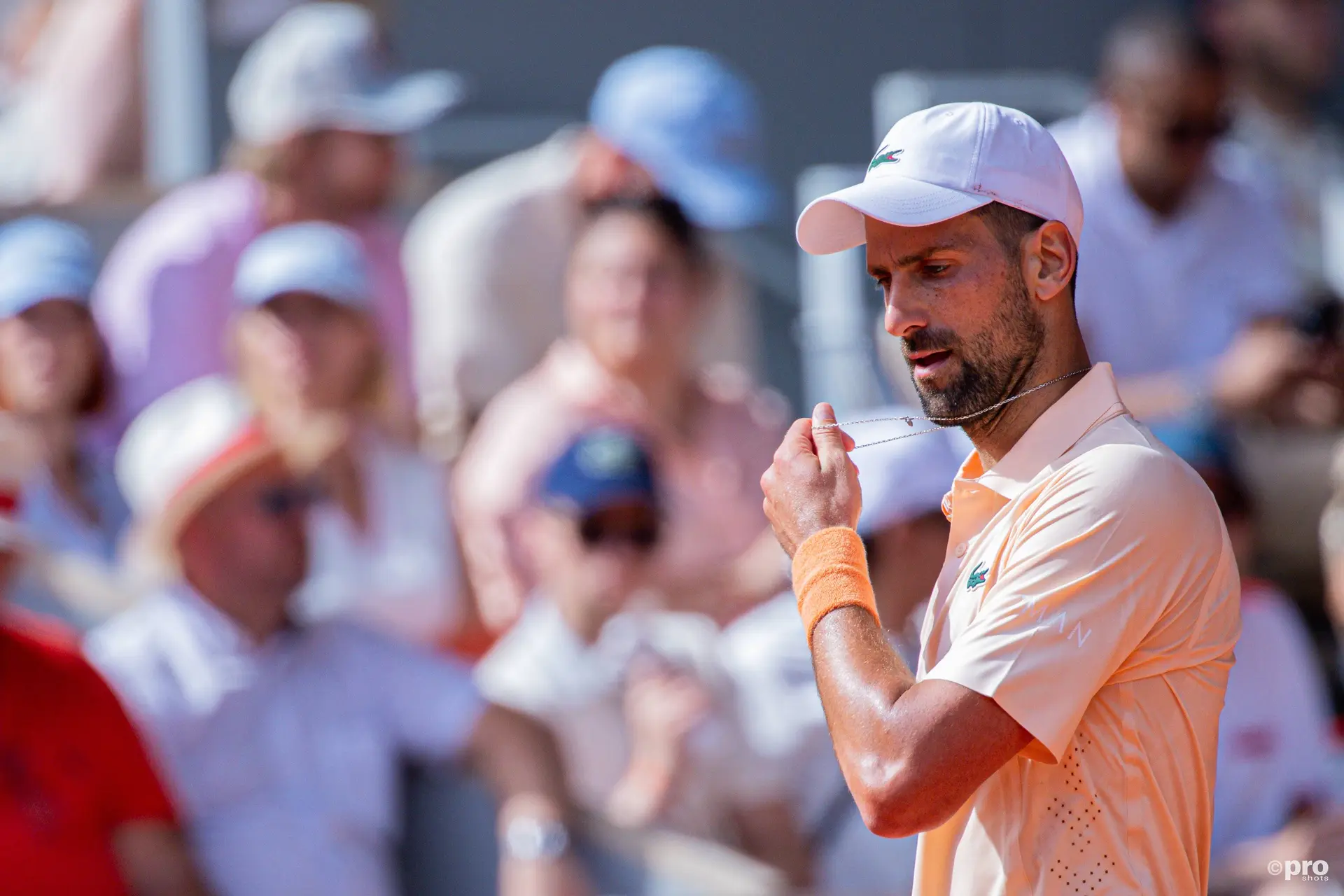
Djokovic's Grand Slam results since his 24th major (record: 48-11)
| Tournament | Result | |
| 1 | 2024 Australian Open | Semifinal (lost to Sinner) |
| 2 | 2024 Roland Garros | Quarterfinals (withdrew) |
| 3 | 2024 Wimbledon | Final (lost to Alcaraz) |
| 4 | 2024 US Open | Third round (lost to No. 28 seed Popyrin) |
| 5 | 2025 Australian Open | Retired hurt in the semifinal |
| 6 | 2025 Roland Garros | Semifinal (lost to Sinner) |
| 7 | 2025 Wimbledon | Semifinal (lost to Sinner) |
| 8 | 2025 US Open | Semifinal (lost to Alcaraz) |
| 9 | 2026 Australian Open | Final (lost to Alcaraz) |
| 10 | 2026 Roland Garros | Third Round (lost to Fonseca) |
| 11 | 2026 Wimbledon | Semifinal (lost to Sinner) |
| 12 | 2026 US Open | First round (lost to Navone) |
The trajectory is unmistakable even without the numbers: finals and semifinals gradually giving way to a third-round upset in 2024, then a run of semifinal exits through 2025, and now a first-round defeat to a player ranked outside the top 40. Each step down looked, at the time, like an aberration against otherwise elite form. Taken together, they look like a pattern.
Where this leaves things
Djokovic didn't cite a single diagnosis for what happened on Sunday, describing instead an accumulation of problems — stomach issues, cramping, back and shoulder pain — that he said have "pretty much" followed him through every match this year. That's a different kind of admission than an injury update. It suggests not a setback to recover from, but a body that may simply no longer be able to do, on demand, what it did for the better part of twenty years.
Whether this was Djokovic's last match at the US Open is, for now, an open question he didn't answer directly. But the moment that will stay with people wasn't the shot that ended it, or even Navone's composure under the lights against the most decorated man in the sport's history. It was watching Djokovic — the player whose entire legend was partly built on refusing to let his body lose before his mind did — finally look like neither one was fully in his control.

Cristhián AvilaTennis Journalist
Cristhián Ávila is a tennis journalist based in Santiago, Chile, and has been part of the TennisUpToDate team since early 2023. He covers the ATP and WTA Tours as well as all four Grand Slams, producing breaking news, match reports, analysis, and regular liveblogs from major tournaments.
His reporting combines statistical analysis with clear explanation, helping readers understand tactical developments, player form, and broader storylines across the tour. Working fluently in both Spanish and English, Cristhián collaborates with an international editorial team and contributes to comprehensive global coverage. As part of his work, he has conducted interviews and media interactions with leading figures in the sport, including Caroline Wozniacki and John McEnroe.
In his journalism, Cristhián places strong emphasis on careful sourcing, editorial accuracy, and updating articles promptly when new, verified information becomes available. His coverage is grounded in research, context, and direct engagement with professional tennis.
claps 0visitors 0
Just In

Popular News
Latest Comments
- A healthy Qinwen may be hard to stop next season. She was already scaring her opponents before her medical leave(s). Unfortunately, Zheng insisted on singing again. On the positive side -- Mirra did not sing!! ;~}
 mandoist11-10-2026
 - Where is it written that athletes, entertainers... People in general... are mandated to keep looking at -- or even using [anti]Social Media? Public & private figures consistently complain and reveal their concerns about negativity and violence thrown at them -- yet they insist on participating. Avoid it, don't use it, don't read it. It's okay to occasionally look up at the World instead beating your eyes & thumbs to death on The Inventions out there.mandoist11-10-2026
- great articlestennisseserver07-10-2026
- Medvedev was leading Djokovic 7-5, 3-5 when an attempted return..' NO you ignorants, Djokovic was leading .weiss05-10-2026
- No more bullshit "Wildcards" to these two. Qualify like everyone else -- there will be cameras there, too. Time to scream... WTF ????!!!!mandoist29-09-2026
- Let's not BS the general public -- Sabalenka started showing cracks in her game last season. Her losses and near-losses started at about the same time she began being distracted by Fame (constant Selfies, making TV commercials, magazine shoots, endless Social Media nonsense, etc., etc.) One would think even Saba could recognize the parallels with others who failed before her -- Raducanu, Giorgi, Bouchard to name a few.mandoist25-09-2026
- Gross!! Hey Raducanu, Giorgi, and Bouchard -- reserve a seat at your Social Media Selfie table for Saba + Naomi. They're heading in your direction soon enough.mandoist24-09-2026
- And then these same players will complain about how lengthy their season’s were and need more time-off. I’m all for more tennis but the amount of tennis we get now is actually kind of crazy! We all need a break, especially the players.DaveyWavey23-09-2026
- You should do a comparison article for "different kinds of justice" the courts decide for tennis players. I can think of at least three players who received very small bans of a few months, however Tara Moore has been fighting for her literal survival the past few years. It seems odd considering she is not a "name" player, unlike the other cases.DaveyWavey22-09-2026
- PRIZE MONEY & POINTS Winner - $185,500 Finalist - $114,500 Semi-Finalist - $66,003 Quarter-Finalist - $35,000 Round of 16 - $18,045 Round of 32 - $13,005 Winner - 500 Finalist - 325 Semi-Finalist - 195 Quarter-Finalist - 108 Round of 16 - 60 Round of 32 - 1DaveyWavey20-09-2026

Loading