"The strongest athlete I have ever trained. Monstrous.": Panichi’s 6-month plan to rebuild Holger Rune
ATP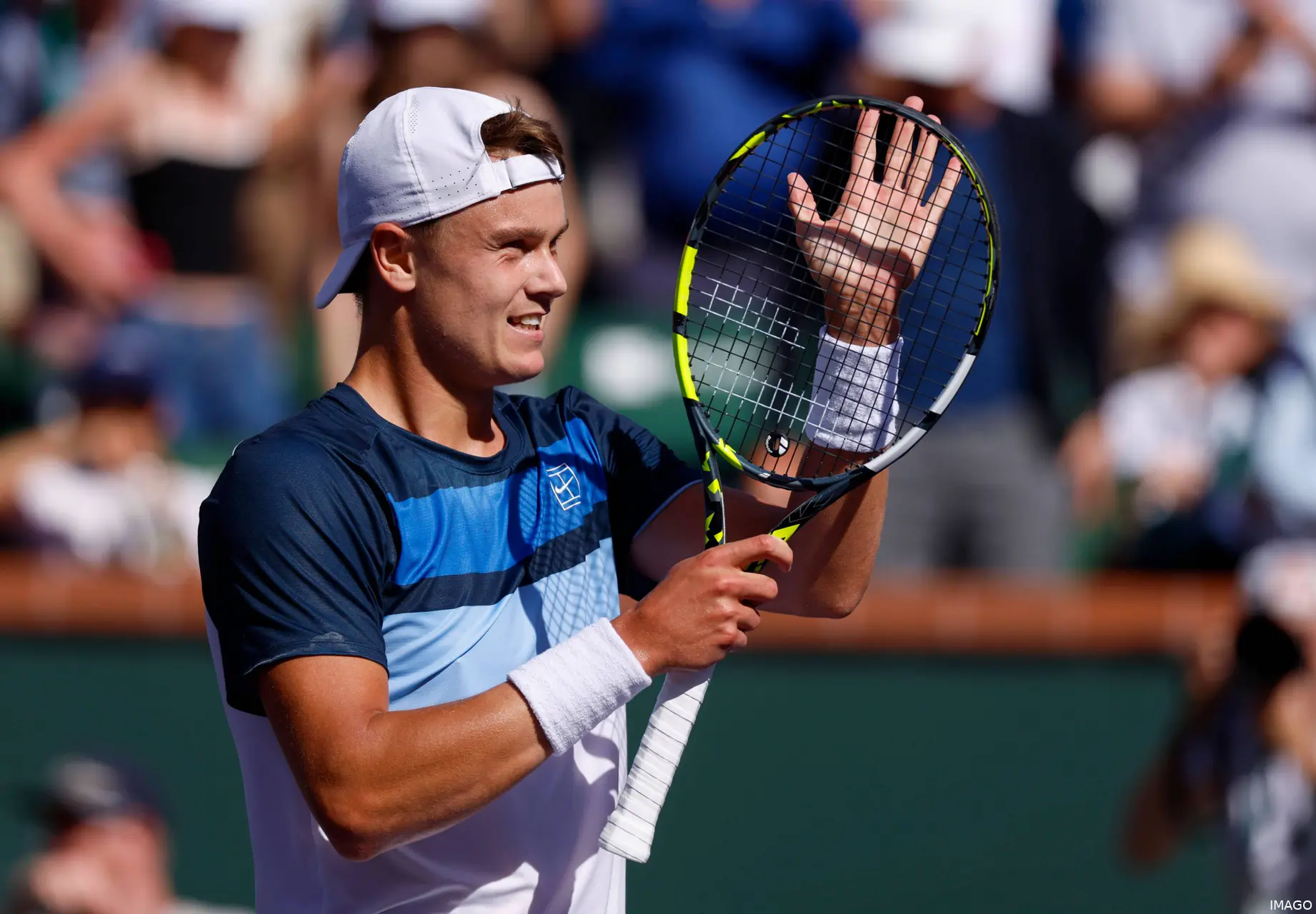
Marco Panichi has spent decades sculpting the bodies of tennis royalty, from the elastic resilience of Novak Djokovic to the development of Jannik Sinner. Now, the veteran physical trainer faces perhaps his most explosive challenge yet in Holger Rune. The partnership began with high hopes but hit an immediate hurdle when the young Dane suffered a significant tendon injury. However, Panichi views this forced hiatus not as a setback, but as a critical opportunity to recalibrate a Ferrari that was being driven off-road.
The Dane suffered a fall in the middle of the Stockholm Open semi-finals that forced him to miss the final stretch of the season. The Achilles tendon rupture was initially expected to require between 9 and 12 months of recovery, and it would not have been surprising if he missed the entire 2026 season. However, Panichi believes that Rune’s return could come much sooner than anticipated.
The immediate focus has shifted entirely to rehabilitation, with a timeline that demands patience in a sport addicted to speed. Panichi and the medical team are looking at a six-month window for a full return, a period necessary to ensure the injury heals completely without the risk of relapse.
The strategy involves a meticulous pre-athletic phase followed by specialized treatment in Doha, distancing the player from the daily grind of the tour. This pause allows the team to reset the physical foundation of a player who has often relied on raw talent over structural stability.
The physical raw material, according to Panichi, is simply unprecedented in his long career. Having worked with the greatest movers in history, his assessment of Rune’s natural gifts carries significant weight in the tennis world. He describes the Dane’s explosive power as "monstrous," placing him in a unique category of athleticism. The goal now is to harness that raw power into a disciplined, sustainable game style that can challenge the current hierarchy of Jannik Sinner and Carlos Alcaraz.
The 6-month road: caution over speed
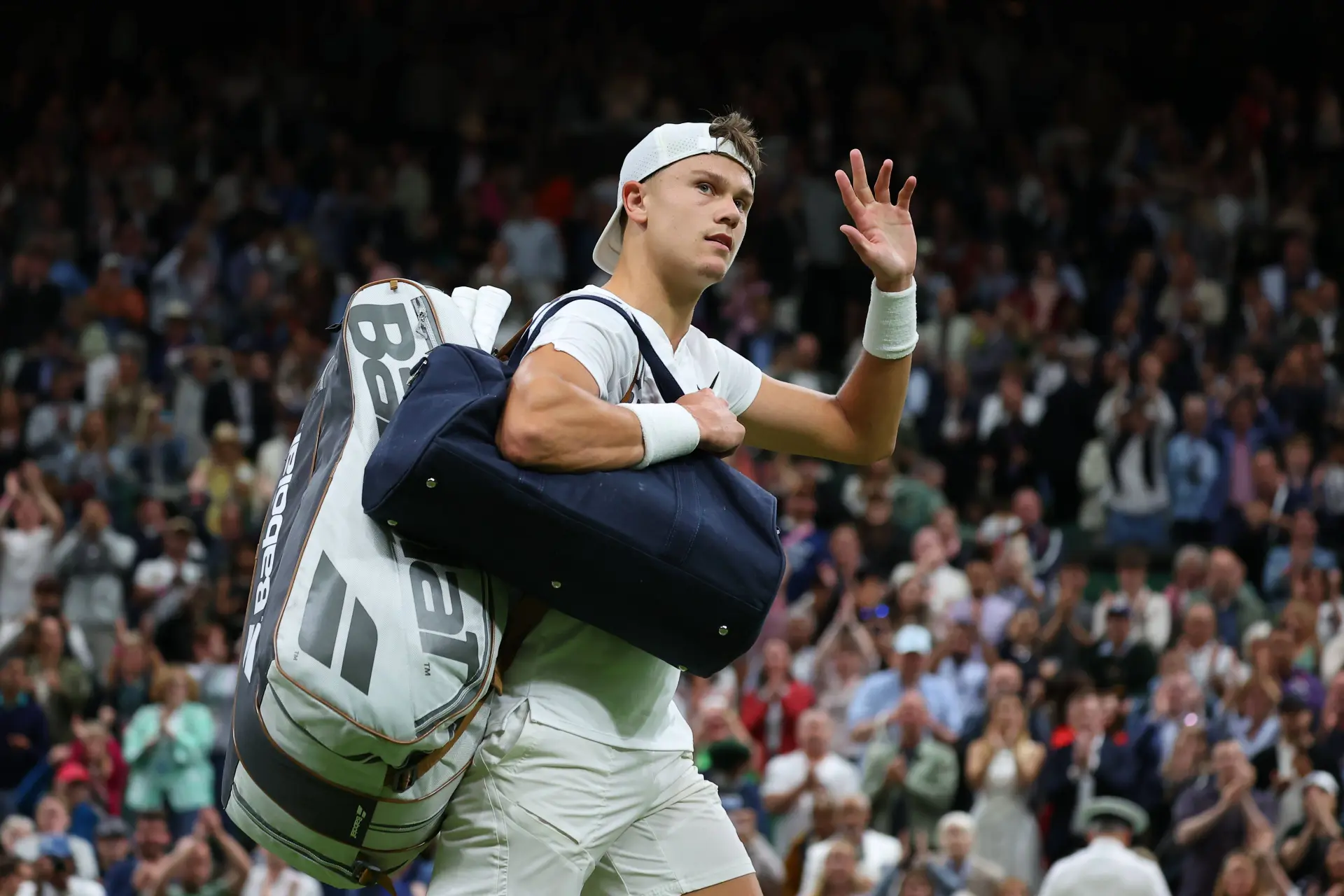
The nature of Rune’s injury—a total tendon rupture—requires a conservative approach that prioritizes long-term health over short-term ranking points. Panichi is keenly aware that rushing back could be catastrophic for an athlete who relies so heavily on explosive movement. The team is currently weighing the risks of surface transitions, with the grass season potentially being a casualty of this cautious timeline.
"We absolutely do not want to rush because we know it is better to be cautious a little bit more to then forget about what happened. I believe for us too, the timeline is more or less that: 6 months. I believe it is more appropriate to wait for the hard courts and not play immediately on grass, but we will see during the process what happens. We leave the door open enough, we will evaluate together with the doctors and the whole staff what to do."
A "monstrous" hybrid
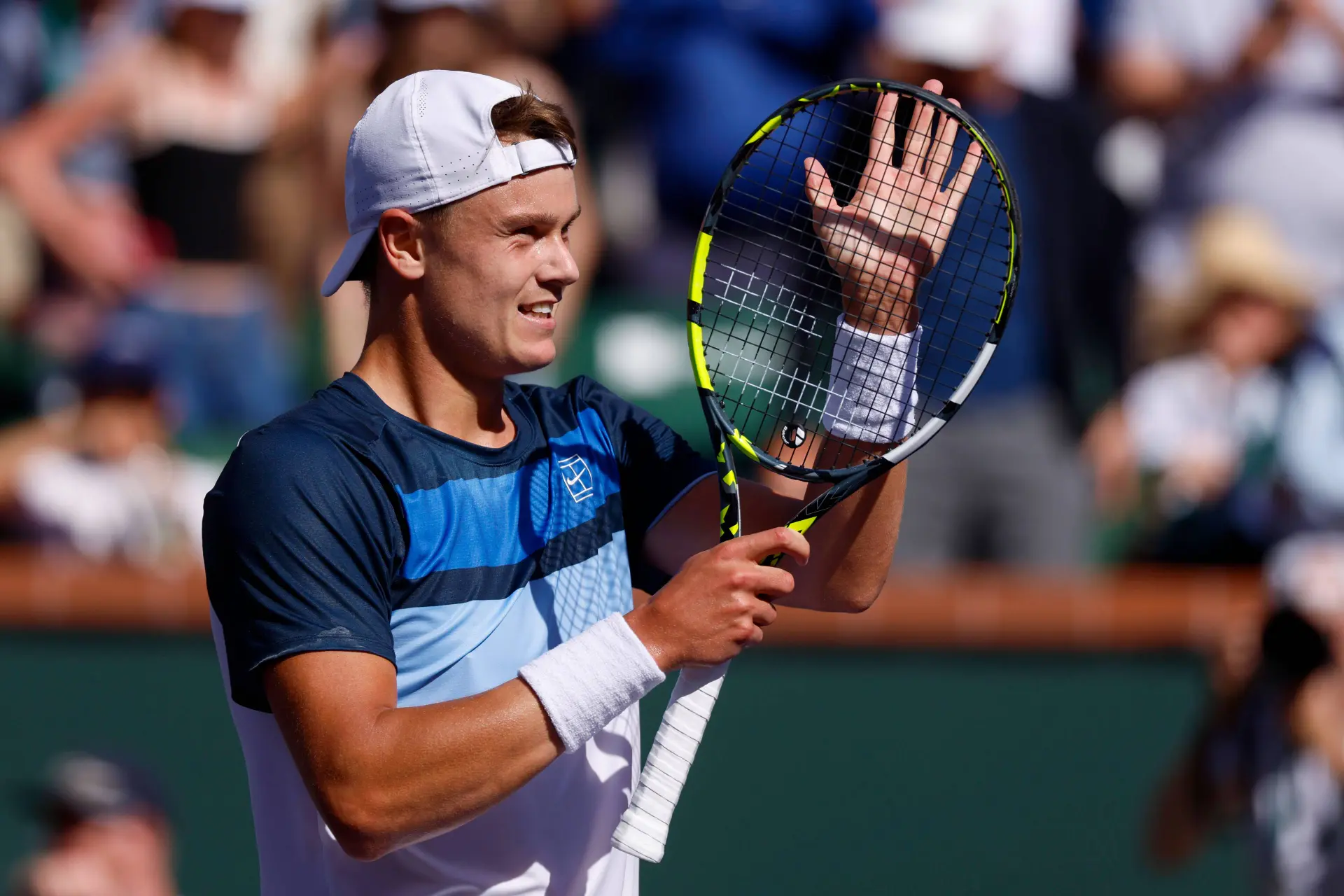
Panichi’s comparison of Rune to his former charges and current rivals is fascinating. He sees the Dane not as a copy of the existing stars, but as a unique hybrid with physical tools that might even exceed those of the legends he has trained before. The challenge lies not in creating power, but in controlling it.
"I believe he is a player a bit more complete, a middle ground between Djokovic, Sinner, and Alcaraz. We are in that range. I knew him as a great athlete, and now training him I have proof: He is the strongest athlete I have ever trained in terms of explosive force expressions. Monstrous. But he doesn't put this athlete on the court at the right moments yet. He needs to balance this mind-body system. It's a challenge, but I am confident."
The "Instinctive" myth
Perhaps the most revealing insight from Panichi is the dismantling of Rune’s public persona. While fans see a reactive, emotional player, Panichi sees a thinker who needs to learn how to trust his instincts in the right way, creating a "game identity" that isn't currently there. "I found a guy who has a very, very high introspective capacity. This is very positive," he said. "He is a guy who, contrary to what it seems on the court, thinks a lot. He doesn't do it on the court actually, but outside he does. So we can work on this."
"He is not completely instinctive like other players I trained. When I started, we aimed at creating a game identity that is his. He has talent, he can touch the ball delicately or hit hard. But this puzzle was messy. In moments to be solid, he wasn't; when he had to dare, he became conservative."

Cristhián AvilaTennis Journalist
Cristhián Ávila is a tennis journalist based in Santiago, Chile, and has been part of the TennisUpToDate team since early 2023. He covers the ATP and WTA Tours as well as all four Grand Slams, producing breaking news, match reports, analysis, and regular liveblogs from major tournaments.
His reporting combines statistical analysis with clear explanation, helping readers understand tactical developments, player form, and broader storylines across the tour. Working fluently in both Spanish and English, Cristhián collaborates with an international editorial team and contributes to comprehensive global coverage. As part of his work, he has conducted interviews and media interactions with leading figures in the sport, including Caroline Wozniacki and John McEnroe.
In his journalism, Cristhián places strong emphasis on careful sourcing, editorial accuracy, and updating articles promptly when new, verified information becomes available. His coverage is grounded in research, context, and direct engagement with professional tennis.
claps 0visitors 0
Just In

Popular News
Latest Comments
- Does Sinner need that 4.5 mil? I doubt it. He can make that with three modelling gigs!😅🤣Rapunzel21-10-2026
- Did "People Magazine" purchase this website? This nonstop storyline is bullshit.
 mandoist21-10-2026
 - Listen... this is of no concern to anyone but these two. Deal with your own issues -- most of us have our own. Thanks, media, for these insignificant follow-ups which are meaningless.mandoist21-10-2026
- This is so very very sad, for all three of them. I truly thought they had an unbreakable bond, but life throws up so many differing challenges. Having your homeland suffering in such a terrible way, makes happiness lose out to guilt as well. Our thoughts are with them. X💔bjsexton20-10-2026
- I have lost all respect for Svitolina! Could she not have waited until he had played at the Paris Masters!!! She is selfish and don't give a damn about Gael. That is NOT how love is demonstrated Elina!!Rapunzel19-10-2026
- Perhaps convenient tennis tour sex is not a strong enough experience in which to base a marriage?mandoist19-10-2026
- Fight the Good Fight... Tennis (sports in general) need more Humans such as yourself.mandoist18-10-2026
- When is WTA going to mandate Genetic Testing (DNA) ???mandoist18-10-2026
- Hey, Dan... you just wake up from a coma? Regardless -- Thanks for the comedy this morning!mandoist18-10-2026
- Two Things: 1. Stop allowing these Spoiled Trust-Fund Elitists to behave badly. Your little hand-slaps do not deter them. 2. STOP the incessantly annoying "towel wiping" nonsense!!!!mandoist15-10-2026

Loading