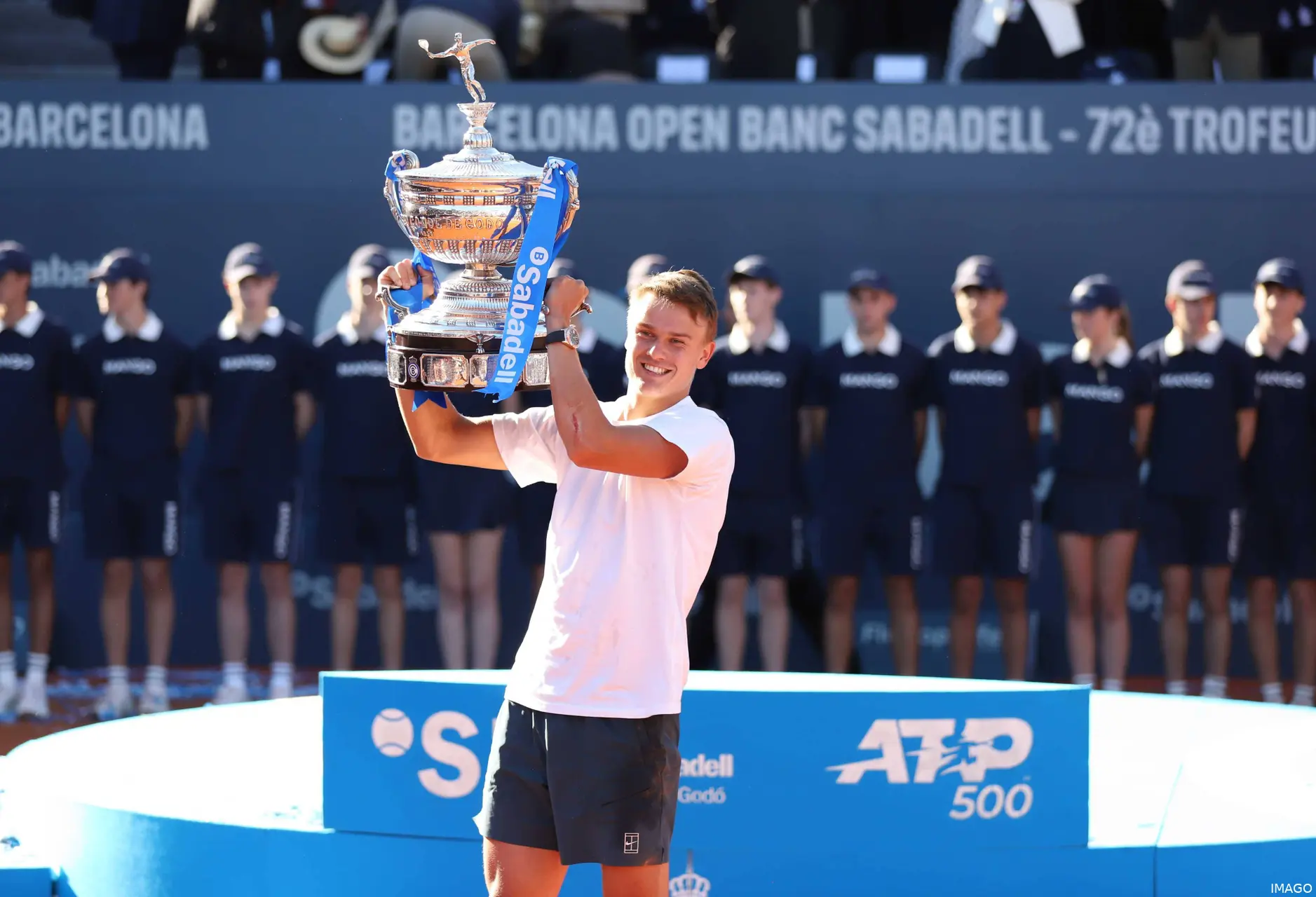
The Barcelona Open Banc Sabadell and its organizers have officially unveiled a bold strategic plan designed to radically transform the historic tournament between 2026 and 2028. Rather than focusing solely on retaining its status as the "best ATP 500" event, organizers aim to position the tournament among the elite competitions of the global tennis calendar, regardless of category.
The objective is clear: operate at standards comparable to the Masters 1000, ensuring the event’s long-term relevance and prestige.
This ambition is rooted in a rich history that makes the event one of the most traditional stops on the European clay swing. Disputed since 1953, the tournament featured historic champions such as Roy Emerson and Manuel Santana even before the beginning of the Open Era. Since 1972, the world's best players have paraded through the Real Club de Tenis Barcelona, with legends like Bjorn Borg, Ilie Nastase, Mats Wilander, and Tomas Muster capturing the title during the last century, cementing the venue's legacy as a crucible for clay-court excellence.
In recent decades, the local dominance of Rafael Nadal, who claimed 12 titles—the last in 2021 after defeating Stefanos Tsitsipas in the final—defined the tournament's modern era. Following his reign, a new generation has taken up the mantle, with Carlos Alcaraz winning back-to-back in 2022 and 2023, followed by Casper Ruud in 2024 and Holger Rune in 2025.
Barcelona Open accelerates transformation
This strategic shift comes in response to new ATP regulations that require tournaments to share 50% of profits exceeding prize money with participating players. To remain competitive and attract top talent under this model, the Barcelona Open must optimize revenue streams. The plan targets a 40% increase in billing over the next five years, building on recent successes where revenue has already multiplied under current management.

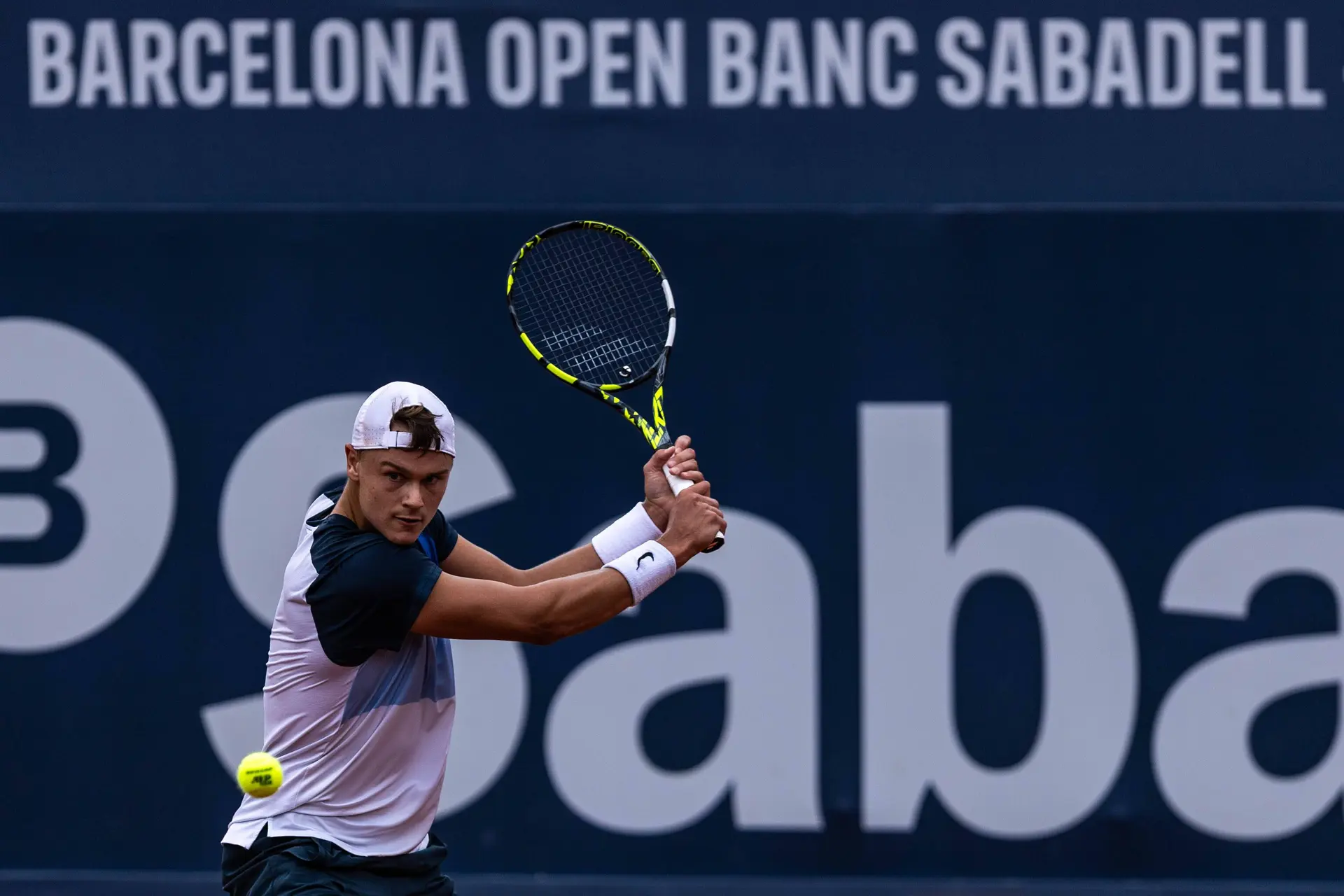
Holger Rune during the 2025 Barcelona Open
Tournament leadership recognizes that past achievements alone will not guarantee future relevance. With the calendar potentially favoring Grand Slams and Masters 1000 events, constant innovation is essential. Xavier Pujol, executive director of the Godó, warned: "Hand in hand with Tennium, we have multiplied income by 2.3 and billing by 5.3 in the last 5 years. But the tsunami of transformation that tennis is experiencing is so brutal that if we do not continue innovating, everything we have achieved so far will be lost."
To achieve this, the event will leverage its commercial strength, currently generating 62% of revenue from sponsors and hospitality. While it cannot match the financial scale of Grand Slams or Masters 1000s, it plans to compete through quality and a "premium experience." Kristoff Puelinckx, CEO of Tennium, emphasized: "The Barcelona Open has to be good enough so that no one thinks it can be left out of the Premium circuit."
Read also
Expanding the schedule and venue innovations
The transformation kicks off in 2026 with "Phase 1," extending the tournament to two full weeks. A pre-tournament "Fan Week" will include activities for the public, sponsors, and partners, alongside a U-21 "Next Gen" event granting the winner a wildcard for the main draw qualifiers. An Opening Night charity match will also support the RCTB Foundation.
Infrastructure upgrades will enhance the spectator experience and optimize space at Pedralbes. Thursday will feature the tournament’s first night session on the Rafa Nadal court, illuminated with LED lights for a more immersive atmosphere. Court 1 will be redesigned with a new member tribune, while Court 3 will host a "Fan Corner" with dining options. Puelinckx noted: "The identity of this tournament is intimately linked to that of the club and taking it out of here is not part of our vision for the future. But we are studying how to optimize the space to the maximum."
Read also

Operational externalization and long-term consolidation
"Phase 2" in 2027 will address the club’s space limits by externalizing certain non-essential operations. Some doubles matches will move to a nearby club, and the players’ lounge will relocate to the Hotel Torre Melina Gran Meliá, providing more space and upgraded services for athletes and their teams. Puelinckx stated: "We will not have the size of a Grand Slam, but we do want to have its quality in care and attention to the player."
The final stage, "Phase 3" in 2028, aims to consolidate these changes and secure long-term financial sustainability. By then, all growth initiatives will be fully integrated, aligning the tournament’s profit-sharing model with ATP objectives. Puelinckx concluded: "The idea is to be at the forefront of the sport, be an innovative leader of the circuit and offer a quality of experience comparable to the best events of the year."

Cristhián AvilaTennis Journalist
Cristhián Ávila is a tennis journalist based in Santiago, Chile, and has been part of the TennisUpToDate team since early 2023. He covers the ATP and WTA Tours as well as all four Grand Slams, producing breaking news, match reports, analysis, and regular liveblogs from major tournaments.
His reporting combines statistical analysis with clear explanation, helping readers understand tactical developments, player form, and broader storylines across the tour. Working fluently in both Spanish and English, Cristhián collaborates with an international editorial team and contributes to comprehensive global coverage. As part of his work, he has conducted interviews and media interactions with leading figures in the sport, including Caroline Wozniacki and John McEnroe.
In his journalism, Cristhián places strong emphasis on careful sourcing, editorial accuracy, and updating articles promptly when new, verified information becomes available. His coverage is grounded in research, context, and direct engagement with professional tennis.
claps 0visitors 0
Just In

Popular News
Latest Comments
- Does Sinner need that 4.5 mil? I doubt it. He can make that with three modelling gigs!😅🤣Rapunzel21-10-2026
- Did "People Magazine" purchase this website? This nonstop storyline is bullshit.
 mandoist21-10-2026
 - Listen... this is of no concern to anyone but these two. Deal with your own issues -- most of us have our own. Thanks, media, for these insignificant follow-ups which are meaningless.mandoist21-10-2026
- This is so very very sad, for all three of them. I truly thought they had an unbreakable bond, but life throws up so many differing challenges. Having your homeland suffering in such a terrible way, makes happiness lose out to guilt as well. Our thoughts are with them. X💔bjsexton20-10-2026
- I have lost all respect for Svitolina! Could she not have waited until he had played at the Paris Masters!!! She is selfish and don't give a damn about Gael. That is NOT how love is demonstrated Elina!!Rapunzel19-10-2026
- Perhaps convenient tennis tour sex is not a strong enough experience in which to base a marriage?mandoist19-10-2026
- Fight the Good Fight... Tennis (sports in general) need more Humans such as yourself.mandoist18-10-2026
- When is WTA going to mandate Genetic Testing (DNA) ???mandoist18-10-2026
- Hey, Dan... you just wake up from a coma? Regardless -- Thanks for the comedy this morning!mandoist18-10-2026
- Two Things: 1. Stop allowing these Spoiled Trust-Fund Elitists to behave badly. Your little hand-slaps do not deter them. 2. STOP the incessantly annoying "towel wiping" nonsense!!!!mandoist15-10-2026

Loading