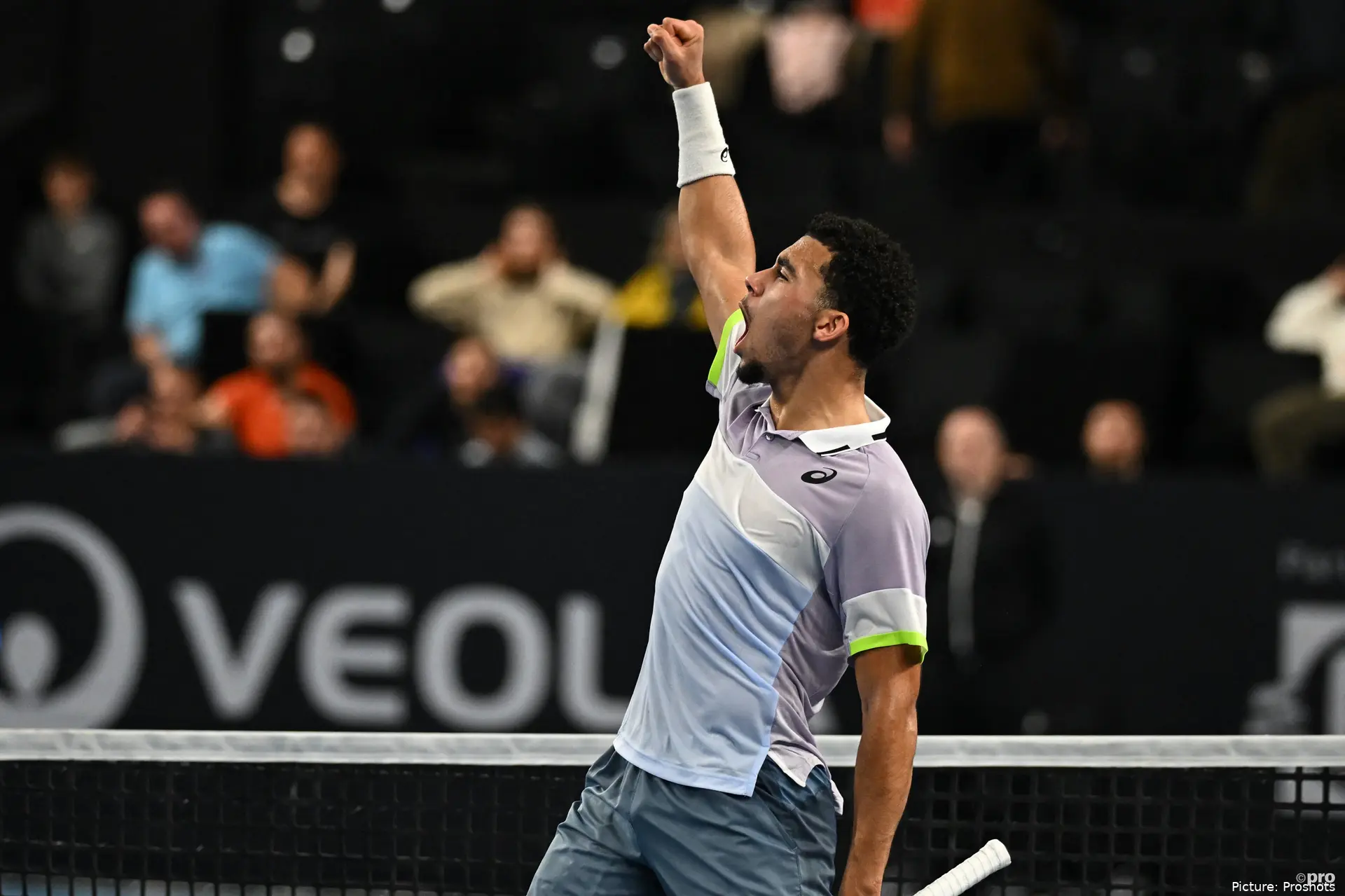
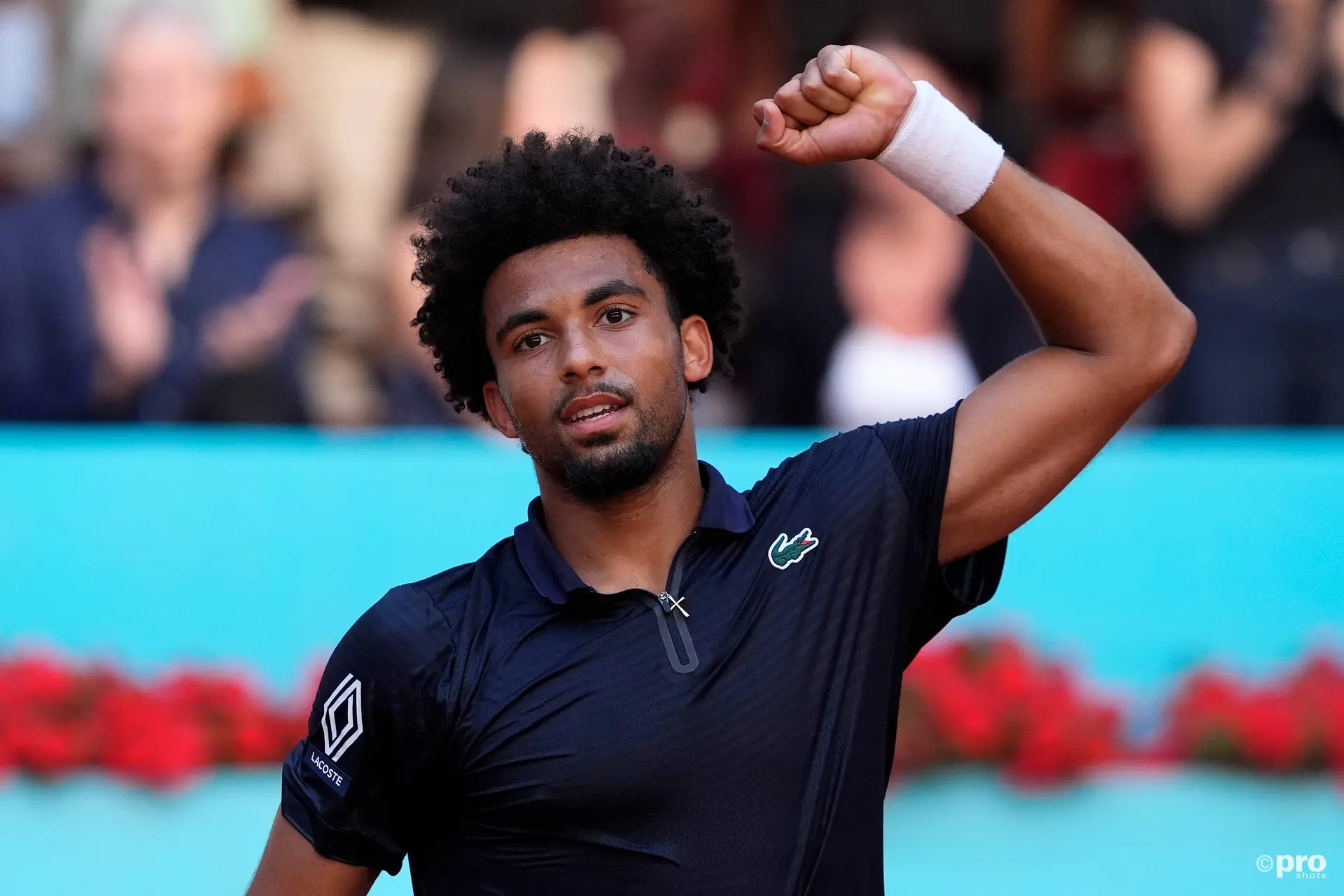
Arthur Fils combined result and symbolism at the Barcelona Open, celebrating his title with the tournament’s traditional pool dive while also securing a rise to a new career-high ranking of World No. 25. The 21-year-old Frenchman followed the path of former champions such as Rafael Nadal, Carlos Alcaraz, Casper Ruud, Dominic Thiem, Holger Rune and Kei Nishikori, aligning his breakthrough moment with an established ritual at the event.
The celebration came after a 6-2, 7-6 victory over Andrey Rublev in the final, securing Fils’ third ATP 500 title and his first tournament win since Tokyo in 2024. Beyond the result itself, the immediate reaction reflected a release after a prolonged absence from the tour due to injury.
Fils had been sidelined for eight months following a stress fracture in his back sustained after Roland Garros, a period that interrupted his early development and required a structured rehabilitation process. His return in 2026 has been defined by steady progression, with results across multiple high-level events preceding this title run in Barcelona.
The Frenchman’s performances leading into the tournament included a final in Doha, a quarter-final in Indian Wells and a semi-final appearance in Miami, establishing a consistent baseline of competitiveness. The Barcelona title represents the first conversion of that form into a trophy, achieved on clay against a top-tier opponent.
Recovery period and structured return to the tour
Fils characterised his absence from competition as a fragmented and demanding phase, shaped by both the physical limitations of his injury and the logistical challenges of recovery. His rehabilitation included time in Munich, where he focused on regaining physical stability and match readiness.
He emphasised the role of his team in navigating that process, pointing to the coordination required to return to full competitive level. Within that context, the Barcelona title functions as a direct outcome of sustained work rather than a singular breakthrough moment.
"I want to say a big thank you to my team, we did an insane job. I am really, really happy,” the Frenchman said. “It was eight difficult months, battling with the injury, in Munich, all over the place. And now, we are back on the court and we win the trophy, so I am pretty very happy about that."
Since resuming competition in February, Fils has demonstrated consistency across surfaces and tournament levels. The Doha final provided an early indicator of form, while deep runs in Indian Wells and Miami confirmed his capacity to compete against higher-ranked opponents. Barcelona consolidates that trajectory with a title under clay-court conditions.
Final dynamics: control, disruption, and recovery
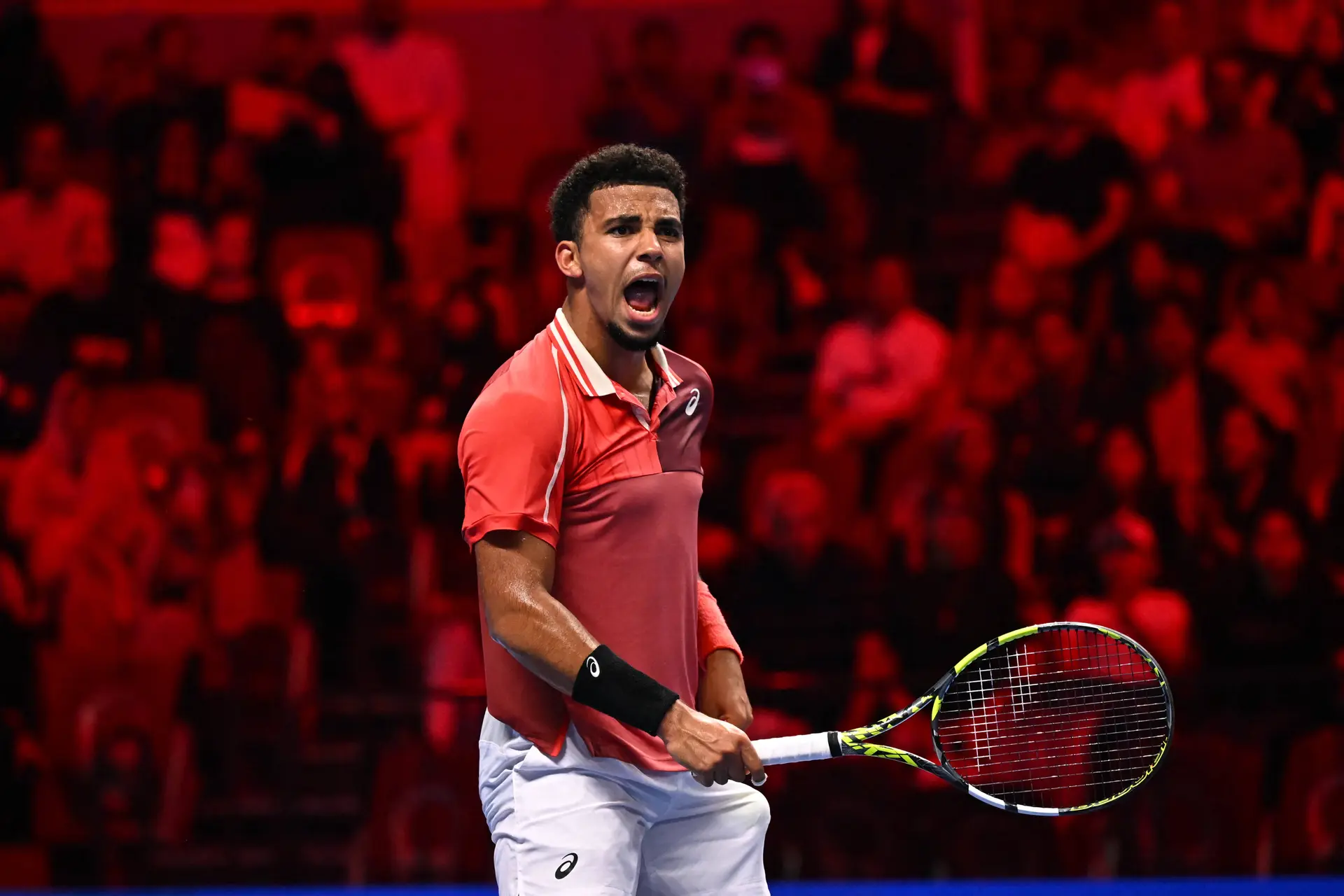
The final itself followed a controlled opening phase before shifting into a more complex second set. Fils dictated play early, taking the first set 6-2 and building a 5-2 lead in the second through efficient baseline patterns and controlled aggression.
The closing stages introduced instability. Serving for the match at 5-3, Fils was unable to convert, while Rublev capitalised on errors, including a double fault, to reduce the margin. The Russian then saved multiple match points and briefly moved ahead 6-5, altering the momentum.
Fils responded by breaking back to force a tie-break, where his level stabilised. The decisive phase was defined by improved shot selection and reduced error frequency, allowing him to close the match despite the earlier lapse.
"It was horrible. The end of the second set was more about mental pressure. The whole match was tough because I was a bit nervous. I played well for a set and a half, but when I had to close the match, I started to think too much. But I am very happy with how I played the tie-break."
The result positions Fils as a relevant contender within the ongoing clay swing, with the Barcelona title serving both as confirmation of his recovery and as an indicator of his capacity to manage high-pressure scenarios at ATP 500 level.

Cristhián AvilaTennis Journalist
Cristhián Ávila is a tennis journalist based in Santiago, Chile, and has been part of the TennisUpToDate team since early 2023. He covers the ATP and WTA Tours as well as all four Grand Slams, producing breaking news, match reports, analysis, and regular liveblogs from major tournaments.
His reporting combines statistical analysis with clear explanation, helping readers understand tactical developments, player form, and broader storylines across the tour. Working fluently in both Spanish and English, Cristhián collaborates with an international editorial team and contributes to comprehensive global coverage. As part of his work, he has conducted interviews and media interactions with leading figures in the sport, including Caroline Wozniacki and John McEnroe.
In his journalism, Cristhián places strong emphasis on careful sourcing, editorial accuracy, and updating articles promptly when new, verified information becomes available. His coverage is grounded in research, context, and direct engagement with professional tennis.
claps 0visitors 0
Just In

Popular News
Latest Comments
- Does Sinner need that 4.5 mil? I doubt it. He can make that with three modelling gigs!😅🤣Rapunzel21-10-2026
- Did "People Magazine" purchase this website? This nonstop storyline is bullshit.
 mandoist21-10-2026
 - Listen... this is of no concern to anyone but these two. Deal with your own issues -- most of us have our own. Thanks, media, for these insignificant follow-ups which are meaningless.mandoist21-10-2026
- This is so very very sad, for all three of them. I truly thought they had an unbreakable bond, but life throws up so many differing challenges. Having your homeland suffering in such a terrible way, makes happiness lose out to guilt as well. Our thoughts are with them. X💔bjsexton20-10-2026
- I have lost all respect for Svitolina! Could she not have waited until he had played at the Paris Masters!!! She is selfish and don't give a damn about Gael. That is NOT how love is demonstrated Elina!!Rapunzel19-10-2026
- Perhaps convenient tennis tour sex is not a strong enough experience in which to base a marriage?mandoist19-10-2026
- Fight the Good Fight... Tennis (sports in general) need more Humans such as yourself.mandoist18-10-2026
- When is WTA going to mandate Genetic Testing (DNA) ???mandoist18-10-2026
- Hey, Dan... you just wake up from a coma? Regardless -- Thanks for the comedy this morning!mandoist18-10-2026
- Two Things: 1. Stop allowing these Spoiled Trust-Fund Elitists to behave badly. Your little hand-slaps do not deter them. 2. STOP the incessantly annoying "towel wiping" nonsense!!!!mandoist15-10-2026

Loading