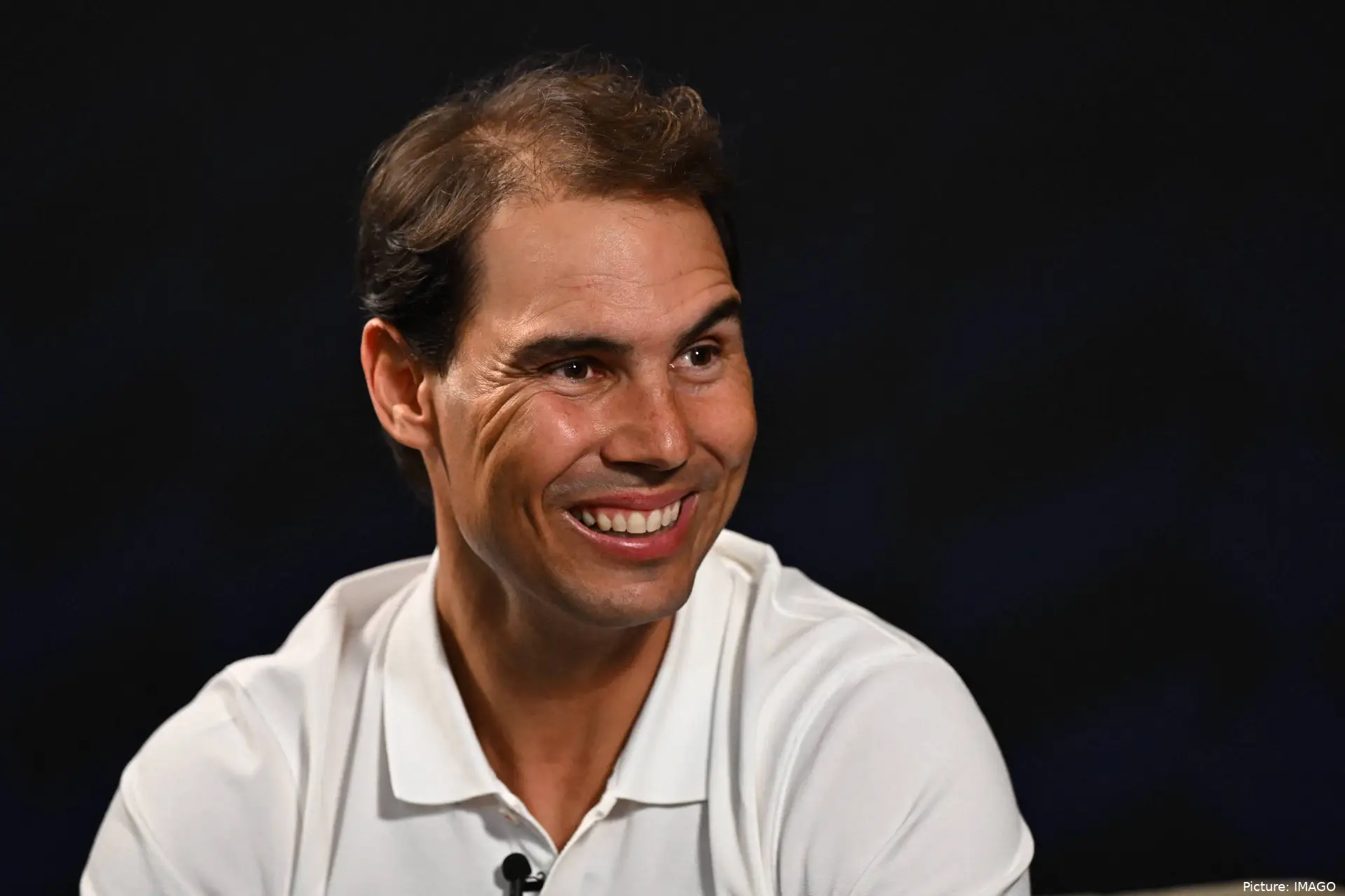
Rafael Nadal has called for changes to professional tennis, questioning the sport's reliance on hard courts and arguing that its ranking system makes it difficult for players to take the breaks they need. The 22-time Grand Slam champion believes the physical demands of the calendar are taking their toll, with competitors paying the price for playing most of their tournaments on demanding surfaces.
The former world No. 1 has repeatedly spoken about player welfare during his career, but his latest comments underline his belief that the sport needs structural changes rather than expecting athletes to manage an increasingly demanding schedule.
Injuries were a recurring problem throughout the Spaniard's career, forcing him to miss numerous tournaments and disrupting his pursuit of further Grand Slam titles. He eventually retired in November 2024, having spent 209 weeks at the top of the ATP rankings.
Nadal also wants the ATP and WTA to reconsider their ranking systems. Both tours currently use a rolling 52-week format, which means players must defend the points they earned at tournaments the previous season. He believes extending that period to two years would give competitors more flexibility to rest and recover without immediately losing their positions in the rankings.
Nadal questions tennis' reliance on hard courts after injury struggles
Speaking about the number of tournaments played on hard courts, Nadal admitted that it had been difficult to challenge the sport's established structure while he was still competing. However, he believes the physical demands of the surface deserve greater attention, particularly given how much of the professional calendar is played on it.
"It was difficult for me to fight for that when I was on the tour," the 14-time Roland Garros champion said. "But now I can say: I don't see a lot of professional sports playing on that kind of surfaces. That's the truth."
"In tennis, we're playing most of the time in a very, let's say, aggressive surface for the body and for the joints. And then we pay the price."
Hard courts account for a substantial part of the ATP and WTA calendars, including several of the sport's biggest tournaments. While the surface offers consistency and allows tournaments to be staged across different conditions, its impact on players' bodies has frequently been debated.
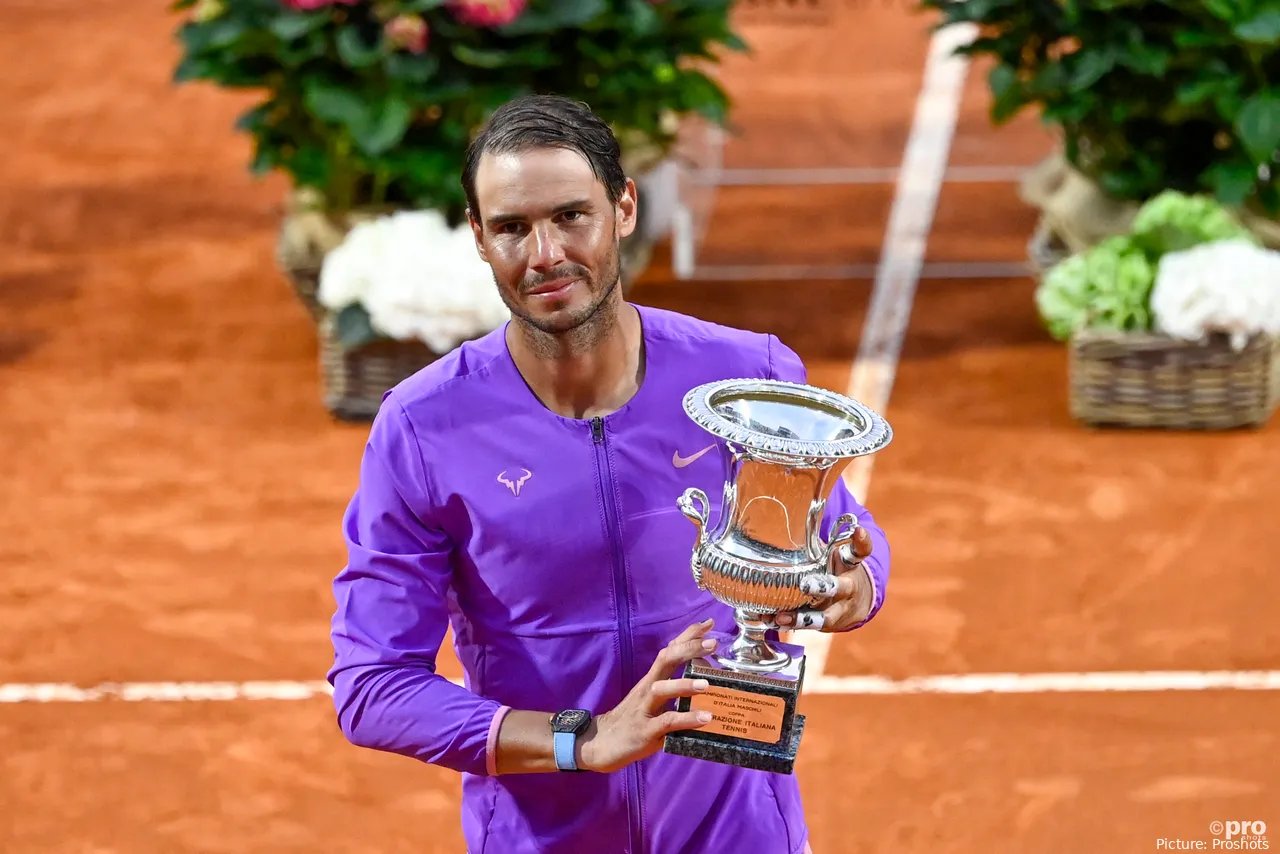
Nadal knows that reality better than most. His career was repeatedly interrupted by knee problems, abdominal injuries and the chronic foot condition that ultimately contributed to his retirement.
The Spaniard's criticism is particularly relevant as the calendar continues to expand. Several leading players have complained about the number of mandatory tournaments and limited opportunities for recovery, with the longer Masters 1000 format adding another dimension to the debate.
“It will be better to manage the schedule”: Nadal renews push for two-year rankings
Nadal also revisited one of his most consistent proposals during his time on the ATP Tour: introducing a two-year ranking system. The Spaniard first explained his position in detail in 2017, arguing that the existing format discouraged players from taking extended breaks, even when their physical condition required them.
"It will be better to manage the schedule – to have a better schedule – to have a ranking for two years,” the former world No. 1 said. "Two-year ranking, not one-year ranking. That's going to protect the players and help the players to have periods to find windows for rest.”
"Having a one-year ranking, it's always that if you want to be in a good position in the ranking, you cannot rest much, he added. “If you are [Roger] Federer, Novak [Djokovic], or even myself and Andy [Murray], we are able to manage it that when we come back we have been winning lots of matches, then you can do it."
Under the current system, players lose the points earned at a tournament once the corresponding event from the following season takes place. That creates additional pressure to return to competition quickly after an injury, particularly for those who rely on regular results to maintain their ranking positions.
Read also

A two-year system would allow players to retain their results for longer, potentially creating more room for recovery without suffering an immediate ranking collapse. However, such a change would also require the ATP and WTA to reconsider how rankings reflect current form and competitive activity.
The Spaniard also criticised the expansion of Masters 1000 tournaments, another issue that has divided players and governing bodies. With several events now lasting 12 days instead of one week, the calendar has become longer, leaving fewer opportunities for extended breaks.

Cristhián AvilaTennis Journalist
Cristhián Ávila is a tennis journalist based in Santiago, Chile, and has been part of the TennisUpToDate team since early 2023. He covers the ATP and WTA Tours as well as all four Grand Slams, producing breaking news, match reports, analysis, and regular liveblogs from major tournaments.
His reporting combines statistical analysis with clear explanation, helping readers understand tactical developments, player form, and broader storylines across the tour. Working fluently in both Spanish and English, Cristhián collaborates with an international editorial team and contributes to comprehensive global coverage. As part of his work, he has conducted interviews and media interactions with leading figures in the sport, including Caroline Wozniacki and John McEnroe.
In his journalism, Cristhián places strong emphasis on careful sourcing, editorial accuracy, and updating articles promptly when new, verified information becomes available. His coverage is grounded in research, context, and direct engagement with professional tennis.
claps 0visitors 0
Just In



Popular News
Latest Comments
- Either Lena has a chronic internal ailment (i.e., colitis, enteritis, Crohn's, or some type of lower abdomen issue) -- or she is once again dealing with 'Vukovitis'. Mental stress can indeed cause lower body pains. No matter... whatever is truly going on sucks. "Virus" excuse is getting a bit old -- and often -- at this point.
 mandoist09-11-2026
- Ironically, Martina became a U.S. Citizen about the same time as the Orange Convicted Felon & Abuser was just beginning on his road to losing all Daddy's Millions!!mandoist09-11-2026
- "Another fresh start is in the cards." Thanks for the Humor!! I'm guessing this is the minimum one can do to keep all your sponsors hanging-on in perpetuity?mandoist09-11-2026
- Vukov is doing this to Lena... AGAIN!!!!! WTA's autonomous collective should be dismantled for allowing Vukov to re-emerge from his hand-slapping suspension. Just ask WTA employees how that's been going lately as they witness his continued verbal abuses. Women's Pro Tennis should start over.mandoist08-11-2026
- Can't help but suspect Vukov is back to his old self again. Thank you, WTA. Perhaps you can give them a "Battling Couple of the Year Award 2026" ??mandoist08-11-2026
- Wtf? Why is there no reason? And what about the men's?Bel08-11-2026
- One step by another step -- WTA continues to 'lose the plot'. Too many hi-tech microphones being installed at most venues!!! Remove them (especially those along the hallways, sidewalks, and pathways throughout the venues. Not to mention (most of all) remove the mic's from the Players/Coaches Box.mandoist06-11-2026
- Enough of her bullshit. Go marry someone.mandoist06-11-2026
- Don't you just love this young lady!? We fans often expect athletes to be supermen and superwomen, often forgetting that they WILL GET TIRED! I love Alex's perspective. Tiredness for an athlete should never be viewed as a negative, especially if you are healthy, taking care of your body and mental health and putting in the work. What a mature perspective. Good for you, Alex!Rapunzel05-11-2026
- Jess is absolutely correct! But the disrespect is a trait I have noticed in most of the Russian players. Mirra is good but very immature and lacks humility. Conceivable needs to get a handle on that!Rapunzel05-11-2026
