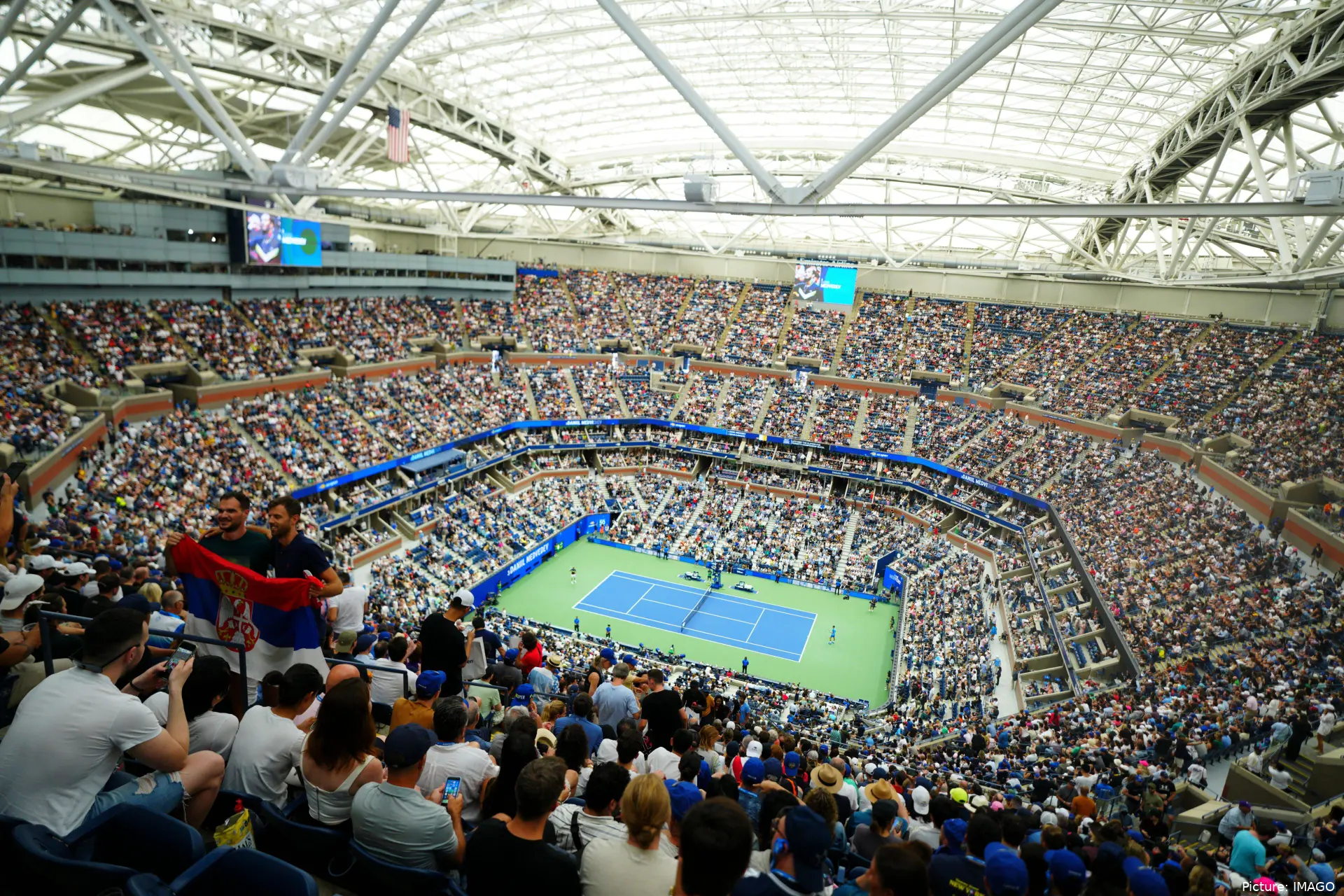
A tennis match can occupy
an entire afternoon, yet the live broadcast is only one part of following the
sport. Before play, fans check the draw, order of play, and court assignment.
During a match, a live score can fill a gap when the video feed is unavailable.
Afterward, reports, interviews, and rankings explain where the result sits in
the season. Each source answers a different question, and the most reliable
matchday routine changes as play moves from scheduled start times to completed
results.
Live coverage still
commands substantial attention. In the United States, Forbes reported that television viewership for the 2025
French Open rose 25% from the previous year. The men's final
lasted five hours and 29 minutes, stretching far beyond a routine viewing slot.
Those figures cover one tournament and one national market. Across the season,
overlapping events, qualifying rounds, late finishes, and matches in several
time zones leave plenty of tennis outside any fan's available viewing hours. A
final in one city can overlap with qualifying already underway elsewhere.
Plan Around a Moving Order of Play
That overlap turns the
order of play into a working schedule rather than a fixed timetable. A fan may
finish one match with another already listed on a different court, but there
may be a bit of a wait between the two – which is when tennis audiences often
turn to games and other fast-paced entertainment to fill the time.
Casino play has become
particularly popular because most of the games can be accessed on-demand and
are generally quite short. However, it’s still important for fans to consider
the time window they have realistically. A bounded break has two limits: the
time needed to start any side activity and the buffer required to return before
play resumes. Ten free minutes on the clock may contain far less than ten
minutes of usable time.
Any casino play placed
inside that interval begins with setup rather than the first round. The account
must be ready, the balance available, and the selected game loaded before play
can begin. A forgotten password, software update, or account-recovery step can
consume much of a short break. At a crypto casino, funding creates another sequence: checking the receiving address and
network, sending the transfer, waiting for network processing, and then waiting
for the account balance to update. The wallet may show that funds have left
before the receiving account makes them playable. Crypto casinos have grown in
popularity over the last few years, but this is still an element to be aware
of.
Once the balance is
available, the game format controls the remaining clock. Self-contained rounds
finish at a visible result and permit an immediate exit. Timed sequences
continue until their timer expires, while continuously running formats may have
no natural stopping point. A ten-minute gap becomes six minutes of play after
three minutes of setup and a one-minute return buffer. Starting a new round
inside that final minute risks missing the tennis players’ arrival or the
opening game.
Read the Score as a Story
A live score supplies the
match state without supplying every reason for it. Set score, game score, and
server identify the immediate situation. Break-point figures reveal chances
created and saved, while first-serve percentage and points won on serve add
context to a hold or a break. Totals can still hide the sequence. A player may
win more points across the match, yet lose the points that decide both sets,
and one lopsided set can distort the overall numbers after two close ones.
The draw provides another
layer. It records who advanced, which section has opened after an upset, and
what route remains for a player. Once play begins, the seed numbers recorded in
the draw describe the starting order, rather than a competitor's current
position in the event. Rankings answer a season-level question, while a
completed draw answers a tournament-level one. A projected table can change
with the next result; the published ranking records the last official update.
Keep Up with Players Between Matches
Tournament coverage now
extends well beyond rallies and pressroom quotes. During Wimbledon in 2025, the
tournament's short-form video account reached 200 million cumulative views by the first Wednesday, according to The Guardian. Its output included archive moments and
brief player interviews alongside current-match clips. A two-minute video can highlight
a point, reaction, or off-court detail that doesn’t get much focus in a
full-match replay.
Build a Routine That Survives the Calendar
Before a session begins,
the order of play establishes when and where to look. The live score takes over
once the first ball is struck, especially when several courts are active. A
match report then records the turning points, and the updated draw shows the
practical consequence of the result. Between events, the interviews, rankings,
and verified player updates can carry the season's longer stories without
requiring a continuous stream of alerts.
On a crowded tournament
day, one schedule page, one score source, and one trusted report are usually
enough. Extra feeds can wait until the match ends, or the next court is idle.
As a listed start approaches, court status deserves priority over highlights or
side activities. Tennis rarely runs to a perfect clock, but separating
schedule, live state, result, and player context makes it possible to step away
without losing the shape of the day.

Samuel GillEditor-in-Chief
Samuel Gill is the Chief Content Officer (CCO) of TennisUpToDate.com, a role he has held since 2020. He is responsible for editorial governance across the platform, including setting content standards, overseeing accuracy and consistency, and guiding long-term editorial strategy. Since joining, he has contributed more than 10,000 articles and editorial pieces across the TennisUpToDate network, playing a central role in the daily operation and development of the site.
Based in Leicester, Samuel has a broad background in tennis media. In his current role, he works closely with editors and writers to ensure coverage meets clear journalistic standards, with particular attention to verification, consistency, and timely updates when new information becomes available.
claps 0visitors 0
Just In

Popular News
Latest Comments
- A healthy Qinwen may be hard to stop next season. She was already scaring her opponents before her medical leave(s). Unfortunately, Zheng insisted on singing again. On the positive side -- Mirra did not sing!! ;~}
 mandoist11-10-2026
 - Where is it written that athletes, entertainers... People in general... are mandated to keep looking at -- or even using [anti]Social Media? Public & private figures consistently complain and reveal their concerns about negativity and violence thrown at them -- yet they insist on participating. Avoid it, don't use it, don't read it. It's okay to occasionally look up at the World instead beating your eyes & thumbs to death on The Inventions out there.mandoist11-10-2026
- great articlestennisseserver07-10-2026
- Medvedev was leading Djokovic 7-5, 3-5 when an attempted return..' NO you ignorants, Djokovic was leading .weiss05-10-2026
- No more bullshit "Wildcards" to these two. Qualify like everyone else -- there will be cameras there, too. Time to scream... WTF ????!!!!mandoist29-09-2026
- Let's not BS the general public -- Sabalenka started showing cracks in her game last season. Her losses and near-losses started at about the same time she began being distracted by Fame (constant Selfies, making TV commercials, magazine shoots, endless Social Media nonsense, etc., etc.) One would think even Saba could recognize the parallels with others who failed before her -- Raducanu, Giorgi, Bouchard to name a few.mandoist25-09-2026
- Gross!! Hey Raducanu, Giorgi, and Bouchard -- reserve a seat at your Social Media Selfie table for Saba + Naomi. They're heading in your direction soon enough.mandoist24-09-2026
- And then these same players will complain about how lengthy their season’s were and need more time-off. I’m all for more tennis but the amount of tennis we get now is actually kind of crazy! We all need a break, especially the players.DaveyWavey23-09-2026
- You should do a comparison article for "different kinds of justice" the courts decide for tennis players. I can think of at least three players who received very small bans of a few months, however Tara Moore has been fighting for her literal survival the past few years. It seems odd considering she is not a "name" player, unlike the other cases.DaveyWavey22-09-2026
- PRIZE MONEY & POINTS Winner - $185,500 Finalist - $114,500 Semi-Finalist - $66,003 Quarter-Finalist - $35,000 Round of 16 - $18,045 Round of 32 - $13,005 Winner - 500 Finalist - 325 Semi-Finalist - 195 Quarter-Finalist - 108 Round of 16 - 60 Round of 32 - 1DaveyWavey20-09-2026

Loading