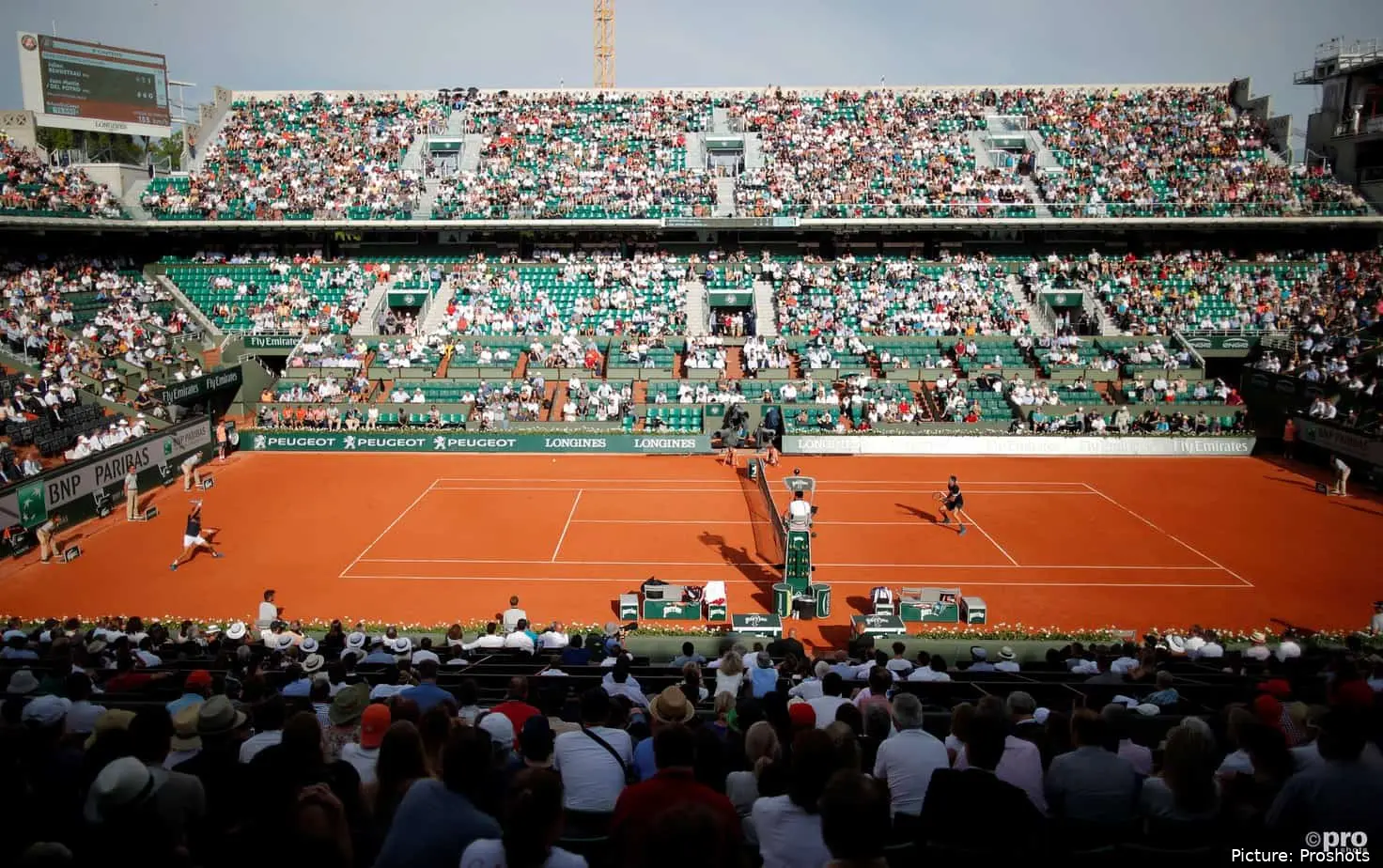
Paris was
supposed to follow the script. Carlos Alcaraz and Jannik Sinner had carved up
each of the last nine Grand Slams between themselves in a run that has
stretched back the last two and a half years. Novak Djokovic proved in
January's Australian Open that he was still dangerous at the age of 38. But then, Roland Garros'
famed clay courts proceeded to rip that script to shreds.
Alcaraz
withdrew before a ball was struck, Sinner went out in the third round, and
Djokovic — three-time champion, architect of misery for a generation of
hopefuls — went out in the third round too. Standing in the midst of the smoke,
clay on his shoes, is Alexander Zverev: the best player on tour never to have won a
Grand Slam, staring at the most generous draw of his career, carrying a memory
he has never been able to put down. The Big Apple, 2020.
Two sets up.
Six points from the title. Then the double faults. Then Dominic Thiem raising
his arms. Then Zverev at the net, knowing exactly what he'd done. He's been
here before. The question Paris is asking is whether that experience makes this
opportunity easier — or worse. Regardless of that heartbreak six years ago,
online betting sites still make him the man to beat in Paris.
The latest odds
from 5Gringos online sportsbook have installed him as the clear 2.37
favorite to finally claim that maiden slam. But what happened the last time a
Slam saw the heavyweights exit early? Who took advantage on those occasions?
Let's take a look.
2024 Australian Open — Jannik Sinner
Novak Djokovic
was riding the wave of a 33-match winning streak heading into the 2024
Australian Open, a run that had yielded four titles in five years. He had never
lost a Melbourne semifinal. Not once. Rafael Nadal was absent through injury,
Roger Federer had retired, and the fourth seed — a composed, quietly formidable
22-year-old Italian — was not a threat, in anyone's genuine estimation... until
he was.
Sinner
dismantled Djokovic in the semifinals. Dismantled him. The first man in history
to beat the Serb in a Melbourne semifinal, ending a streak so dominant it had
stopped feeling like a streak and started feeling like an annual coronation.
The final
against Daniil Medvedev appeared, briefly, to follow a crueler script — Sinner
dropped the first two sets 3-6, 3-6, and for a moment it seemed like the sport
was simply producing another footnote for Djokovic's eventual return. Then
Sinner reeled off three straight sets 6-4, 6-4, 6-3.
First Italian
man to win the Australian Open since 1976. Youngest champion at Melbourne
Park since Djokovic himself in 2008. He went on to win the 2024 US Open and the
2025 Australian Open. None of it starts without that semifinal. None of it
starts without the draw opening up and a player ready enough to walk through.
2022 US Open — Carlos Alcaraz
The afternoon
Frances Tiafoe beat Rafael Nadal at the 2022 US Open, Arthur Ashe Stadium
changed. The entire atmosphere around the Big Apple turned on its head.
Djokovic wasn't there — barred from entering the United States over his medical
stance, his absence a wound in the draw before the tournament began.
Medvedev, the
defending champion, was the first seed. Nadal, fresh off a French Open and
Australian Open double, was the second. Alcaraz, 19, was the third. And then,
inside 24 hours, Nick Kyrgios sent Medvedev crashing out in the fourth round,
and Tiafoe ended Nadal's 22-match Grand Slam winning streak the very next day.
First US Open without either of the top two seeds in the quarterfinals since
2000.
Into that
vacuum walked a teenager. Alcaraz became only the third man in the Open Era to
win three consecutive five-set matches on the way to a major title, then
defeated Casper Ruud in the final 6-4, 2-6, 7-6, 6-3. Youngest Grand Slam
champion since Nadal's first Roland Garros in 2005. First teenager to reach
world No. 1 in ATP history. The draw handed him the opening. What he did with
it was entirely his own.
2020 US Open — Dominic Thiem
Here is where
it gets uncomfortable for Zverev. No major has ever looked like the 2020 US
Open: behind closed doors, inside a bubble, the crowd replaced by silence and
the baseline sound of a sport playing to nobody. Federer absent. Nadal absent.
Djokovic defaulted in the fourth round after a ball struck in frustration
caught a line judge in the throat — an exit so strange, so sudden, that the
tournament felt briefly suspended between realities. The path to the title had
never looked more inviting.
Zverev reached
his first major final. He took the first two sets. At 3-5 in the fifth, he was
six points from the championship. Then came the double faults. Then came Thiem,
clawing back from two sets down — the first player in Open Era history to
recover from that deficit in a US Open final — winning 2-6, 4-6, 6-4, 6-3,
7-6(6). Thiem fell to his knees. Zverev stood at the net.
That image has
followed Zverev through every major since. It follows him now through the red
clay of Roland-Garros, through morning practice sessions and pre-match rituals,
and the particular private silence before a tournament like this one begins to
ask its questions. He knows what it feels like to stand at the edge of history.
He knows what it costs to take a step back.

Samuel GillEditor-in-Chief
Samuel Gill is the Chief Content Officer (CCO) of TennisUpToDate.com, a role he has held since 2020. He is responsible for editorial governance across the platform, including setting content standards, overseeing accuracy and consistency, and guiding long-term editorial strategy. Since joining, he has contributed more than 10,000 articles and editorial pieces across the TennisUpToDate network, playing a central role in the daily operation and development of the site.
Based in Leicester, Samuel has a broad background in tennis media. In his current role, he works closely with editors and writers to ensure coverage meets clear journalistic standards, with particular attention to verification, consistency, and timely updates when new information becomes available.
claps 0visitors 0
Just In

Popular News
Latest Comments
- Does Sinner need that 4.5 mil? I doubt it. He can make that with three modelling gigs!😅🤣Rapunzel21-10-2026
- Did "People Magazine" purchase this website? This nonstop storyline is bullshit.
 mandoist21-10-2026
 - Listen... this is of no concern to anyone but these two. Deal with your own issues -- most of us have our own. Thanks, media, for these insignificant follow-ups which are meaningless.mandoist21-10-2026
- This is so very very sad, for all three of them. I truly thought they had an unbreakable bond, but life throws up so many differing challenges. Having your homeland suffering in such a terrible way, makes happiness lose out to guilt as well. Our thoughts are with them. X💔bjsexton20-10-2026
- I have lost all respect for Svitolina! Could she not have waited until he had played at the Paris Masters!!! She is selfish and don't give a damn about Gael. That is NOT how love is demonstrated Elina!!Rapunzel19-10-2026
- Perhaps convenient tennis tour sex is not a strong enough experience in which to base a marriage?mandoist19-10-2026
- Fight the Good Fight... Tennis (sports in general) need more Humans such as yourself.mandoist18-10-2026
- When is WTA going to mandate Genetic Testing (DNA) ???mandoist18-10-2026
- Hey, Dan... you just wake up from a coma? Regardless -- Thanks for the comedy this morning!mandoist18-10-2026
- Two Things: 1. Stop allowing these Spoiled Trust-Fund Elitists to behave badly. Your little hand-slaps do not deter them. 2. STOP the incessantly annoying "towel wiping" nonsense!!!!mandoist15-10-2026

Loading