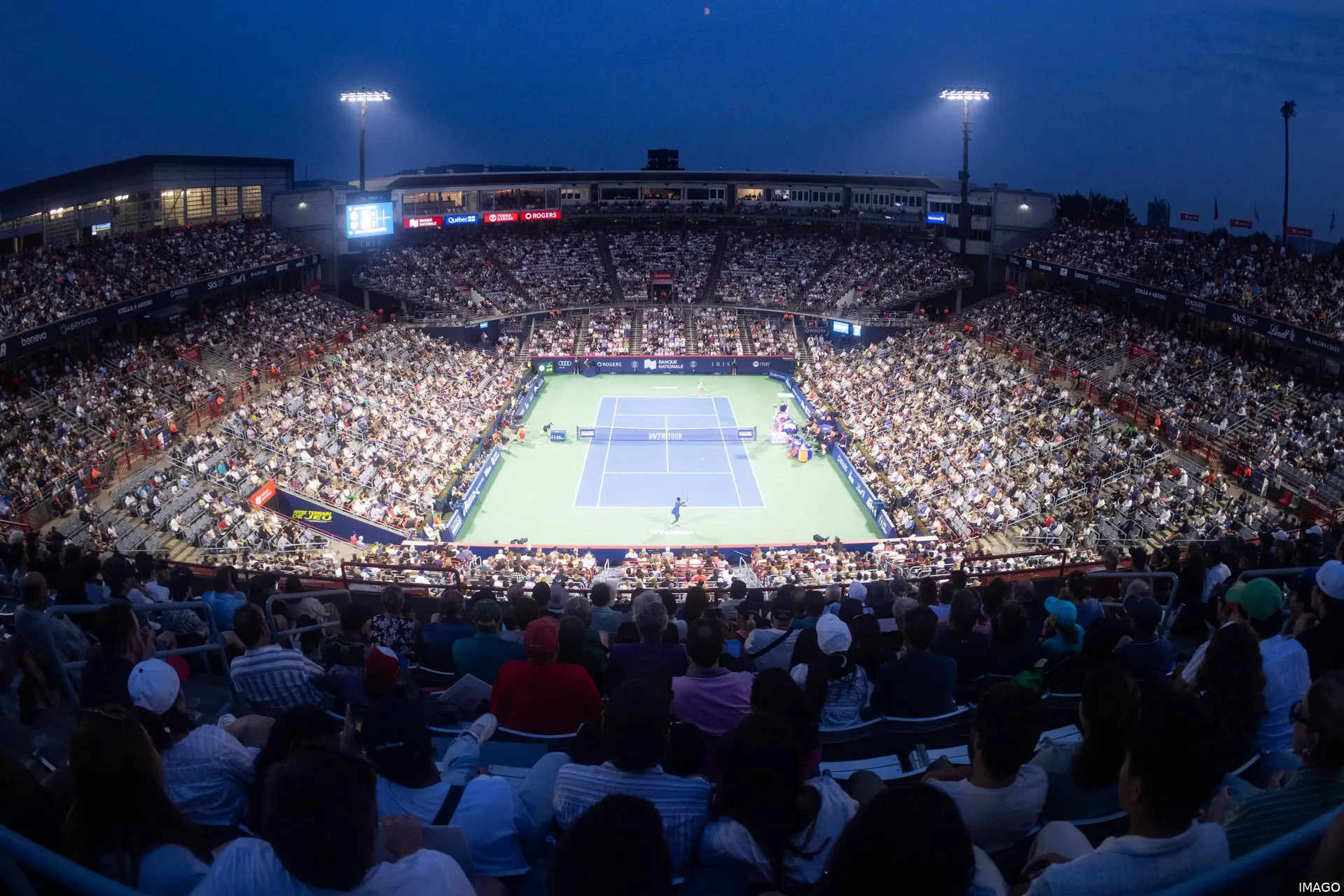
A tennis season has four big dates, and each one comes with its own floor. The calendar and the surfaces are linked. In 2026, the majors filled 59 days of a 239-day stretch, from 18 January in Melbourne to 13 September in New York.
The gaps between them vary a lot: 112 days from the Australian Open to the French Open, 22 to Wimbledon and 49 to the US Open. These gaps and floors determine what skills players require and who is gonna be the next winner.
So, let’s go through the season in order to learn how to see the difference. For each major, we cover the date, the surface, and what the tournament demands from a player.
The year in four chapters
The season runs in a fixed order. The Australian Open comes first, in late January on hard courts. The French Open follows in late May on clay, Wimbledon in late June on grass, and the US Open in late August on hard courts again. Men play best-of-five sets, women best-of-three.
The 2026 dates show how tight the middle is:
- The Australian Open ran from 18 January to 1 February
- The French Open ran from 24 May to 7 JuneThe Wimbledon ran from 29 June to 12 July.
- The US Open ran from 30 August to 13 September
Count the days between the French Open final and the first Wimbledon match. It is 22. Clay to grass is the sharpest switch of the year, and the calendar gives players three weeks to make it.
Australian Open: Hard courts and heat
Melbourne comes first, and it is played in the Australian summer. The courts are an acrylic hard surface. Tennis Australia replaced Plexicushion with GreenSet for the 2020 edition. A hard court gives a consistent bounce. It is faster than clay and slower than grass.
The heat is the extra test. The tournament uses a Heat Stress Scale from 1 to 5, built from air temperature, radiant heat, humidity and wind. At index 4, organizers can add a ten-minute break. At index 5, singles play stops. In 2026, the index reached 4 on day seven, with temperatures near 35°C.
So the Australian Open rewards fitness and calm. In 2026, Carlos Alcaraz beat Novak Djokovic in four sets, and Elena Rybakina beat Aryna Sabalenka in three. The next edition is scheduled for 11 to 31 January 2027, with an Opening Week before the main draw.
French Open: Patience on clay
Roland Garros is built from the ground up. The top layer is only about 3mm of crushed brick, laid over limestone, slag and a stone base. The brick gives the red color.
Clay slows the ball and produces a high bounce. That cuts the value of a big serve and favors players who can rally from the baseline. A rally has time to grow, and a men's final can run to five sets.
The 2026 men's final did. Zverev beat Flavio Cobolli 6-1, 4-6, 6-4, 6-7, 6-1, his first major title in his fourth final. Mirra Andreeva won the women's title in straight sets over Maja Chwalińska, who had come through qualifying.
Wimbledon: Three weeks to learn a new floor
Grass is the fastest common surface. It gives fast, low bounces and short rallies. The courts are made of 100 percent perennial ryegrass, cut to 8mm. The ground staff measure surface hardness and ball rebound every day of the event.
A grass court also changes over the fortnight. The tournament says its courts must withstand at least 14 days of wear, and the bounce depends on how healthy the grass is and how much play it has seen. Day twelve is not day one.
That is why the short grass season matters. A player has three weeks to move from a slow, high bounce to a fast, low one. In 2026, Jannik Sinner beat Zverev in four sets, after Zverev took the first set on a tiebreak. Linda Nosková, 21, won the women's title in an all-Czech final over Karolína Muchová.
US Open: The last exam of the year
New York closes the season on Laykold acrylic hard courts. It is a second hard-court major, so the surface is familiar, but it comes after a long summer, and it is the last chance of the year.
The 2026 draw shows how much can change. Djokovic lost in the first round, and Sinner withdrew with a knee injury before it began. Zverev then beat Ben Shelton 6-3, 7-6, 5-7, 6-2 in the final. Rybakina beat Sabalenka 6-4, 5-7, 6-2 and became the first player to beat a defending US Open champion in the final since Serena Williams in 2002.
How to follow the season
Start with the surface and then the ranking. Anyone who follows tennis just as a fan and viewer, or makes it more exciting with bets at a Bitcoin sportsbook, should ask the same first question as everyone else: what is the court made of and who plays better on it?
Zverev showed why. In 2026 he reached the final on clay, grass and hard court within 14 weeks, and two of the three finals went his way.

Samuel GillEditor-in-Chief
Samuel Gill is the Chief Content Officer (CCO) of TennisUpToDate.com, a role he has held since 2020. He is responsible for editorial governance across the platform, including setting content standards, overseeing accuracy and consistency, and guiding long-term editorial strategy. Since joining, he has contributed more than 10,000 articles and editorial pieces across the TennisUpToDate network, playing a central role in the daily operation and development of the site.
Based in Leicester, Samuel has a broad background in tennis media. In his current role, he works closely with editors and writers to ensure coverage meets clear journalistic standards, with particular attention to verification, consistency, and timely updates when new information becomes available.
claps 0visitors 0
Just In


Popular News

Latest Comments
- Vacherot is Mongasque, rather than Swiss. The tournament was Swiss :DTrwd7702-11-2026
- After a couple decades traveling to IIHF tourneys overseas... our family is done with it... and I will not be the only one!! Bad enough the NHL allows Ovachenko (a Putin Supporter and Campaigner) to live and play in the USA. Let's not forget the STATE SPONSORED RUSSIAN DOPING PROGRAMS still in effect today.
 mandoist31-10-2026
- Osaka's mental state apparently does not allow her to reach any more Quarter Finals? I mean, she doesn't really have the time for tennis with all the pre-planning that must go into her 12 year-old "fashion" goals.mandoist29-10-2026
- With her money one would think she could afford a better team of Psychiatrists?mandoist29-10-2026
- Boss move, Sinner !Rapunzel27-10-2026
- Apparently still refusing to seek 'help' ...and still playing Dress-Up like a 10 year-old.mandoist27-10-2026
- Lena... Takin' care of businessmandoist25-10-2026
- Can you please stop publishing this nonsense? Stick to Tennis.mandoist25-10-2026
- Does Sinner need that 4.5 mil? I doubt it. He can make that with three modelling gigs!😅🤣Rapunzel21-10-2026
- Did "People Magazine" purchase this website? This nonstop storyline is bullshit.mandoist21-10-2026
