I hate doubles. I hate playing it, I can barely stand watching it, and if you gave me a choice between sitting through a men's doubles match and watching two reasonably competent 12-year-olds play singles on a public court, I'd probably choose the kids. At least I'd get to see somebody cover the entire court.
There are exceptions. I'll watch some women's doubles, particularly when the matchups are interesting, and I genuinely enjoyed the revamped mixed doubles competition at this year's U.S. Open. But those are exceptions to a rule I've followed for most of my tennis life. Doubles simply isn't my thing, and I doubt it ever will be.
Which is why I find myself in the slightly uncomfortable position of agreeing with pretty much every word of an open letter signed by 137 active men's doubles players, 28 former players, and 20 national tennis federations.
They're furious about the ATP's proposed changes to professional doubles, and they have every reason to be. The proposals would reduce doubles' share of ATP prize money from 20 percent to 10 percent, with the difference redirected toward singles players, particularly those competing in qualifying and the early rounds of tournaments. According to the players' letter, that would represent approximately $20 million taken away from doubles.

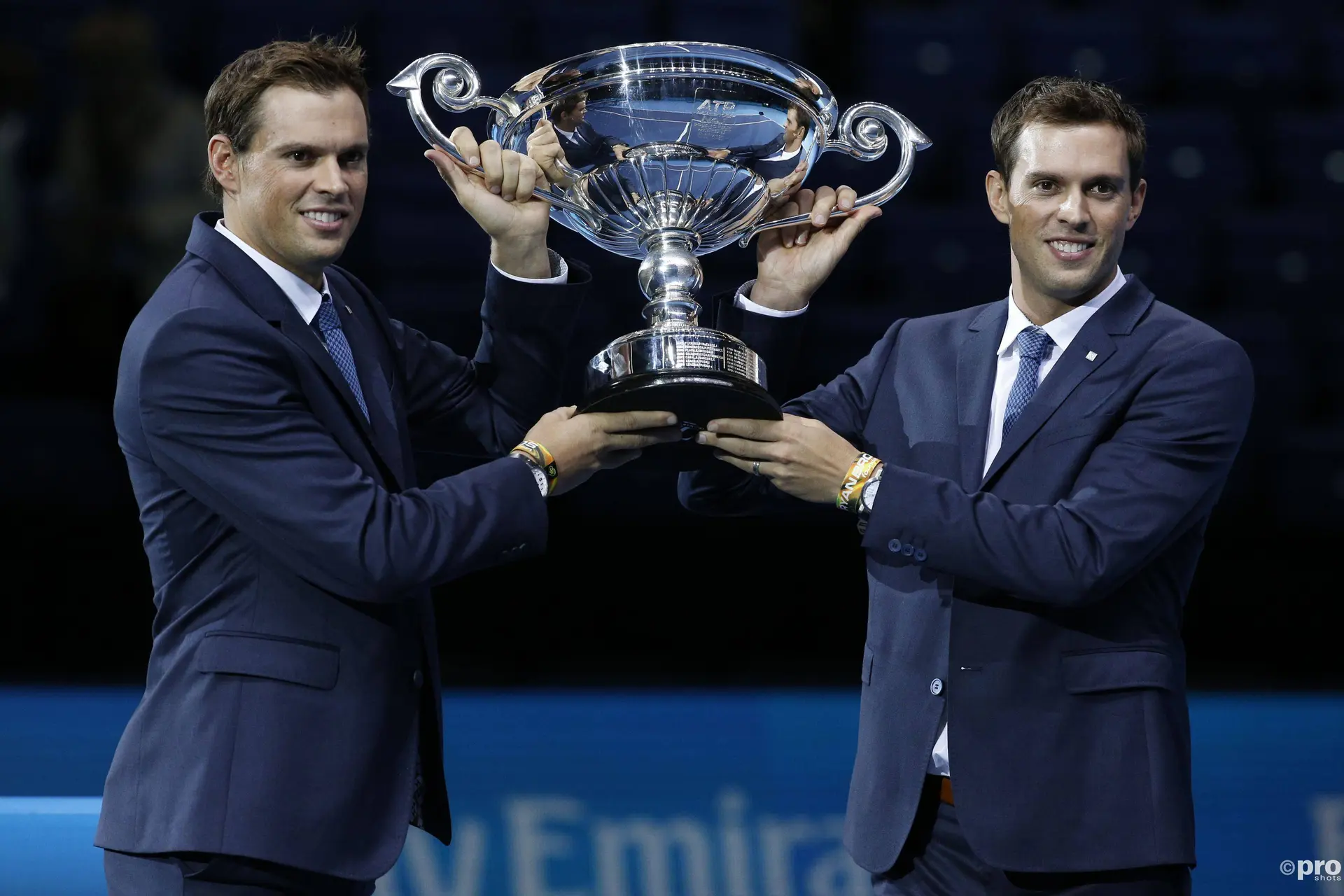
Bryan Brothers signed the letter.
The changes would also dramatically reduce opportunities to compete. Masters 1000 doubles draws would shrink from 32 teams to 16, while ATP 500 and 250 events would go from 16 teams to eight. Grand Slam doubles would remain untouched, at least for now.
This is being presented as a sensible adjustment to the economics of professional tennis. ATP chairman Andrea Gaudenzi has described the review as an effort to build a sustainable future for doubles while supporting the broader player pathway.
I understand the economics. I understand that singles drives television audiences, sponsorships, ticket sales, and much of the public conversation about tennis. I'm part of that audience. I will happily watch an obscure singles match between two players ranked outside the top 100 before I voluntarily turn on most doubles matches. But there's something deeply wrong with deciding that because one part of a sport is commercially stronger than another, the weaker part should essentially be cut in half.
And that's what the ATP is proposing. The most compelling argument in the players' letter is also the simplest. Professional tennis cannot consist exclusively of the people who generate the most revenue. If that's our standard, we might as well eliminate half the singles draw at every tournament and give the money to the players people actually pay to watch.
Nobody seriously believes that would be healthy for tennis. We understand that a professional sport needs an ecosystem. It needs developmental opportunities, different competitive pathways, and enough people earning a living to make pursuing a career worthwhile. The top players don't emerge from nowhere. They come through a system that gives thousands of athletes a reason to keep playing, training, and improving.
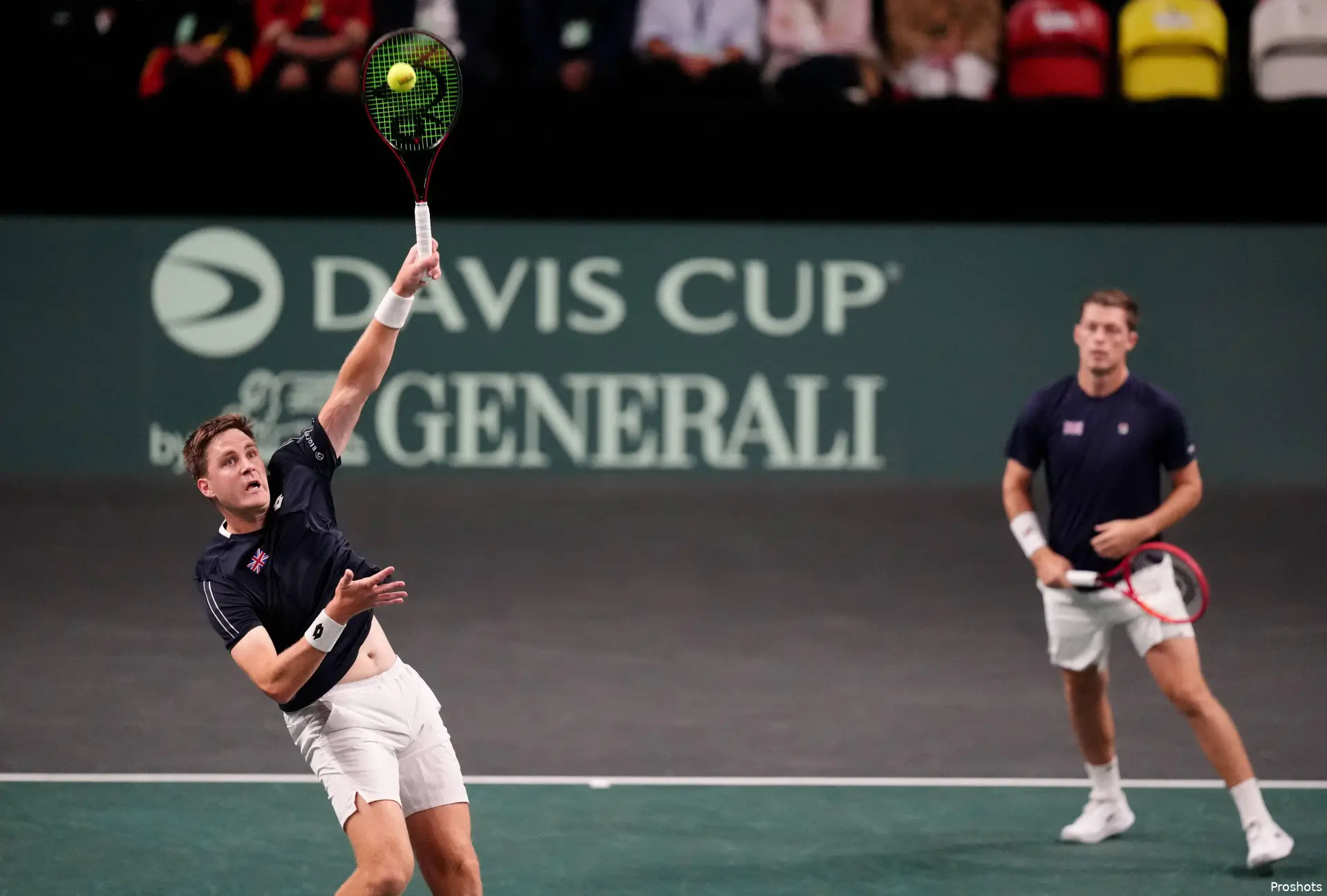
Doubles is part of that system, and for some players, it's the part where they've found their greatest success. Henry Patten and Harri Heliövaara, who have been among the most vocal opponents of the proposed changes, are not failed singles players hanging around tournaments looking for a paycheck. They're elite professionals who have developed extraordinary skills in a specific discipline. Their success deserves recognition, and the ATP should be figuring out how to make more people care about watching them.
Instead, the tour appears prepared to make it substantially harder for the next Patten or Heliövaara to build a career. There's another issue here that I think the ATP would prefer not to discuss too loudly.
A lot of questions without answers
What exactly has the tour done to make doubles commercially successful? When was the last time you saw a serious ATP marketing campaign built around doubles specialists? How often are doubles matches presented as must-watch events rather than something scheduled around the singles matches that actually matter to tournament organizers? How much effort has gone into developing personalities, rivalries, and storylines that might convince someone like me to watch?
I follow tennis obsessively, and I couldn't tell you the answer to most of those questions. That should concern the ATP far more than it apparently does.
Professional sports don't simply discover audiences. They build them. They introduce fans to personalities, create narratives, make events accessible, and give people reasons to become emotionally invested.
The ATP has spent years treating doubles as a supporting act and now seems surprised that it doesn't sell as many tickets as the headliner. That's a management problem, not necessarily a doubles problem. And before anyone suggests that doubles simply isn't exciting enough to attract a larger audience, consider what happened at the U.S. Open.
The revamped mixed doubles competition was imperfect. Its format and timing created legitimate controversy, and some established doubles specialists understandably resented seeing singles stars receive so much attention. But the event also demonstrated something important. When tennis organizers actually make an effort to create a compelling doubles product, people pay attention.
US Open shows what doubles perhaps needs
The answer isn't necessarily to turn every doubles competition into a celebrity exhibition. In fact, that would create another set of problems. But the U.S. Open showed that presentation matters, promotion matters, and treating doubles as something worth watching can change how audiences respond.
There's also a broader cultural argument in the players' letter that deserves more attention than it's likely to receive from the people counting the money.
Most people who play tennis aren't professional singles players. They're recreational players, and an enormous number of them play doubles.
They play at clubs, in public parks, in local leagues, and with friends. For older players, doubles can extend their tennis lives by decades. For beginners, it's often a more welcoming introduction to the sport. It's social, accessible, and an essential part of the culture that keeps tennis alive outside the professional tours.
I may dislike playing doubles, but I'm not so self-absorbed that I think my personal preferences should determine what happens to millions of people who love it. Professional tennis has an obligation to recognize the game that exists beyond its television contracts.
Now, I also want to acknowledge something important about the ATP's position. The idea of directing more prize money toward lower-ranked singles players is a good one. I've argued repeatedly that professional tennis has an economic problem, particularly for players who are good enough to compete at the highest level but not successful enough to become wealthy. Travel, coaching, accommodation, medical care, and the everyday costs of being a professional athlete are enormous. The financial gap between the stars and everyone else remains one of tennis' most persistent problems.
But why should doubles players be asked to solve it? This is the part of the proposal that bothers me most. The ATP has identified a legitimate problem in singles and decided that the solution is to create an entirely new problem in doubles.
That's not reform. It's redistribution among players who, in many cases, are already operating on relatively thin financial margins.
If the ATP believes lower-ranked singles players deserve more money, it should find ways to generate more revenue, reconsider how existing revenues are allocated, and work with tournaments to improve compensation. Those are difficult conversations, particularly when powerful commercial interests are involved.
Taking money from doubles specialists is considerably easier. It's also worth noticing who hasn't signed the letter. The national federations of Australia, France, Great Britain, and the United States, the four countries that host the Grand Slams, are absent from the list of 20 supporting federations.
That doesn't automatically mean they oppose the players. But their absence is conspicuous, particularly given how much influence those organizations have over the sport's economic future.
The people with the greatest power in tennis should be willing to explain where they stand on a proposal that could fundamentally change one of its oldest disciplines.
I don't expect the ATP to preserve every doubles draw forever, regardless of commercial performance. Sports evolve. Formats change. Tournaments have to make financial decisions, and professional tennis isn't a charity.
But there is a considerable difference between making thoughtful adjustments and reducing a discipline's share of prize money by half while simultaneously eliminating a substantial number of competitive opportunities.
Before the ATP does anything remotely this drastic, it owes doubles players something much more basic: a genuine effort to make their sport succeed.
Give doubles meaningful promotion. Invest in its personalities. Make its matches easier to find and more attractive to watch. Experiment with scheduling and presentation. Establish clear commercial objectives and give those efforts enough time to produce results.
Then have an informed conversation about what a sustainable doubles tour should look like.
What the ATP shouldn't do is spend years treating doubles as an afterthought and then punish the people who play it for failing to become a commercial phenomenon.
I still hate doubles. I'll probably hate it tomorrow, and I'm certainly not going to start watching every doubles final just because I've written this column.
Read also
But I respect the athletes who have dedicated their careers to it. I respect the millions of people who love playing it. And I respect the idea that professional tennis should be a sport with room for more than just its most marketable stars.
The doubles players are right. And if they've managed to convince someone who dislikes doubles as much as I do, perhaps the ATP should listen.

Aron SolomonGuest Author
A Pulitzer Prize-nominated journalist for his groundbreaking op-ed in The Independent exposing the NFL’s “race-norming” policies, Aron Solomon, JD, is a globally recognized thought leader in law, media, and strategy.
As Chief Strategy Officer for AMPLIFY, he leverages his deep expertise to shape the future of legal marketing. Aron has taught entrepreneurship at McGill University and the University of Pennsylvania and was honored as a Fastcase 50 recipient, recognizing him among the world’s top legal innovators. A prolific commentator on law, business, and culture, his insights regularly appear in Newsweek, The Hill, Crunchbase News, and Literary Hub.
He has also been featured in The New York Times, Fast Company, Fortune, Forbes, CBS News, CNBC, USA Today, ESPN, TechCrunch, BuzzFeed, Venture Beat and countless other leading global media outlets. We are proud to have Aron on board at TennisUpToDate, where his deep tennis expertise enriches the site with sharp, original columns that connect the sport to wider cultural debates.
claps 0visitors 0
Just In


Popular News


Latest Comments
- It's been apparent to people that remember who Saba acted and spoke (before her win streak) that she's been gradually reverting to her old nasty, argumentative, excuse-making self. Even Championships cannot hide one's personality forever.
 mandoist18-11-2026
- Great list of players to watch! Really like Lilli Tagger. Nice looking game. I’m most interested in seeing how good Victoria Mboko becomes. She and Jovic and Eala might just be the ones fighting alongside Andreeva for Grand Slam titles soon.DaveyWavey16-11-2026
- Mirra's very funny words have been in my head since yesterday. "If I win the car I have 5 people in my box that can drive me around. I will forever be a passenger princess. I have a plan..." And I will never forget how she had me rolling on the floor laughing when asked how she beat Jess Pegula so handily: "I don't know what happened; It must have been the Diva in me". CLASSIC STUFF !mandoist15-11-2026
- Can whomever has a microphone in the Final... PLEASE STOP YAMMERING ABOUT YOURSELVES NONSTOP THROUGHOUT THE MATCH???? Get a grip and STFU once in awhile so we can 'hear' the actual play on court.mandoist15-11-2026
- Martina is one of the most competent, knowledgeable, and 99.999% correct in her analysis. Most of all -- WHILE A COMMENTATOR IN MATCHES SHE KNOWS WHEN NOT TO TALK AND DISTRACT FROM THE ACTION !!! Someone please pass that idea on to Austin, Shriver, and whoever else has been f-ing YAPPING throughout the play. How thoughtless and elitist can these people be squawking nonstop throughout an entire game about themselves. STFU, please (I said "please"). Let us 'hear' the game play on court.mandoist15-11-2026
- Tennis "fans" have short memories. This is exactly who Saba always was... granted she found a 'new' persona when she began winning matches and tourneys. Off-court she's always been a racist potty-mouth. Her meanness also shines through when she thinks no one else is around. In short, the "person" you've witnessed in post-match on-court interviews is NOT who she is. As for her familiar "apologies, she can stick that routine in her racquet bags because I never believed her words nor phony "respect" for her opponents -- and I ain't buying that now.mandoist15-11-2026
- Was Saba not paying attention to those who sought an inordinate amount of attention outside of their sport (occupation)... and to the point they lost their focus and eventually their place in tennis? For example: Giorgi, Bouchard, Raducanu, etc. They became infatuated with endless Selfies, videos, podcasts, TV commercials, magazine shoots, and so on. Thus their tennis suffered. Priorities are important.mandoist14-11-2026
- I, like writer of this wonderful article, also picked Noskova to win this entire thing. I would love it if she and Andreeva are in the final.Rapunzel12-11-2026
- "Priorities", Saba... spend less time in front of cameras, anti-Social Media, selfies and back to Tennis.mandoist12-11-2026
- Tell this to Andreeva!mandoist12-11-2026
