
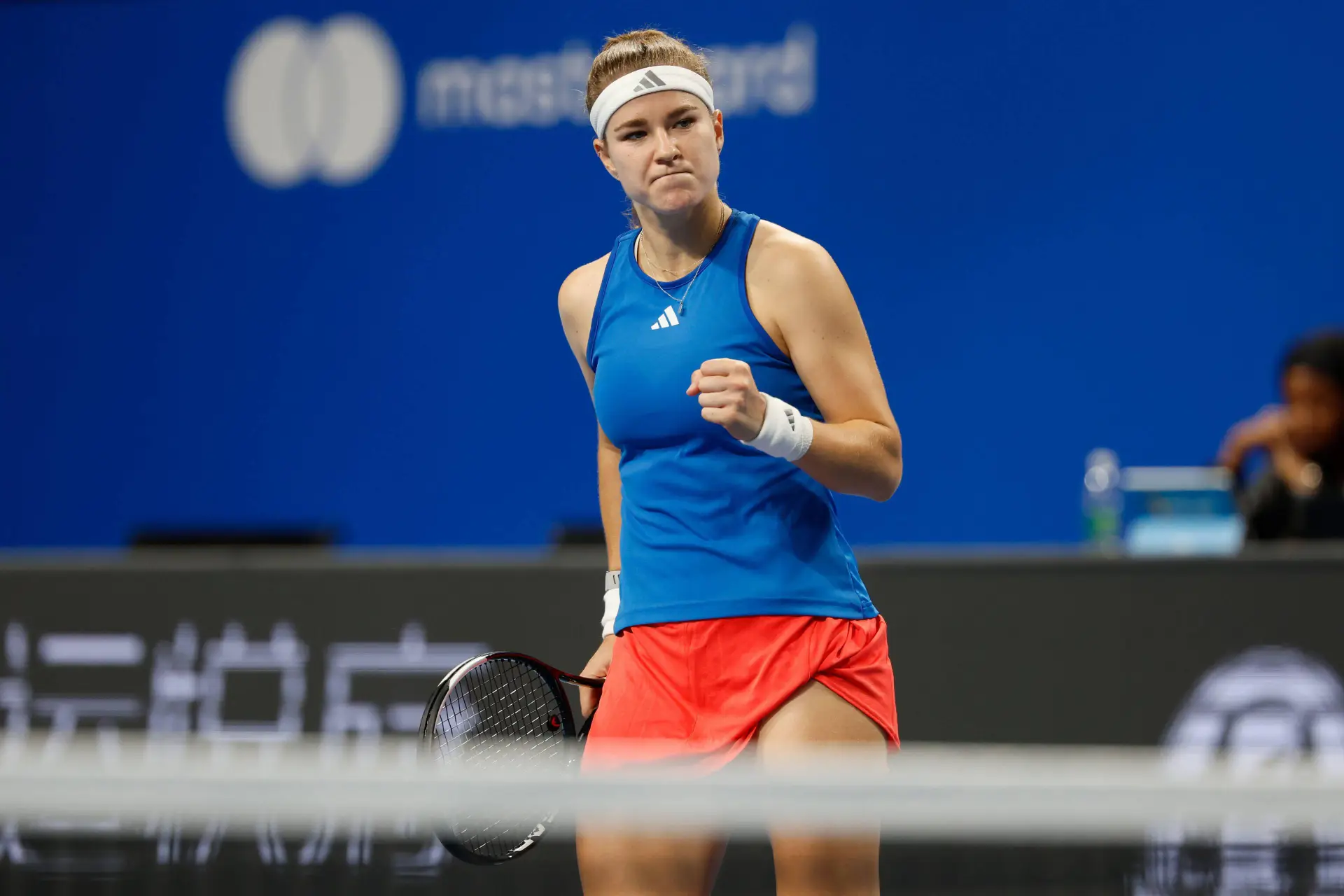
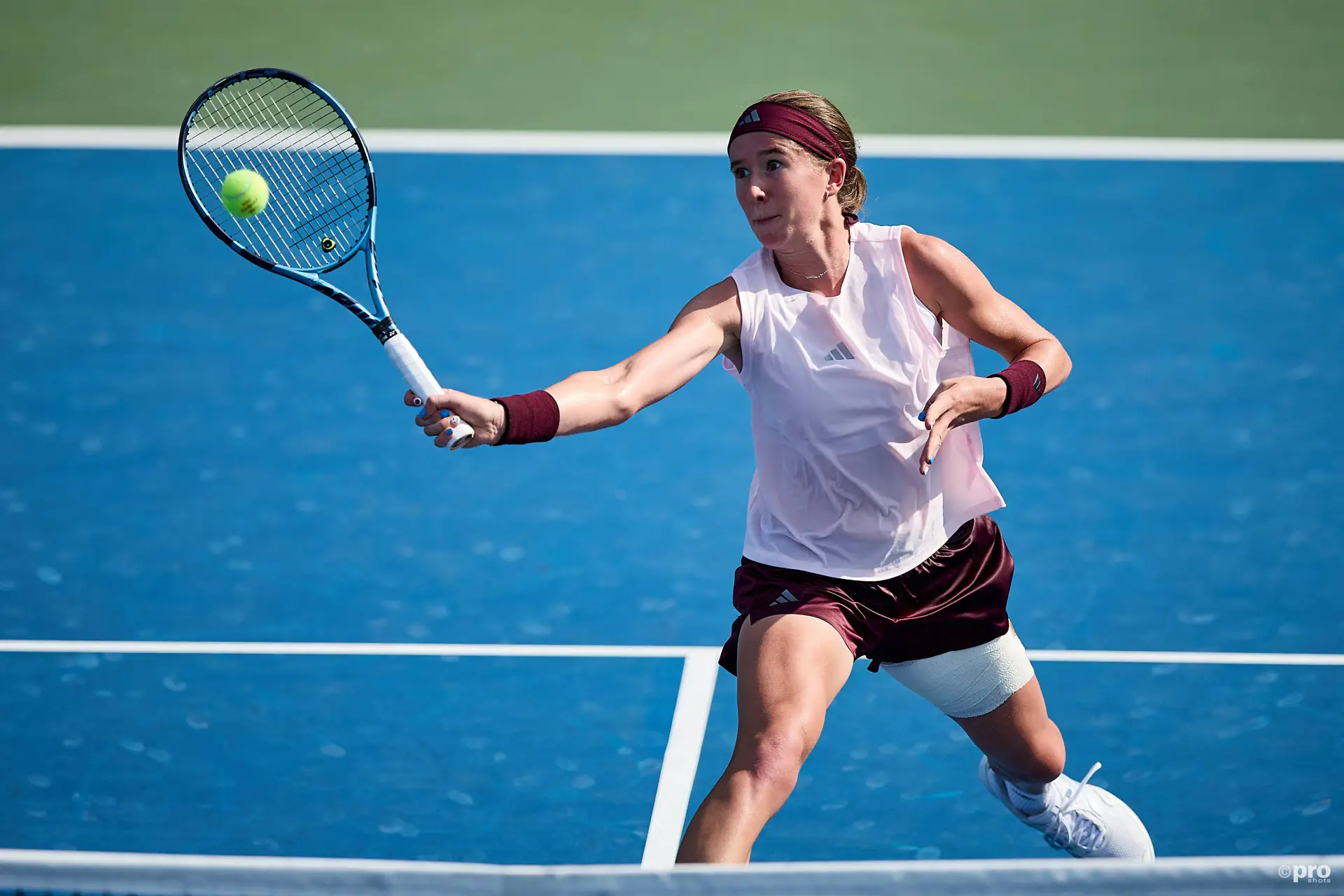
Karolina Muchova is one of the best tennis players in the world. When she’s healthy and playing her best, I’d put her across the net from anyone in the top 10 and give her a serious chance. She has the variety, the touch and the imagination to make even very good opponents uncomfortable. Watching her work a point is one of the pleasures of following women’s tennis.
Today in Beijing, she won three games. Nikola Bartunkova defeated her 6-3, 6-0 in 67 minutes in the quarterfinals of a WTA 1000 tournament. Muchova entered the day seventh in the live rankings and seventh in the race to the WTA Finals. That’s a substantial player to dismantle, particularly when the woman doing the dismantling is another Czech working her way toward the top of the sport.
Acknowledging Czech depth in women's tennis
I’ve been calling this story “Czech Mate” all season. At some point, though, the rest of tennis needs to do more than appreciate the pun.
As of this afternoon, Prague time, Czech women occupied five of the top 30 places in the live rankings and 10 of the top 90. Read that again. Ten women from one relatively small country among the best 90 players in the world. Those numbers will move as results come in, but the depth they reveal deserves considerably more attention than it gets.
And the rankings are only part of it. The Czechs just won the Billie Jean King Cup, with Muchova and Linda Noskova delivering the singles victories against Ukraine. Noskova is also this year’s Wimbledon champion, having beaten Muchova in the final. They competed against each other for the biggest prize on grass, then joined forces to win a world team title. That’s quite a summer of work.
If I’m responsible for developing women’s tennis anywhere else in the world, I’m booking a trip, and not just for the amazing breakfast at Prague’s Cafe Savoy, or the coffee at Ema or Doubleshot, all of which I’ve enjoyed many times.
I want to see the clubs, watch the practices and speak with the coaches who work with children long before television cameras know their names. I want to understand what happens between a girl picking up a racket and that same girl walking onto a major court believing she belongs there.
Because we keep treating Czech success as a lovely tennis tradition when it should also be treated as something other countries can learn from.
Of course, no federation can guarantee a Wimbledon champion. Talent matters. Families matter. Injuries can alter a career overnight, something Muchova knows all too well. But when outstanding players keep emerging across different generations, it becomes increasingly difficult to explain everything as fortunate timing.

The Wimbledon final was competed between two Czech Republic players, being won by Linda Noskova
There’s something underneath those results worth examining
Start with the clubs. The Czech tennis structure includes established centres such as Prostejov, Sparta Prague and I. CLTK Prague. These are places other federations should understand in detail: how players train, who teaches them, how competition is organised and how promising youngsters find their next opportunity.
There’s evidence, too, that experience remains available to the next generation. Tennis Europe’s academy partnership in Prostejov offers young players the chance to train alongside other elite players and national teams, with coaches including David Kotyza, whose work has included Petra Kvitova, Lucie Safarova, Karolina Pliskova and Noskova. That’s a considerable amount of knowledge to have around a practice court.
My inference is that this continuity matters. A coach who has helped players through the difficult transition into professional tennis brings something that a glossy development brochure cannot provide. They’ve seen the setbacks. They know that the best junior this month may struggle next year, and that another player may need longer to become physically or emotionally ready.
Other countries should be asking how to keep that knowledge close to their young players.
As a reader her wrote me in a recent email, we have to give credit to those who paved the way, the remarkable example set by the Czech women who have already succeeded. Martina Navratilova has pointed to the positive atmosphere around Czech clubs as a contributor to the country’s results. Kvitova has spoken about the influence of the champions who came before her. Those observations deserve attention because development involves more than forehands and fitness sessions.
A young girl watching a woman from her own country win a major gets a different message from one watching a distant superstar. When it happens repeatedly, through several players, success starts to look reachable. I suspect that changes what a child thinks is possible, and perhaps what the adults coaching her are prepared to expect.
What I especially enjoy about the Czech women is that they don’t all play alike. Muchova can construct points with wonderful subtlety. Noskova brings a different kind of pressure. Across generations, Czech tennis has made room for powerful hitters, inventive players and exceptional doubles competitors.
That variety should interest anyone designing a development programme. The goal ought to be helping a player discover what she can do exceptionally well, then giving her the tools to make it hold up under pressure. Muchova’s imagination is part of her value. You wouldn’t want to coach it out of her.
None of this means another country can reproduce Czech results simply by opening a few clubs and hiring a famous coach. I’d want serious answers about costs, access, travel support and the opportunities available to players who develop later. Which families can afford the journey? Where do talented girls drop out? How much competitive tennis can they get without turning family life upside down?
Those are the practical questions a useful study should answer
Bartunkova’s victory gives us another reason to ask them. Earlier in Beijing, she beat Aryna Sabalenka in straight sets. Now she has overwhelmed Muchova. Whatever comes next in her tournament, she has made herself a player people need to watch. Meanwhile, Czech tennis has supplied another compelling name for a conversation already full of them.
Read also
That’s why I keep returning to “Czech Mate.” The trophies are impressive, but the depth is what holds my attention. Other countries are entitled to admire it. The people responsible for developing their next generation should be doing something more useful.
Go to the Czech Republic. Watch. Ask questions. Find out which parts can work at home. By the time you finish congratulating this generation, another Czech woman may already be coming through.

Aron SolomonGuest Author
A Pulitzer Prize-nominated journalist for his groundbreaking op-ed in The Independent exposing the NFL’s “race-norming” policies, Aron Solomon, JD, is a globally recognized thought leader in law, media, and strategy.
As Chief Strategy Officer for AMPLIFY, he leverages his deep expertise to shape the future of legal marketing. Aron has taught entrepreneurship at McGill University and the University of Pennsylvania and was honored as a Fastcase 50 recipient, recognizing him among the world’s top legal innovators. A prolific commentator on law, business, and culture, his insights regularly appear in Newsweek, The Hill, Crunchbase News, and Literary Hub.
He has also been featured in The New York Times, Fast Company, Fortune, Forbes, CBS News, CNBC, USA Today, ESPN, TechCrunch, BuzzFeed, Venture Beat and countless other leading global media outlets. We are proud to have Aron on board at TennisUpToDate, where his deep tennis expertise enriches the site with sharp, original columns that connect the sport to wider cultural debates.
claps 0visitors 0
Just In


Popular News
Latest Comments
- great articlestennisseserver07-10-2026
- Medvedev was leading Djokovic 7-5, 3-5 when an attempted return..' NO you ignorants, Djokovic was leading .weiss05-10-2026
- No more bullshit "Wildcards" to these two. Qualify like everyone else -- there will be cameras there, too. Time to scream... WTF ????!!!!
 mandoist29-09-2026
 - Let's not BS the general public -- Sabalenka started showing cracks in her game last season. Her losses and near-losses started at about the same time she began being distracted by Fame (constant Selfies, making TV commercials, magazine shoots, endless Social Media nonsense, etc., etc.) One would think even Saba could recognize the parallels with others who failed before her -- Raducanu, Giorgi, Bouchard to name a few.mandoist25-09-2026
- Gross!! Hey Raducanu, Giorgi, and Bouchard -- reserve a seat at your Social Media Selfie table for Saba + Naomi. They're heading in your direction soon enough.mandoist24-09-2026
- And then these same players will complain about how lengthy their season’s were and need more time-off. I’m all for more tennis but the amount of tennis we get now is actually kind of crazy! We all need a break, especially the players.DaveyWavey23-09-2026
- You should do a comparison article for "different kinds of justice" the courts decide for tennis players. I can think of at least three players who received very small bans of a few months, however Tara Moore has been fighting for her literal survival the past few years. It seems odd considering she is not a "name" player, unlike the other cases.DaveyWavey22-09-2026
- PRIZE MONEY & POINTS Winner - $185,500 Finalist - $114,500 Semi-Finalist - $66,003 Quarter-Finalist - $35,000 Round of 16 - $18,045 Round of 32 - $13,005 Winner - 500 Finalist - 325 Semi-Finalist - 195 Quarter-Finalist - 108 Round of 16 - 60 Round of 32 - 1DaveyWavey20-09-2026
- Pegula withdrew from this Singapore event
 tennishappens19-09-2026
 - Serena Williams chose her tournaments. It's not such a bad idea.MuswellHillbilly17-09-2026

Loading