A renaissance implies that something went away. Czech women’s tennis never did. And after Sunday, I think we can dispense with whatever qualifiers are left.
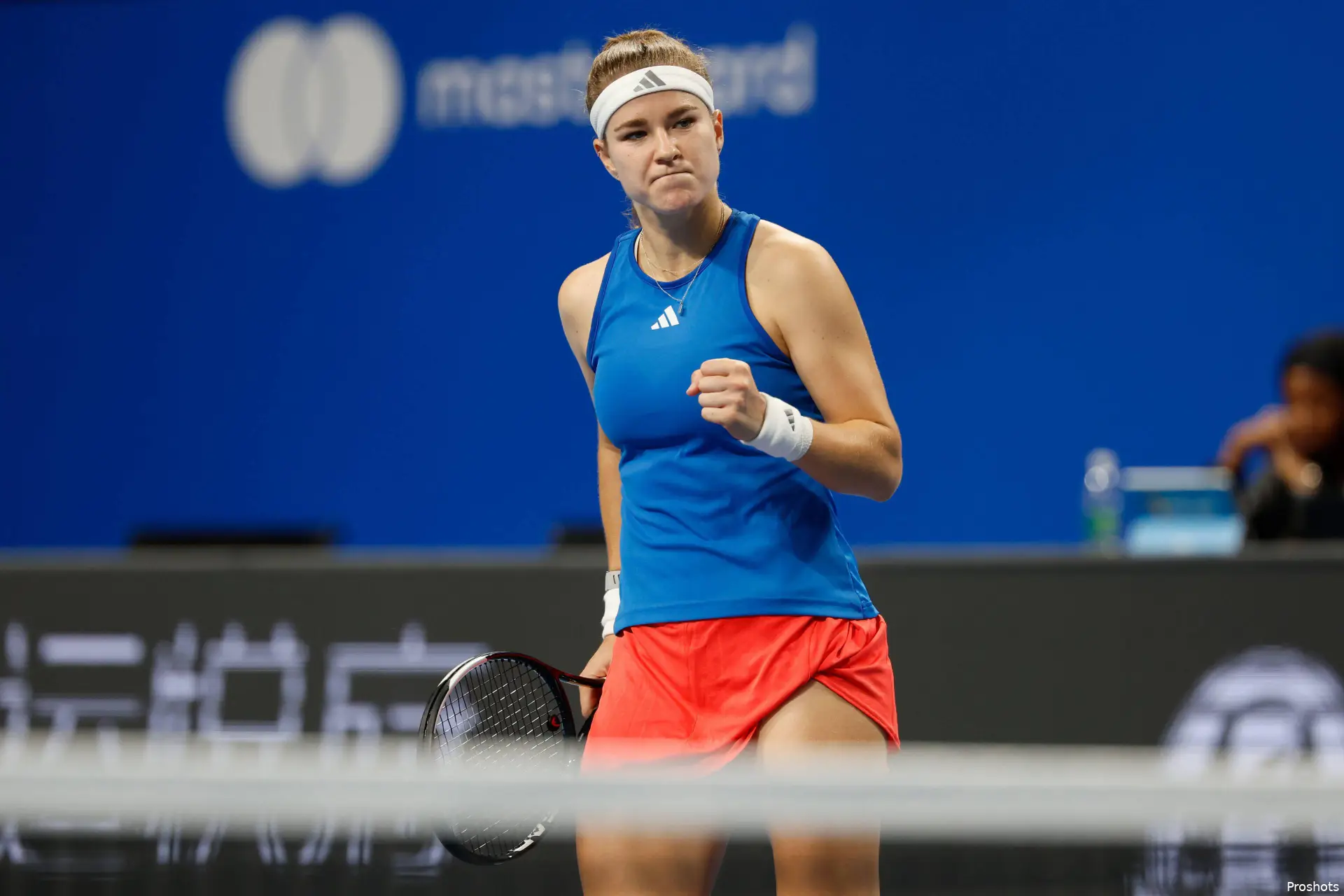
This is the greatest year Czech women’s tennis has ever had. The Billie Jean King Cup was the perfect way to make the point. Czechia defeated Ukraine 2-0 Sunday in Shenzhen to win the competition for the first time since 2018. Karolina Muchova started things by beating Anhelina Kalinina 6-2, 6-3. Then Linda Noskova, who has spent most of 2026 making the extraordinary look increasingly routine, beat Elina Svitolina 6-3, 7-6(5).
No doubles required. No late drama. No escape act. Just another Czech trophy.

Noskova in action.
And not just any trophy. This was Czechia's 12th Billie Jean King Cup title, counting the five won by Czechoslovakia, leaving only the United States ahead of them in the history of the competition. But history is almost beside the point here. What makes this title so fitting is 2026.
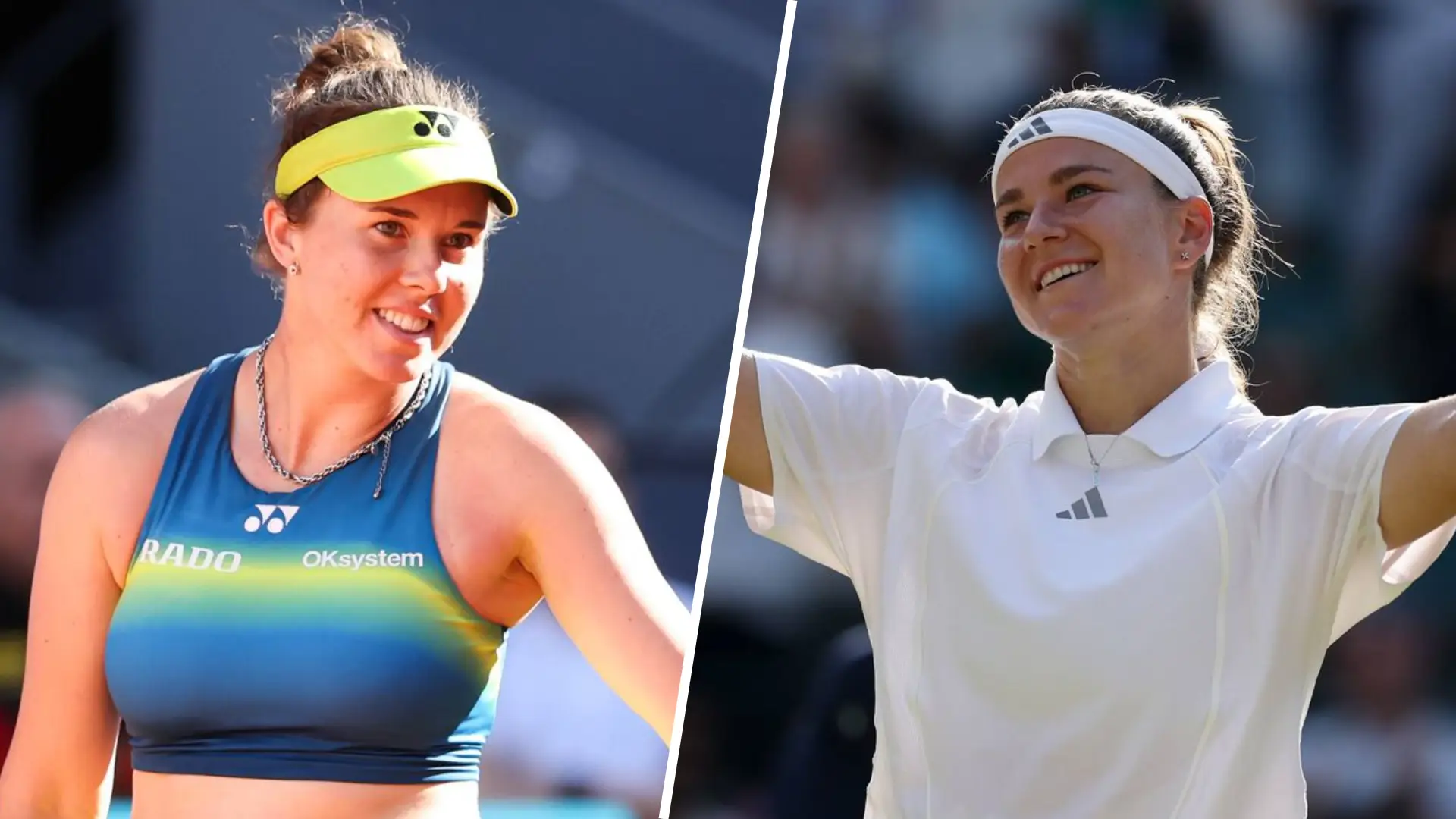
Think about the two women who won the matches Sunday. In July, Linda Noskova and Karolina Muchova walked onto Centre Court at Wimbledon and played each other for the championship. It was the first all-Czech women's singles final in Grand Slam history. Noskova won it, 6-2, 5-7, 6-3, becoming the third Czech woman in four editions of Wimbledon to lift the Venus Rosewater Dish.
Now, two and a half months later, they stood on the same side of the net figuratively, wearing the same colors and finishing the year by winning a world championship for their country. That's not a renaissance. That's ridiculous.
Not a tennis team, that's showing off
And the scary part for everybody else is that Czechia did not arrive in Shenzhen with two good players and some people to fill out the team photo. Noskova is No. 6 in the world. Muchova is No. 8. Marie Bouzkova and Sara Bejlek are both inside the Top 30. And if, after all that, you somehow need a doubles match, Czechia can turn to Katerina Siniakova, the world's No. 1 doubles player.
That's not a tennis team. That's showing off. They didn't even lose a match in Shenzhen. Great Britain: 2-0. Spain: 2-0. Ukraine: 2-0. Six matches played. Six Czech wins. This also shouldn't obscure what Ukraine accomplished. Ukraine reached its first Billie Jean King Cup final, and it didn't arrive there because somebody handed it a favorable draw. The Ukrainians eliminated two-time defending champion Italy in the semifinal and came into Sunday with an opportunity to complete one of the best stories of the tennis year.
There was nothing fluky about their run. They simply ran into Czechia.
There is a larger point in all of this, and it's the same one I made earlier this year. We have a tendency in tennis to look for a single superstar when we talk about a country's golden generation. One player becomes the face of the whole thing.
That doesn't work with Czechia. Who exactly is the face? Noskova, the 21-year-old Wimbledon champion? Muchova, the Wimbledon finalist and one of the most gifted players in tennis?
Siniakova, who has spent years building one of the great doubles careers of her generation? What about Barbora Krejcikova, a two-time Grand Slam singles champion? Marketa Vondrousova, the 2023 Wimbledon champion? Marie Bouzkova? Sara Bejlek? Tereza Valentova? And we're still not finished.
That's what makes Czech women's tennis so fascinating. This isn't one generational player dragging a nation behind her. It isn't even one particularly strong generation. It's an ecosystem. Players arrive. Players get hurt. Players come back. Players age out. Another 17-year-old appears seemingly five minutes later with immaculate technique and absolutely no interest in being impressed by the person across the net.
Somewhere in Czechia right now there is presumably a 12-year-old girl hitting backhands down the line who will ruin everyone's afternoon at Wimbledon in 2032. I'm only half joking. Because at some point, when something keeps happening, you have to stop treating it as remarkable luck and start asking why it keeps happening.
The Czech Republic has a population of roughly 11 million people. It shouldn't be able to produce this many elite women's tennis players this consistently. The United States has roughly 30 times as many people. China has more than 100 times as many. Yet put up a Grand Slam draw and start circling the Czech flags. They'll be there.
Put together a Billie Jean King Cup team and the problem becomes almost comical. Other captains are figuring out how to hide weaknesses. Czech captain Barbora Strycova has to figure out which world-class tennis players she isn't going to use. Sunday was therefore more than another championship. It was the logical conclusion to the Czech tennis year.
Noskova won Wimbledon. Muchova stood across from her in the final. Czech players remained scattered throughout the upper reaches of the rankings. Siniakova remained Siniakova. Another wave of young Czech players kept coming. And then, when tennis finally asked them to stop competing against one another and play together, they won that too.
Read also
So congratulations to Ukraine, which made history by reaching its first final and deserves to have this tournament remembered as a breakthrough rather than a defeat. But 2026 belongs to Czechia.
Earlier this year, I wrote that it was time to stop calling Czech women's tennis a renaissance. After Sunday, I'll go one step further. Stop waiting for the golden age. You're watching it.

Aron SolomonGuest Author
A Pulitzer Prize-nominated journalist for his groundbreaking op-ed in The Independent exposing the NFL’s “race-norming” policies, Aron Solomon, JD, is a globally recognized thought leader in law, media, and strategy.
As Chief Strategy Officer for AMPLIFY, he leverages his deep expertise to shape the future of legal marketing. Aron has taught entrepreneurship at McGill University and the University of Pennsylvania and was honored as a Fastcase 50 recipient, recognizing him among the world’s top legal innovators. A prolific commentator on law, business, and culture, his insights regularly appear in Newsweek, The Hill, Crunchbase News, and Literary Hub.
He has also been featured in The New York Times, Fast Company, Fortune, Forbes, CBS News, CNBC, USA Today, ESPN, TechCrunch, BuzzFeed, Venture Beat and countless other leading global media outlets. We are proud to have Aron on board at TennisUpToDate, where his deep tennis expertise enriches the site with sharp, original columns that connect the sport to wider cultural debates.
claps 0visitors 0
Just In

Popular News
Latest Comments
- A healthy Qinwen may be hard to stop next season. She was already scaring her opponents before her medical leave(s). Unfortunately, Zheng insisted on singing again. On the positive side -- Mirra did not sing!! ;~}
 mandoist11-10-2026
 - Where is it written that athletes, entertainers... People in general... are mandated to keep looking at -- or even using [anti]Social Media? Public & private figures consistently complain and reveal their concerns about negativity and violence thrown at them -- yet they insist on participating. Avoid it, don't use it, don't read it. It's okay to occasionally look up at the World instead beating your eyes & thumbs to death on The Inventions out there.mandoist11-10-2026
- great articlestennisseserver07-10-2026
- Medvedev was leading Djokovic 7-5, 3-5 when an attempted return..' NO you ignorants, Djokovic was leading .weiss05-10-2026
- No more bullshit "Wildcards" to these two. Qualify like everyone else -- there will be cameras there, too. Time to scream... WTF ????!!!!mandoist29-09-2026
- Let's not BS the general public -- Sabalenka started showing cracks in her game last season. Her losses and near-losses started at about the same time she began being distracted by Fame (constant Selfies, making TV commercials, magazine shoots, endless Social Media nonsense, etc., etc.) One would think even Saba could recognize the parallels with others who failed before her -- Raducanu, Giorgi, Bouchard to name a few.mandoist25-09-2026
- Gross!! Hey Raducanu, Giorgi, and Bouchard -- reserve a seat at your Social Media Selfie table for Saba + Naomi. They're heading in your direction soon enough.mandoist24-09-2026
- And then these same players will complain about how lengthy their season’s were and need more time-off. I’m all for more tennis but the amount of tennis we get now is actually kind of crazy! We all need a break, especially the players.DaveyWavey23-09-2026
- You should do a comparison article for "different kinds of justice" the courts decide for tennis players. I can think of at least three players who received very small bans of a few months, however Tara Moore has been fighting for her literal survival the past few years. It seems odd considering she is not a "name" player, unlike the other cases.DaveyWavey22-09-2026
- PRIZE MONEY & POINTS Winner - $185,500 Finalist - $114,500 Semi-Finalist - $66,003 Quarter-Finalist - $35,000 Round of 16 - $18,045 Round of 32 - $13,005 Winner - 500 Finalist - 325 Semi-Finalist - 195 Quarter-Finalist - 108 Round of 16 - 60 Round of 32 - 1DaveyWavey20-09-2026

Loading