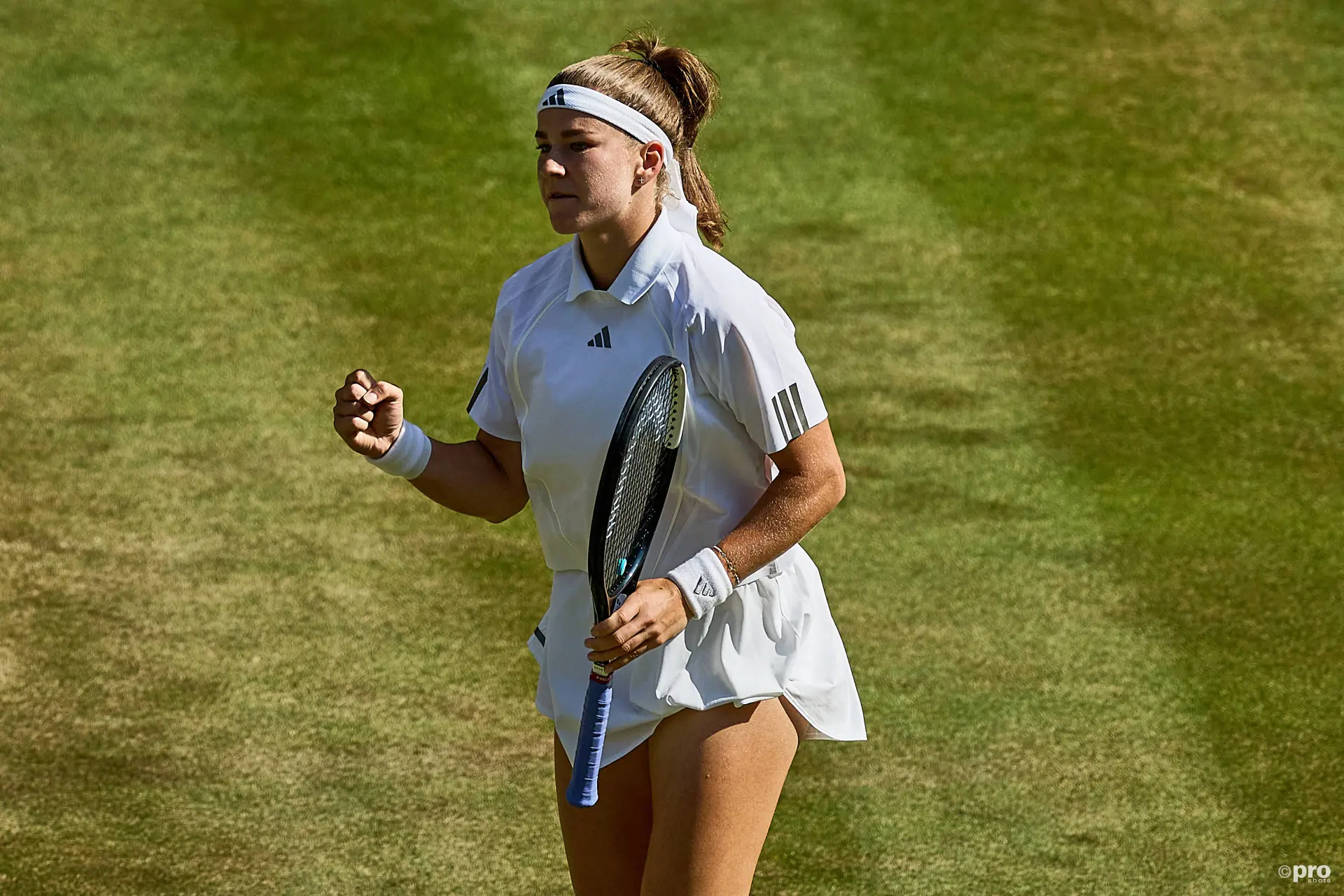
All hail the tennis women of Czechia! For the past two weeks, the tennis world has once again been asking whether Czech women’s tennis is back.
It’s an understandable question. There are eight Czech women in the WTA Top 50 live rankings. Two have reached the Wimbledon semifinals. We could very see an all-Czech Wimbledon final, for (wait for it…) the first time ever
Everywhere you look, another Czech player seems to be making a deep run, upsetting a higher seed, or climbing quietly through the rankings. But I think we’re asking the wrong question.
Back from where? A renaissance suggests something disappeared before returning. Czech women’s tennis never really disappeared. It simply kept doing what it has done for more than twenty years: producing world-class players at a rate that no country of comparable size has been able to match.
That’s the remarkable part. The Czech Republic has a population of roughly eleven million people. New York City alone is nearly as large. Yet this relatively small country has become the closest thing women’s tennis has to a perpetual talent factory.
Think about the names. Petra Kvitová. Karolína Plíšková. Lucie Šafářová. Barbora Krejčíková. Markéta Vondroušová. Karolína Muchová. Some won Grand Slams. Others reached No. 1. Others became Olympic medalists, doubles legends, or perennial contenders.
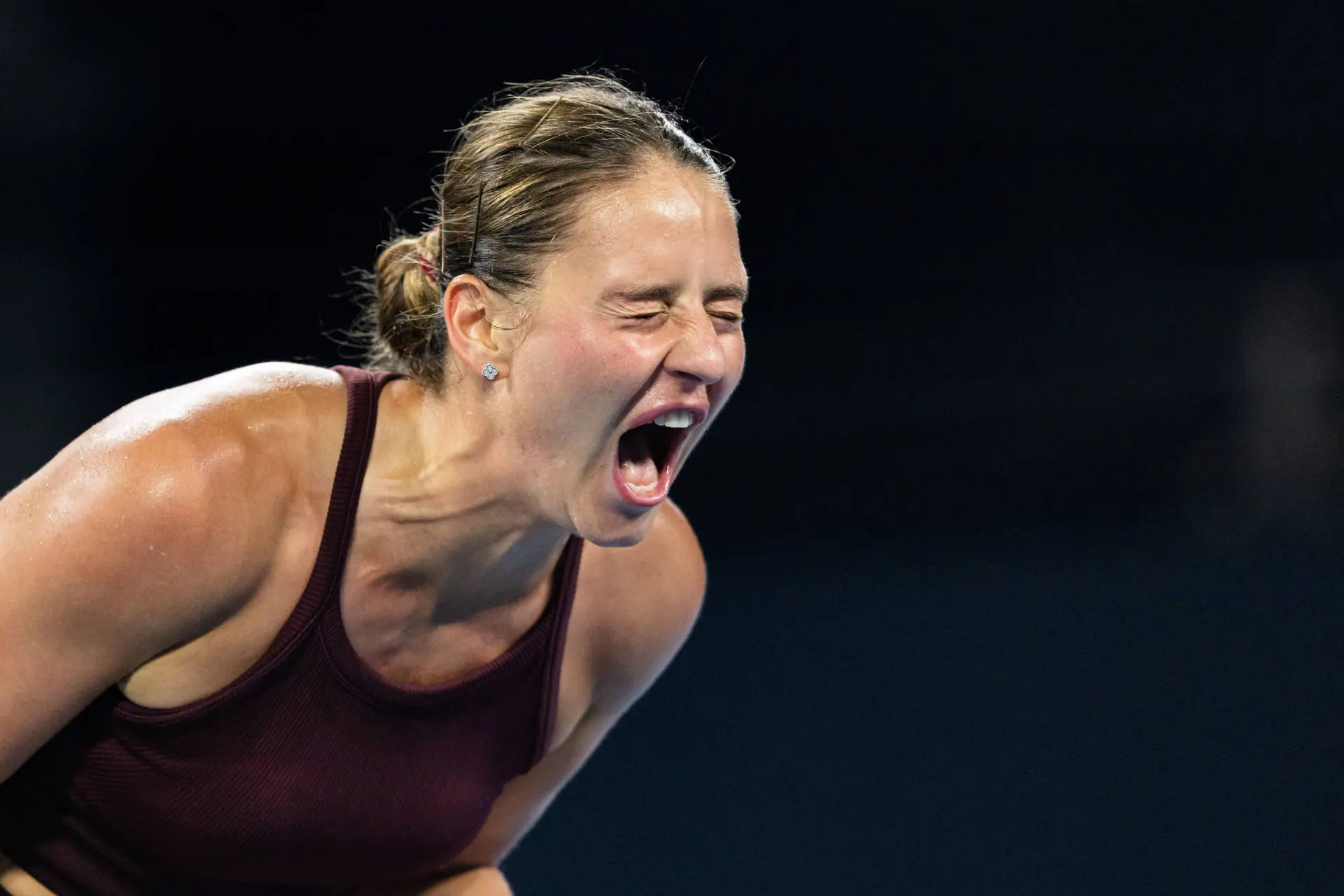
And as each generation has begun to fade, another has appeared. Linda Nosková. Sára Bejlek. Nikola Bartunková Tereza Valentová. There is remarkably little downtime. That’s what makes the Czech story different from so many others.
Most tennis powers are defined by extraordinary individuals. Switzerland had Roger Federer. Spain had Rafael Nadal. Belgium had Justine Henin and Kim Clijsters. When those icons retired, there were inevitable gaps while the next generation developed. The Czech Republic doesn’t seem to experience those gaps. Instead, it produces waves. Just as one group begins leaving the tour, another group arrives.
That suggests something much more significant than a golden generation. It suggests a system. No one ingredient explains it. There are respected coaches throughout the country. A strong club culture. Young players compete regularly against older, accomplished professionals. Technical development is emphasized before raw power. Players are encouraged to become complete competitors rather than specialists built around one overwhelming weapon.
Results impossible to call a coincidence
Whatever the precise formula may be, the results have become impossible to dismiss as coincidence. The rest of the tennis world often searches for the next superstar. The Czech Republic seems content to produce the next ten excellent players. That distinction matters. Women’s tennis has perhaps the greatest depth it has ever seen. Winning major championships has become increasingly difficult because there are so many players capable of doing damage in any draw. Countries that depend upon one transcendent talent inevitably find themselves rebuilding when that player retires.
Countries with pipelines don’t have to rebuild. They simply reload. Watching Wimbledon this year, I found myself realizing that I wasn’t especially surprised to see multiple Czech women still standing in the second week.
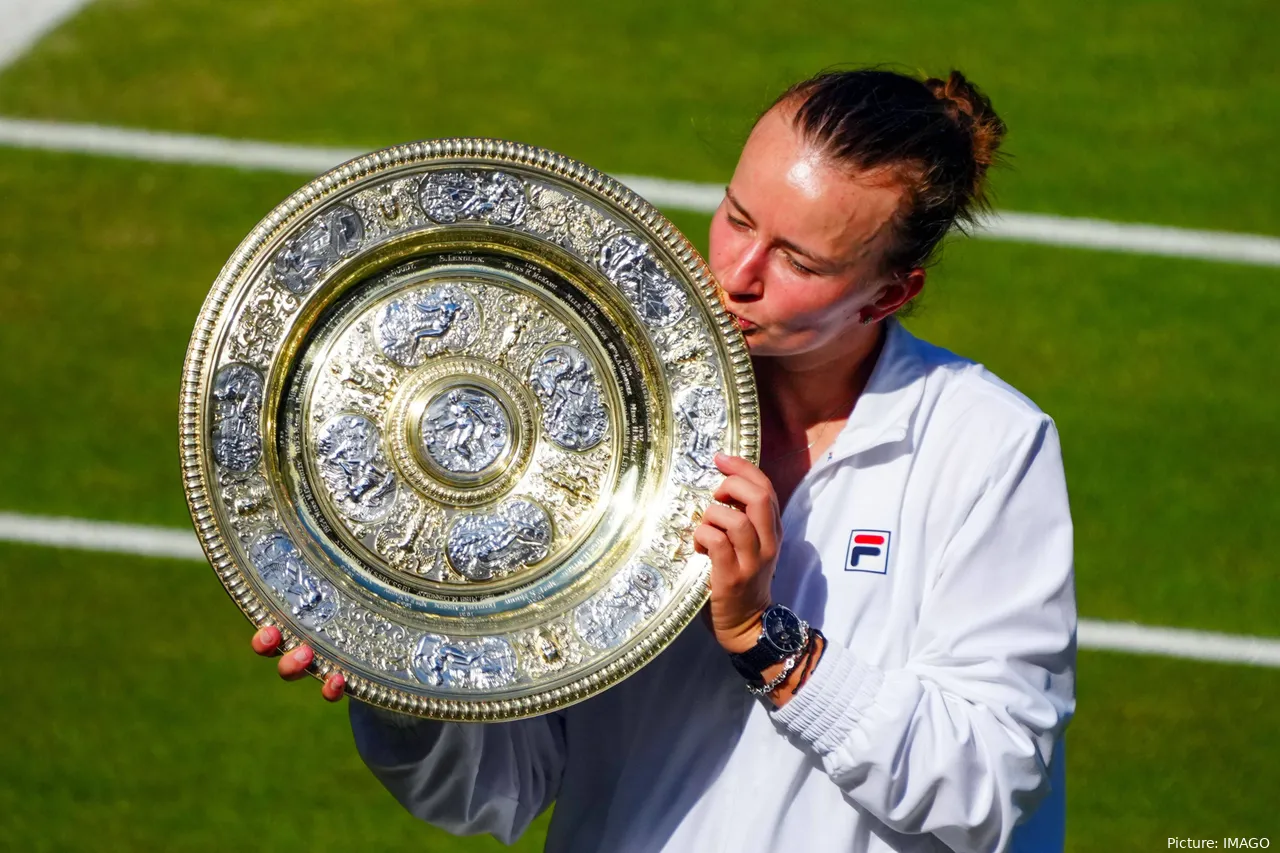
Barbora Krejcikova previously won Wimbledon.
If anything, I would have been surprised if none of them were. That says something. For years, commentators have spoken about Czech women’s tennis in cycles. Every time another player emerges, we hear that the country has returned to prominence.
Perhaps it’s time to retire that narrative. Nothing has returned. The names have changed. The jerseys have changed. The rankings have shifted. The standard hasn’t. And maybe that’s the real lesson for the rest of the tennis world.

Instead of asking why another Czech player has broken through, perhaps national federations should be asking a different question altogether. How has one nation of eleven million people built a system where excellence no longer feels exceptional?
Because after twenty years of evidence, this isn’t a renaissance. It’s simply what Czech women’s tennis does.

Aron SolomonGuest Author
A Pulitzer Prize-nominated journalist for his groundbreaking op-ed in The Independent exposing the NFL’s “race-norming” policies, Aron Solomon, JD, is a globally recognized thought leader in law, media, and strategy.
As Chief Strategy Officer for AMPLIFY, he leverages his deep expertise to shape the future of legal marketing. Aron has taught entrepreneurship at McGill University and the University of Pennsylvania and was honored as a Fastcase 50 recipient, recognizing him among the world’s top legal innovators. A prolific commentator on law, business, and culture, his insights regularly appear in Newsweek, The Hill, Crunchbase News, and Literary Hub.
He has also been featured in The New York Times, Fast Company, Fortune, Forbes, CBS News, CNBC, USA Today, ESPN, TechCrunch, BuzzFeed, Venture Beat and countless other leading global media outlets. We are proud to have Aron on board at TennisUpToDate, where his deep tennis expertise enriches the site with sharp, original columns that connect the sport to wider cultural debates.
claps 1visitors 1
Just In


Popular News


Latest Comments
- Does Sinner need that 4.5 mil? I doubt it. He can make that with three modelling gigs!😅🤣Rapunzel21-10-2026
- Did "People Magazine" purchase this website? This nonstop storyline is bullshit.
 mandoist21-10-2026
 - Listen... this is of no concern to anyone but these two. Deal with your own issues -- most of us have our own. Thanks, media, for these insignificant follow-ups which are meaningless.mandoist21-10-2026
- This is so very very sad, for all three of them. I truly thought they had an unbreakable bond, but life throws up so many differing challenges. Having your homeland suffering in such a terrible way, makes happiness lose out to guilt as well. Our thoughts are with them. X💔bjsexton20-10-2026
- I have lost all respect for Svitolina! Could she not have waited until he had played at the Paris Masters!!! She is selfish and don't give a damn about Gael. That is NOT how love is demonstrated Elina!!Rapunzel19-10-2026
- Perhaps convenient tennis tour sex is not a strong enough experience in which to base a marriage?mandoist19-10-2026
- Fight the Good Fight... Tennis (sports in general) need more Humans such as yourself.mandoist18-10-2026
- When is WTA going to mandate Genetic Testing (DNA) ???mandoist18-10-2026
- Hey, Dan... you just wake up from a coma? Regardless -- Thanks for the comedy this morning!mandoist18-10-2026
- Two Things: 1. Stop allowing these Spoiled Trust-Fund Elitists to behave badly. Your little hand-slaps do not deter them. 2. STOP the incessantly annoying "towel wiping" nonsense!!!!mandoist15-10-2026

Loading